

 Download PDF
Market Overview
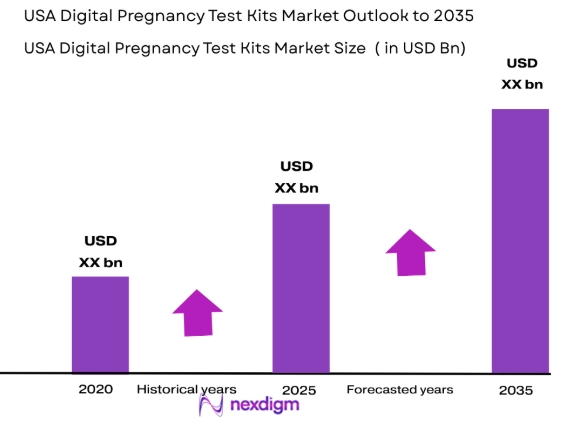
The USA Digital Pregnancy Test Kits market is valued at approximately USD ~ billion, driven by a rise in the preference for home-use diagnostic tools and increasing consumer demand for privacy and convenience. Advancements in technology, including AI-powered test kits and more accurate results, have bolstered growth. Moreover, increased consumer awareness about early detection and the expanding retail distribution networks contribute significantly to the market’s expansion. These factors combine to support a stable market size for the year.
The United States holds a dominant position in the digital pregnancy test kits market, primarily due to its strong healthcare infrastructure and well-established retail sector. Major cities like New York, Los Angeles, and Chicago lead in terms of consumer spending on healthcare products, with a growing trend of women seeking early pregnancy testing for convenience and accuracy. The demand is especially high in urban centers due to better access to digital products through pharmacies and e-commerce platforms.
Market Segmentation
By Product Type
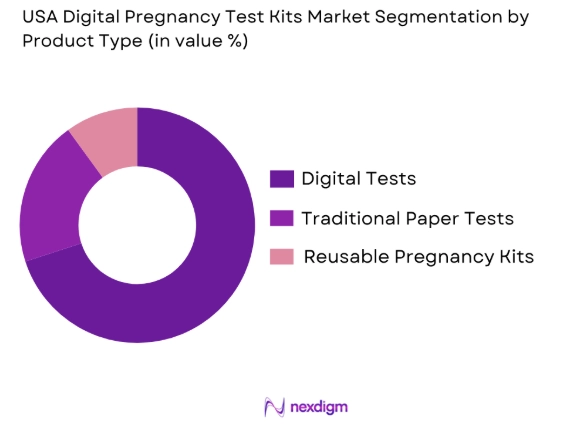
The USA Digital Pregnancy Test Kits market is segmented by product type into digital tests, traditional paper tests, and reusable pregnancy kits. The digital tests segment leads the market due to their enhanced accuracy and ease of use. Digital pregnancy tests provide a more reliable and clearer result, making them highly popular among consumers. With the growing demand for high-tech solutions and the increasing awareness of their accuracy, digital tests dominate the market. Additionally, manufacturers continue to innovate with features like smartphone compatibility and enhanced user interfaces, further driving this segment’s growth.
By Application Type
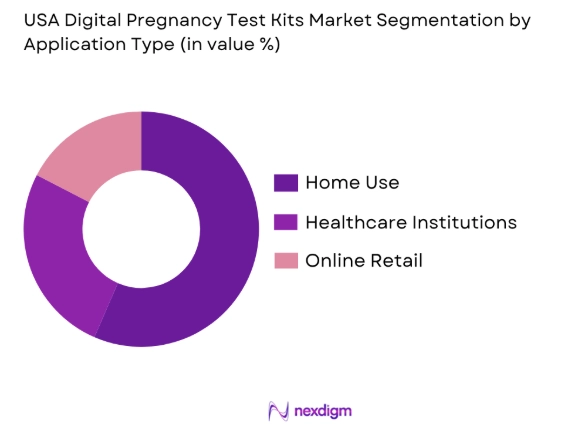
The market is segmented by application into home use, healthcare institutions, and online retail. Home use is the dominant segment in this market, primarily due to increased consumer preference for private and convenient pregnancy testing at home. The availability of digital pregnancy test kits in drugstores and supermarkets also contributes to this segment’s market share dominance. With advancements in e-commerce, home-use tests are now easily accessible through online platforms, further increasing their appeal. As more consumers opt for at-home health solutions, this segment continues to grow robustly.
Competitive Landscape
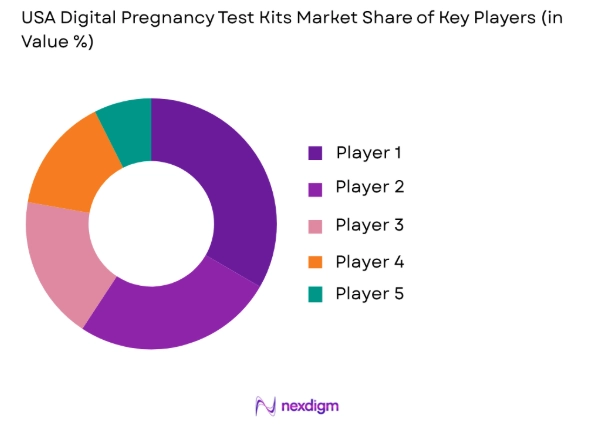
The USA Digital Pregnancy Test Kits market is dominated by several key players, with leading companies including Clearblue, First Response, and EPT. These players have established strong brand recognition and extensive distribution networks, allowing them to maintain a significant presence in the market. The competition is characterized by ongoing product innovation, particularly with digital and reusable test kits. Companies continue to leverage advancements in digital technologies to offer consumers more convenient, reliable, and accurate testing solutions.
| Company | Establishment Year | Headquarters | Product Range | Revenue (USD) | Market Focus | Technology | Distribution Channels | Competitive Advantage |
| Clearblue | 1985 | UK | ~ | ~ | ~ | ~ | ~ | ~ |
| First Response | 1996 | USA | ~ | ~ | ~ | ~ | ~ | ~ |
| EPT | 1980 | USA | ~ | ~ | ~ | ~ | ~ | ~ |
| Pregmate | 2012 | USA | ~ | ~ | ~ | ~ | ~ | ~ |
| AccuMed | 2009 | USA | ~ | ~ | ~ | ~ | ~ | ~ |
USA Digital Pregnancy Test Kits Market Analysis
Growth Drivers
Increasing Awareness and Accessibility
The growing awareness of digital health solutions is driving the adoption of digital testing kits. As people become more health-conscious, they seek convenient and accessible methods for monitoring health parameters. This awareness is enhanced by the internet, social media, and health influencers, who promote the benefits of at-home testing. Digital health solutions, including easy-to-use test kits for conditions like diabetes, cholesterol, and pregnancy, are now more widely available online and in pharmacies, making them more accessible. This increased awareness and availability are expected to continue fueling the growth of the digital testing market.
Rising Demand for At-Home Health Solutions
The COVID-19 pandemic accelerated the demand for at-home health solutions as consumers became more inclined to monitor their health in the comfort of their homes. Digital test kits, which allow users to perform tests independently and privately, have gained popularity. People are now more interested in managing their health proactively through remote health monitoring, including testing for common conditions such as blood pressure, cholesterol, and even fertility. As consumer preferences shift toward convenience and privacy, the demand for at-home health testing solutions continues to rise, contributing to market expansion.
Market Challenges
Regulatory Barriers
One of the key challenges facing the digital testing market is navigating regulatory barriers. Governments and health authorities around the world are still establishing regulations for digital health technologies. The lack of standardization and the slow pace of regulatory approvals can create uncertainty for manufacturers and delay the market entry of new products. Additionally, inconsistent regulations between different regions may complicate international distribution, limiting the ability of companies to reach global markets. To succeed, businesses must stay ahead of regulatory changes and work closely with authorities to ensure compliance and timely product approvals.
High Cost of High-Tech Digital Test Kits
Although technological advancements have led to the development of high-quality digital test kits, their high cost remains a significant challenge. Cutting-edge devices, such as those powered by artificial intelligence or advanced sensors, often come with a hefty price tag, making them unaffordable for a large segment of the population. This price barrier limits access to the most innovative and accurate digital testing solutions, particularly in developing regions. For these devices to gain widespread adoption, manufacturers must find ways to lower production costs, improve affordability, or offer financing options to consumers.
Opportunities
Product Innovations
Artificial intelligence (AI) presents a significant opportunity for the digital testing market by enabling more accurate, faster, and automated results. AI-powered tests can provide insights that traditional methods may miss, improving the overall user experience. These innovations allow for real-time analysis and personalized recommendations based on test results. For example, AI algorithms can help detect patterns in health data, predict potential issues, and even suggest preventive actions. As AI continues to evolve, its integration into digital test kits could revolutionize the market, making health monitoring more effective and accessible.
Expansion into Emerging Markets
Emerging markets represent a significant opportunity for the digital testing market due to increasing healthcare needs, rising disposable income, and growing awareness of health and wellness. As these regions continue to develop, demand for affordable and accessible healthcare solutions is on the rise. Digital health solutions, including home test kits, can meet the needs of underserved populations in these regions, where traditional healthcare infrastructure may be limited. By expanding into emerging markets, companies can tap into new customer bases, increase market share, and drive global growth in the digital testing industry
Future Outlook
Over the next 5 years, the USA Digital Pregnancy Test Kits market is expected to experience steady growth, fueled by technological advancements and an increasing consumer preference for home-based healthcare solutions. With the rise in digitalization and the expanding online retail sector, consumers are now looking for more accessible and reliable pregnancy test kits. The market is also likely to benefit from innovations in AI-powered tests, which promise faster and more accurate results, helping to drive demand further.
Major Players in the Market
- Clearblue
- First Response
- EPT
- Pregmate
- AccuMed
- Fairhaven Health
- LabCorp
- Walgreens
- CVS Health
- Procter & Gamble
- Church & Dwight
- Apex Laboratories
- Quidel Corporation
- Hologic
- iTest
Key Target Audience
- Investments and Venture Capitalist Firms
- Government and Regulatory Bodies (FDA, CDC)
- Health and Wellness Retailers
- Pharmaceutical Companies
- E-commerce Platforms
- Healthcare Providers and Hospitals
- Medical Device Manufacturers
- Home Healthcare Companies
Research Methodology
Step 1: Identification of Key Variables
The initial phase involves defining the key stakeholders and variables influencing the USA Digital Pregnancy Test Kits Market. This process is underpinned by comprehensive desk research and an analysis of industry reports to establish the critical factors impacting market growth.
Step 2: Market Analysis and Construction
In this phase, historical data on the digital pregnancy test kit market is compiled and analyzed. Market penetration, product types, and consumer behaviors are assessed, ensuring the reliability of revenue estimates and identifying key trends and growth patterns.
Step 3: Hypothesis Validation and Expert Consultation
Market hypotheses are tested through expert consultations. Industry professionals from both the private and public sectors are interviewed to validate the data, offering insights into operational and financial matters, and ensuring that the market data is corroborated by real-world experiences.
Step 4: Research Synthesis and Final Output
The final stage involves synthesizing the findings and conducting direct interviews with manufacturers and suppliers. This ensures that the research incorporates up-to-date insights into market segments, consumer preferences, and product innovations, resulting in a fully validated market outlook.

- Executive Summary
- Research Methodology (Market Definitions and Assumptions, Abbreviations, Market Sizing Approach, Consolidated Research Approach, Understanding Market Potential Through In-Depth Industry Interviews, Primary Research Approach, Limitations and Future Conclusions)

- Definition and Scope
- Market Genesis and Evolution
- Key Milestones and Historical Developments
- Business Cycle
- Supply Chain and Value Chain Analysis
- Regulatory Landscape

- Growth Drivers
Increasing Awareness and Accessibility
Rising Demand for At-Home Health Solutions
Technological Advancements in Digital Testing - Market Challenges
Regulatory Barriers
High Cost of High-Tech Digital Test Kits - Opportunities
Product Innovations (AI-powered Tests)
Expansion into Emerging Markets - Trends
Rising Popularity of Fertility and Ovulation Monitoring
Growing Consumer Preference for Eco-friendly Options - Government Regulation
FDA Guidelines
Import Tariffs and Duties - SWOT Analysis
- Stakeholder Ecosystem
- Porter’s Five Forces

- By Value, 2020-2025
- By Volume, 2020-2025
- By Average Price, 2020-2025

- By Product Type (In Value %)
Digital Tests
Traditional Paper Tests
Reusable Pregnancy Kits - By Application (In Value %)
Home Use
Healthcare Institutions
Online Retail - By Distribution Channel (In Value %)
Supermarkets/Hypermarkets
Pharmacies
E-commerce Platforms
Health and Wellness Stores - By Region (In Value %)
Northeast Region
Midwest Region
South Region
West Region - By Age Group (In Value %)
Women Aged 18-30
Women Aged 31-45
Women Aged 46 and Above

- Market Share of Major Players
- Cross Comparison Parameters (Company Overview, Business Strategies, Recent Developments, Product Portfolio Analysis, Strength and Weaknesses, Revenues and Profit Margins, Distribution Channels, Number of Dealers and Distributors)
- SWOT Analysis of Major Players
- Pricing Analysis by SKUs
- Detailed Profiles of Major Companies
Clearblue
First Response
EPT
Pregmate
iTest
AccuMed
Fairhaven Health
LabCorp
Walgreens
CVS Health
Procter & Gamble
Church & Dwight
Apex Laboratories
Quidel Corporation
Hologic

- Market Demand and Utilization
- Purchasing Power and Budget Allocations
- Regulatory and Compliance Requirements
- Consumer Preferences and Behavior
- Needs, Desires, and Pain Point Analysis

- By Value, 2026– 2035
- By Volume, 2026– 2035
- By Average Price, 2026– 2035


 Request a Sample
 Ask for Customization
 Get a Quote
 Enquire Now