

 Download PDF
 Download PDF
Market Overview
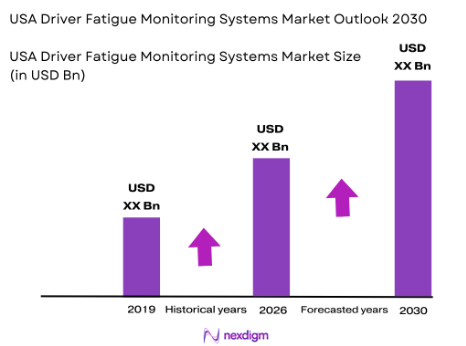
The USA Driver Fatigue Monitoring Systems market is valued at USD ~ billion and is driven by the increasing concerns over road safety and the growing demand for advanced driver-assistance systems (ADAS). The market’s expansion is further supported by heightened awareness about the dangers of driver fatigue, particularly in commercial and long-haul trucking sectors. With the implementation of stricter safety regulations and growing technological advancements in sensor systems, the market is poised for continuous growth. The driver fatigue monitoring technology has become an essential component in reducing road accidents caused by fatigue, offering significant potential in saving lives and improving fleet safety.
The United States remains the dominant country in the Driver Fatigue Monitoring Systems market. This dominance is primarily driven by the country’s robust transportation infrastructure, widespread adoption of ADAS, and the high volume of commercial fleet operations, including trucking and logistics. Major cities like New York, Los Angeles, and Chicago have high concentrations of fleet operators and a growing focus on integrating advanced safety technologies into vehicles. Moreover, regulatory mandates from agencies like the National Highway Traffic Safety Administration (NHTSA) have accelerated the adoption of these systems, particularly in the commercial vehicle sector.
Market Segmentation
By Technology
The USA Driver Fatigue Monitoring Systems market is segmented by technology into facial recognition, steering pattern analysis, heart rate monitoring, multi-sensor fusion AI, and other related methods. Among these, facial recognition technology is the dominant segment. This dominance is due to its ability to offer accurate and real-time detection of driver fatigue through infrared cameras that monitor eye movements, blink frequency, and facial expressions. It is particularly effective in commercial vehicles and passenger cars, where continuous driver monitoring is crucial for accident prevention. Companies like Seeing Machines and Smart Eye are leading this segment by providing highly reliable facial recognition-based systems.

By Vehicle Type
The market is segmented by vehicle type into passenger cars, commercial vehicles (including trucks and buses), and specialty vehicles. The commercial vehicle segment holds the largest share. This is primarily due to the increasing need for fatigue monitoring in long-haul trucking, where drivers are often on the road for extended periods. Driver fatigue in these vehicles poses a significant risk, leading to higher adoption of monitoring systems. Fleet operators, especially in the logistics industry, are keen on integrating these systems to comply with safety regulations and to reduce the risk of accidents due to driver exhaustion.

Competitive Landscape
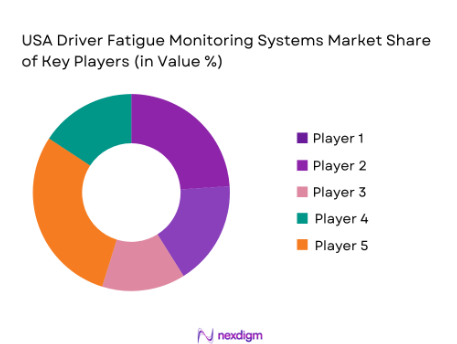
The USA Driver Fatigue Monitoring Systems market is competitive, with a mix of established automotive suppliers, sensor manufacturers, and technology startups leading the charge. The market is largely influenced by players such as Mobileye, Seeing Machines, and Bosch, who offer advanced technologies like facial recognition and steering pattern analysis. These companies benefit from robust research and development capabilities and strong ties with OEMs and fleet operators. In addition, the rising adoption of AI and machine learning in the industry has intensified competition, as players race to develop the most accurate and reliable systems for detecting driver fatigue.
| Company Name | Establishment Year | Headquarters | Technology Type | Key Product | Market Focus |
| Mobileye | 1999 | Israel | Vision-Based Systems | Mobileye DriverSense | OEM Integration |
| Bosch | 1886 | Germany | AI, Steering Analysis | Bosch Driver Monitoring | ADAS Solutions |
| Seeing Machines | 2000 | Australia | Facial Recognition | Fatigue Detection System | Commercial Fleets |
| Smart Eye | 1999 | Sweden | Eye Tracking | Smart Eye DMS | Passenger Cars, OEM |
| Continental AG | 1871 | Germany | AI, Infrared Sensors | Continental DMS | OEM, Aftermarket |
USA Driver Fatigue Monitoring Systems Market Analysis
Market Growth Drivers
Fatigue‑Caused Accident Costs
Fatigue-related accidents remain a major concern in the United States, contributing significantly to road traffic fatalities. According to the National Highway Traffic Safety Administration (NHTSA), in 2022, driver fatigue was involved in approximately 91,000 crashes, resulting in over 50,000 injuries and nearly 1,500 fatalities. The economic impact of these accidents is estimated to be in the range of USD ~ billion annually. As road safety is a top priority, the financial burden of fatigue-induced accidents continues to drive the adoption of driver fatigue monitoring systems, aiming to reduce accident costs and improve overall safety on the roads.
Source: NHTSA
Regulatory Push
Government regulations have played a crucial role in driving the adoption of driver fatigue monitoring systems in commercial vehicles. The Federal Motor Carrier Safety Administration (FMCSA) introduced regulations mandating the use of electronic logging devices (ELDs) for trucking fleets, which track driver hours and ensure compliance with the Hours of Service (HOS) regulations. In 2022, more than 80% of trucks in the U.S. were using ELDs, pushing the adoption of related technologies like driver monitoring systems (DMS) to improve safety and regulatory compliance. These regulations not only ensure better safety but also help reduce accidents caused by driver fatigue.
Key Market Challenges
False Positives
False positives in driver fatigue monitoring systems remain a significant challenge in the market. Systems that incorrectly detect driver fatigue can lead to unnecessary alarms, reducing driver confidence and contributing to “alarm fatigue.” For instance, a study by the National Sleep Foundation in 2022 revealed that over 30% of drivers reported ignoring warning signals from their fatigue monitoring systems due to perceived false alarms. This not only diminishes the effectiveness of the system but also risks undermining driver trust in the technology, affecting its widespread adoption.
Sensor Costs
The high cost of advanced sensors remains one of the major obstacles to the broader adoption of driver fatigue monitoring systems, especially in the aftermarket. The infrared and optical sensors used in facial recognition systems, for example, are expensive to produce and integrate into vehicles. According to the U.S. Bureau of Labor Statistics, in 2022, the average cost of advanced optical sensors for automotive applications was approximately USD 200-300 per unit, making it difficult for smaller fleets or low-budget consumers to adopt these systems. Lowering sensor costs could significantly drive market growth, particularly in the commercial sector.
Market Opportunities
Predictive Alerts
Predictive alerts are revolutionizing the way fatigue monitoring systems can prevent accidents. By analyzing real-time driver behavior and environmental data, predictive systems can proactively warn drivers of impending fatigue issues. In 2023, more than 15,000 trucking companies in the U.S. adopted telematics systems capable of offering predictive alerts, leading to a significant reduction in fatigue-related incidents. The shift towards predictive technologies is expected to provide more value to fleet operators by reducing insurance premiums and improving safety records, paving the way for substantial market growth.
Fleet Safety Platforms
The demand for fleet safety platforms is growing as businesses focus on improving driver safety and reducing accident rates. In 2022, the U.S. fleet management market grew to USD ~ billion, with a substantial portion of this growth attributed to the incorporation of driver monitoring systems. Fleet operators are increasingly adopting safety platforms that integrate fatigue monitoring, vehicle diagnostics, and driver performance analytics into a single system. As the demand for integrated fleet safety solutions grows, the market for driver fatigue monitoring systems is also expected to expand.
Future Outlook
Over the next 5 years, the USA Driver Fatigue Monitoring Systems market is expected to witness steady growth, propelled by the continuous development of advanced driver assistance systems (ADAS) and increased government regulations aimed at enhancing road safety. The market is also expected to benefit from the growing trend of fleet safety management, where more companies are integrating driver monitoring systems as part of their safety protocols. Technological innovations in AI and multi-sensor fusion will likely make the systems even more accurate and reliable, further driving market adoption. Additionally, the growth of autonomous vehicles and the demand for higher safety standards in commercial transport will fuel the market expansion during the forecast period.
Major Players in the Market
- Mobileye
- Bosch
- Seeing Machines
- Smart Eye
- Continental AG
- Valeo
- Denso
- Aptiv
- Delphi Technologies
- ZF Friedrichshafen
- Autoliv
- Magna International
- Panasonic Automotive
- Nexteer Automotive
- NVIDIA
Key Target Audience
- Automotive Manufacturers (OEMs)
- Commercial Fleet Operators (Logistics and Trucking Companies)
- Government Agencies (National Highway Traffic Safety Administration [NHTSA], Federal Motor Carrier Safety Administration [FMCSA])
- Investments and Venture Capitalist Firms
- Insurance Companies (Automotive and Commercial Fleets)
- Tier-1 Suppliers of ADAS Components
- Regulatory Bodies (Federal Communications Commission [FCC], National Institute for Occupational Safety and Health [NIOSH])
- Aftermarket Suppliers (Vehicle Retrofit Providers)
Research Methodology
Step 1: Identification of Key Variables
The initial step involves mapping out all major stakeholders in the USA Driver Fatigue Monitoring Systems market. This phase includes secondary research through databases, industry reports, and publicly available government data. The goal is to define the key variables driving market demand, such as regulatory requirements, technological advancements, and adoption rates across different vehicle types.
Step 2: Market Analysis and Construction
In this phase, historical data from the last few years is analyzed to understand trends in the adoption of fatigue monitoring systems. Revenue generation is evaluated based on vehicle type, technology, and application across both OEM and aftermarket channels. Data from service providers, fleet operators, and component manufacturers is also considered for a complete market analysis.
Step 3: Hypothesis Validation and Expert Consultation
Market hypotheses are validated through interviews and consultations with industry experts, including fleet operators, OEM manufacturers, and technology developers. These consultations help refine initial estimates and provide valuable operational insights into the challenges and opportunities within the market.
Step 4: Research Synthesis and Final Output
The final phase integrates all gathered data and expert insights to generate a comprehensive report on the USA Driver Fatigue Monitoring Systems market. This report includes accurate market sizing, segment analysis, and competitive landscape evaluations to offer a holistic view of the industry.

- Executive Summary
- Research Methodology (Market Definitions and Scope Driver Fatigue vs Drowsiness Monitoring Definitions, Detection Thresholds, Abbreviations and Industry Nomenclature ADAS, DMS, OEM/Aftermarket, AI/ML Metrics, USA Market Sizing Approach Top‑Down and Bottom‑Up Hybrid, Data Triangulation and Forecasting Techniques CAGR, TAM/SAM/SOM, Primary Research Framework OEMs, Tier‑1 Suppliers, Fleet Operators)

- Definition and Scope (Driver Alerting & Monitoring Criteria)
- Genesis of Driver Fatigue Monitoring Systems (Evolution from Basic Drowsiness Detection)
- Technology Adoption Timeline (Sensor Fusion, AI, Edge Processing Units)
- Business Cycle Dynamics (Development, Integration, Aftermarket Adoption)
- Supply Chain & Value Chain Analysis (Component, Integration, OEM/Aftermarket)
- Regulatory & Safety Mandates Impact (NHTSA / FMVSS / State Safety Initiatives)

- Market Growth Drivers
Fatigue‑Caused Accident Costs
Regulatory Push
ADAS Integration - Key Market Challenges
False Positives
Sensor Costs
Data Privacy Compliance - Market Opportunities
Edge AI
Predictive Alerts
Fleet Safety Platforms - Key Market Trends
AI‑Based Algorithms
Subscription Safety Services
OTA Updates - Regulatory Framework & Safety Standards
Incentives
Mandates
Testing Protocols
- SWOT Analysis
- Porter’s Five Forces

- By Value (USD), 2019-2025
- By Unit Shipments, 2019-2025
- By Average System ASP, 2019-2025

- By Technology (Detection Method)
Facial Recognition (Eye Movement + Gaze Tracking)
Steering Pattern Analysis
Heart Rate & Bio‑Signal Monitoring
Multi‑Sensor Fusion AI Algorithms
Others (Voice, EEG/In‑Seat Sensors) - By Component
Sensor Suite (Infrared, Optical, Biometric Sensors)
Camera Array (RGB/IR)
Software & Analytics Engine (AI/ML Models)
Alerting Modules (Audio/Visual/Haptic)
Connectivity & Telematics Modules - By Vehicle Type
Passenger Cars
Commercial Vehicles (Heavy Duty Trucks, Buses)
Specialty Vehicles (Emergency, Agriculture) - By Sales Channel
OEM (Factory Fitted)
Aftermarket (Retrofit Solutions) - By End‑User
Private Consumers
Commercial Fleets
Ride‑Hailing & Logistics Operators
Government/Safety Programs

- USA Market Share by Value & Units
Cross‑Comparison Parameters (Company Overview, Business Strategy, R&D Spend, Patent Strength, Product Portfolio Depth, Technology Differentiators, Price Positioning, Distribution Network, OEM Tier Position, Last‑Mile Support, Aftermarket Penetration, Fleet Integration Capabilities, AI/Analytics Edge, Partnerships & Alliances) - SWOT of Key Competitors (Technology, Market Footprint, Innovation)
- Detailed Company Profiles
Mobileye
Bosch (Driver Monitoring & Fatigue Solutions)
Continental AG
Aptiv
Valeo
Denso
Delphi Technologies
ZF Friedrichshafen
Seeing Machines
Autoliv
Magna International
Panasonic Automotive
Nexteer Automotive
NVIDIA (AI Infotainment + Fatigue Modules)
CareDrive

- Demand Patterns by Geography (Northeast, Midwest, South, West)
- Adoption by Fleet Size & Use Case
- Budget Allocations & Purchasing Criteria
- Pain Points & Requirement Prioritization
- Decision‑Making Process (OEM Procurement, Fleet Safety Directors)

- By Value (USD), 2026-2030
- By Units Shipped, 2026-2030
- By ASP (Price Evolution), 2026-2030


 Request a Sample
 Ask for Customization
 Get a Quote
 Enquire Now