
 Download PDF
 Download PDF
Market Overview
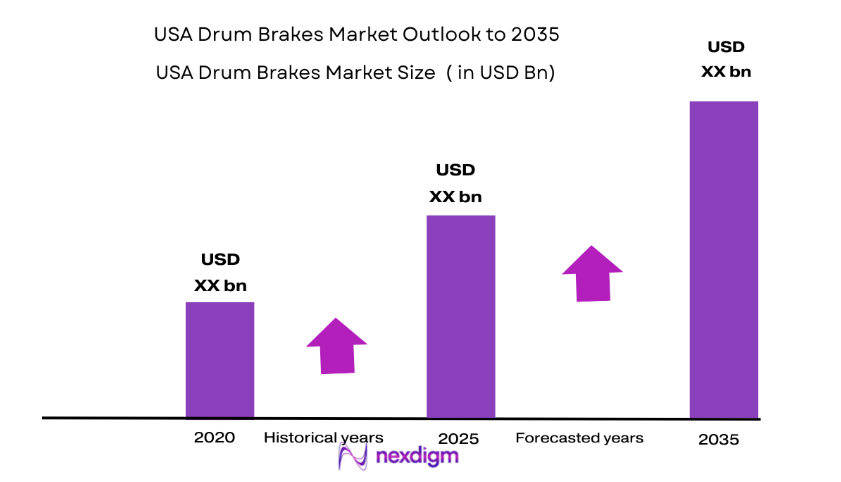
The USA Drum Brakes market has witnessed steady growth in recent years, driven by the increased demand for vehicles, particularly in the commercial and passenger vehicle sectors. The market size for drum brakes is estimated to reach USD ~ billion based on a recent historical assessment, with a marked surge in demand for cost-effective braking solutions. This growth is fueled by technological advancements in brake systems, which enhance the performance, durability, and cost-effectiveness of drum brakes, making them an attractive choice for various vehicle categories.
The market is dominated by key regions such as the United States, where vehicle production and automotive manufacturing activities are robust, contributing to the demand for drum brakes. The dominance of the USA in the market can be attributed to its extensive automotive infrastructure and the presence of major vehicle manufacturers and aftermarket suppliers. Additionally, the widespread use of drum brakes in medium-duty trucks and commercial vehicles further strengthens the USA’s position as a dominant player in the global drum brakes market.
Market Segmentation
By Product Type:
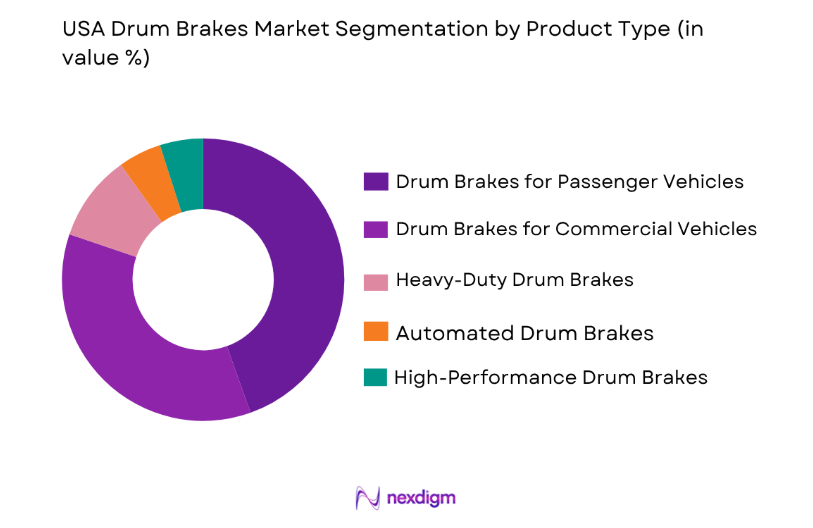
The USA Drum Brakes market is segmented by product type into various categories. Recently, drum brakes for passenger vehicles have captured the largest share due to the ongoing demand for affordable and reliable braking systems in standard consumer cars. These products offer a cost-effective alternative to disc brakes while still delivering satisfactory performance in a range of driving conditions. The cost-effectiveness of drum brakes for everyday vehicles, combined with their relatively simpler design and manufacturing processes, has contributed significantly to their dominance in the market.
By Platform Type:
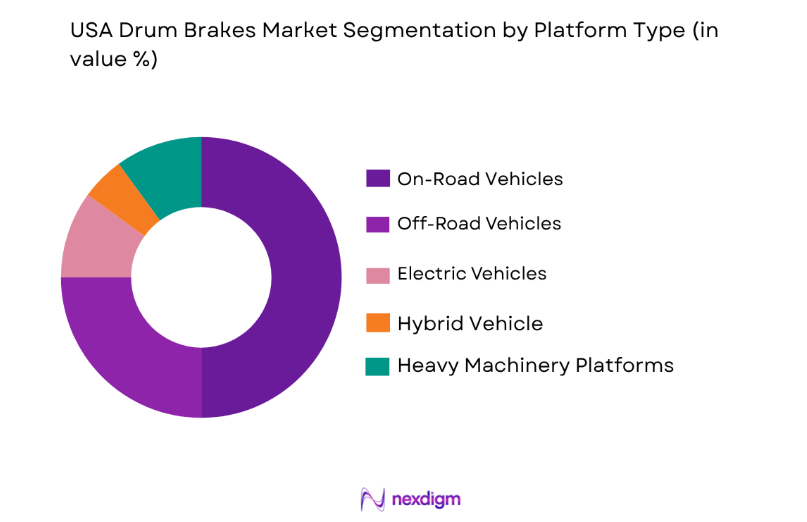
The USA Drum Brakes market is also segmented by platform type, with significant growth observed in the on-road vehicle segment. The dominance of on-road vehicles is driven by the continual growth of the automotive industry, where drum brakes are commonly used in mid-range vehicles such as sedans and light trucks. These vehicles often use drum brakes due to their relatively low cost and reliability for everyday use. As a result, on-road vehicles continue to be the dominant platform for drum brake applications in the USA.
Competitive Landscape
The USA Drum Brakes market is highly competitive, with key players such as Brembo, ZF Friedrichshafen, and Akebono leading the charge. These companies focus on technological innovation, cost-efficiency, and expanding production capabilities to capture a larger share of the growing market. The competitive dynamics are influenced by ongoing efforts to reduce manufacturing costs, meet stringent regulatory standards, and improve the performance and longevity of drum brakes.
| Company Name | Establishment Year | Headquarters | Technology Focus | Market Reach | Key Products | Revenue | Additional Parameter |
| Brembo | 1961 | Italy | ~ | ~ | ~ | ~ | ~ |
| ZF Friedrichshafen | 1915 | Germany | ~ | ~ | ~ | ~ | ~ |
| Akebono Brake Industry Co. | 1931 | Japan | ~ | ~ | ~ | ~ | ~ |
| Haldex | 1887 | Sweden | ~ | ~ | ~ | ~ | ~ |
| TMD Friction | 2000 | Germany | ~ | ~ | ~ | ~ | ~ |
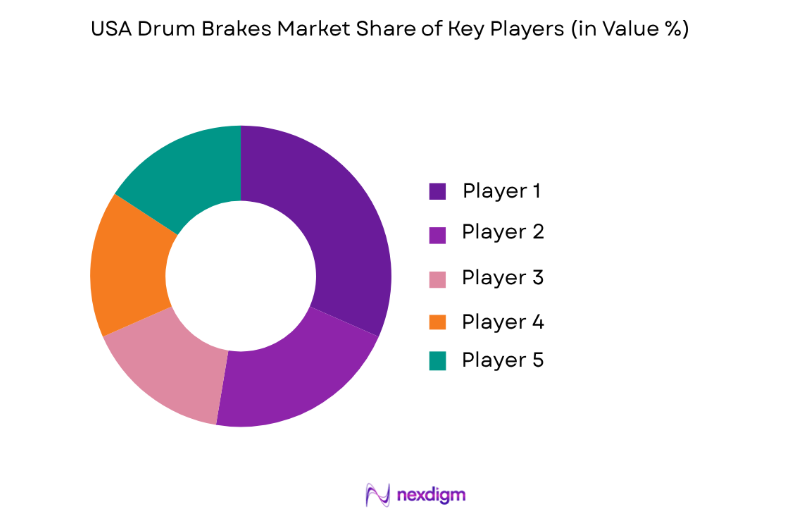
USA Drum Brakes Market Analysis
Growth Drivers
Technological Advancements in Brake Systems:
One of the key drivers of the USA Drum Brakes market is the ongoing technological advancements in brake system design and manufacturing. Manufacturers are continuously working to improve the efficiency and performance of drum brakes through the use of better materials and innovative designs. These advancements enhance the overall reliability, safety, and durability of the braking systems, thus making them increasingly popular across various vehicle segments. The shift towards lightweight materials in drum brakes has also led to reduced fuel consumption in vehicles, which is another reason for their growing adoption in passenger vehicles and commercial fleets.
Cost-Efficiency of Drum Brakes:
Another significant growth driver for the USA Drum Brakes market is the cost-efficiency of drum brakes compared to disc brakes. Drum brakes offer a more affordable alternative for both original equipment manufacturers (OEMs) and the aftermarket sector, making them an attractive option for budget-conscious consumers. The relatively low production cost of drum brakes, combined with their ease of installation and maintenance, has bolstered their demand in mid-range and entry-level vehicles. As a result, this segment is expected to continue expanding in the coming years.
Market Challenges
Competition from Disc Brakes:
The main challenge for the USA Drum Brakes market is the increasing competition from disc brakes. Disc brakes offer superior performance in terms of heat dissipation, which is crucial for high-performance and heavy-duty vehicles. As such, their adoption is on the rise, particularly in premium vehicles and commercial trucks. This shift towards disc brakes has created challenges for drum brakes, especially in the higher-end vehicle segments, where performance is a major consideration. Drum brake manufacturers must work on improving their product features to remain competitive in a market dominated by disc brake technology.
Supply Chain Disruptions in Raw Materials:
Another challenge faced by the USA Drum Brakes market is supply chain disruptions in raw materials. The availability and cost of critical materials, such as steel, cast iron, and other alloys used in drum brake manufacturing, are subject to fluctuations. These supply chain disruptions can lead to increased production costs and delays in meeting demand. Manufacturers must navigate these challenges to ensure stable supply chains and maintain consistent product delivery, which is essential for meeting the growing demand in both OEM and aftermarket segments.
Opportunities
Increasing Demand for Commercial Vehicles:
One key opportunity for the USA Drum Brakes market is the increasing demand for commercial vehicles, particularly in sectors such as logistics, construction, and transportation. As the USA economy continues to recover, demand for commercial vehicles, including medium-duty trucks, delivery vans, and buses, is expected to grow. These vehicles frequently use drum brakes due to their affordability and reliability. The expansion of the commercial vehicle fleet presents an excellent opportunity for drum brake manufacturers to capture additional market share, particularly by offering cost-effective solutions for heavy-duty applications.
Growing Adoption of Electric Vehicles (EVs):
The rising adoption of electric vehicles (EVs) presents a unique opportunity for the USA Drum Brakes market. While disc brakes are more commonly used in high-performance EVs, the increased production of affordable EVs presents a growing market for drum brakes, particularly in mid-range and budget electric vehicle segments. As automakers focus on keeping costs low for mass-market EVs, drum brakes are likely to play a crucial role in making EVs more affordable for consumers.
Future Outlook
The USA Drum Brakes market is expected to experience steady growth over the next five years, driven by increased vehicle production and technological advancements in brake systems. The demand for cost-effective braking solutions in passenger and commercial vehicles will continue to be a key factor supporting market expansion. Additionally, the growing focus on electric vehicles and the need for sustainable, low-cost brake systems will provide new opportunities for innovation and market entry. Manufacturers will need to focus on enhancing the performance and durability of drum brakes to maintain their competitiveness, particularly against the growing adoption of disc brake systems.
Major Players
- Brembo
- ZF Friedrichshafen
- Akebono Brake Industry Co.
- Haldex
- TMD Friction
- MibaAG
- Friction Materials of North America
- SBS Friction
- MAT Foundry Group
- Kongsberg Automotive
- Aisin Seiki Co., Ltd.
- Mitsubishi Motors
- Delphi Technologies
- Federal-MogulMotorparts
- Disc Brake Engineering
Key Target Audience
- Investments and venture capitalist firms
- Government and regulatory bodies
- Vehicle manufacturers
- Commercial vehicle fleet operators
- Automotive aftermarket distributors
- Electric vehicle manufacturers
- Logistics and transportation companies
- Automotivecomponentsuppliers
Research Methodology
Step 1: Identification of Key Variables
The first step involves identifying the critical factors influencing the market, such as technological advancements, vehicle production rates, and the competitive landscape.
Step 2: Market Analysis and Construction
Market segmentation is carried out by analyzing the demand for different types of drum brakes across various vehicle categories and platforms.
Step 3: Hypothesis Validation and Expert Consultation
Consultation with industry experts helps validate assumptions, ensuring the accuracy and relevance of the research findings.
Step 4: Research Synthesis and Final Output
The final research report is synthesized, focusing on the most significant trends, challenges, and opportunities identified in the analysis.

- Executive Summary
- Research Methodology (Definitions, Scope, Industry Assumptions, Market Sizing Approach, Primary & Secondary Research Framework, Data Collection & Verification Protocol, Analytic Models & Forecast Methodology, Limitations & Research Validity Checks)

- Market Definition and Scope
- Value Chain & Stakeholder Ecosystem
- Regulatory / Certification Landscape
- Sector Dynamics Affecting Demand

- Growth Drivers
Increase in Vehicle Production and Sales
Rise in Demand for Affordable Vehicle Components
Technological Advancements in Brake Systems - Market Challenges
Regulatory Challenges in Safety Standards
Supply Chain Disruptions in Raw Materials
Competition from Disc Brakes - Market Opportunities
Expansion of Electric and Hybrid Vehicle Production
Growing Demand for Eco-Friendly and Durable Brake Systems
Technological Advancements in Drum Brake Design - Trends
Integration of Advanced Materials in Drum Brakes
Growth in Electric Vehicle Adoption Driving Drum Brake Innovation
Shift Towards Eco-friendly Brake Solutions - Government Regulations
- SWOT Analysis of Key Competitors

- By Market Value, 2020-2025
- By Installed Units, 2020-2025
- By Average System Price, 2020-2025
- By System Complexity Tier, 2020-2025

- By System Type (In Value%)
Drum Brakes for Commercial Vehicles
Drum Brakes for Passenger Vehicles
Heavy-Duty Drum Brakes
Automated Drum Brakes
High-Performance Drum Brakes - By Platform Type (In Value%)
On-Road Vehicles
Off-Road Vehicles
Electric Vehicles
Hybrid Vehicles
Heavy Machinery Platforms - By Fitment Type (In Value%)
OEM (Original Equipment Manufacturer)
Aftermarket
Replacement Parts
Customized Fitment
Refurbished Systems - By EndUser Segment (In Value%)
Automobile Manufacturers
Commercial Vehicle Fleets
Replacement Part Distributors
Vehicle Maintenance Providers

- Market Share Analysis
- CrossComparison Parameters (System Type, Platform Type, Procurement Channel, EndUser Segment, Fitment Type)
- SWOT Analysis of Key Competitors
- Pricing & Procurement Analysis
- Porter’s Five Forces
- Key Players
Brembo
ZF Friedrichshafen
Haldex
TMD Friction
Akebono Brake Industry Co., Ltd.
Miba AG
Friction Materials of North America
SBS Friction
MAT Foundry Group
Kongsberg Automotive
Aisin Seiki Co., Ltd.
Mitsubishi Motors
Delphi Technologies
Federal-Mogul Motorparts
Disc Brake Engineering

- Increasing Demand from the Commercial Vehicle Sector
- Shift Towards Lightweight Brake Systems in Consumer Vehicles
- Technological Upgrades in Vehicle Brake Systems
- Growth in Aftermarket Replacement for Aging Vehicle Fleets

- Forecast Market Value, 2026-2035
- Forecast Installed Units, 2026-2035
- Price Forecast by System Tier, 2026-2035
- Future Demand by Platform, 2026-2035


 Request a Sample
 Ask for Customization
 Get a Quote
 Enquire Now