
 Download PDF
Market Overview
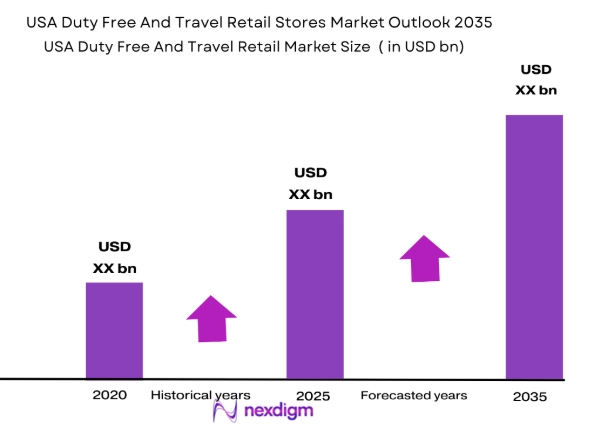
The USA Duty Free and Travel Retail Market is valued at USD ~ billion in 2024, with the forecasted CAGR for the 2024–2030 period assessed at 7.8%, supported by the wider global travel retail market benchmark of USD 95.5 billion in 2024 and its projected growth toward 2030. The market is driven by international air passenger recovery, premium airport retail formats, luxury brand expansion, digital pre-ordering, and rising demand for beauty, liquor, confectionery, fashion, and travel-exclusive products. TSA checkpoint volumes remained above 2 million travelers on most peak travel days, supporting strong airport retail footfall.
New York, Los Angeles, Miami, San Francisco, Chicago, Atlanta, Dallas-Fort Worth, Las Vegas, and Orlando are the dominant city and airport markets for USA Duty Free and Travel Retail Market. Their dominance is linked to high international passenger traffic, global airline connectivity, premium airport terminals, strong tourism inflows, and the presence of major gateway airports. JFK, LAX, MIA, SFO, ORD, ATL, DFW, LAS, and MCO act as key retail hubs because they combine international departures, luxury-shopping demand, airport redevelopment, and large concession networks that support duty free and travel retail expansion.
Market Segmentation
By Product Type
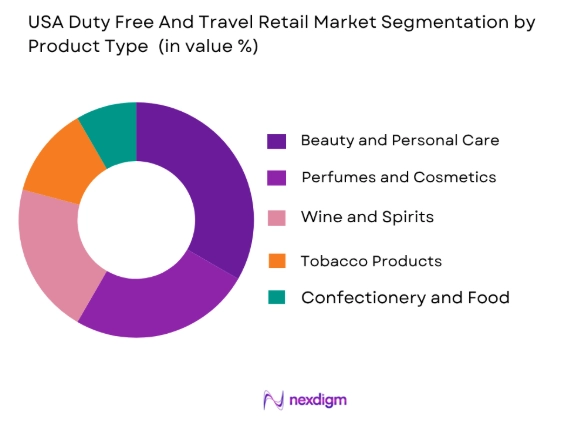
The USA Duty Free and Travel Retail Market is segmented by product type into beauty and personal care, wines and spirits, fashion and accessories, confectionery and food, tobacco products, electronics, and others. Recently, beauty and personal care have held the dominant market share under product type segmentation because cosmetics, fragrances, skincare, and premium beauty products are highly suited to airport retail environments. These products benefit from strong brand visibility, compact packaging, attractive gifting value, travel-exclusive sets, and high impulse-purchase potential among international passengers. Global beauty brands also use duty free and travel retail channels to launch limited editions, value packs, and premium sampling formats. In the USA, large international airports attract leisure travelers, business travelers, and affluent tourists, all of whom contribute to beauty and fragrance purchases. Retailers prefer this segment because it delivers high margins, strong brand support, and repeat purchase behaviour among frequent travelers.
By Sales Type
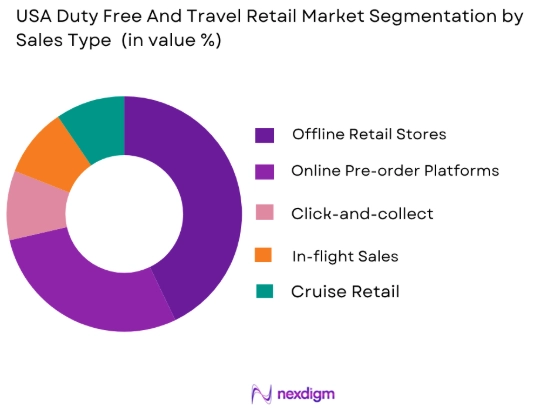
The USA Duty Free and Travel Retail Market is segmented by sales channel into airports, cruise and ferry terminals, border shops, downtown duty free stores, and online pre-order platforms. Recently, airports have had the dominant market share under sales channel segmentation because U.S. duty free and travel retail is heavily concentrated around international airport departures and arrivals. Major gateway airports such as JFK, LAX, Miami, San Francisco, Chicago O’Hare, Dallas-Fort Worth, Atlanta, Las Vegas, and Orlando have high passenger throughput, strong international connectivity, and large concession areas. Airports provide controlled retail environments where travelers have dwell time, access to tax-exempt products, and exposure to premium brands. Duty free operators also benefit from terminal redevelopment, luxury retail zones, digital signage, and omnichannel pre-order services. While cruise retail and online pre-order are growing, airports remain dominant because they capture the largest volume of eligible international travelers and premium retail spending.
Competitive Landscape
The USA Duty Free and Travel Retail Market is consolidated around major airport concessionaires, duty free operators, luxury brand partners, and travel convenience retailers. Competition is shaped by airport contracts, terminal location, brand portfolio, concession duration, luxury-store partnerships, digital pre-order capability, and passenger experience. Avolta / Dufry, DFS Group, International Shoppes, 3Sixty Duty Free, and Paradies Lagardère are influential players, while airport authorities and luxury brands play a major role in shaping product assortment, store design, and concession strategy across major U.S. gateways.
| Company | Establishment Year | Headquarters | Business Model | Core Product Focus | Store / Channel Presence | Digital Capability | Airport Presence | Market Role |
| Avolta / Dufry | 1865 | Basel, Switzerland | ~ | ~ | ~ | ~ | ~ | ~ |
| DFS Group | 1960 | Hong Kong | ~ | ~ | ~ | ~ | ~ | ~ |
| International Shoppes | 1951 | New York, USA | ~ | ~ | ~ | ~ | ~ | ~ |
| 3Sixty Duty Free | 1987 | Miami, USA | ~ | ~ | ~ | ~ | ~ | ~ |
| Paradies Lagardère | 1960 | Atlanta, USA | ~ | ~ | ~ | ~ | ~ | ~ |
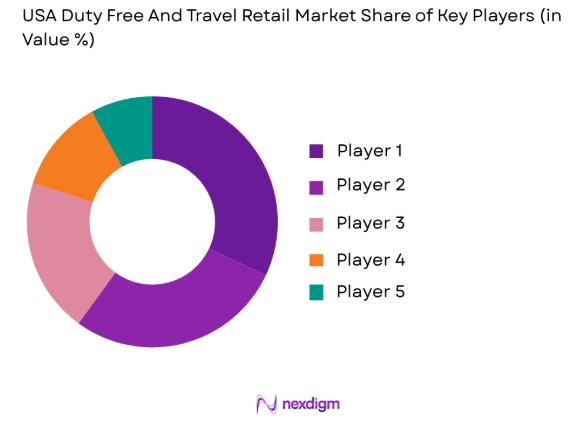
USA Duty Free and Travel Retail Market Analysis
Growth Drivers
Recovery and growth in international passenger traffic
The USA duty free and travel retail market is benefiting from the recovery of international passenger traffic across major airports such as New York JFK, Los Angeles, Miami, San Francisco, Chicago O’Hare, and Atlanta. As cross-border travel normalizes, more international tourists, business travelers, and visiting friends and relatives are returning to airport retail environments. Duty free stores depend heavily on passenger volume because purchases are often made during departure waiting times or transit periods. Higher traffic increases exposure for categories such as beauty, fragrances, spirits, confectionery, fashion, and luxury accessories. The recovery also encourages airport operators and retailers to invest in upgraded retail spaces, improved merchandising, and better digital shopping tools.
Rising demand for premium and luxury travel retail products
Demand for premium and luxury products is an important growth driver in the USA duty free and travel retail market. International travelers often view airport shopping as an opportunity to purchase branded fragrances, cosmetics, spirits, watches, leather goods, and fashion items at attractive prices or with exclusive travel editions. The USA attracts high-spending tourists from Europe, Latin America, Asia, and the Middle East, many of whom seek recognized global brands while traveling. Premiumization is especially relevant in beauty, liquor, and luxury accessories, where gifting and self-purchase are common. Retailers can strengthen sales by offering exclusive packs, limited editions, personalized services, and curated assortments tailored to international passenger profiles.
Market Challenges
High airport rental and operating costs
High airport rental and operating costs remain a major challenge for duty free and travel retailers in the USA. Retail space in major international airports is expensive, and concession agreements often include minimum guarantees, revenue-sharing arrangements, staffing costs, security requirements, and extended operating hours. These costs increase pressure on margins, especially when passenger traffic fluctuates or spending per traveler weakens. Retailers must also invest in premium store design, compliance systems, inventory security, and multilingual customer service to compete effectively. Smaller operators may struggle to absorb these expenses compared with large global travel retail groups. As a result, profitability depends heavily on strong sales productivity, careful category planning, and efficient airport partnerships.
Competition from e-commerce and domestic retail channels
Competition from e-commerce and domestic retail channels is increasing pressure on USA duty free and travel retail stores. Travelers can now compare prices online before flying and may find similar products through brand websites, online marketplaces, department stores, or domestic promotions. This reduces the perception that duty free always offers the best value. In categories such as beauty, fashion, electronics, and premium spirits, online convenience and home delivery can be more attractive than carrying purchases through airports. To remain competitive, duty free retailers need exclusive travel products, limited editions, loyalty benefits, and strong omnichannel services. Without clear differentiation, travelers may treat airport retail as optional rather than essential.
Opportunities
Expansion of omnichannel duty free retailing
Omnichannel duty free retailing presents a strong opportunity in the USA market. Retailers can allow travelers to browse products online before reaching the airport, reserve items through digital pre-order platforms, and collect purchases at departure terminals. This model improves convenience, reduces time pressure, and helps capture sales from passengers who may not browse extensively in-store. It also allows retailers to personalize offers based on flight destination, loyalty status, nationality, and purchase history. Omnichannel platforms can support beauty, spirits, luxury accessories, confectionery, and gifting categories. By connecting digital engagement with airport pickup, duty free retailers can improve conversion rates and compete more effectively with e-commerce and domestic retail channels.
Development of experiential retail and brand boutiques
Experiential retail and brand boutiques offer significant growth potential for USA duty free and travel retail. Travelers increasingly expect more than basic product displays, especially in premium airport environments. Beauty consultations, fragrance discovery zones, whiskey tastings, luxury pop-ups, limited-edition launches, and interactive brand storytelling can increase dwell time and encourage higher spending. Airports with high international traffic are well suited for immersive retail because passengers often have waiting time before flights. Brand boutiques also help luxury companies control presentation, service quality, and exclusivity. By creating memorable shopping experiences, duty free retailers can differentiate themselves from online channels and encourage impulse purchases among tourists, business travelers, and premium passengers.
Future Outlook
Over the next decade, the USA Duty Free and Travel Retail Market is expected to expand steadily as international travel normalizes, airport infrastructure improves, and premium retail formats become more integrated into passenger journeys. Growth will be concentrated in major gateway airports, cruise terminals, and international travel corridors. The market outlook to 2035 will be shaped by luxury brand expansion, digital pre-ordering, airport redevelopment, experiential retail, traveler personalization, and increased demand for beauty, liquor, fashion, and travel-exclusive assortments.
Major Players
- Avolta / Dufry
- DFS Group
- International Shoppes
- 3Sixty Duty Free
- Paradies Lagardère
- Hudson
- Duty Free Americas
- WHSmith North America
- Lagardère Travel Retail
- The Shilla Duty Free
- Lotte Duty Free
- Heinemann Americas
- Delaware North
- SSP America
- OTG Management
Key Target Audience
- Duty free operators
- Airport retail concessionaires
- Airport authorities and terminal operators
- Luxury goods and premium brand manufacturers
- Travel retail technology providers
- Investments and venture capitalist firms
- Government and regulatory bodies
- Cruise terminal operators and travel retail associations
Research Methodology
Step 1: Identification of Key Variables
The initial phase involves constructing an ecosystem map covering duty free operators, airport concessionaires, luxury brands, airport authorities, airlines, cruise retailers, digital travel retail platforms, and regulatory stakeholders. This step is underpinned by desk research and secondary databases to identify the key variables influencing the USA Duty Free and Travel Retail Market, such as international passenger traffic, airport redevelopment, category mix, concession contracts, and traveler spending behaviour.
Step 2: Market Analysis and Construction
In this phase, historical data related to U.S. airport passenger traffic, international departures, airport retail sales, duty free category performance, cruise retail, luxury travel demand, and digital pre-order adoption is compiled and assessed. The analysis reviews market penetration, channel performance, product-category relevance, and revenue generation across airport, cruise, border, downtown, and online formats. The objective is to construct a market view that reflects both traditional duty free stores and broader travel retail formats.
Step 3: Hypothesis Validation and Expert Consultation
Market hypotheses are developed around product dominance, airport-level adoption, sales-channel strength, traveler purchasing behaviour, and concessionaire positioning. These hypotheses are validated through interviews with duty free operators, airport retail executives, brand managers, concession planners, travel retail consultants, and aviation retail stakeholders. The consultation process helps test assumptions related to passenger conversion, category margins, airport dwell time, digital pre-ordering, and competitive differentiation.
Step 4: Research Synthesis and Final Output
The final phase integrates secondary findings, market modelling, stakeholder inputs, and competitive benchmarking into a structured analysis of the USA Duty Free and Travel Retail Market. Insights from travel retailers, airport authorities, brand partners, digital platform providers, and concession operators are used to verify segmentation, sales-channel dynamics, future outlook, and major-player positioning. This step ensures that the final output reflects practical market conditions, growth opportunities, and investment relevance.

- Executive Summary
- Research Methodology (Market Definitions and Assumptions, Abbreviations, Market Sizing Approach, Consolidated Research Approach, Understanding Market Potential Through In-Depth Industry Interviews, Primary Research Approach, Limitations and Future Conclusions)

- Definition and Scope
- Market Dynamics Overview
- Market Genesis
- Major Players and Market Timeline
- Business Cycle and Trends
- Supply Chain and Value Chain Analysis
- Role of Airports, Border Stores, Cruise Terminals, and Travel Hubs

- Growth Drivers
Recovery and Growth in International Passenger Traffic
Rising Demand for Premium and Luxury Travel Retail Products
Expansion of Airport Retail Infrastructure
Growth in Beauty, Spirits, Fashion, and Luxury Categories
Increasing Adoption of Digital Pre-order and Click-and-collect Models
Rising Spending by International Tourists and Business Travelers
Growing Role of Cruise Tourism and Border Retail - Market Challenges
Volatility in International Travel Demand
Strict Customs, Tax, and Duty Regulations
High Airport Rental and Operating Costs
Competition from E-commerce and Domestic Retail Channels
Price Sensitivity Among Travelers
Supply Chain Disruptions and Inventory Management Challenges
Changing Consumer Preferences Toward Experience-led Retail - Opportunities
Expansion of Omnichannel Duty Free Retailing
Growth of Luxury, Beauty, and Premium Spirits Categories
Partnerships with Airports, Airlines, Cruise Operators, and Luxury Brands
Personalization Through Loyalty Programs and Digital Platforms
Expansion into High-traffic International Airports and Border Locations
Development of Experiential Retail and Brand Boutiques
Use of Data Analytics for Passenger Targeting and Inventory Optimization - Key Trends
Shift Toward Digital Pre-order and Click-and-collect Models
Increasing Demand for Premium Beauty and Fragrance Products
Growth of Luxury Fashion, Watches, and Accessories in Travel Retail
Expansion of Airport Retail Concessions and Branded Boutiques
Rising Focus on Personalized and Experiential Retail
Increasing Integration of Mobile Payments and Loyalty Programs
Growing Demand for Sustainable and Travel-exclusive Products - Government Regulations and Policy Landscape
US Customs and Border Protection Duty Free Regulations
Transportation Security Administration Guidelines for Airport Retail and Passenger Screening
Federal Aviation Administration Rules for Airport Commercial Operations
Alcohol, Tobacco, and Firearms Regulations for Travel Retail Products
State-level Tax and Retail Compliance Requirements
Packaging, Labeling, and Consumer Protection Regulations
Airport Concession and Lease Regulations - SWOT Analysis
- Porter’s Five Forces Analysis

- By Value, 2020–2025
- By Store Count, 2020–2025
- By Passenger Footfall, 2020–2025
- By Average Basket Size, 2020–2025
- By Average Revenue per Store, 2020–2025

- By Product Category (In Value %)
Beauty and Personal Care
Perfumes and Cosmetics
Wine and Spirits
Tobacco Products
Confectionery and Food - By Store Format (In Value %)
Airport Duty Free Stores
Border Duty Free Stores
Cruise and Seaport Retail Stores
Downtown Duty Free Stores
Airline and In-flight Retail
Travel Retail Boutiques
Others - By Sales (In Value %)
Offline Retail Stores
Online Pre-order Platforms
Click-and-collect
In-flight Sales
Cruise Retail
Others - By Traveler Type (In Value %)
International Travelers
Domestic Travelers
Business Travelers
Leisure Travelers
Cruise Travelers
Cross-border Travelers
Others - By Airport Type (In Value %)
International Airports
Domestic Airports with International Terminals
Regional Airports
Major Transit Hubs
Others - By Price Range (In Value %)
Mass Market
Premium
Luxury
Ultra-luxury - By Region (In Value %)
Northeast
Midwest
South
West
Rest of USA

- Market Share of Major Players by Value
- Market Share of Major Players by Store Count
- Market Share by Product Category
- Market Share by Region
- Competitive Positioning of Duty Free Operators and Travel Retailers
- Cross Comparison Parameters (Company Overview, Business Model, Product Categories, Store Presence, Airport and Travel Hub Presence, Online Presence, Geographic Reach, Brand Partnerships, Pricing Strategy, Customer Base, Revenue Streams, Recent Developments, Strengths and Weaknesses, Partnerships and Supplier Network, Unique Value Offering)
- SWOT Analysis of Major Players
- Pricing Analysis
Pricing Analysis by Product Category
Pricing Comparison with Domestic Retail and E-commerce Channels
Pricing Analysis of Premium and Luxury Products
Average Basket Size by Store Format
Margin Analysis by Product Category - Detailed Profiles of Major Companies
Dufry / Avolta
DFS Group
International Shoppes
Duty Free Americas
Paradies Lagardère
Hudson Group
WHSmith North America
Tumi Travel Retail
3Sixty Duty Free
Gebr. Heinemann
Lotte Duty Free
The Shilla Duty Free
LVMH Travel Retail
Estée Lauder Companies Travel Retail
L’Oréal Travel Retail Americas
Diageo Global Travel
Pernod Ricard Global Travel Retail
Brown-Forman Travel Retail
Local and Regional Duty Free Operators

- Market Demand and Utilization
- Purchasing Power and Budget Allocations
- Traveler Preferences and Buying Behavior
- Awareness of Duty Free Pricing and Product Exclusivity
- Needs, Desires, and Pain Point Analysis
- Decision-making Process
- Frequency of Purchase and Average Basket Size Analysis

- By Value, 2026–2035
- By Store Count, 2026–2035
- By Passenger Footfall, 2026–2035
- By Average Basket Size, 2026–2035
- By Average Revenue per Store, 2026–2035


 Request a Sample
 Ask for Customization
 Get a Quote
 Enquire Now