

 Download PDF
 Download PDF
Market Overview
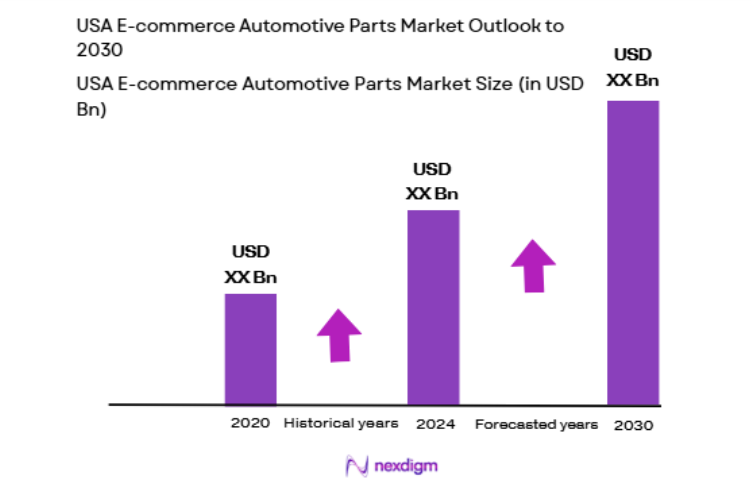
The USA E-commerce Automotive Parts Market has seen significant growth, driven by the increasing shift towards online shopping for auto parts, a more digitally inclined consumer base, and a growing interest in DIY vehicle maintenance. Based on a recent historical assessment, the market size for automotive parts sold online in the United States reached approximately USD ~ billion in 2024. This growth is fueled by the convenience, variety, and often lower prices offered by online platforms, which provide consumers with direct access to OEM and aftermarket parts.
The United States continues to dominate the online auto parts market due to its established automotive aftermarket industry and strong consumer interest in e-commerce. Key states such as California, Texas, and Michigan drive this growth, where high vehicle ownership, large car repair networks, and a strong base of online purchasing platforms enhance market demand. California’s tech-driven landscape, combined with Texas’s expansive vehicle fleet and Michigan’s automotive roots, make these regions focal points for online auto parts sales in the U.S.
Market Segmentation
By Product Type
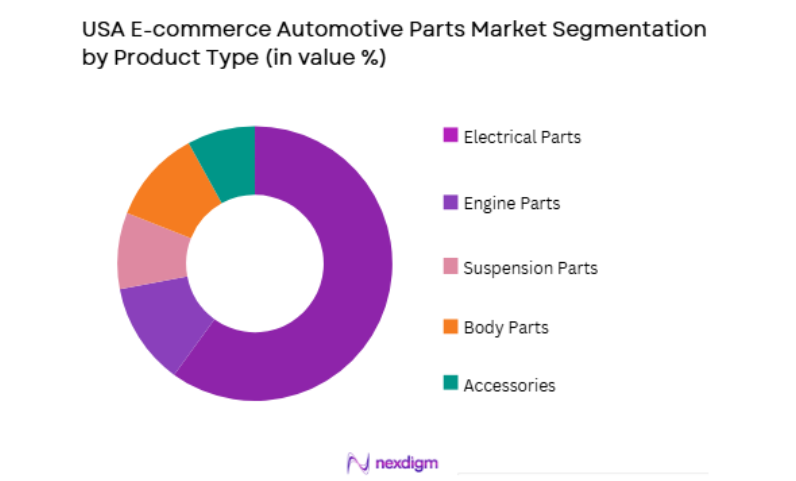
The USA E-commerce Automotive Parts Market is segmented by product type into engine parts, suspension systems, body parts, electrical parts, and accessories. Electrical parts have emerged as the dominant sub-segment, primarily driven by the increasing adoption of advanced electrical components in modern vehicles. These include items such as batteries, alternators, sensors, and lighting systems, all of which are in high demand for both repairs and upgrades. The rising interest in vehicle electrification and hybrid technologies further fuels the demand for electrical auto parts, positioning them as the largest product category in the market.
By Platform Type
The USA E-commerce Automotive Parts Market is segmented by platform type into e-commerce websites, automotive retailer websites, third-party marketplaces, OEM platforms, and subscription services. E-commerce websites have become the dominant platform type, with platforms like Amazon, RockAuto, and CarParts.com leading the charge. These platforms have grown rapidly due to the convenience, variety, and competitive pricing they offer. The ability to browse a wide range of parts, compare prices, read customer reviews, and access fast shipping options has positioned e-commerce websites as the preferred choice for consumers, contributing significantly to the market’s expansion.

Competitive Landscape
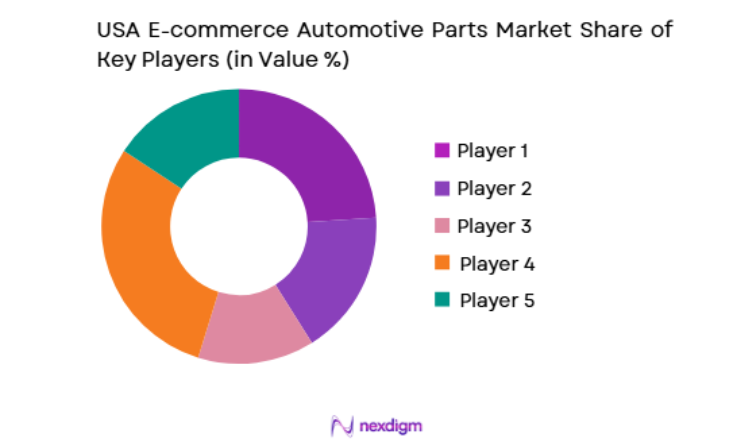
The USA E-commerce Automotive Parts Market is highly competitive, with several major players in the industry driving growth and innovation. Companies such as AutoZone, O’Reilly Auto Parts, and RockAuto have established themselves as leading e-commerce players, benefiting from strong brand recognition and expansive product offerings. In addition, e-commerce giants like Amazon have rapidly gained traction, leveraging their vast logistics network and user-friendly platforms to capture market share. The growing importance of online platforms for automotive parts sales has led to increased competition, fostering continuous innovation and service improvements.
| Company Name | Establishment Year | Headquarters | Technology Focus | Market Reach | Key Products | Revenue (USD) |
| AutoZone | 1979 | Memphis, TN | ~ | ~ | ~ | ~ |
| O’Reilly Auto Parts | 1957 | Springfield, MO | ~ | ~ | ~ | ~ |
| RockAuto | 1999 | Madison, WI | ~ | ~ | ~ | ~ |
| Amazon | 1994 | Seattle, WA | ~ | ~ | ~ | ~ |
| eBay Motors | 1995 | San Jose, CA | ~ | ~ | ~ | ~ |
USA E-commerce Automotive Parts Market Analysis
Growth Drivers
Increase in Online Shopping for Automotive Parts
The surge in online shopping, driven by the rise of e-commerce and changing consumer preferences, is a primary growth driver for the USA E-commerce Automotive Parts Market. Consumers are increasingly turning to the internet to purchase auto parts due to the convenience of browsing a wide selection of products, comparing prices, and having them delivered to their homes. The ability to shop at any time and access detailed product information and customer reviews has significantly boosted the online retail of automotive parts. With the growing popularity of DIY vehicle maintenance and repair, more customers are opting to purchase their parts online. As the trend of online shopping continues to dominate, the demand for e-commerce automotive parts is expected to increase.
Technological Advancements in Automotive Systems
The constant advancements in automotive technologies, such as electric vehicles (EVs) and autonomous driving systems, have created a surge in demand for specialized auto parts, further driving the growth of the e-commerce automotive parts market. With the introduction of more sophisticated vehicle technologies, the need for advanced components, including electric motors, sensors, batteries, and high-tech electronics, has grown. Online platforms are capitalizing on this demand by providing a wide range of specialized parts that meet the needs of modern vehicles. As vehicles become more complex, the demand for specific, high-quality parts will continue to grow, providing new growth opportunities for online auto parts retailers.
Market Challenges
Counterfeit and Substandard Products
One of the significant challenges facing the USA E-commerce Automotive Parts Market is the prevalence of counterfeit and low-quality parts being sold through online platforms. While reputable retailers maintain strict quality control measures, third-party marketplaces can sometimes host sellers offering substandard or counterfeit products. These parts can compromise vehicle safety and performance, resulting in customer dissatisfaction and increased returns. To mitigate this challenge, e-commerce platforms and manufacturers must work together to implement more robust verification and authentication systems for automotive parts. Building consumer trust and ensuring product quality are essential to the continued growth of the online auto parts market.
Competitive Pricing Pressure
Intense price competition is another significant challenge for online auto parts retailers. With numerous players offering similar products, consumers have become highly price-sensitive, leading to pressure on profit margins. Retailers must constantly adjust their pricing strategies to remain competitive, which can affect their bottom line. Additionally, the low barrier to entry for third-party sellers on online marketplaces increases the competition and drives prices down further. To maintain profitability, e-commerce platforms need to differentiate themselves through value-added services such as faster delivery times, superior customer support, and additional product offerings. Pricing strategies must be carefully managed to balance competitiveness with profitability.
Opportunities
Growth of Electric Vehicle (EV) Parts
With the increasing adoption of electric vehicles (EVs) in the U.S., there is a growing demand for EV-specific auto parts. This presents a significant opportunity for the e-commerce automotive parts market, as online platforms can cater to the specialized needs of EV owners. Parts such as batteries, charging stations, electric motors, and regenerative braking systems are in high demand as the EV market expands. E-commerce retailers have the potential to tap into this growing market by offering a broad range of EV parts, coupled with expert advice and efficient delivery services. As the EV industry grows, online auto parts platforms will play a crucial role in providing the necessary components for maintenance and repairs.
Subscription-Based Auto Parts Services
Another opportunity in the USA E-commerce Automotive Parts Market is the rise of subscription-based auto parts services. These services provide consumers with the convenience of receiving essential car parts, such as oil filters, wiper blades, and air filters, delivered to their homes on a regular basis. Subscription models can help e-commerce platforms establish a loyal customer base by ensuring repeat purchases and offering a more convenient and personalized experience. As consumers become more accustomed to subscription-based models in other industries, this trend is expected to extend to automotive parts, offering both convenience and cost savings. This model also benefits auto parts retailers by providing a steady, predictable revenue stream.
Future Outlook
The future of the USA E-commerce Automotive Parts Market looks promising, with continued growth expected due to the increasing shift towards online shopping, rising vehicle complexity, and growing demand for specialized parts. Technological advancements, such as AI-driven recommendations and augmented reality tools for part visualization, will enhance the customer experience. Additionally, the expanding electric vehicle market and subscription-based models will present new opportunities for online retailers. As consumer preferences continue to evolve, online platforms will continue to play an essential role in shaping the automotive parts industry.
Major Players
- AutoZone
- O’Reilly Auto Parts
- Advance Auto Parts
- RockAuto
- Amazon
- eBay Motors
- Walmart
- CarParts.com
- PartsGeek
- AutoAnything
- Summit Racing
- NAPA Auto Parts
- JC Whitney
- Tire Rack
- Bumper to Bumper
Key Target Audience
- Automotive Manufacturers
- Fleet Operators
- Government Agencies
- Regulatory Bodies
- Investors and Venture Capitalists
- Dealerships
- Online Marketplaces
- Automotive Aftermarket Suppliers
Research Methodology
Step 1: Identification of Key Variables
Identify the key variables affecting consumer behavior, market growth, and competitive dynamics in the online automotive parts market.
Step 2: Market Analysis and Construction
Use primary and secondary data to analyze the current state of the market and build a comprehensive model.
Step 3: Hypothesis Validation and Expert Consultation
Consult with industry experts and stakeholders to validate assumptions and refine market insights.
Step 4: Research Synthesis and Final Output
Synthesize findings from research to create a detailed report that offers actionable insights and recommendations.

- Executive Summary
- Research Methodology (Definitions, Scope, Industry Assumptions, Market Sizing Approach, Primary & Secondary Research Framework, Data Collection & Verification Protocol, Analytic Models & Forecast Methodology, Limitations & Research Validity Checks)

- Market Definition and Scope
- Value Chain & Stakeholder Ecosystem
- Regulatory / Certification Landscape
- Sector Dynamics Affecting Demand

- Growth Drivers
Increase in online vehicle parts demand
Rising preference for DIY vehicle maintenance
Expansion of mobile and e-commerce platforms - Market Challenges
High cost of genuine OEM parts
Competition from local repair shops and traditional retailers
Challenges in logistics and timely deliveries - Market Opportunities
Rising demand for electric vehicle parts
Increasing vehicle customization and modification
Growing market for subscription-based auto parts services - Trends
Shift towards mobile applications for auto parts purchasing
Use of augmented reality (AR) for part visualization
Rise in demand for eco-friendly and sustainable auto parts - Government regulations
- SWOT analysis
- Porters 5 forces

- By Market Value, 2019-2024
- By Installed Units, 2019-2024
- By Average System Price, 2019-2024
- By System Complexity Tier, 2019-2024

- By Product Type (In Value%)
Engine Parts
Electrical Parts
Suspension Parts
Body Parts
Braking Parts - By Platform Type (In Value%)
E-commerce Websites
Automotive Retailer Websites
Third-Party Marketplaces
OEM Websites
Subscription-Based Platforms - By Fitment Type (In Value%)
OEM Fitment
Aftermarket Fitment
Refurbished Parts
Custom Parts
Performance Parts - By EndUser Segment (In Value%)
Individual Consumers
Automobile Repair Shops
Fleet Operators
Dealerships

- Market Share Analysis
- Cross Comparison Parameters (Product Type, Platform Type, Procurement Channel, EndUser Segment, Fitment Type, Delivery Speed, Customer Support, Return Policies, Shipping Costs, Brand Loyalty)
- SWOT Analysis of Key Competitors
- Pricing & Procurement Analysis
- Key Players
AutoZone
O’Reilly Auto Parts
Advance Auto Parts
RockAuto
Amazon
eBay Motors
Walmart
CarParts.com
PartsGeek
AutoAnything
Summit Racing
NAPA Auto Parts
JC Whitney
Tire Rack
Bumper to Bumper

- Increasing consumer interest in DIY vehicle maintenance
- Automobile repair shops seeking efficient sourcing platforms
- Fleet operators looking for bulk purchasing options
- Dealerships relying on digital platforms for parts sourcing

- Forecast Market Value, 2025-2030
- Forecast Installed Units, 2025-2030
- Price Forecast by System Tier, 2025-2030
- Future Demand by Platform, 2025-2030


 Request a Sample
 Ask for Customization
 Get a Quote
 Enquire Now