
 Download PDF
Market Overview
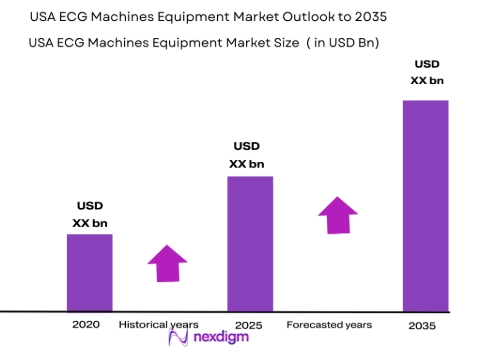
The USA ECG Machines Equipment market is poised for significant growth, driven by increasing healthcare expenditures and the rising prevalence of cardiovascular diseases. As the demand for diagnostic tools in hospitals and home healthcare rises, the market size is expected to expand, reaching USD ~ billion. This growth is further supported by advancements in ECG technologies and innovations in telemedicine, which are enhancing accessibility to diagnostic equipment. The increased adoption of portable ECG devices in home care settings is also contributing to the market’s expansion, offering patients more accessible and affordable diagnostic solutions.
The USA ECG Machines Equipment market is predominantly driven by key urban centers such as New York, Los Angeles, and Chicago, where healthcare infrastructure is robust, and demand for medical equipment is consistently high. These cities, along with major metropolitan areas, are witnessing a surge in both demand and technological innovation in the healthcare sector. The demand for advanced ECG machines is also supported by regulatory frameworks and the presence of leading manufacturers who are pushing the boundaries of diagnostic capabilities. The ongoing focus on reducing healthcare costs and improving patient outcomes is fueling the market’s growth in these regions.
Market Segmentation
By Product Type:
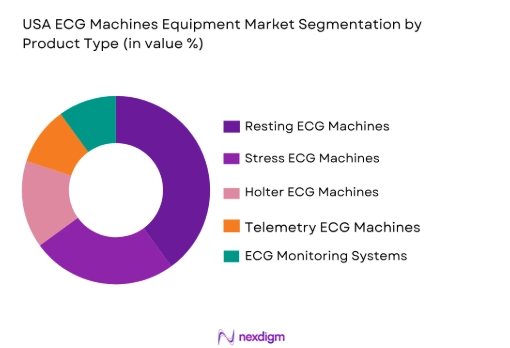
The USA ECG Machines Equipment market is segmented by product type into various sub-segments, including Resting ECG Machines, Stress ECG Machines, Holter ECG Machines, Telemetry ECG Machines, and ECG Monitoring Systems. Recently, Resting ECG Machines have held a dominant market share due to their widespread use in hospitals and clinics for routine diagnostic purposes. This sub-segment benefits from the high demand for basic cardiovascular monitoring and is favored for its simplicity, cost-effectiveness, and reliability. Hospitals and diagnostic centers primarily adopt these machines due to their ability to provide accurate and quick assessments of heart health, enabling early detection of cardiovascular conditions.
By Platform Type:
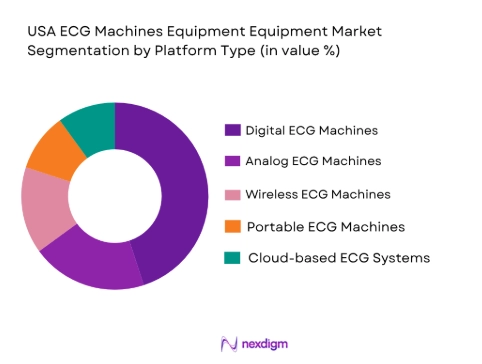
The USA ECG Machines Equipment market is segmented by platform type into Analog ECG Machines, Digital ECG Machines, Wireless ECG Machines, Portable ECG Machines, and Cloud-based ECG Systems. Digital ECG Machines have recently dominated the market due to their enhanced capabilities, including more precise readings and improved data storage and transmission. The shift from analog to digital technology is driven by the increasing need for higher diagnostic accuracy, better data integration with hospital systems, and more effective patient monitoring. Additionally, the transition to digital systems aligns with the industry’s broader trend of incorporating advanced technologies, such as AI and cloud computing, in healthcare diagnostics.
Competitive Landscape
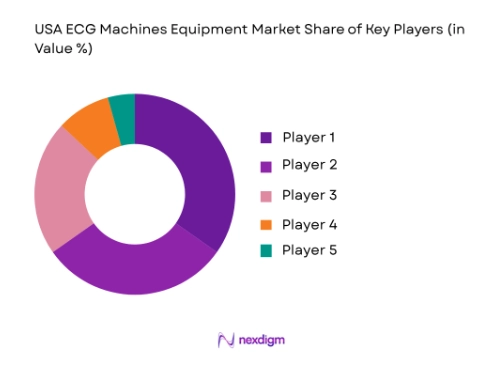
The competitive landscape in the USA ECG Machines Equipment market is characterized by a high level of consolidation, with several major players controlling a significant portion of the market. These companies invest heavily in research and development to drive innovation in diagnostic technologies. The market’s competitiveness is also fueled by the constant demand for advanced, user-friendly, and affordable ECG solutions. Leading players continue to expand their product portfolios and collaborate with healthcare providers to meet the evolving needs of end users. Mergers, acquisitions, and strategic partnerships further shape the dynamics of the market.
| Company Name | Establishment Year | Headquarters | Technology Focus | Market Reach | Key Products | Revenue (USD) |
| GE Healthcare | 1892 | Chicago, IL | ~ | ~ | ~ | ~ |
| Philips Healthcare | 1891 | Amsterdam, NL | ~ | ~ | ~ | ~ |
| Medtronic | 1949 | Minneapolis, MN | ~ | ~ | ~ | ~ |
| Nihon Kohden | 1951 | Tokyo, Japan | ~ | ~ | ~ | ~ |
| Mindray | 1991 | Shenzhen, China | ~ | ~ | ~ | ~ |
USA ECG Machines Equipment Market Analysis
Growth Drivers
Technological Advancements:
The USA ECG Machines Equipment market is being significantly driven by technological advancements, particularly the shift toward digital ECG machines that provide enhanced diagnostic capabilities. These advancements include improved signal processing, the ability to integrate with electronic health records (EHRs), and wireless data transmission. Digital machines not only offer more precise heart monitoring but also reduce errors that are often seen with analog devices. The integration of artificial intelligence (AI) in ECG systems is another key driver, helping in the early detection of cardiovascular diseases, improving accuracy, and automating interpretation. The continuous evolution of digital ECG technology ensures that patients receive more reliable and real-time data, leading to better diagnosis and treatment outcomes. Moreover, the growing adoption of remote monitoring solutions, including wearable ECG devices, supports the market’s expansion by making it easier for patients to monitor their health outside of traditional hospital settings. Hospitals, clinics, and homecare providers are increasingly investing in these technologies to improve patient care, enhance diagnostic accuracy, and reduce healthcare costs. These advancements, coupled with government support for healthcare technology innovation, are expected to further fuel the market’s growth.
Increase in Cardiovascular Diseases:
Another major growth driver for the USA ECG Machines Equipment market is the rising incidence of cardiovascular diseases (CVDs). With more than 30% of deaths in the United States attributed to CVDs, there is a heightened demand for efficient diagnostic tools such as ECG machines. Factors such as aging populations, unhealthy lifestyle choices, and increased levels of stress have contributed to a significant rise in cardiovascular health concerns. As the awareness of heart diseases increases, both healthcare providers and patients are investing in ECG equipment to help detect and monitor conditions such as arrhythmias, heart attacks, and other cardiovascular issues. The growing prevalence of chronic diseases has led to an increased need for ECG machines in both hospitals and outpatient settings, particularly as healthcare systems push for early diagnosis and preventive care. Furthermore, public health initiatives and government campaigns focused on reducing cardiovascular disease rates have encouraged the adoption of diagnostic tools like ECG machines. As the prevalence of heart disease continues to rise, the demand for advanced ECG technology is expected to grow, driving the market forward.
Market Challenges
High Cost of Equipment:
A significant challenge faced by the USA ECG Machines Equipment market is the high cost of ECG machines, particularly advanced models with digital and wireless capabilities. The initial investment required to purchase and maintain these machines is a barrier for smaller healthcare facilities, including private clinics and ambulatory surgical centers. The high price points are often attributed to the cost of the technology itself, as well as ongoing maintenance, software updates, and system integration. For many healthcare providers, especially in rural areas or economically disadvantaged regions, these costs can be prohibitive, leading to delayed adoption of newer, more advanced ECG systems. Additionally, healthcare providers must consider the total cost of ownership, including training staff, ensuring technical support, and managing the integration of ECG systems into existing healthcare IT infrastructure. The high cost of equipment may also affect the adoption rate of ECG machines in smaller and medium-sized healthcare organizations, potentially limiting market growth in these segments.
Regulatory Challenges:
The regulatory landscape for ECG machines in the USA presents another significant challenge. ECG devices must meet strict regulatory requirements set by the Food and Drug Administration (FDA), which ensures that the devices are safe and effective for clinical use. While these regulations are crucial for patient safety, they can create delays in product development, approvals, and market entry. The process of obtaining FDA approval can be time-consuming and costly, particularly for new technologies that require extensive testing and clinical trials. Additionally, healthcare providers must stay compliant with changing regulations, including those related to the certification of ECG equipment and data privacy. As regulations continue to evolve, manufacturers must adapt to meet new standards, which can increase costs and slow down innovation. These regulatory challenges could potentially hinder the growth of the market, especially for small and emerging players trying to enter the competitive ECG market.
Opportunities
Emerging Markets:
One of the most significant opportunities for the USA ECG Machines Equipment market lies in the expansion of ECG equipment into emerging markets. As healthcare systems in countries like India, Brazil, and South Africa improve, the demand for diagnostic tools such as ECG machines is increasing. The growing prevalence of cardiovascular diseases in these regions, coupled with rising healthcare investments, has created new opportunities for ECG manufacturers to expand their market presence. Additionally, many of these countries are undergoing significant improvements in their healthcare infrastructure, which includes the establishment of new hospitals, clinics, and diagnostic centers that require modern medical equipment. By tapping into these emerging markets, ECG machine manufacturers can diversify their revenue streams and expand their geographical footprint. The expansion of healthcare access in these regions also presents an opportunity for companies to provide more affordable and portable ECG solutions, further driving demand. The increasing adoption of telemedicine and remote patient monitoring in emerging markets is another factor contributing to this opportunity, as ECG machines are essential components in telehealth setups.
Wearable ECG Devices:
The growing popularity of wearable ECG devices represents a major opportunity in the USA ECG Machines Equipment market. As consumers become more health-conscious and increasingly rely on wearable technology for fitness and health monitoring, ECG manufacturers are seizing the opportunity to develop portable, consumer-friendly ECG solutions. These devices can track heart activity in real-time, allowing users to monitor their heart health regularly and share data with healthcare professionals for remote monitoring. Wearable ECG devices, such as wristbands and patches, are revolutionizing cardiovascular health management by offering a more convenient and non-invasive method of monitoring. This growing trend presents manufacturers with a significant opportunity to cater to both the healthcare sector and the growing demand for personal health technology. As these devices become more advanced and affordable, their adoption is expected to rise, opening new revenue streams for ECG manufacturers and contributing to overall market growth. The integration of artificial intelligence in wearable ECG devices to provide predictive analytics and personalized health insights further enhances their appeal and offers new opportunities for innovation.
Future Outlook
The future outlook for the USA ECG Machines Equipment market is promising, with expected growth driven by continuous advancements in technology, increasing demand for cardiovascular monitoring, and the rising prevalence of chronic diseases. Technological developments, including the integration of AI, cloud computing, and wireless capabilities, are anticipated to revolutionize the market, providing more efficient and accurate diagnostic tools. Additionally, regulatory support for innovative medical devices and increasing investments in healthcare infrastructure are expected to foster market expansion. The growing demand for portable and wearable ECG devices in both healthcare facilities and home care settings is another key factor that will shape the future of the market.
Major Players
- GE Healthcare
- Philips Healthcare
- Medtronic
- NihonKohden
- Mindray
- Siemens Healthineers
- Schiller
- Hill-Rom
- Toshiba
- BioTelemetry
- Welch Allyn
- Fukuda Denshi
- Carestream Health
- Johnson & Johnson
- Abbott Laboratories
Key Target Audience
- Investments and venture capitalist firms
- Government and regulatory bodies
- Hospitals and diagnosticcenters
- Medical device manufacturers
- Healthcare IT solution providers
- Healthcare distributors and suppliers
- Homecare providers
- Insurance companies
Research Methodology
Step 1: Identification of Key Variables
We identify the critical market drivers, restraints, and opportunities that influence market growth.
Step 2: Market Analysis and Construction
We conduct an in-depth analysis of the market’s current landscape, focusing on technological trends and market dynamics.
Step 3: Hypothesis Validation and Expert Consultation
We validate our findings by consulting with industry experts and analyzing market data to refine our hypotheses.
Step 4: Research Synthesis and Final Output
We synthesize all findings into actionable insights and develop the final report.

- Executive Summary
- Research Methodology (Definitions, Scope, Industry Assumptions, Market Sizing Approach, Primary & Secondary Research Framework, Data Collection & Verification Protocol, Analytic Models & Forecast Methodology, Limitations & Research Validity Checks)

- Market Definition and Scope
- Value Chain & Stakeholder Ecosystem
- Regulatory / Certification Landscape
- Sector Dynamics Affecting Demand
- Strategic Initiatives & Infrastructure Growth

- Growth Drivers
Increasing Prevalence of Cardiovascular Diseases
Advancements in ECG Technology
Rising Demand for Home Healthcare Devices - Market Challenges
High Costs of ECG Equipment
Regulatory Hurdles in Equipment Approvals
Lack of Skilled Professionals for Equipment Operation - Market Opportunities
Growth in Emerging Markets
Technological Innovations in ECG Devices
Government Initiatives for Healthcare Improvement - Trends
Integration of AI in ECG Systems
Shift Toward Remote ECG Monitoring
Focus on Portable and Wearable ECG Devices - Government Regulations
- SWOT Analysis of Key Competitors
- Porter’s Five Forces

- By Market Value, 2020-2025
- By Installed Units, 2020-2025
- By Average System Price, 2020-2025
- By System Complexity Tier, 2020-2025

- By System Type (In Value%)
Resting ECG Machines
Stress ECG Machines
Holter ECG Machines
Telemetry ECG Machines
ECG Monitoring Systems - By Platform Type (In Value%)
Analog ECG Machines
Digital ECG Machines
Wireless ECG Machines
Portable ECG Machines
Cloud-based ECG Systems - By Fitment Type (In Value%)
Standalone ECG Machines
Integrated ECG Machines
Wireless ECG Patches
Wearable ECG Devices
Mobile ECG Monitoring Systems - By EndUser Segment (In Value%)
Hospitals
Diagnostic Laboratories
Ambulatory Surgical Centers
Home Care
Other Healthcare Providers - By Procurement Channel (In Value%)
Direct Sales
Distributors
Online Sales
Retailers
Government & Institutional Sales

- Market Share Analysis
- CrossComparison Parameters (Market Share by Revenue, Market Share by Installed Units, Average Price per Unit, Growth Rate by Region, Key Technological Developments)
- SWOT Analysis of Key Competitors
- Pricing & Procurement Analysis
- Porter’s Five Forces
Key Players
GE Healthcare
Philips Healthcare
Medtronic
Siemens Healthineers
Schiller
Hill-Rom
Nihon Kohden
BioTelemetry
Mindray
Welch Allyn
Fukuda Denshi
Toshiba
Carestream Health
Johnson & Johnson
Abbott Laboratories

- Hospitals Demand for ECG Machines
- Diagnostic Laboratories Adoption of ECG Systems
- Ambulatory Centers and Their Role in ECG Equipment
- Home Healthcare Market for ECG Devices

- Forecast Market Value, 2026-2035
- Forecast Installed Units, 2026-2035
- Price Forecast by System Tier, 2026-2035
- Future Demand by Platform, 2026-2035


 Request a Sample
 Ask for Customization
 Get a Quote
 Enquire Now