

 Download PDF
 Download PDF
Market Overview
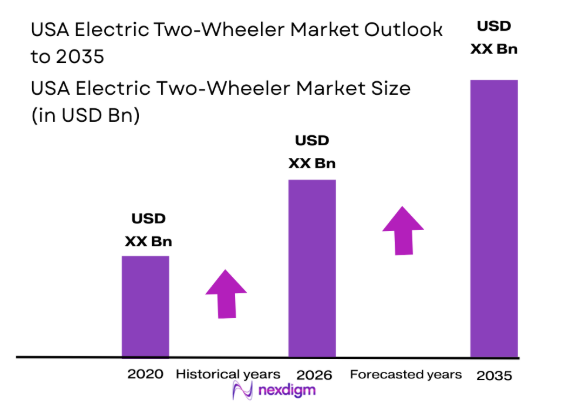
The USA Electric Two-Wheeler market demonstrates steady expansion supported by increasing demand for sustainable urban mobility and technological improvements in battery systems. Based on a recent historical assessment, the market value for electric two-wheelers in the United States reached approximately USD ~ billion, supported by rising adoption of electric scooters and motorcycles in urban transportation systems. Government initiatives promoting low-emission mobility, expansion of shared micromobility services, and increased investments from vehicle manufacturers have accelerated market development across multiple consumer and commercial segments.
Major metropolitan areas including California’s Los Angeles and San Francisco, New York City, Seattle, and Austin demonstrate the strongest adoption of electric two-wheelers due to dense urban mobility needs and strong environmental policies. California remains a central hub because of supportive transportation regulations and advanced charging infrastructure networks. Technology-driven cities such as Seattle and Austin benefit from strong startup ecosystems and venture investments in micromobility platforms, encouraging deployment of electric scooters, delivery fleets, and shared mobility services across densely populated urban corridors.
Market Segmentation
By Product Type
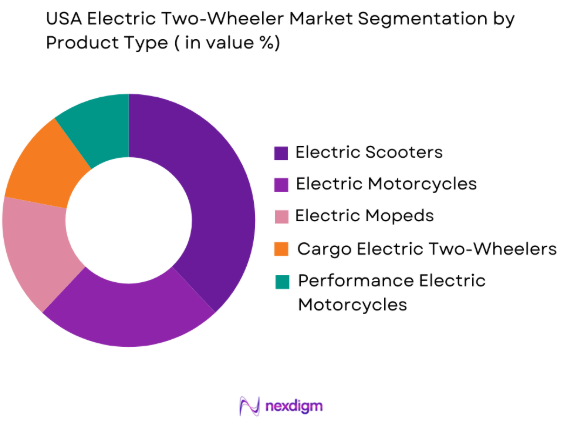
USA Electric Two-Wheeler market is segmented by product type into electric scooters, electric motorcycles, electric mopeds, cargo electric two-wheelers, and performance electric motorcycles. Recently, electric scooters has a dominant market share due to strong adoption in urban micro-mobility services, short-distance commuting, and shared transportation networks. Electric scooters are particularly popular because they provide cost-effective mobility solutions for dense urban environments where parking constraints and traffic congestion are significant challenges. Delivery service providers, ride sharing platforms, and personal commuters increasingly adopt electric scooters for last mile transportation. Cities across the United States have also introduced dedicated micromobility lanes and parking zones, improving operational convenience for scooter users.
By End User
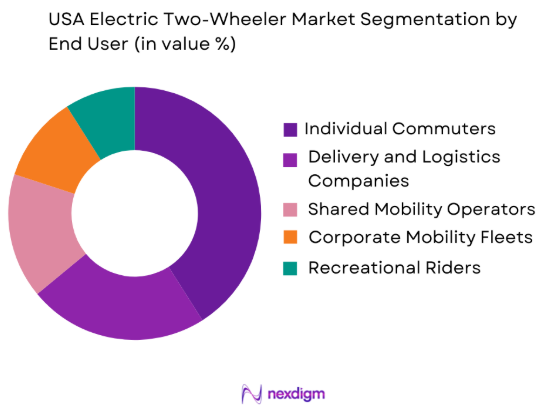
USA Electric Two-Wheeler market is segmented by end user into individual commuters, delivery and logistics companies, shared mobility operators, corporate mobility fleets, and recreational riders. Recently, individual commuters has a dominant market share due to growing interest in alternative transportation options for short-distance urban travel. Rising fuel costs, urban congestion, and environmental awareness encourage consumers to adopt electric two-wheelers as daily commuting vehicles. Electric scooters and motorcycles offer lower operating costs compared with conventional vehicles and provide convenient parking advantages in crowded cities. Increasing availability of financing options, government incentives for electric vehicles, and improvements in battery range further accelerate individual adoption.
Competitive Landscape
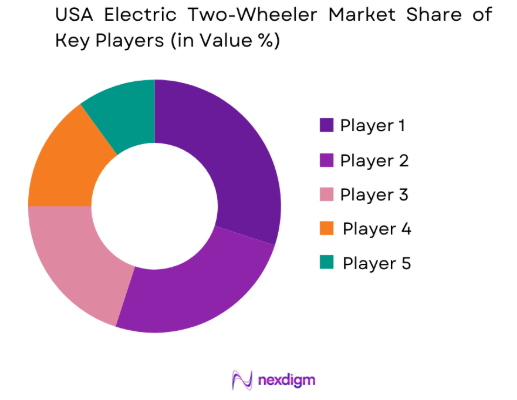
The competitive landscape of the USA Electric Two-Wheeler market includes both established motorcycle manufacturers and emerging electric mobility startups. Market competition is moderately fragmented, with several companies focusing on innovation in battery technology, smart connectivity, and lightweight vehicle platforms. Companies are investing heavily in research and development to improve vehicle performance and extend battery range. Partnerships with technology firms, urban mobility platforms, and charging infrastructure providers are increasingly shaping competitive positioning in this market.
| Company Name | Establishment Year | Headquarters | Technology Focus | Market Reach | Key Products | Revenue | Battery Technology |
| Harley-Davidson | 1903 | USA | ~ | ~ | ~ | ~ | ~ |
| Zero Motorcycles | 2006 | USA | ~ | ~ | ~ | ~ | ~ |
| NIU Technologies | 2014 | China | ~ | ~ | ~ | ~ | ~ |
| Segway-Ninebot | 1999 | USA | ~ | ~ | ~ | ~ | ~ |
| Gogoro | 2011 | Taiwan | ~ | ~ | ~ | ~ | ~ |
USA Electric Two-Wheeler Market Analysis
Growth Drivers
Urban Micro-Mobility Expansion in Major US Cities
Rapid expansion of urban micromobility ecosystems across major American cities is accelerating the adoption of electric two-wheelers as municipalities seek solutions to reduce congestion and transportation emissions. Local governments increasingly promote alternative mobility options that encourage residents to use electric scooters and motorcycles for short urban trips, easing pressure on public transit networks. Shared mobility operators deploy large fleets of scooters, familiarizing consumers with electric mobility technologies and encouraging personal ownership. Dedicated micromobility lanes and parking zones improve rider safety and accessibility. Integration with multimodal transport systems connecting buses, rail stations, and metro networks enhances mobility efficiency. Lower operating costs and growing urban populations further strengthen demand for compact electric transportation solutions.
Technological Advancements in Electric Powertrain and Battery Systems
Continuous innovation in battery chemistry, electric motor engineering, and power management software is improving the performance and reliability of electric two-wheelers, encouraging wider consumer adoption in the United States mobility ecosystem. Modern lithium-ion batteries provide higher energy density and longer operational life, enabling scooters and motorcycles to achieve greater travel ranges suitable for daily commuting and delivery services. Manufacturers increasingly invest in advanced battery management systems that optimize energy usage and regulate thermal stability. Lightweight vehicle design and efficient electric motors enhance handling and energy efficiency. Fast charging technologies, battery swapping systems, and smart connectivity applications further improve operational convenience and vehicle performance.
Market Challenges
Limited Charging Infrastructure for Electric Two-Wheelers
Limited availability of dedicated charging infrastructure remains a major barrier to widespread adoption of electric two-wheelers in the United States transportation ecosystem. Although electric vehicle charging networks continue expanding, most infrastructure primarily supports passenger cars rather than smaller mobility platforms such as scooters and motorcycles. Many public charging stations lack compatible connectors or parking arrangements for electric two-wheelers. Riders often depend on residential charging, which is inconvenient for individuals without private parking or electrical access. Delivery companies operating large scooter fleets must invest in private charging facilities, increasing operational costs. Long charging times also reduce fleet availability, while battery swapping solutions require substantial infrastructure investment and industry standardization.
High Initial Purchase Costs Compared with Conventional Two-Wheelers
High upfront costs of electric two-wheelers compared with conventional gasoline motorcycles and scooters remain a major barrier to wider consumer adoption in the United States mobility market. Advanced battery packs, electric motors, and power electronics increase production costs, which are reflected in higher retail prices for buyers. Although electric vehicles offer lower long-term operating and maintenance expenses, many consumers prioritize the initial purchase cost when choosing transportation options. Limited large-scale manufacturing further keeps production costs elevated compared with traditional motorcycles. Consumers may also incur additional expenses for home charging installations or electrical upgrades. Variations in government incentives across states also influence affordability and purchasing decisions.
Opportunities
Expansion of Electric Two-Wheelers in Last-Mile Delivery Logistics
Rapid expansion of e-commerce and on-demand delivery services is creating strong opportunities for electric two-wheelers in urban logistics operations. Electric scooters and motorcycles are well suited for last-mile delivery because they can navigate congested city streets more efficiently than larger vehicles. Logistics companies benefit from lower operating expenses since electric vehicles require less fuel and maintenance than gasoline alternatives. Electric two-wheelers also produce zero tailpipe emissions, helping delivery providers comply with stricter environmental regulations in many cities. Fleet operators can deploy lightweight electric scooters for food delivery, parcel distribution, and courier services. Battery swapping systems and digital fleet management platforms further improve operational efficiency and reliability.
Integration of Electric Two-Wheelers with Smart City Mobility Ecosystems
Expansion of smart city transportation initiatives across the United States is creating strong opportunities for electric two-wheelers within modern urban mobility systems. Municipal governments increasingly deploy integrated transport platforms combining buses, rail services, ride sharing, and micromobility solutions. Electric scooters and motorcycles support efficient short-distance travel and enable first-mile and last-mile connectivity between transit hubs. Unified mobility applications allow users to plan routes, access navigation, and manage payments through a single platform. Smart traffic systems provide dedicated lanes and parking infrastructure for electric two-wheelers, improving safety and convenience. Renewable energy charging networks and connected vehicle data further enhance sustainability, traffic planning, and overall efficiency in urban transportation networks.
Future Outlook
The USA Electric Two-Wheeler market is expected to expand steadily as urban mobility patterns evolve toward environmentally sustainable transportation systems. Advancements in battery technology, increasing availability of charging infrastructure, and rising consumer interest in micromobility solutions will support long term growth. Government incentives promoting electric vehicles and investments in smart city transportation networks will further accelerate adoption. Expansion of shared mobility platforms and delivery logistics fleets will also contribute significantly to market demand.
Major Players
- Harley-Davidson
- Zero Motorcycles
- NIU Technologies
- Segway-Ninebot
- Gogoro
- YadeaGroup
- VmotoLimited
- Super73
- Cake
- EnergicaMotor Company
- HorwinGlobal
- CSC Motorcycles
- KYMCO
- SondorsElectric Car Company
- BMW Motorrad
Key Target Audience
- Electric vehicle manufacturers
- Urban mobility platform operators
- Delivery andlogisticscompanies
- Automotivecomponentsuppliers
- Investments and venture capitalist firms
- Government and regulatory bodies
- Battery technology developers
- Smart city infrastructure providers
Research Methodology
Step 1: Identification of Key Variables
The research begins with identification of critical variables influencing the USA Electric Two-Wheeler market, including technological innovation, urban mobility policies, consumer adoption trends, and manufacturing developments. These variables help define the overall scope of analysis and guide data collection across primary and secondary sources.
Step 2: Market Analysis and Construction
Collected data is analyzed to construct a comprehensive understanding of market dynamics, including segmentation, competitive positioning, and demand drivers. Quantitative data is validated using multiple credible sources including government reports, company disclosures, and industry databases.
Step 3: Hypothesis Validation and Expert Consultation
Preliminary findings are validated through consultations with industry professionals, technology developers, mobility operators, and policy experts. Their insights help refine market assumptions and confirm key trends affecting electric two-wheeler adoption across the United States.
Step 4: Research Synthesis and Final Output
All verified information is synthesized into a structured market report that includes detailed analysis of market size, segmentation, competitive landscape, and growth opportunities. The final output ensures that insights are supported by credible data and aligned with observed industry developments.

- Executive Summary
- Research Methodology (Definitions, Scope, Industry Assumptions, Market Sizing Approach, Primary & Secondary Research Framework, Data Collection & Verification Protocol, Analytic Models & Forecast Methodology, Limitations & Research Validity Checks)

- Market Definition and Scope
- Value Chain & Stakeholder Ecosystem
- Regulatory / Certification Landscape
- Sector Dynamics Affecting Demand
- Strategic Initiatives & Infrastructure Growth

- Growth Drivers
Expansion of Urban Micro Mobility Solutions
Rising Adoption of Electric Delivery Vehicles
Government Incentives for Electric Mobility - Market Challenges
Limited Charging Infrastructure for Two-Wheelers
High Initial Purchase Costs Compared to ICE Models
Battery Performance and Range Limitations - Market Opportunities
Growth of Battery Swapping Infrastructure
Integration with Smart City Mobility Programs
Expansion of Shared Electric Two-Wheeler Fleets - Trends
Increasing Adoption of Connected Electric Motorcycles
Growth of Subscription Based Mobility Models
Integration of Advanced Battery Management Systems - Government Regulations
- SWOT Analysis of Key Competitors
- Porter’s Five Forces

- By Market Value, 2020-2025
- By Installed Units, 2020-2025
- By Average System Price, 2020-2025
- By System Complexity Tier, 2020-2025

- By System Type (In Value%)
Electric Scooters
Electric Motorcycles
Electric Mopeds
Cargo Electric Two-Wheelers
Performance Electric Motorcycles - By Platform Type (In Value%)
Urban Commuter Platforms
Delivery and Logistics Platforms
Shared Mobility Platforms
Recreational Riding Platforms
Fleet Mobility Platforms - By Fitment Type (In Value%)
OEM Factory-Fitted Systems
Aftermarket Conversion Kits
Integrated Smart Mobility Systems
Modular Battery Swap Systems
Retrofit Electrification Kits - By End User Segment (In Value%)
Urban Commuters
Delivery and Courier Companies
Ride Sharing Operators
Corporate Mobility Fleets
Recreational Riders - By Procurement Channel (In Value%)
Direct Manufacturer Sales
Authorized Dealership Networks
Online Direct-to-Consumer Platforms
Fleet Procurement Contracts
Government and Municipal Procurement

- Market Share Analysis
- Cross Comparison Parameters (Battery Range, Charging Time, Top Speed, Motor Power Output, Battery Capacity, Torque Performance, Acceleration Performance, Vehicle Weight, Energy Efficiency per Charge, Smart Connectivity Features)
- SWOT Analysis of Key Competitors
- Pricing & Procurement Analysis
- Key Players
Harley Davidson
Zero Motorcycles
NIU Technologies
Yadea Group
Segway Ninebot
Rivian Micromobility Division
Super73
Cake
Energica Motor Company
Vmoto Limited
Horwin Global
CSC Motorcycles
Gogoro
Sondors Electric Car Company
KYMCO

- Urban Commuters Driving Demand for Compact Electric Mobility
- Rapid Adoption by Last Mile Delivery Operators
- Corporate Fleets Integrating Electric Mobility Solutions
- Growth of Recreational Electric Motorcycle Enthusiasts

- Forecast Market Value, 2026-2035
- Forecast Installed Units, 2026-2035
- Price Forecast by System Tier, 2026-2035
- Future Demand by Platform, 2026-2035


 Request a Sample
 Ask for Customization
 Get a Quote
 Enquire Now