
 Download PDF
 Download PDF
Market Overview
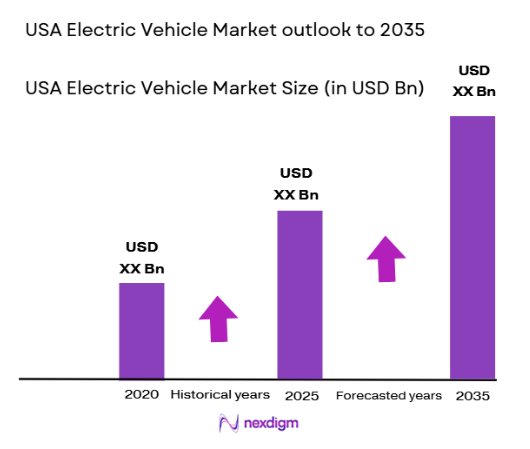
The USA Electric Vehicle Market is projected to reach USD ~ billion by 2024, driven primarily by the growing consumer demand for clean energy alternatives and electric mobility solutions. With increasing environmental concerns, government incentives, and tax rebates, the market is expanding rapidly. As the adoption of electric vehicles rises, the market is fueled by advancements in battery technologies and the expansion of EV charging infrastructure, supporting this surge in demand. The rise in EV adoption is also supported by automakers’ ongoing efforts to integrate innovative features and improve range capabilities.
In the USA, the electric vehicle market is dominated by several key cities and states that prioritize sustainable mobility solutions. California stands out as a significant driver due to its aggressive environmental policies and substantial investment in EV infrastructure. Other major states, including New York, Texas, and Florida, are following suit with government-backed incentives, creating conducive environments for electric vehicle adoption. The favorable policies in these regions, combined with the ongoing shift towards greener energy, are expected to propel the market forward, solidifying their leadership in the EV sector.
Market Segmentation
By Product Type:
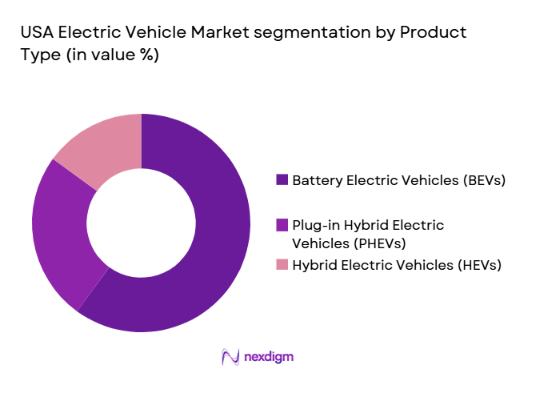
The USA Electric Vehicle Market is segmented by product type into battery electric vehicles (BEVs), plug-in hybrid electric vehicles (PHEVs), and hybrid electric vehicles (HEVs). Recently, BEVs have seen the most significant market share due to advancements in battery technology, which have led to increased range and faster charging times. These vehicles are driven by entirely electric powertrains, providing a fully zero-emission driving experience, which appeals to eco-conscious consumers. Increasing support from the government in the form of subsidies and tax credits for BEVs is also a contributing factor to their dominance. The expansion of fast-charging networks and the improving affordability of electric vehicles have further encouraged the shift towards BEVs. As battery costs continue to decline, BEVs are expected to maintain their strong market position, with leading manufacturers expanding their BEV portfolios.
By Platform Type:
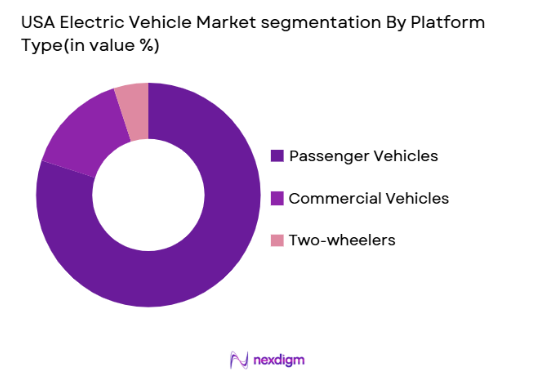
The USA Electric Vehicle Market is segmented by platform type into passenger vehicles, commercial vehicles, and two-wheelers. Among these, passenger vehicles dominate the market due to their higher adoption rates, driven by individual consumer preferences and the increased availability of affordable electric cars. Government incentives, rising fuel prices, and the growing concern for environmental impact are encouraging more consumers to opt for electric passenger vehicles. Additionally, the introduction of popular models from major automakers, along with the expanding charging infrastructure, is expected to bolster the adoption of electric passenger vehicles in the coming years. While commercial vehicles and two-wheelers are also gaining traction, the passenger vehicle segment remains the largest and is likely to continue driving market growth.
Competitive Landscape
The competitive landscape of the USA Electric Vehicle Market is shaped by consolidation, with major players investing heavily in research, development, and infrastructure to maintain their market dominance. Leading automakers like Tesla, Ford, and General Motors continue to dominate the market, pushing technological advancements in electric vehicle production and battery technologies. Smaller players, alongside traditional automakers, are also vying for market share by offering innovative solutions in electric mobility, thereby driving competition. Strategic partnerships and joint ventures are also increasingly common, allowing companies to share resources and expand their reach in the market.
| Company Name | Establishment Year | Headquarters | Technology Focus | Market Reach | Key Products | Revenue | Additional Parameter |
| Tesla | 2003 | Palo Alto, CA | ~ | ~ | ~ | ~ | ~ |
| Ford | 1903 | Dearborn, MI | ~ | ~ | ~ | ~ | ~ |
| General Motors | 1908 | Detroit, MI | ~ | ~ | ~ | ~ | ~ |
| Rivian | 2009 | Plymouth, MI | ~ | ~ | ~ | ~ | ~ |
| Lucid Motors | 2007 | Newark, CA | ~ | ~ | ~ | ~ | ~ |
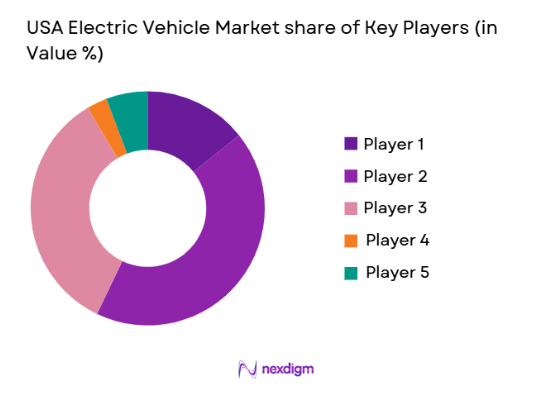
USA Electric Vehicle Market Analysis
Growth Drivers
Government Incentives for Electric Vehicle Purchases:
The USA Electric Vehicle Market has seen substantial growth due to the strong government incentives aimed at reducing the cost of electric vehicle adoption. Federal tax credits and state-specific subsidies have made EVs more affordable for consumers, driving up demand. These incentives are particularly appealing in regions with higher environmental awareness and a push toward carbon neutrality. The government’s commitment to achieving net-zero emissions in the coming decades has further cemented the importance of these incentives, as they encourage both individual and fleet consumers to adopt electric vehicles. Furthermore, government policies such as fuel efficiency standards and the development of EV-friendly infrastructure like charging stations continue to boost EV adoption, ensuring a consistent upward trajectory for the market. As EV-related infrastructure and services become more accessible, consumers find it easier to transition from traditional gasoline-powered vehicles to electric ones.
Technological Advancements in Electric Vehicle Batteries:
Another significant driver of the USA Electric Vehicle Market is the rapid development of EV battery technologies. Battery technology advancements, such as increased energy density, shorter charging times, and reduced costs, have significantly improved the performance and affordability of electric vehicles. The lowering cost of lithium-ion batteries is directly impacting the price of electric vehicles, making them more accessible to a broader range of consumers. With research focused on solid-state batteries and other cutting-edge battery technologies, the market is poised for further technological breakthroughs that will enhance the range and charging capabilities of EVs. This increased reliability and efficiency in electric vehicle battery technology is expected to boost consumer confidence and lead to higher adoption rates, especially as battery prices continue to drop.
Market Challenges
High Upfront Vehicle Costs:
Despite growing interest in electric vehicles, one of the biggest challenges facing the USA Electric Vehicle Market is the high upfront cost of EVs. While EVs offer significant long-term savings due to lower operating costs, the initial purchase price remains a significant barrier for many consumers. Even with government incentives, the cost of purchasing an electric vehicle is still higher than that of a comparable internal combustion engine vehicle. This challenge is particularly pronounced for lower-income consumers and those in areas with less access to government subsidies. Additionally, the price difference between electric vehicles and their gasoline-powered counterparts is often not offset by the savings on fuel and maintenance, making it harder for EVs to gain widespread acceptance in certain segments of the market.
Lack of Charging Infrastructure in Rural Areas:
Another challenge hindering the growth of the USA Electric Vehicle Market is the insufficient charging infrastructure, particularly in rural and less densely populated areas. While urban regions and major metropolitan areas have seen substantial investment in charging networks, rural areas are often underserved, limiting the practicality of electric vehicles for many potential buyers. EV owners in these areas may struggle to find convenient charging stations, which can significantly reduce the attractiveness of EV ownership. Furthermore, the availability of fast-charging stations, which are critical for long-distance travel, is limited outside major cities. The lack of accessible and reliable charging infrastructure, particularly in rural regions, remains a significant hurdle in achieving mass adoption of electric vehicles across the country.
Opportunities
Expansion of Charging Infrastructure:
The expansion of electric vehicle charging infrastructure presents a significant opportunity for the USA Electric Vehicle Market. With an increase in the number of electric vehicles on the road, there is a growing need for widespread and accessible charging stations. The construction of more public charging stations, especially in rural and suburban areas, will ensure that EV owners have access to convenient charging options. Furthermore, private companies and utilities are investing heavily in the development of ultra-fast charging networks, reducing charging times and enhancing the overall user experience. As the infrastructure for charging continues to grow, the adoption of electric vehicles is likely to increase, as potential customers will feel more confident in the availability of charging options, making it easier to integrate EVs into daily life.
Integration of Autonomous Driving Technologies:
The integration of autonomous driving technologies into electric vehicles represents another promising opportunity for market growth. As the USA Electric Vehicle Market evolves, the demand for autonomous features such as self-driving capabilities, advanced driver-assistance systems (ADAS), and smart vehicle connectivity is increasing. Electric vehicles are well-suited for the integration of these technologies due to their reliance on electric powertrains and more advanced electronics. Major automakers are already exploring autonomous driving in their electric vehicle offerings, making this a significant growth area. The combination of electric vehicles with autonomous driving capabilities could revolutionize the automotive industry by enhancing safety, convenience, and reducing the overall cost of ownership for consumers, providing a competitive edge to manufacturers who lead in this area.
Future Outlook
The future outlook for the USA Electric Vehicle Market is highly promising, driven by technological advancements, regulatory support, and growing demand for clean energy transportation solutions. In the next few years, it is expected that electric vehicles will become increasingly affordable as battery prices continue to fall. Technological innovations in charging infrastructure and energy storage will further reduce the barriers to EV adoption. Strong government incentives and policies promoting zero-emission vehicles will support continued growth, with demand rising from both individual consumers and fleet operators. The regulatory landscape will continue to evolve to incentivize electrification in various sectors, contributing to a broader shift toward sustainable transportation.
Major Players
- Tesla
- General Motors
- Ford
- Rivian
- Lucid Motors
- Volkswagen
- BMW
- Nissan
- Hyundai
- Kia
- Mercedes-Benz
- Audi
- Toyota
- Porsche
- BYD
Key Target Audience
- Investments and venture capitalist firms
- Government and regulatory bodies
- Original Equipment Manufacturers (OEMs)
- Electric vehicle fleet operators
- EV infrastructure developers
- Utility companies
- Battery technology suppliers
- Automotive technology companies
Research Methodology
Step 1: Identification of Key Variables
This step involves defining the essential factors and data sources for the market study. These variables include technological trends, policy influences, and demographic shifts affecting EV adoption.
Step 2: Market Analysis and Construction
Data is collected from primary and secondary sources to build a comprehensive market model. This includes insights from interviews, market reports, and public financial data.
Step 3: Hypothesis Validation and Expert Consultation
Key hypotheses are validated through consultations with industry experts, stakeholders, and thought leaders in the electric vehicle and clean energy sectors.
Step 4: Research Synthesis and Final Output
All findings are synthesized into a detailed report that presents key insights, trends, and future projections for the USA Electric Vehicle Market.

- Executive Summary
- Research Methodology (Definitions, Scope, Industry Assumptions, Market Sizing Approach, Primary & Secondary Research Framework, Data Collection & Verification Protocol, Analytic Models & Forecast Methodology, Limitations & Research Validity Checks)

- Market Definition and Scope
- Value Chain & Stakeholder Ecosystem
- Regulatory / Certification Landscape
- Sector Dynamics Affecting Demand
- Strategic Initiatives & Infrastructure Growth

- Growth Drivers
Government Incentives for EV Purchases
Advancements in EV Battery Technologies
Increasing Environmental Awareness
Rising Fuel Costs and Energy Independence
Expansion of Charging Infrastructure - Market Challenges
High Upfront Vehicle Costs
Battery Supply Chain Constraints
Lack of Charging Infrastructure in Rural Areas
Long Charging Times
Regulatory Barriers and Policy Uncertainty - Market Opportunities
Integration of Autonomous Driving Technologies
Expansion into Emerging Markets
Development of Second-life Batteries for Energy Storage - Trends
Rising Consumer Demand for EVs
Shift Towards EV Production by Major Automakers
Development of Ultra-fast Charging Networks
Increase in Commercial EV Adoption
Growth of EV-related Startups and Innovations - Government Regulations & Defense Policy
Federal Tax Incentives for EV Purchases
Zero-emission Vehicle Mandates
Fuel Economy Standards and Emissions Regulations - SWOT Analysis
- Stakeholder and Ecosystem Analysis
- Porter’s Five Forces Analysis
- Competition Intensity and Ecosystem Mapping

- By Market Value, 2020-2025
- By Installed Units, 2020-2025
- By Average System Price, 2020-2025
- By System Complexity Tier, 2020-2025

- By System Type (In Value%)
Battery Electric Vehicles
Plug-in Hybrid Electric Vehicles
Hybrid Electric Vehicles
Fuel Cell Electric Vehicles
Electric Buses - By Platform Type (In Value%)
Passenger Vehicles
Commercial Vehicles
Light-duty Vehicles
Heavy-duty Vehicles
Two-wheelers - By Fitment Type (In Value%)
OEM Solutions
Aftermarket Solutions
Integrated Systems
Retrofitted Systems
Modular Systems - By EndUser Segment (In Value%)
Individual Consumers
Fleet Operators
Government and Public Sector
Ride-sharing and Car Rental Companies
Logistics and Transportation Companies - By Procurement Channel (In Value%)
Direct Sales
Dealerships
Online Platforms
Third-party Distributors
Government Procurement - By Material / Technology (in Value%)
Lithium-ion Batteries
Solid-state Batteries
Electric Drive Systems
Charging Infrastructure
Energy Storage Solutions

- Market structure and competitive positioning
- Market share snapshot of major players
- CrossComparison Parameters (Battery Technology, Charging Infrastructure, Vehicle Range, Vehicle Type, Market Share, Geographic Reach, Production Capacity, Regulatory Compliance, Brand Reputation, Cost-Effectiveness)
- SWOT Analysis of Key Players
- Pricing & Procurement Analysis
- Key Players
Tesla
General Motors
Ford
Rivian
Lucid Motors
Volkswagen
BMW
Nissan
Hyundai
Kia
Mercedes-Benz
Audi
Toyota
Porsche
BYD

- Consumers’ Growing Focus on Sustainability
- Government Fleet Electrification Programs
- Commercial Fleets Transitioning to Electric
- Ride-sharing Services Adopting Electric Vehicles

- Forecast Market Value, 2026-2035
- Forecast Installed Units, 2026-2035
- Price Forecast by System Tier, 2026-2035
- Future Demand by Platform, 2026-2035


 Request a Sample
 Ask for Customization
 Get a Quote
 Enquire Now