
 Download PDF
Market Overview
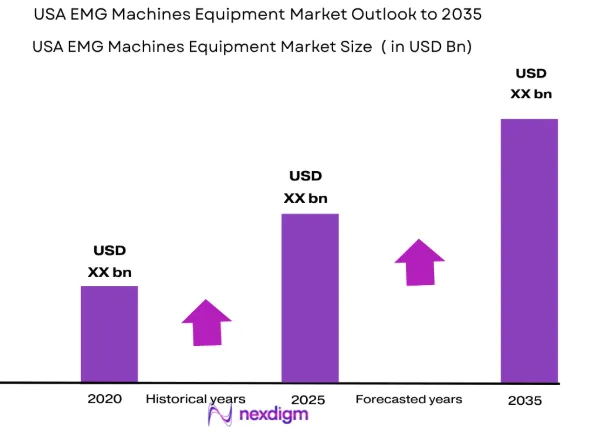
The market for EMG (Electromyography) machines and equipment in the United States has seen significant growth in recent years. Based on a recent historical assessment, the market size is expected to be valued at approximately USD ~ billion, driven by an increasing demand for diagnostic tools in healthcare. The need for better and faster diagnostics in conditions like neuropathies, muscle disorders, and sports-related injuries has spurred adoption across healthcare facilities. Technological advancements, such as the integration of wireless and portable EMG systems, have further facilitated market expansion. Moreover, a rising focus on enhancing patient care through non-invasive diagnostics is propelling market growth.
The U.S. remains a dominant force in the EMG machines and equipment market, with cities like New York, Los Angeles, and Chicago leading the way due to their well-established healthcare infrastructure. These regions are home to prominent medical institutions and research centers, driving both innovation and demand for advanced EMG systems. The increasing prevalence of neurological diseases, coupled with the growing aging population in these regions, further contributes to the demand for such diagnostic equipment. Additionally, government regulations and funding supporting healthcare technology adoption in these cities have bolstered the market presence of EMG systems.
Market Segmentation
By Product Type
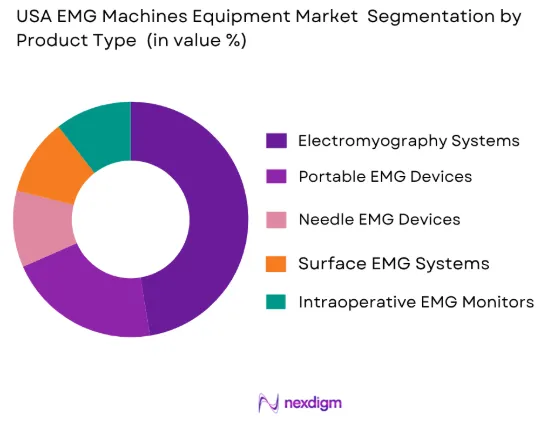
The EMG machines market is segmented by product type into systems, portable devices, and surface electrodes. Recently, surface electrodes have seen a dominant market share due to factors such as demand patterns, brand presence, infrastructure availability, and consumer preference. Surface electrodes are preferred in various healthcare facilities due to their non-invasive nature, ease of use, and cost-effectiveness compared to other types of systems. Their ability to provide reliable diagnostic results with minimal discomfort to patients has made them highly sought after by medical professionals, leading to the growth of this sub-segment.
By Application Type
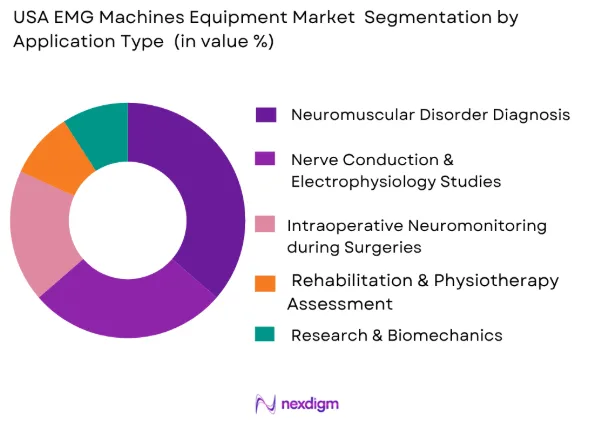
The EMG market is segmented by application into clinical diagnostics, rehabilitation, and research. The clinical diagnostics application holds the dominant market share due to increasing demand for precise and fast diagnostic tools in hospitals and clinics. EMG systems are widely used in diagnosing neuromuscular disorders and muscle dysfunctions. As healthcare facilities increasingly prioritize early detection and treatment of disorders such as muscular dystrophy, carpal tunnel syndrome, and other nerve-related diseases, the clinical diagnostics sub-segment has expanded significantly, outperforming other applications in the market.
Competitive Landscape
The competitive landscape in the U.S. EMG machines market is characterized by the presence of several prominent players who are focused on technological innovation and market consolidation. Major players such as Medtronic, NeuroMetrix, and Natus Medical have made significant strides in enhancing product offerings with advanced features like wireless connectivity, portability, and AI-driven diagnostics. These companies dominate the market by leveraging their vast resources, extensive distribution networks, and strong research and development capabilities. Additionally, strategic partnerships and acquisitions are becoming common as companies aim to consolidate their market presence and increase product diversity to meet evolving customer needs.
| Company Name | Establishment Year | Headquarters | Technology Focus | Market Reach | Key Products | Revenue | Key Innovation |
| Medtronic | 1949 | Dublin, Ireland | ~ | ~ | ~ | ~ | ~ |
| NeuroMetrix | 1996 | Waltham, MA, US | ~ | ~ | ~ | ~ | ~ |
| Natus Medical | 1989 | Middleton, WI, US | ~ | ~ | ~ | ~ | ~ |
| Cadwell Industries | 1979 | Kennewick, WA, US | ~ | ~ | ~ | ~ | ~ |
| BIOPAC Systems | 1985 | Goleta, CA, US | ~ | ~ | ~ | ~ | ~ |
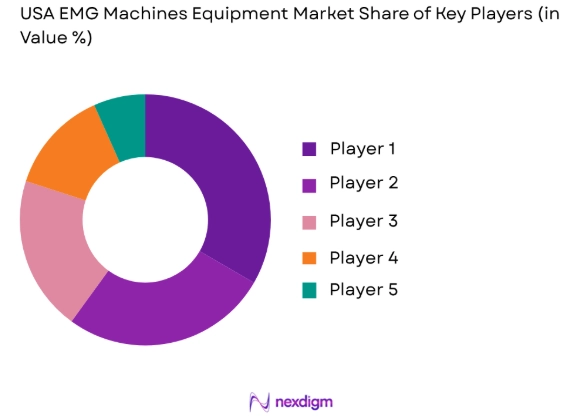
USA EMG Machines Equipment Market Analysis
Growth Drivers
Technological Advancements
The rapid evolution of EMG technology has significantly driven market growth, with newer systems offering enhanced capabilities like wireless connectivity and portability. This shift is largely due to the increased demand for efficient and non-invasive diagnostic solutions. Innovations like cloud-based platforms and AI integration allow clinicians to access real-time data remotely, making it easier to diagnose and monitor conditions. These advancements also improve the accuracy and efficiency of EMG tests, reducing patient discomfort and downtime. As a result, the market for EMG machines is expanding as more healthcare facilities adopt these advanced systems for both routine and specialized care. The availability of portable devices that can be used outside traditional hospital settings is another key factor contributing to the growth of this sector. These portable devices are particularly beneficial in rehabilitation centers and homecare settings, making healthcare more accessible to patients in remote areas.
Regulatory Support and Funding
Government initiatives and regulatory frameworks are critical drivers of the EMG machine market. Healthcare systems in many countries, including the U.S., are increasingly supporting the adoption of advanced diagnostic equipment by offering grants and incentives to hospitals and medical centers. Additionally, regulatory approvals for new EMG systems are streamlined, facilitating the quicker availability of innovative devices in the market. These regulatory measures help ensure that high-quality devices are available for clinical use, providing clinicians with reliable tools for diagnosing a range of neurological and muscular disorders. The backing of these regulatory bodies, along with the increased funding for healthcare infrastructure, further promotes the widespread adoption of EMG technologies. As a result, companies in the sector are encouraged to develop and introduce more advanced systems to meet the growing demand.
Market Challenges
High Cost of Equipment
One of the major challenges faced by the U.S. EMG machines market is the high cost of advanced EMG systems, which can limit their adoption, especially in smaller healthcare centers or those with budget constraints. The initial purchase cost of sophisticated systems, coupled with ongoing maintenance and calibration costs, can be prohibitively expensive for some institutions. While these high-end devices offer numerous benefits such as increased accuracy and portability, their pricing can pose a significant barrier, particularly in rural or underserved regions where healthcare budgets are limited. Furthermore, the need for specialized training for staff to operate these advanced systems adds to the overall expenditure, making it harder for smaller institutions to afford the necessary equipment.
Lack of Skilled Workforce
Another challenge in the EMG machines market is the shortage of trained professionals who can effectively operate and interpret data from these devices. While EMG technology is becoming more sophisticated, it requires a high level of expertise to ensure accurate readings and proper patient diagnosis. Many healthcare centers, particularly in less urbanized areas, struggle to find professionals with the necessary training to use advanced EMG systems. This gap in workforce expertise can lead to incorrect diagnoses or underutilization of the equipment, ultimately limiting the growth of the market. Training programs for medical personnel are expensive and time-consuming, further hindering the widespread adoption of EMG systems in healthcare institutions.
Opportunities
Increasing Demand for Homecare Solutions
With the growing emphasis on homecare and remote patient monitoring, there is a significant opportunity for EMG machine manufacturers to expand their product lines. Portable and wireless EMG systems are being increasingly adopted for use in home settings, providing patients with the ability to monitor their conditions from the comfort of their own homes. This trend is driven by both patient preference for more accessible care and healthcare systems’ efforts to reduce hospital readmission rates and associated costs. Manufacturers can leverage this demand by developing more compact, affordable, and user-friendly devices designed for home use. Additionally, advancements in telemedicine have made remote consultations more viable, allowing patients to receive professional diagnoses without needing to visit a healthcare facility.
Growth in Sports Medicine and Rehabilitation
Another growing opportunity for the EMG machines market is the rising demand for EMG devices in sports medicine and rehabilitation. As athletes and fitness enthusiasts become more proactive about maintaining their health and performance, there is an increasing need for accurate diagnostic tools to assess muscle function and nerve health. EMG devices allow for detailed analysis of muscle activity, which can aid in injury prevention, recovery, and performance enhancement. With the growing popularity of sports medicine and the increasing use of EMG in rehabilitation settings, companies have the opportunity to create specialized products tailored to these markets, further driving the growth of the sector.
Future Outlook
The EMG machines market in the U.S. is expected to experience significant growth in the coming years, driven by technological advancements, increased demand for non-invasive diagnostic tools, and the growing healthcare infrastructure. Innovations such as AI-powered EMG systems, portable devices, and cloud-based solutions are poised to revolutionize the industry, enhancing both the efficiency and accuracy of diagnostic processes. In addition, regulatory support and government funding will continue to promote the adoption of EMG technology in both urban and rural healthcare settings. As the healthcare sector increasingly focuses on patient-centered care and cost-efficiency, demand for EMG devices is likely to rise, presenting substantial growth opportunities for market participants.
Major Players
- Medtronic
- NeuroMetrix
- Natus Medical
- Cadwell Industries
- BIOPAC Systems
- Delsys
- Compumedics
- Thermo Fisher Scientific
- UFI, Inc.
- Innovative Diagnostics
- Empatica
- Omron Healthcare
- Zimmer Biomet
- MDD Medical Devices
- Philips Healthcare
Key Target Audience
- Investments and venture capitalist firms
- Government and regulatory bodies
- Healthcare providers
- Medical device manufacturers
- Rehabilitation centers
- Hospitals and clinics
- Sports medicine professionals
- Homecare providers
Research Methodology
Step 1: Identification of Key Variables
The research process begins by identifying the key variables affecting the EMG machines market, including product types, application areas, regional demand patterns, and market growth factors.
Step 2: Market Analysis and Construction
A thorough analysis is conducted using both primary and secondary data sources to construct the market size and segmentation, along with key trends, growth drivers, challenges, and opportunities.
Step 3: Hypothesis Validation and Expert Consultation
Insights are validated by consulting with industry experts, market participants, and other stakeholders to ensure the accuracy of data and assumptions used in the study.
Step 4: Research Synthesis and Final Output
The final output synthesizes all collected data and insights into a comprehensive market report, providing actionable recommendations for stakeholders.

- Executive Summary
- Research Methodology (Definitions, Scope, Industry Assumptions, Market Sizing Approach, Primary & Secondary Research Framework, Data Collection & Verification Protocol, Analytic Models & Forecast Methodology, Limitations & Research Validity Checks)

- Market Definition and Scope
- Value Chain & Stakeholder Ecosystem
- Regulatory / Certification Landscape
- Sector Dynamics Affecting Demand
- Strategic Initiatives & Infrastructure Growth

- Growth Drivers
Technological Advancements in EMG Systems
Increasing Prevalence of Neurological Disorders
Rise in Sports and Physical Rehabilitation - Market Challenges
High Cost of Advanced EMG Systems
Limited Availability of Skilled Technicians
Data Privacy Concerns with Cloud-Based Solutions - Market Opportunities
Emerging Market Penetration
Adoption of AI and Machine Learning in EMG Devices
Growth in Homecare & Remote Monitoring Solutions - Trends
Integration with Wearables and Mobile Devices
Shift Towards Non-invasive EMG Solutions
Growth in Sports Medicine and Performance Monitoring - Government Regulations
- SWOT Analysis of Key Competitors
- Porter’s Five Forces

- By Market Value, 2020-2025
- By Installed Units, 2020-2025
- By Average System Price, 2020-2025
- By System Complexity Tier, 2020-2025

- By Product Type (In Value%)
Electromyography Systems
Portable EMG Devices
Needle EMG Devices
Surface EMG Systems
Intraoperative EMG Monitors - By Platform Type (In Value%)
Standalone Systems
Integrated Systems
Wireless EMG Platforms
Software-Based EMG Solutions
Cloud-Based EMG Solutions - By Application (In Value%)
Neuromuscular Disorder Diagnosis
Nerve Conduction & Electrophysiology Studies
Intraoperative Neuromonitoring during Surgeries
Rehabilitation & Physiotherapy Assessment
Research & Biomechanics - By Procurement Channel (In Value%)
Direct Sales
Distributors
Online Sales Platforms
Government Procurement
Hospitals & Medical Networks

- Market Share Analysis
- Cross Comparison Parameters (Price, System Type, Platform Type, Fitment Type, End User Segment, Signal Accuracy, Channel Capacity, Portability, Software Integration, Ease of Use, Diagnostic Application Range, Regulatory Compliance, Market Presence, After-sales Support, Technology Innovation)
- SWOT Analysis of Key Competitors
- Pricing & Procurement Analysis
- Key Players
Medtronic
NeuroMetrix
Delsys
Cadwell Industries
Natus Medical
Thermo Fisher Scientific
Compumedics
BIOPAC Systems
MedeAnalytics
MedeAnalytics
Boston Scientific
UFI, Inc.
Innovative Diagnostics
Empatica
Omron Healthcare
Zimmer Biomet

- Hospitals & Healthcare Providers
- Research and Educational Institutions
- Sports Medicine Professionals
- At-home EMG Equipment Users

- By Market Value, 2026-2035
- By Installed Units, 2026-2035
- By Average System Price, 2026-2035
- By System Complexity Tier, 2026-2035


 Request a Sample
 Ask for Customization
 Get a Quote
 Enquire Now