
 Download PDF
 Download PDF
Market Overview
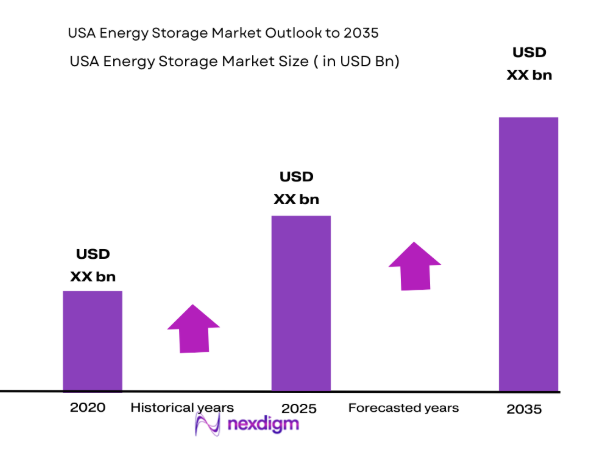
The USA energy storage market is expected to reach USD ~ billion based on a recent historical assessment, driven by the increasing adoption of renewable energy, grid modernization, and government incentives for energy storage systems. The rising demand for backup power, energy efficiency, and sustainability has bolstered investments in energy storage technologies like lithium-ion batteries and flow batteries, aiding the market’s growth. Technological advancements and declining system costs further stimulate the market’s development, especially in residential and commercial sectors.
The dominance of states like California, Texas, and New York can be attributed to their strong renewable energy initiatives and robust government incentives for energy storage systems. These regions also feature a large number of solar energy installations, creating a significant demand for energy storage to ensure a reliable power supply. The availability of large-scale infrastructure and high energy consumption further supports their leadership in the energy storage market. The regulatory environment and climate policies in these states also encourage innovation and deployment of energy storage solutions.
Market Segmentation
By Product Type
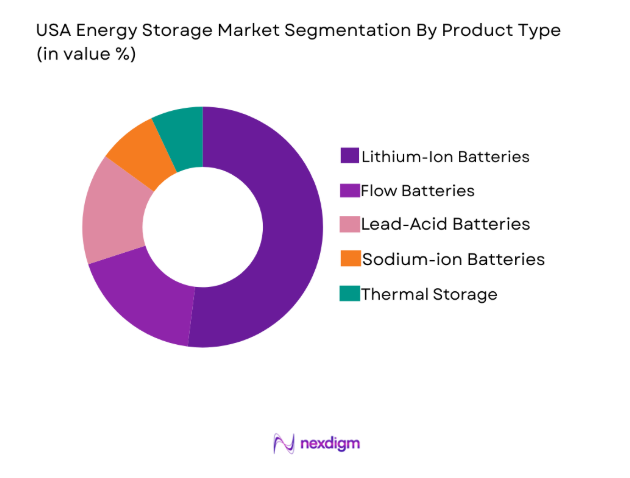
The USA energy storage market is segmented by product type into lithium-ion batteries, flow batteries, lead-acid batteries, sodium-ion batteries, and thermal storage. Recently, lithium-ion batteries have captured a dominant market share due to their cost efficiency, energy density, and the growing demand for electric vehicles and renewable energy storage systems. Their widespread adoption in both residential and commercial applications has made them the preferred choice for energy storage across various sectors. The significant advancements in lithium-ion battery technology and the availability of government incentives have further boosted their market presence, making them the dominant sub-segment.
By Platform Type
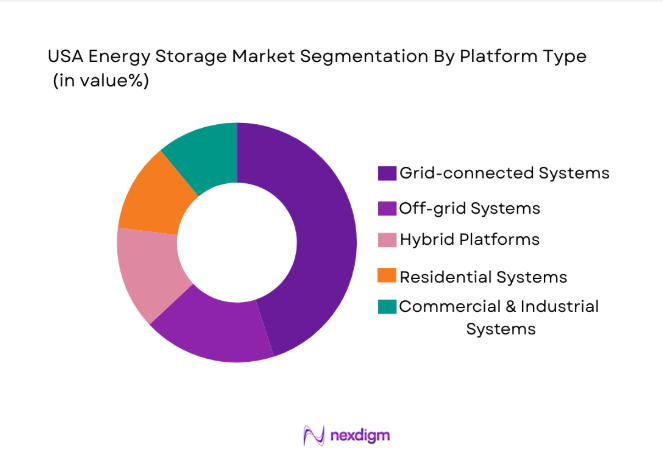
The USA energy storage market is segmented by platform type into grid-connected systems, off-grid systems, hybrid systems, residential systems, and commercial & industrial systems. Grid-connected systems dominate the market due to their ability to integrate renewable energy and stabilize the grid. With increasing investments in renewable energy and grid modernization, these systems have become the preferred choice for large-scale energy storage, driving their market leadership.
Competitive Landscape
The USA energy storage market is highly competitive, with several major players involved in the development and deployment of energy storage solutions. Companies like Tesla, AES Energy Storage, and Fluence Energy lead the market by providing innovative products that meet the increasing demand for renewable energy integration and grid stability. The market has seen substantial consolidation, with large energy corporations acquiring smaller firms to expand their technological capabilities and market reach. This consolidation has further driven the adoption of energy storage technologies and accelerated the development of advanced energy storage solutions.
| Company Name | Establishment Year | Headquarters | Technology Focus | Market Reach | Key Products | Revenue | Market-Specific Parameter |
| Tesla, Inc. | 2003 | Palo Alto, CA | ~ | ~ | ~ | ~ | ~ |
| AES Energy Storage | 1981 | Arlington, VA | ~ | ~ | ~ | ~ | ~ |
| Fluence Energy | 2018 | Washington, D.C. | ~ | ~ | ~ | ~ | ~ |
| LG Chem | 1947 | Seoul, South Korea | ~ | ~ | ~ | ~ | ~ |
| NextEra Energy | 1925 | Juno Beach, FL | ~ | ~ | ~ | ~ | ~ |
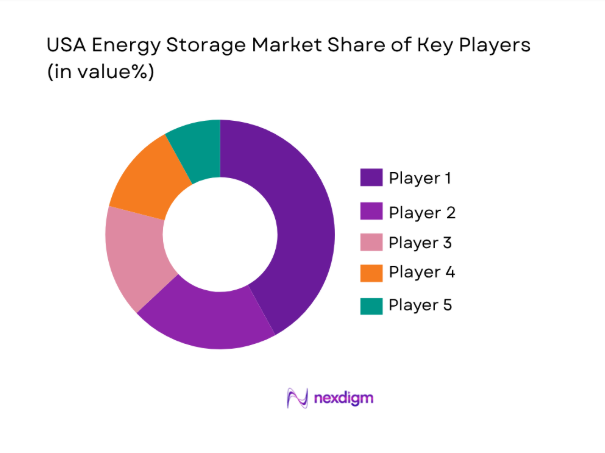
USA Energy Storage Market Analysis
Growth Drivers
Government Incentives
Government incentives for energy storage systems, such as tax credits and rebates, have significantly contributed to market growth by reducing the initial costs for consumers and businesses. These programs are designed to support the adoption of renewable energy, allowing for increased integration of energy storage systems into homes, businesses, and utilities. As the USA continues its push for a cleaner energy future, federal and state governments have committed to expanding these incentives to ensure more widespread adoption of storage systems. These incentives often make energy storage more financially viable for a variety of customers, ranging from residential consumers to large-scale utility companies. With federal efforts supporting energy storage, including funds for energy innovation, the market is expected to continue growing. As a result, these programs have played a central role in advancing storage technology and promoting its wide-scale integration into the energy grid, thus contributing significantly to market expansion.
Technological Advancements
Advances in battery technology, particularly in lithium-ion batteries, have played a major role in driving the USA energy storage market. Over the years, there have been significant improvements in energy density, battery life, and charging speed, all of which have contributed to the increased efficiency and cost-effectiveness of storage solutions. Additionally, breakthroughs in flow batteries and solid-state batteries are expected to further revolutionize the market, enhancing storage capacity and expanding the application of energy storage systems across a wider range of industries. The continuous improvement in battery performance ensures that these storage solutions are more reliable and accessible for customers. The rapid pace of technological development, combined with the decreasing costs of battery production, also helps make energy storage more competitive with traditional energy sources, boosting adoption across both residential and commercial sectors. These advancements in battery technology represent one of the key factors driving the growth of the energy storage market in the USA.
Market Challenges
High Initial Costs
One of the primary challenges facing the USA energy storage market is the high upfront cost of energy storage systems. While prices have been steadily declining, the initial investment required for both residential and commercial energy storage solutions remains a significant barrier. Even with incentives in place, many consumers and businesses still find it difficult to justify the expense, especially when the benefits are long-term. The relatively high installation costs for batteries, inverters, and other equipment necessary for energy storage systems are often a deterrent for potential buyers, particularly small businesses and homeowners. Although long-term savings can be achieved through lower energy bills and increased energy independence, the initial capital outlay continues to challenge market penetration. As the technology matures and economies of scale come into play, these costs are expected to decline, but for now, the high initial costs remain a substantial hurdle for the widespread adoption of energy storage systems.
Regulatory Barriers
The USA energy storage market faces a range of regulatory barriers, which can delay or inhibit the deployment of energy storage systems. These include complex permitting processes, inconsistent state-level regulations, and a lack of standardized interconnection requirements for energy storage systems. In certain regions, local jurisdictions have implemented their own permitting and installation processes, creating inefficiencies that can slow down deployment. This patchwork of regulations makes it difficult for companies to operate across different states, as the rules and standards vary from place to place. Without a clear and consistent regulatory framework, it can be difficult for energy storage companies to operate efficiently and for consumers to access storage solutions. Additionally, delays in regulatory approval can hinder the timely implementation of energy storage projects, further limiting market growth. A streamlined regulatory process at the federal and state levels would significantly accelerate market expansion by providing a clear path for both developers and consumers to follow.
Opportunities
Battery Recycling
As the USA energy storage market grows, the need for battery recycling technologies is becoming increasingly important. With the rise in demand for lithium-ion batteries and other energy storage solutions, the accumulation of used batteries will also increase. Developing efficient recycling technologies presents an opportunity for companies to tap into this growing segment by providing sustainable solutions for the disposal and reuse of battery materials. Recycling batteries not only helps reduce environmental impacts but also ensures that valuable materials such as lithium, cobalt, and nickel are recovered and reused in new battery production. This process supports the development of a circular economy within the energy storage industry. Furthermore, innovations in battery recycling can reduce the need for new raw materials, lowering the environmental footprint of energy storage systems. As more consumers adopt energy storage solutions, battery recycling will become a crucial component of the overall sustainability strategy for the market, creating significant opportunities for companies involved in both battery manufacturing and recycling.
Microgrid Development
The demand for energy independence and reliable power sources is driving the growth of microgrid systems. Microgrids, which are localized energy systems that can operate independently from the main grid, rely heavily on energy storage solutions to ensure uninterrupted power supply. As more regions in the USA invest in microgrid infrastructure, especially in remote or disaster-prone areas, the need for integrated energy storage systems will continue to rise. These systems, which combine renewable energy sources like solar power with energy storage, provide a sustainable and resilient solution to local energy challenges. Microgrids are particularly valuable in areas prone to natural disasters such as hurricanes, wildfires, and floods, where traditional grid infrastructure may be unreliable or inaccessible. This presents a significant opportunity for energy storage companies to provide essential solutions for microgrid projects, driving market growth. With increasing demand for energy security, microgrids are expected to become an integral part of the USA’s energy infrastructure, creating a significant opportunity for energy storage solutions to play a key role in these systems.
Future Outlook
The USA energy storage market is poised for continued growth over the next five years, driven by technological innovations, declining system costs, and expanding government support. With increasing investments in renewable energy integration, energy storage solutions will play a crucial role in ensuring grid stability and reducing reliance on fossil fuels. Additionally, the growing demand for electric vehicles and the expansion of microgrid systems will further increase the adoption of energy storage technologies. Technological advancements in battery storage, coupled with supportive policies, are expected to propel the market forward.
Major Players
- Tesla, Inc.
- AES Energy Storage
- Fluence Energy
- LG Chem
- NextEra Energy
- Siemens AG
- BYD Company
- VARTA AG
- Schneider Electric
- Panasonic Corporation
- ABB Ltd.
- GE Renewable Energy
- Samsung SDI
- Hitachi Chemical
- Enel X
Key Target Audience
- Investments and venture capitalist firms
- Government and regulatory bodies
- Energy providers
- Residential consumers
- Commercial & industrial businesses
- Renewable energy solution providers
- Battery manufacturers
Research Methodology
Step 1: Identification of Key Variables
This step involves identifying the key factors affecting the USA energy storage market, including market size, growth drivers, and challenges. These variables will be used to build a foundation for analysis.
Step 2: Market Analysis and Construction
In this phase, comprehensive research is conducted to assess market trends, segmentations, and forecasts. A detailed market analysis model is built based on available data.
Step 3: Hypothesis Validation and Expert Consultation
The market findings are validated with industry experts to ensure the accuracy and reliability of the results. Expert opinions provide valuable insights into market dynamics and help refine hypotheses.
Step 4: Research Synthesis and Final Output
Finally, all findings are synthesized into a cohesive report, which includes detailed analysis, forecasts, and recommendations for stakeholders in the USA energy storage market.

- Executive Summary
- Research Methodology (Definitions, Scope, Industry Assumptions, Market Sizing Approach, Primary & Secondary Research Framework, Data Collection & Verification Protocol, Analytic Models & Forecast Methodology, Limitations & Research Validity Checks)

- Market Definition and Scope
- Value Chain & Stakeholder Ecosystem
- Regulatory / Certification Landscape
- Sector Dynamics Affecting Demand
- Strategic Initiatives & Infrastructure Growth

- Growth Drivers
Government Incentives and Subsidies
Increasing Renewable Energy Adoption
Declining Battery Costs - Market Challenges
Regulatory Barriers
High Initial Investment
Technological Limitations - Market Opportunities
Expansion of Battery Recycling
Integration with Electric Vehicle Charging Infrastructure
Growth in Microgrid Development - Trends
Advances in Battery Chemistry
Rise in Energy Storage as a Service (ESaaS) - Government Regulations
Energy Storage Standards and Certifications
Regulatory Support for Renewable Integration
Incentives for Storage Systems - SWOT Analysis
- Porter’s Five Forces

- By Market Value, 2020-2025
- By Installed Units, 2020-2025
- By Average System Price, 2020-2025
- By System Complexity Tier, 2020-2025

- By System Type (In Value%)
Lithium-ion Batteries
Flow Batteries
Lead-acid Batteries
Sodium-ion Batteries
Thermal Storage - By Platform Type (In Value%)
Grid-connected Systems
Off-grid Systems
Hybrid Systems
Residential Systems
Commercial & Industrial Systems - By Fitment Type (In Value%)
On-premise Solutions
Cloud-based Solutions
Hybrid Solutions
Integrated Solutions - By End User Segment (In Value%)
Utility Providers
Commercial & Industrial Users
Residential Users

- Market Share Analysis
- Cross Comparison Parameters (System Type, Platform Type, Procurement Channel, End User Segment, Fitment Type, Price, Battery Chemistry)
- SWOT Analysis of Key Competitors
- Pricing & Procurement Analysis
- Key Players
Tesla, Inc.
AES Energy Storage
Fluence Energy
LG Chem
Siemens AG
BYD Company
E.ON SE
VARTA AG
NextEra Energy
ENGIE
Mitsubishi Electric
Samsung SDI
General Electric
ABB Ltd.
Bloom Energy

- Demand from Large-Scale Utility Projects
- Increasing Interest from Residential Users
- Adoption by Commercial & Industrial Sectors
- Growth in Microgrid Applications

- Forecast Market Value, 2026-2035
- Forecast Installed Units, 2026-2035
- Price Forecast by System Tier, 2026-2035
- Future Demand by Platform, 2026-2035


 Request a Sample
 Ask for Customization
 Get a Quote
 Enquire Now