
 Download PDF
 Download PDF
Market Overview
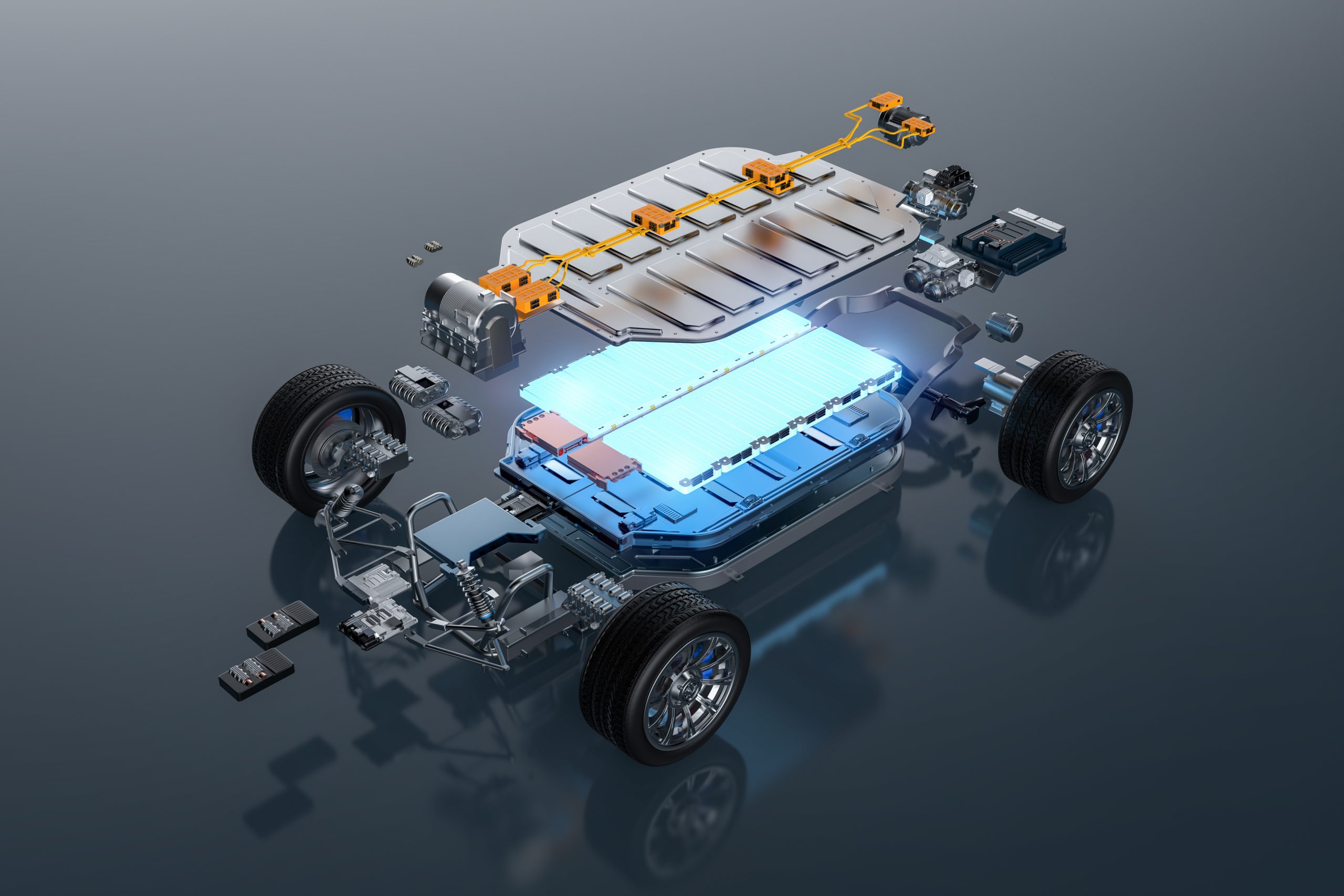
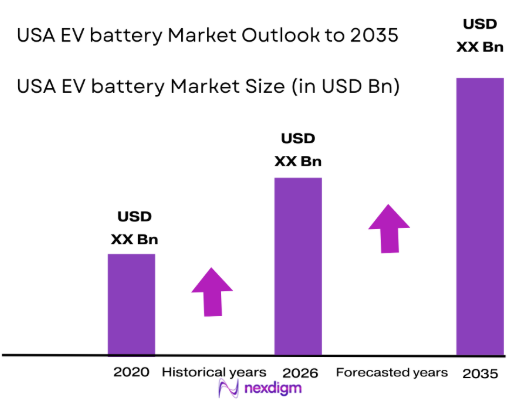
The USA EV Battery market is experiencing substantial growth, driven by the increasing adoption of electric vehicles (EVs) and the push toward reducing carbon emissions. In recent years, the market has reached a value of approximately USD ~ billion, with factors like government incentives, advancements in battery technology, and rising consumer awareness playing key roles in driving this market. The expansion of EV production and the improvement of battery storage capacity are expected to fuel further growth, making EV batteries an essential part of the green energy transition.
The United States has emerged as a key market for EV batteries, with states like California and Texas leading in EV adoption. The dominance of these regions can be attributed to supportive regulatory policies, including tax incentives for EV purchases and charging infrastructure development. Furthermore, strong partnerships between automakers and battery manufacturers in these areas have significantly contributed to the rapid development of the EV battery market. The presence of major EV manufacturers such as Tesla and the rising demand for sustainable energy solutions are expected to continue shaping the market landscape in the coming years.
Market Segmentation
By Product Type
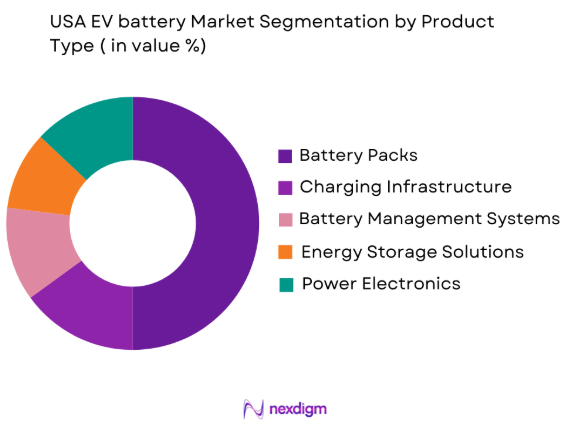
The USA EV battery market is segmented by product type into battery packs, charging infrastructure, battery management systems (BMS), energy storage solutions, and power electronics. Recently, battery packs have dominated the market share due to the significant increase in demand for electric vehicles, which directly drives the demand for battery packs. The focus on improving battery performance, capacity, and longevity has further cemented the dominance of this sub-segment, supported by advancements in lithium-ion battery technology and large-scale investments from automakers.
By Platform Type
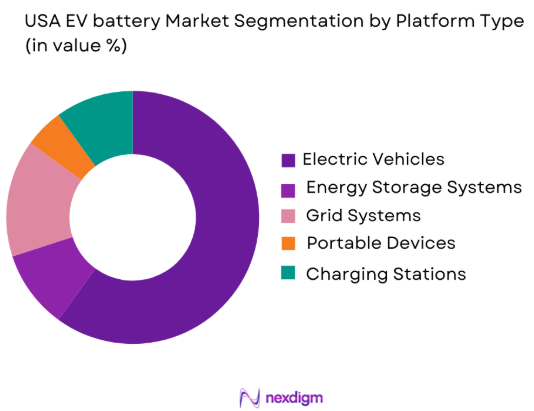
The USA EV battery market is also segmented by platform type, including electric vehicles, energy storage systems, grid systems, portable devices, and charging stations. Electric vehicles have the dominant share due to the rapid growth of the EV market, where automotive manufacturers are investing heavily in EV battery production to meet increasing consumer demand. This platform type continues to experience growth due to improved vehicle range, reduced charging times, and enhanced infrastructure, making electric vehicles more attractive to consumers.
Competitive Landscape
The USA EV battery market is highly competitive, with several key players involved in the production and innovation of battery technologies. Major companies like Tesla, LG Chem, and Panasonic are leading the charge in terms of market presence and technology development. With the increasing emphasis on electric vehicles, these companies are consolidating their market position through strategic partnerships and investments in advanced battery technologies. The competition in the market is expected to intensify as more players enter the space, focusing on improving the performance, efficiency, and sustainability of EV batteries.
| Company Name | Establishment Year | Headquarters | Technology Focus | Market Reach | Key Products | Revenue | Additional Parameter |
| Tesla | 2003 | Palo Alto, CA | ~ | ~ | ~ | ~ | ~ |
| LG Chem | 1947 | Seoul, South Korea | ~ | ~ | ~ | ~ | ~ |
| Panasonic | 1918 | Osaka, Japan | ~ | ~ | ~ | ~ | ~ |
| BYD | 1995 | Shenzhen, China | ~ | ~ | ~ | ~ | ~ |
| Samsung SDI | 1970 | Seoul, South Korea | ~ | ~ | ~ | ~ | ~ |
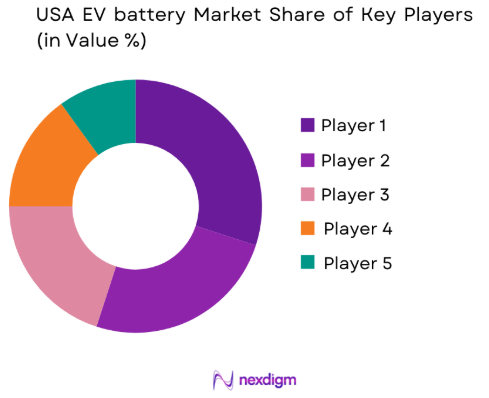
USA EV battery Market Analysis
Growth Drivers
Government Incentives
The growth of the USA EV battery market is significantly driven by government incentives that promote electric vehicle adoption. Policies such as tax rebates, grants for EV manufacturers, and funding for charging infrastructure have established a supportive environment for EV battery production. These incentives help make electric vehicles more affordable for consumers, while simultaneously encouraging automakers to invest in advanced battery technologies. As these policies evolve and expand, they are expected to further increase the demand for EV batteries, stimulating market growth. This continued government support plays a crucial role in driving the widespread adoption of electric vehicles and advancing battery technology innovation.
Technological Advancements in Battery Chemistry
Technological advancements in battery chemistry are a key growth driver for the EV battery market. The transition from conventional lithium-ion batteries to more efficient technologies like solid-state and lithium-sulfur batteries is set to improve energy storage capacity, reduce costs, and extend battery lifespan. Ongoing research focused on enhancing energy density and developing faster-charging solutions will further fuel the demand for EV batteries. Automakers are increasingly prioritizing these innovations to offer vehicles with longer driving ranges and shorter charging times, meeting consumer demands for convenience and efficiency. These advancements will continue to shape the future of the EV market, making electric vehicles more attractive and accessible to a broader audience.
Market Challenges
High Production Costs
A major challenge for the USA EV battery market is the high production cost of batteries. Despite fluctuations in the prices of raw materials like lithium, cobalt, and nickel, the cost of battery production remains high, especially for advanced battery technologies. This directly impacts the overall cost of electric vehicles, making them less affordable for some consumers. Furthermore, the complexity of the battery manufacturing process and the substantial investment required to scale up production facilities pose significant barriers for new entrants. These factors contribute to the slow reduction in battery costs, limiting the widespread adoption of electric vehicles and hindering market growth.
Supply Chain Disruptions
The USA EV battery market faces significant challenges related to supply chain disruptions, especially in securing a steady supply of raw materials essential for battery production. Shortages of critical materials like lithium and cobalt, compounded by geopolitical tensions and trade restrictions, have created difficulties for battery manufacturers. These disruptions lead to production delays and higher material costs, which ultimately impact the cost and availability of EV batteries. As a result, the broader electric vehicle market faces challenges, including slower adoption rates. Ensuring a stable supply of these materials is crucial for the continued growth and development of the EV battery sector.
Opportunities
Battery Recycling
Battery recycling offers a major opportunity for the USA EV battery market. As electric vehicle adoption continues to rise, the demand for sustainable recycling methods for used EV batteries becomes increasingly important. Recycling enables the recovery of valuable materials such as lithium, cobalt, and nickel, which can be reused in new battery production, reducing the need for virgin resources. Companies investing in efficient recycling processes are positioned to benefit from this growing trend, contributing to environmental sustainability while also lowering raw material costs over time. This shift not only supports the circular economy but also helps mitigate the environmental impact of battery production, creating long-term economic and ecological benefits for the industry.
Partnerships with Renewable Energy Providers
Another opportunity for the USA EV battery market is the collaboration with renewable energy providers. As the demand for clean energy rises, integrating EV batteries with renewable sources such as solar and wind power presents a significant growth avenue. By linking EV batteries with solar and wind power, a seamless energy storage and distribution system can be created, optimizing energy use and improving grid stability. This integration offers consumers more sustainable and cost-effective energy solutions, both for residential and commercial use. EV battery manufacturers can tap into the growing renewable energy sector by providing energy storage systems, contributing to the transition toward greener, more efficient energy consumption while expanding their market reach.
Future Outlook
The future of the USA EV battery market looks promising, driven by continued advancements in battery technology and growing demand for electric vehicles. Over the next five years, the market is expected to experience steady growth, supported by government incentives, technological innovations, and increasing consumer adoption. As battery manufacturers focus on improving energy density, reducing costs, and enhancing charging infrastructure, the market is poised to meet the rising demand for EV batteries. The integration of renewable energy solutions with EV battery systems will further accelerate growth, offering additional opportunities for players in the market.
Major Players
- Tesla
- LG Chem
- Panasonic
- BYD
- Samsung SDI
- General Motors
- Ford Motor Company
- CATL
- Nissan
- Rivian
- Volkswagen
- BMW
- Hyundai
- Toyota
- ChargePoint
Key Target Audience
- Investments and venture capitalist firms
- Government and regulatory bodies
- Electric vehicle manufacturers
- Energy providers
- Automotive suppliers
- Battery manufacturers
- Research and development institutions
- Public and private sector sustainability programs
Research Methodology
Step 1: Identification of Key Variables
This step involves identifying the key variables driving the market, such as government policies, consumer adoption rates, and advancements in battery technology. These factors are analyzed to build a foundation for the research.
Step 2: Market Analysis and Construction
A comprehensive analysis of the current market landscape is conducted, including market size, key players, and consumer trends. This step helps to understand the dynamics and potential growth of the EV battery market.
Step 3: Hypothesis Validation and Expert Consultation
Experts in the field are consulted to validate assumptions and hypotheses related to the market. Insights from industry leaders help refine market projections and identify emerging trends.
Step 4: Research Synthesis and Final Output
All data and insights gathered from various sources are synthesized to create the final market report. This step includes the formulation of conclusions and actionable recommendations for stakeholders.

- Executive Summary
- Research Methodology (Definitions, Scope, Industry Assumptions, Market Sizing Approach, Primary & Secondary Research Framework, Data Collection & Verification Protocol, Analytic Models & Forecast Methodology, Limitations & Research Validity Checks)

- Market Definition and Scope
- Value Chain & Stakeholder Ecosystem
- Regulatory / Certification Landscape
- Sector Dynamics Affecting Demand
- Strategic Initiatives & Infrastructure Growth

- Growth Drivers
Increasing Demand for Electric Vehicles
Government Incentives for EV Adoption
Technological Advancements in Battery Chemistry - Market Challenges
High Production Costs of EV Batteries
Supply Chain Disruptions in Raw Materials
Energy Density Limitations in Batteries - Market Opportunities
Integration of Renewable Energy in EV Batteries
Rise of Battery Recycling Technologies
Partnerships with Tech Giants for Battery Innovations - Trends
Shift Towards Lithium-Ion and Solid-State Batteries
Adoption of Fast Charging Technologies
Increase in Battery Leasing Models - Government Regulations
- SWOT Analysis of Key Competitors
- Porter’s Five Forces

- By Market Value, 2020-2025
- By Installed Units, 2020-2025
- By Average System Price, 2020-2025
- By System Complexity Tier, 2020-2025

- By System Type (In Value%)
Battery Packs
Charging Infrastructure
Battery Management Systems
Energy Storage Solutions
Power Electronics - By Platform Type (In Value%)
Electric Vehicles
Energy Storage Systems
Grid Systems
Portable Devices
Charging Stations - By Fitment Type (In Value%)
OEM
Aftermarket
Integrated Solutions
Stand-alone Solutions
Modular Systems - By End User Segment (In Value%)
Automotive Manufacturers
Energy Providers
Battery Manufacturers
Government Agencies
Private Consumers - By Procurement Channel (In Value%)
Direct Procurement
Third-party Suppliers
Online Bidding Platforms
Government Contracts
Retail and Wholesale

- Market Share Analysis
- Cross Comparison Parameters (Battery Type, Platform Type, Procurement Channel, End User Segment, Fitment Type, Energy Density, Charging Speed, Cost of Production, Raw Material Sourcing, Battery Lifespan)
- SWOT Analysis of Key Competitors
- Pricing & Procurement Analysis
- Key Players
Tesla
General Motors
Panasonic
LG Chem
CATL
Samsung SDI
BYD
SK Innovation
Ford Motor Company
BMW Group
Nissan
Volkswagen
Eaton
ChargePoint
ABB

- Automotive Manufacturers Focus on Battery Efficiency
- Energy Providers Expanding Charging Networks
- Battery Manufacturers Investing in R&D
- Government Policies Promoting EV Adoption

- Forecast Market Value, 2026-2035
- Forecast Installed Units, 2026-2035
- Price Forecast by System Tier, 2026-2035
- Future Demand by Platform, 2026-2035


 Request a Sample
 Ask for Customization
 Get a Quote
 Enquire Now