

 Download PDF
Market Overview
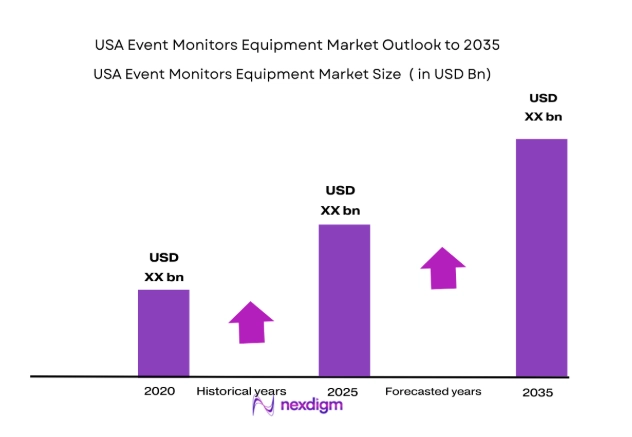
The USA Event Monitors Equipment Market is estimated to reach a market value of approximately USD ~ billion based on a recent historical assessment. This market is primarily driven by the increasing demand for advanced monitoring systems across various industries, especially healthcare, broadcasting, and event management sectors. Additionally, advancements in sensor technologies, coupled with the growing need for real-time data monitoring and analytics, are fueling this growth. Factors like improved infrastructure, regulatory requirements, and the rising awareness of data security are also contributing to the market’s expansion. The market is poised for steady growth due to the growing trend of digitalization and technological advancements.
Certain regions, particularly metropolitan hubs in the USA such as New York, Los Angeles, and Chicago, dominate the event monitoring equipment market due to their strong infrastructure and business ecosystems. These cities offer favorable conditions for technology adoption and are home to numerous industries, including healthcare, event management, and broadcasting. Their proximity to key stakeholders, including government agencies, large enterprises, and major event venues, further reinforces their dominance. Additionally, the presence of research and development facilities in these cities facilitates innovation, driving the growth of the event monitoring market.
Market Segmentation
By Product Type:
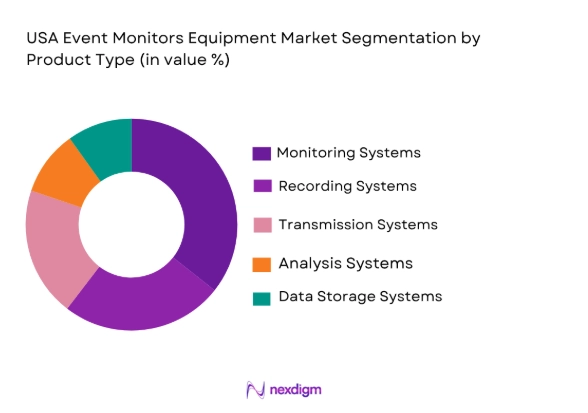
The USA Event Monitors Equipment market is segmented by product type into monitoring systems, recording systems, transmission systems, analysis systems, and data storage systems. Recently, monitoring systems have garnered the largest market share due to their essential role in real-time event surveillance and analytics. This segment’s dominance is attributed to the increasing demand for high-accuracy monitoring systems, particularly in sectors like healthcare, where real-time patient monitoring is crucial. Moreover, the increasing adoption of IoT-enabled devices that provide continuous monitoring and the growing awareness of the need for real-time data tracking in various industries are further fueling the market’s growth in this sub-segment.
By Platform Type:
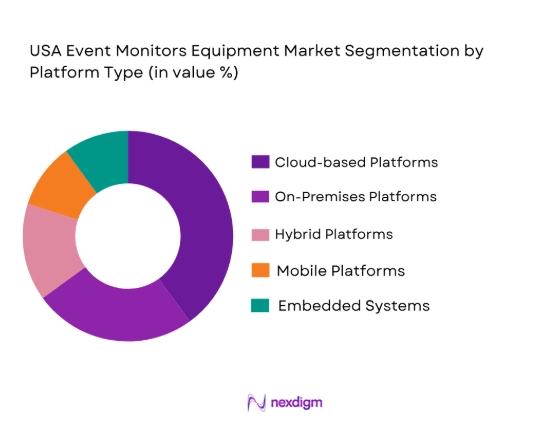
The USA Event Monitors Equipment market is segmented by platform type into cloud-based platforms, on-premise platforms, hybrid platforms, mobile platforms, and embedded systems. Recently, cloud-based platforms have emerged as the dominant sub-segment, driven by the growing trend of digital transformation and the increasing need for scalable, flexible solutions. The benefits of cloud-based platforms, such as ease of remote access, cost-efficiency, and enhanced data storage capacity, have led to their widespread adoption in industries like healthcare, event management, and government sectors. The shift towards cloud solutions, alongside the integration of AI and machine learning capabilities, is further driving the demand for cloud-based monitoring platforms. \
Competitive Landscape
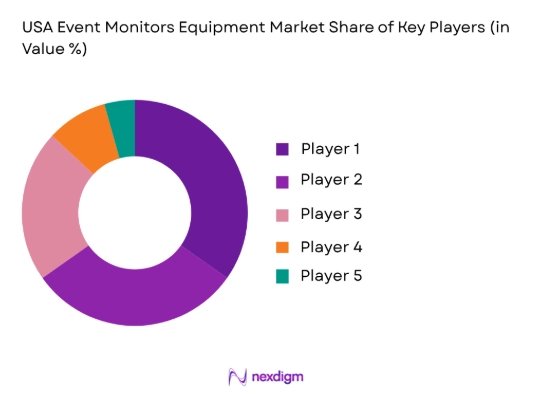
The USA Event Monitors Equipment market is competitive, with several prominent players continuously innovating and investing in R&D to maintain their market positions. This competitive environment has led to market consolidation, with mergers and acquisitions occurring among top industry players. Major players in this space are leveraging advanced technologies such as IoT, AI, and cloud computing to offer more sophisticated and scalable solutions. The dominance of these players is a result of their strong brand presence, extensive distribution networks, and technological advancements that cater to the rising demand for high-performance monitoring systems across various industries.
| Company Name | Establishment Year | Headquarters | Technology Focus | Market Reach | Key Products | Revenue (USD) |
| Honeywell International Inc. | 1906 | Morris Plains, NJ, USA | ~ | ~ | ~ | ~ |
| Siemens AG | 1847 | Munich, Germany | ~ | ~ | ~ | ~ |
| Johnson Controls | 1885 | Cork, Ireland | ~ | ~ | ~ | ~ |
| Bosch Security Systems | 1886 | Stuttgart, Germany | ~ | ~ | ~ | ~ |
| Tyco International | 1960 | Cork, Ireland | ~ | ~ | ~ | ~ |
USA Event Monitors Equipment Market Analysis
Growth Drivers
Increasing Adoption of IoT in Event Monitoring:
The integration of Internet of Things (IoT) technologies into event monitoring systems has significantly driven the market’s growth. IoT allows for the seamless collection and real-time transmission of data, making monitoring systems more efficient and reliable. The shift towards connected devices that can monitor, analyze, and report on events instantaneously has transformed industries such as healthcare, security, and broadcasting. With IoT, data is gathered from various sensors and devices, improving the accuracy of event detection and enabling faster responses to real-time incidents. This has increased the need for advanced monitoring solutions that can manage vast amounts of data and provide actionable insights. Furthermore, the growing adoption of smart cities and connected infrastructure has further driven the demand for IoT-based monitoring systems. As a result, event monitoring equipment suppliers are focusing on enhancing the capabilities of their systems by integrating IoT functionalities to cater to these new demands, ensuring that they remain competitive in the ever-evolving market.
Regulatory Compliance and Data Security Requirements:
Another key driver for the growth of the event monitoring equipment market is the increasing regulatory focus on data security and compliance across industries. Governments and regulatory bodies are imposing stringent rules on data collection, storage, and transmission to ensure privacy and security. These regulations are particularly prominent in sectors like healthcare, where patient data must be securely monitored and managed, and in the event management and broadcasting industries, where event data security is a critical concern. As businesses and organizations are required to comply with these regulations, the demand for advanced monitoring solutions that ensure secure data transmission and compliance with regulatory standards has surged. This trend is particularly strong in the USA, where stringent data privacy laws such as HIPAA (Health Insurance Portability and Accountability Act) and other security frameworks mandate the use of secure monitoring equipment. As companies increasingly invest in technology that can meet these regulatory requirements, the event monitoring market continues to grow at a steady pace.
Market Challenges
High Initial Costs of Advanced Systems:
One of the significant challenges facing the USA Event Monitors Equipment market is the high initial costs associated with advanced monitoring systems. While these systems offer high performance, they also come with significant capital expenditure that can be a barrier to entry for many smaller organizations and startups. This challenge is particularly pronounced in sectors such as healthcare, where smaller medical facilities may not have the budget to invest in sophisticated event monitoring solutions. Despite the long-term benefits of improved efficiency and compliance with regulations, many businesses are hesitant to invest in these costly systems, especially when economic conditions are unstable. The substantial initial outlay required for installation, combined with the need for regular system upgrades and maintenance, further increases the financial burden on businesses. As a result, companies must evaluate the total cost of ownership, including not only the equipment purchase but also ongoing costs like maintenance and updates. The challenge of high initial costs is compounded by the rapid pace of technological advancements, as businesses must continually invest in upgrading their systems to stay competitive.
Integration Challenges in Legacy Systems:
Another challenge in the event monitoring market is the difficulty of integrating new systems with existing legacy infrastructure. Many industries, especially healthcare and government sectors, still rely on outdated monitoring systems that are not easily compatible with modern technologies. These legacy systems were designed using older hardware and software, which makes integration with cloud-based platforms or IoT-enabled devices challenging. This lack of compatibility can lead to inefficiencies, higher operational costs, and limited functionality when attempting to implement newer monitoring solutions. Moreover, the cost and time required to retrofit or replace legacy systems can be prohibitive for organizations that have already invested heavily in their current infrastructure. This challenge is particularly relevant in industries with stringent budget constraints, such as small healthcare providers, who may struggle to justify the costs of system upgrades. The lack of interoperability between old and new systems creates significant obstacles for businesses looking to improve their event monitoring capabilities while minimizing disruption to their existing operations.
Opportunities
Rising Demand for Real-Time Analytics in Healthcare:
One of the most significant opportunities in the USA Event Monitors Equipment market is the growing demand for real-time analytics in the healthcare sector. As healthcare providers increasingly focus on improving patient outcomes, the need for real-time monitoring and data analytics is becoming more critical. With the rise of chronic diseases and an aging population, healthcare facilities require advanced monitoring solutions that can provide accurate, real-time data on patients’ conditions. This shift toward continuous monitoring is driving the demand for event monitoring systems that can track vital signs, alert healthcare providers to emergencies, and provide data-driven insights. Furthermore, the increasing use of wearable devices and IoT-based solutions in healthcare is transforming the way patient data is collected and analyzed. These technologies enable healthcare providers to monitor patients remotely, improving care delivery and reducing hospital readmission rates. As the healthcare industry continues to prioritize real-time monitoring, event monitoring equipment providers have the opportunity to develop solutions that cater specifically to the evolving needs of healthcare facilities and patients, ensuring the delivery of better, faster care.
Expansion of Smart Cities and IoT-Enabled Infrastructure:
The rise of smart cities and IoT-enabled infrastructure presents a major opportunity for growth in the USA Event Monitors Equipment market. Smart cities are designed to leverage technology to improve the quality of life for their residents and increase operational efficiency. This includes the use of advanced monitoring systems to track everything from traffic patterns to energy consumption and public safety. As more cities adopt smart infrastructure, the demand for event monitoring equipment that can seamlessly integrate with IoT devices and provide real-time data will continue to increase. These systems will play a crucial role in urban planning and disaster management, enabling authorities to respond quickly to emergencies and manage resources more efficiently. Moreover, the growing trend of connected devices within smart cities is driving the need for advanced event monitoring solutions that can handle the vast amounts of data generated by these devices. The expansion of smart cities presents a long-term growth opportunity for event monitoring equipment providers, particularly those offering scalable, IoT-enabled solutions.
Future Outlook
The future of the USA Event Monitors Equipment market looks promising, with expected growth driven by technological advancements, increased regulatory requirements, and the continued expansion of IoT-enabled infrastructure. Over the next five years, the demand for advanced monitoring solutions will be fueled by the increasing need for real-time data collection, analytics, and security in various sectors such as healthcare, event management, and government. Innovations in sensor technologies, AI, and cloud computing are expected to drive the development of more sophisticated and cost-effective solutions. Additionally, the rise of smart cities and the increasing focus on digitalization across industries will further contribute to the market’s expansion. Regulatory support for enhanced data privacy and security will also play a significant role in shaping the market’s future trajectory.
Major Players
- Honeywell International Inc.
- Siemens AG
- Johnson Controls
- Bosch Security Systems
- Tyco International
- GE Digital
- ABB Ltd.
- Emerson Electric Co.
- Hikvision Digital Technology
- Motorola Solutions Inc.
- FlirSystems
- Kronos Incorporated
- Daktronics
- Vicon Industries
- Schneider Electric
Key Target Audience
- Investments and venture capitalist firms
- Government and regulatory bodies
- Healthcare providers
- Event management companies
- Broadcasting networks
- Industrial sectors
- Technology integrators
- Infrastructure developers
Research Methodology
Step 1: Identification of Key Variables
Identification of key market variables and factors influencing the event monitoring equipment market, including technological trends, regulatory requirements, and economic conditions.
Step 2: Market Analysis and Construction
Construction of the market model by analyzing historical data, market trends, and key drivers influencing market dynamics.
Step 3: Hypothesis Validation and Expert Consultation
Validation of the hypotheses and market assumptions through consultations with industry experts and stakeholders across key market segments.
Step 4: Research Synthesis and Final Output
Synthesis of the research findings into a comprehensive market report, providing actionable insights and future forecasts.

- Executive Summary
- Research Methodology (Definitions, Scope, Industry Assumptions, Market Sizing Approach, Primary & Secondary Research Framework, Data Collection & Verification Protocol, Analytic Models & Forecast Methodology, Limitations & Research Validity Checks)

- Market Definition and Scope
- Value Chain & Stakeholder Ecosystem
- Regulatory / Certification Landscape
- Sector Dynamics Affecting Demand
- Strategic Initiatives & Infrastructure Growth

- Growth Drivers
Rising Demand for Real-time Monitoring
Technological Advancements in Sensor Technology
Increasing Regulatory Requirements for Event Monitoring - Market Challenges
High Initial Installation Costs
Data Privacy and Security Concerns
Complexity in System Integration - Market Opportunities
Growth in Smart Event Monitoring Solutions
Expansion in Emerging Markets
Rising Demand for Data Analytics and Reporting Features - Trends
Integration of AI and Machine Learning
Use of Cloud Computing in Event Monitoring
Growth in Automated Event Detection
Government Regulations
SWOT Analysis of Key Competitors
Porter’s Five Force

- By Market Value, 2020-2025
- By Installed Units, 2020-2025
- By Average System Price, 2020-2025
- By System Complexity Tier, 2020-2025

- By System Type (In Value%)
Monitoring Systems
Recording Systems
Transmission Systems
Analysis Systems
Data Storage Systems - By Platform Type (In Value%)
Cloud-based Platforms
On-premise Platforms
Hybrid Platforms
Mobile Platforms
Embedded Systems - By Fitment Type (In Value%)
Fixed-fit Systems
Portable-fit Systems
Integrated Systems
Modular Systems
Upgradable Systems - By EndUser Segment (In Value%)
Healthcare Institutions
Event Management Companies
Government Agencies
Broadcasting Networks
Industrial Sectors - By Procurement Channel (In Value%)
Direct Procurement
Distributors
Online Platforms
Retailers
OEM Channels

- Market Share Analysis
- CrossComparison Parameters (Market Share, Installed Units, System Complexity, Procurement Channels, End-user Segments)
- SWOT Analysis of Key Competitors
- Pricing & Procurement Analysis
- Porter’s Five Forces
- Key Players
Honeywell International Inc.
Siemens AG
Schneider Electric
Johnson Controls
Tyco International
Bosch Security Systems
GE Digital
ABB Ltd.
Emerson Electric Co.
Hikvision Digital Technology
Motorola Solutions Inc.
Flir Systems
Kronos Incorporated
Daktronics
Vicon Industries

- Healthcare Institutions’ Adoption
- Event Management Sector’s Demand for Scalable Solutions
- Government Agencies’ Increasing Need for Security
- Broadcasting Networks’ Focus on Real-time Data

- Forecast Market Value, 2026-2035
- Forecast Installed Units, 2026-2035
- Price Forecast by System Tier, 2026-2035
- Future Demand by Platform, 2026-2035


 Request a Sample
 Ask for Customization
 Get a Quote
 Enquire Now