
 Download PDF
Market Overview
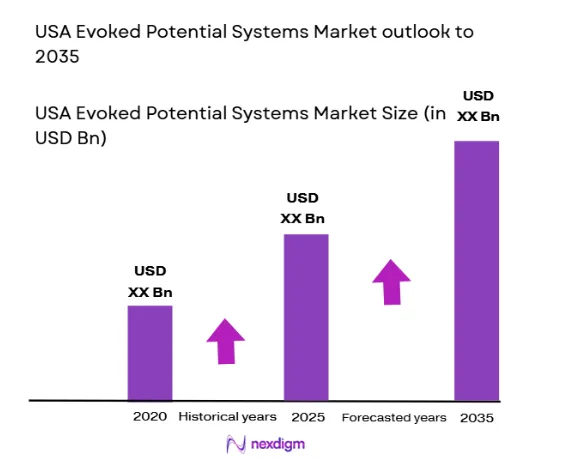
The USA Evoked Potential Systems Market demonstrates a stable valuation of approximately USD ~ billion based on a recent historical assessment, driven primarily by increasing neurological disorder diagnostics and surgical monitoring applications. Growth is supported by the expansion of neurodiagnostic infrastructure and higher demand for intraoperative monitoring systems. Hospitals and specialty clinics are adopting advanced multimodal systems, while continuous technological innovation in signal processing and AI-assisted diagnostics further strengthens the overall market size.
The market is predominantly concentrated in major healthcare hubs such as New York, California, Texas, and Massachusetts, where advanced medical infrastructure and high patient volumes drive adoption. These regions benefit from strong research ecosystems, presence of leading healthcare institutions, and favorable reimbursement frameworks. Additionally, urban centers with specialized neurology and surgical facilities exhibit higher system utilization due to greater awareness and access to advanced diagnostic procedures.
Market Segmentation
By Product Type:
USA Evoked Potential Systems Market is segmented by product type into visual evoked potential systems, auditory evoked potential systems, somatosensory evoked potential systems, motor evoked potential systems, and multimodal evoked potential systems. Recently, multimodal evoked potential systems have a dominant market share due to their ability to integrate multiple diagnostic modalities into a single platform, enhancing clinical efficiency and diagnostic accuracy. Healthcare providers prefer these systems for intraoperative monitoring and comprehensive neurological assessments, as they reduce equipment redundancy and improve workflow. The growing demand for precision diagnostics and real-time monitoring during surgeries further accelerates their adoption. Additionally, advancements in digital signal processing and AI integration have made multimodal systems more reliable and scalable, strengthening their dominance across hospitals and specialized clinics. 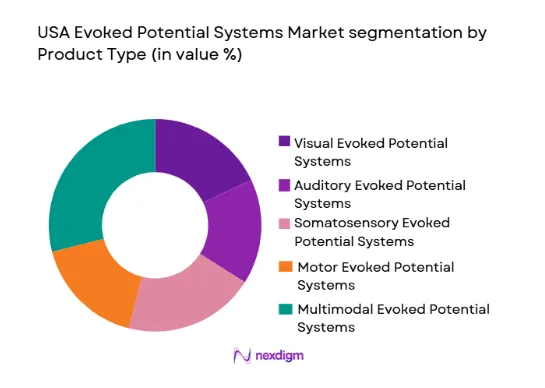
By EndUser:
USA Evoked Potential Systems Market is segmented by end-user segment into hospitals and surgical centers, diagnostic laboratories, neurology clinics, research institutes, and ambulatory care centers. Recently, hospitals and surgical centers have a dominant market share due to the increasing number of complex surgical procedures requiring intraoperative neurophysiological monitoring. These facilities possess advanced infrastructure and skilled personnel necessary for operating sophisticated evoked potential systems. The integration of these systems into operating rooms enhances patient safety and surgical outcomes, making them indispensable. Furthermore, higher patient inflow and availability of reimbursement frameworks encourage hospitals to invest in advanced neurodiagnostic technologies, reinforcing their leading position in the market. 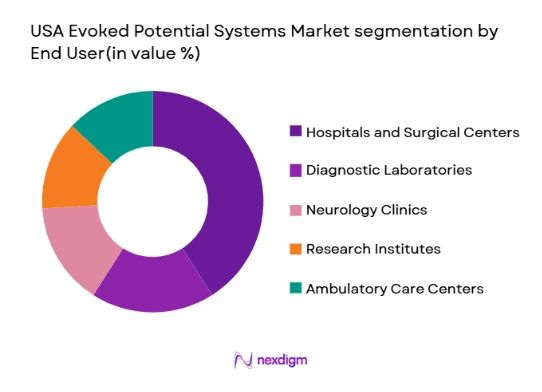
Competitive Landscape
The USA Evoked Potential Systems Market is moderately consolidated, with a mix of established global manufacturers and specialized neurodiagnostic firms competing on technology innovation and product differentiation. Major players focus on integrating AI-driven analytics, improving signal accuracy, and expanding distribution networks. Strategic partnerships, product launches, and acquisitions are commonly observed to strengthen market presence and address evolving clinical requirements.
| Company Name | Establishment Year | Headquarters | Technology Focus | Market Reach | Key Products | Revenue | Additional Parameter (Neurodiagnostic Specialization) |
| Natus Medical Incorporated | 1987 | USA | ~ | ~ | ~ | ~ | ~ |
| Cadwell Industries Inc. | 1979 | USA | ~ | ~ | ~ | ~ | ~ |
| Nihon Kohden Corporation | 1951 | Japan | ~ | ~ | ~ | ~ | ~ |
| Compumedics Limited | 1987 | Australia | ~ | ~ | ~ | ~ | ~ |
| Neurosoft Ltd. | 1992 | Russia | ~ | ~ | ~ | ~ | ~ |
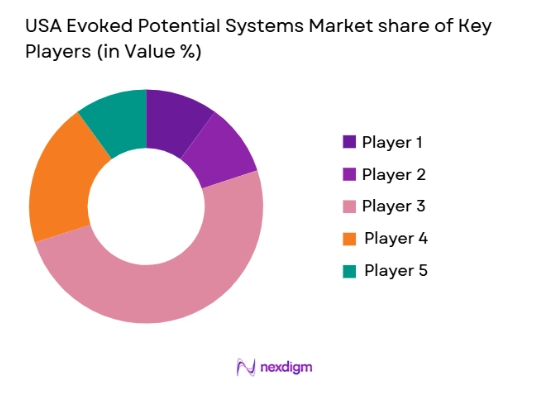
USA Evoked Potential Systems Market Analysis
Growth Drivers
Rising Incidence of Neurological Disorders and Surgical Procedures:
The increasing prevalence of neurological disorders such as epilepsy, multiple sclerosis, and spinal cord injuries significantly drives the demand for evoked potential systems across the USA healthcare landscape. These conditions require precise diagnostic tools for early detection and continuous monitoring, making evoked potential systems essential in clinical settings. Additionally, the rising number of complex surgical procedures, including neurosurgeries and spinal operations, has intensified the need for intraoperative neurophysiological monitoring. These systems help surgeons minimize risks by providing real-time feedback on neural function during procedures. Hospitals are increasingly investing in advanced diagnostic technologies to improve patient outcomes and reduce postoperative complications. The aging population further contributes to the demand as neurological disorders are more prevalent among older individuals. Increased healthcare spending and insurance coverage for diagnostic procedures also support market expansion. Technological advancements have enhanced the accuracy and reliability of these systems, making them more attractive to healthcare providers. The growing awareness among clinicians regarding the benefits of early neurological diagnosis continues to strengthen adoption rates. This combination of clinical need, demographic trends, and technological progress firmly establishes this driver as a key factor influencing market growth.
Technological Advancements and Integration of AI in Neurodiagnostics:
Continuous technological innovation in evoked potential systems has significantly enhanced their capabilities, making them more efficient and reliable for clinical use. The integration of artificial intelligence and machine learning algorithms allows for automated signal interpretation, reducing dependency on highly specialized professionals. These advancements improve diagnostic accuracy and speed, enabling clinicians to make informed decisions more quickly. Modern systems now offer enhanced portability, wireless connectivity, and cloud-based data management, which facilitate remote monitoring and data sharing. Healthcare providers are increasingly adopting these advanced solutions to streamline workflows and improve patient care. The development of multimodal systems that combine various diagnostic capabilities into a single platform further drives efficiency and cost-effectiveness. Additionally, improvements in electrode technology and signal processing have minimized noise interference, ensuring clearer and more accurate readings. Manufacturers are investing heavily in research and development to introduce innovative features that cater to evolving clinical needs. The growing emphasis on precision medicine and personalized treatment plans also supports the adoption of technologically advanced systems. Overall, these technological enhancements play a crucial role in expanding the application scope and market penetration of evoked potential systems.
Market Challenges
High Cost of Advanced Evoked Potential Systems and Maintenance:
The high initial investment required for advanced evoked potential systems remains a significant barrier for widespread adoption, particularly among smaller healthcare facilities. These systems often involve substantial costs related to hardware, software, and installation, which can strain limited budgets. Additionally, ongoing maintenance expenses and the need for periodic upgrades further increase the total cost of ownership. Healthcare providers must also invest in training personnel to operate these systems effectively, adding to operational costs. Smaller clinics and diagnostic centers may find it difficult to justify such investments without guaranteed patient volume. Reimbursement limitations for certain diagnostic procedures further complicate financial feasibility for providers. The cost factor also affects procurement decisions, leading some institutions to opt for refurbished or less advanced equipment. Budget constraints in public healthcare systems can delay or restrict adoption of newer technologies. Manufacturers face challenges in balancing innovation with cost-efficiency to make systems more accessible. Overall, the high cost associated with these systems continues to limit market penetration and slows down adoption rates across certain segments.
Shortage of Skilled Professionals for Accurate Interpretation:
The effective use of evoked potential systems requires highly trained professionals who can accurately interpret complex neurological data. However, there is a notable shortage of such skilled personnel across the healthcare sector, which poses a significant challenge to market growth. Training specialists in neurophysiology and diagnostic interpretation requires substantial time and resources, limiting the availability of qualified experts. Healthcare institutions often face difficulties in recruiting and retaining skilled professionals, especially in non-urban areas. This shortage can lead to delays in diagnosis and reduced utilization of advanced diagnostic systems. Additionally, the complexity of interpreting evoked potential signals increases the risk of diagnostic errors if handled by less experienced personnel. The lack of standardized training programs further exacerbates this issue, resulting in variability in diagnostic accuracy. Automation and AI integration are helping to address this challenge, but they cannot fully replace human expertise. Healthcare providers must invest in continuous training and development programs to bridge this gap. Until the workforce shortage is adequately addressed, it will continue to hinder the full potential of the market.
Opportunities
Expansion of Remote and Home-Based Neurodiagnostic Solutions:
The growing demand for remote healthcare services presents a significant opportunity for the expansion of evoked potential systems into home-based and telemedicine applications. Advances in portable and wearable technologies enable patients to undergo neurological monitoring outside traditional clinical settings. This shift is particularly beneficial for individuals with chronic neurological conditions who require continuous monitoring. Remote diagnostic solutions reduce the need for frequent hospital visits, improving patient convenience and reducing healthcare costs. The integration of cloud-based platforms allows for real-time data transmission and analysis, enabling clinicians to monitor patients remotely. Healthcare providers are increasingly exploring these solutions to expand their service offerings and improve patient engagement. The COVID-19 pandemic has accelerated the adoption of telehealth services, creating a favorable environment for remote diagnostics. Manufacturers are developing compact and user-friendly systems tailored for home use. Regulatory bodies are also supporting telemedicine initiatives, further boosting market potential. This trend is expected to significantly expand the addressable market and create new revenue streams for industry players.
Increasing Investment in Neurological Research and Precision Medicine:
The rising focus on neurological research and precision medicine offers substantial opportunities for the evoked potential systems market. Governments and private organizations are investing heavily in research initiatives aimed at understanding neurological disorders and developing targeted treatments. These efforts require advanced diagnostic tools capable of providing detailed insights into neural function. Evoked potential systems play a critical role in research settings by enabling accurate measurement of neural responses. The shift toward personalized medicine further increases the demand for precise diagnostic technologies. Research institutions and pharmaceutical companies are collaborating to develop innovative therapies, driving the need for advanced neurodiagnostic equipment. Additionally, the growing emphasis on early diagnosis and preventive healthcare supports the adoption of these systems. Technological advancements are enabling more sophisticated research applications, enhancing the value of evoked potential systems. Funding support from government agencies and healthcare organizations continues to strengthen research activities. This increasing investment landscape presents significant growth opportunities for manufacturers and solution providers in the market.
Future Outlook
The USA Evoked Potential Systems Market is expected to witness steady growth over the next five years, driven by technological advancements and increasing demand for neurological diagnostics. The integration of artificial intelligence and portable monitoring systems will enhance diagnostic efficiency and accessibility. Regulatory support for innovative medical devices and telehealth solutions will further strengthen market expansion. Additionally, rising awareness of neurological health and expanding healthcare infrastructure will continue to support sustained demand.
Major Players
- Natus Medical Incorporated
- Cadwell Industries Inc.
- Nihon Kohden Corporation
- Compumedics Limited
- Neurosoft Ltd.
- Electrical Geodesics Inc.
- Medtronic Neurodivision
- Micromed S.p.A.
- Neurocare Group AG
- ANT Neuro B.V.
- EMS Biomedical
- Deymed Diagnostic
- Bio-logic Systems Corp
- Neuronic Systems Inc.
- Advanced Brain Monitoring Inc.
Key Target Audience
- Hospitals and surgical centers
- Neurology clinics
- Diagnostic laboratories
- Ambulatory care centers
- Medical device distributors
- Healthcare procurement organizations
- Investments and venture capitalist firms
- Government and regulatory bodies
Research Methodology
Step 1: Identification of Key Variables
Key variables such as system adoption rates, pricing trends, clinical demand, and technological advancements are identified. These variables form the foundation for market modeling and analysis.
Step 2: Market Analysis and Construction
Market data is collected from secondary sources and validated through primary interviews. A structured model is developed to estimate market size and segmentation.
Step 3: Hypothesis Validation and Expert Consultation
Industry experts and healthcare professionals are consulted to validate assumptions and refine data accuracy. Insights are incorporated to ensure realistic projections.
Step 4: Research Synthesis and Final Output
All findings are synthesized into a comprehensive report, ensuring consistency, accuracy, and actionable insights for stakeholders.

- Executive Summary
- Research Methodology Definitions,Scope, Industry Assumptions, Market Sizing Approach, Primary & Secondary Research Framework, Data Collection & Verification Protocol, Analytic Models & Forecast Methodology, Limitations & Research Validity Checks)

- Market Definition and Scope
- Value Chain & Stakeholder Ecosystem
- Regulatory / Certification Landscape
- Sector Dynamics Affecting Demand
- Strategic Initiatives & Infrastructure Growth

- Growth Drivers
Increasing prevalence of neurological disorders driving diagnostic demand
Rising adoption of intraoperative neurophysiological monitoring
Technological advancements in signal accuracy and processing speed
Growing aging population requiring neurological assessments
Expansion of outpatient and ambulatory diagnostic services - Market Challenges
High cost of advanced evoked potential systems limiting accessibility
Requirement of skilled professionals for accurate interpretation
Complex regulatory approval processes for medical devices
Limited reimbursement coverage for certain diagnostic procedures
Data variability and sensitivity issues in signal acquisition - Market Opportunities
Integration of artificial intelligence for automated interpretation
Expansion into home-based and remote monitoring applications
Growing investments in neurological research and diagnostics - Trends
Shift toward portable and wireless diagnostic systems
Increasing integration with electronic health record systems
Adoption of multimodal monitoring solutions
Development of user-friendly interfaces for clinicians
Growing use of cloud-based data storage and analytics - Government Regulations & Defense Policy
Stringent FDA regulations for neurodiagnostic device approvals
Compliance with HIPAA for patient data security
Increased federal funding for neurological disorder research - SWOT Analysis
- Stakeholder and Ecosystem Analysis
- Porter’s Five Forces Analysis
- Competition Intensity and Ecosystem Mapping

- By Market Value, 2020-2025
- By Installed Units, 2020-2025
- By Average System Price, 2020-2025
- By System Complexity Tier, 2020-2025

- By System Type (In Value%)
Visual Evoked Potential Systems
Auditory Evoked Potential Systems
Somatosensory Evoked Potential Systems
Motor Evoked Potential Systems
Multimodal Evoked Potential Systems - By Platform Type (In Value%)
Standalone Diagnostic Systems
Portable Handheld Devices
Integrated Neurodiagnostic Platforms
Cloud-Connected Monitoring Systems
Wearable Neurological Monitoring Units - By Fitment Type (In Value%)
Fixed Clinical Installations
Mobile Diagnostic Units
Bedside Monitoring Systems
Operating Room Integrated Systems
Home-Based Monitoring Systems - By EndUser Segment (In Value%)
Hospitals and Surgical Centers
Diagnostic Laboratories
Neurology Clinics
Research and Academic Institutes
Ambulatory Care Centers - By Procurement Channel (In Value%)
Direct Institutional Procurement
Distributor-Based Sales
Group Purchasing Organizations
Online Medical Equipment Platforms
Leasing and Subscription Models - By Material / Technology (in Value %)
Analog Signal Processing Systems
Digital Signal Processing Systems
AI-Integrated Diagnostic Systems
Wireless Electrode Technologies
High-Resolution Multi-Channel Systems

- Market structure and competitive positioning
- Market share snapshot of major players
- CrossComparison Parameters (Product Portfolio Breadth, Technology Integration Level, Pricing Strategy, Distribution Network Strength, Regulatory Compliance Capability, R&D Investment Intensity, Customer Support Services, System Accuracy and Sensitivity, Installation Base, Strategic Partnerships)
- SWOT Analysis of Key Players
- Pricing & Procurement Analysis
- Key Players
Natus Medical Incorporated
Cadwell Industries Inc.
Nihon Kohden Corporation
Compumedics Limited
Electrical Geodesics Inc.
Neurosoft Ltd.
Medtronic Neurodivision
Micromed S.p.A.
Neurocare Group AG
ANT Neuro B.V.
EMS Biomedical
Deymed Diagnostic
Bio-logic Systems Corp
Neuronic Systems Inc.
Advanced Brain Monitoring Inc.

- Hospitals dominate due to high patient inflow and surgical procedures
- Diagnostic labs expanding adoption for specialized testing services
- Neurology clinics focusing on early-stage diagnosis and monitoring
- Research institutes driving innovation and advanced application usage

- Forecast Market Value, 2026-2035
- Forecast Installed Units, 2026-2035
- Price Forecast by System Tier, 2026-2035
- Future Demand by Platform, 2026-2035


 Request a Sample
 Ask for Customization
 Get a Quote
 Enquire Now