
 Download PDF
Market Overview
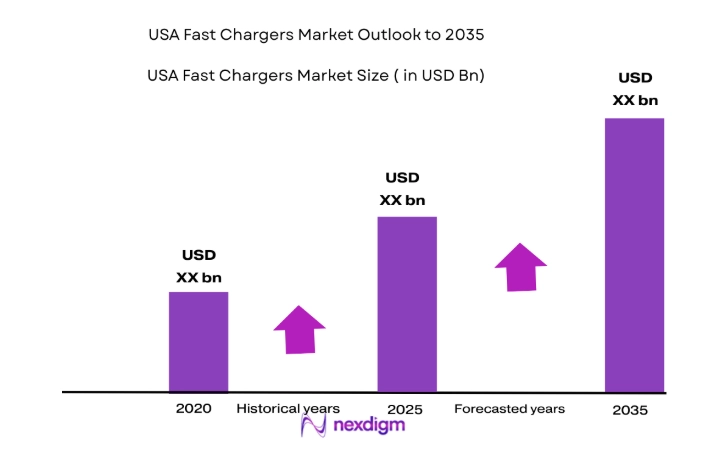
The USA Fast Chargers automotive market is valued at approximately USD ~ billion based on a recent historical assessment supported by U.S. Department of Energy Alternative Fuels Data Center records and public financial disclosures from major charging network operators. Growth is driven by accelerating electric vehicle adoption, federal infrastructure funding exceeding USD ~ billion under national highway electrification programs, and large-scale deployment of high-power direct current fast charging stations across interstate corridors and metropolitan regions.
California, Texas, Florida, and New York dominate the USA Fast Chargers automotive market due to strong electric vehicle registrations and state-backed charging investments. California alone has allocated more than USD ~ billion toward charging infrastructure expansion through public and private initiatives. Major urban centers including Los Angeles, Houston, Miami, and New York City host dense fast-charging networks supported by commercial fleet electrification, retail partnerships, and utility-backed grid modernization programs.
Market Segmentation
By Product Type
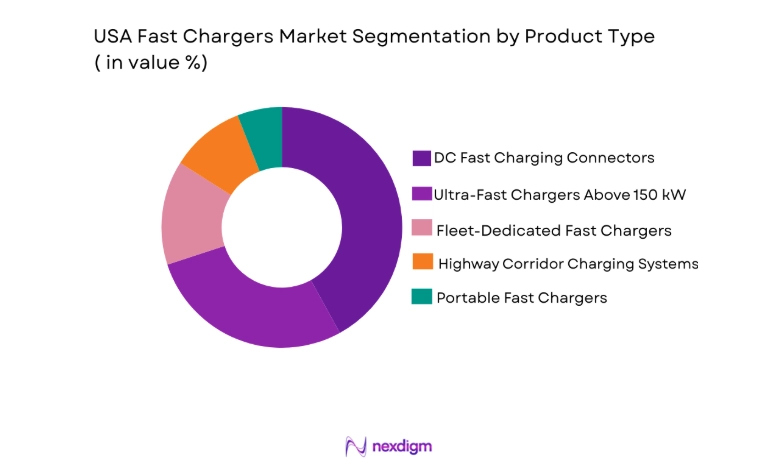
USA Fast Chargers automotive market is segmented by product type into DC Fast Chargers, Ultra-Fast Chargers Above 150 kW, Portable Fast Chargers, Fleet-Dedicated Fast Chargers, and Highway Corridor Charging Systems. Recently, DC Fast Chargers have a dominant market share due to widespread compatibility with passenger electric vehicles, strong deployment under federal highway programs, extensive network expansion by established operators, and preference for 50 kW to 150 kW systems that balance installation cost and charging efficiency for urban and suburban use cases.
By Platform Type
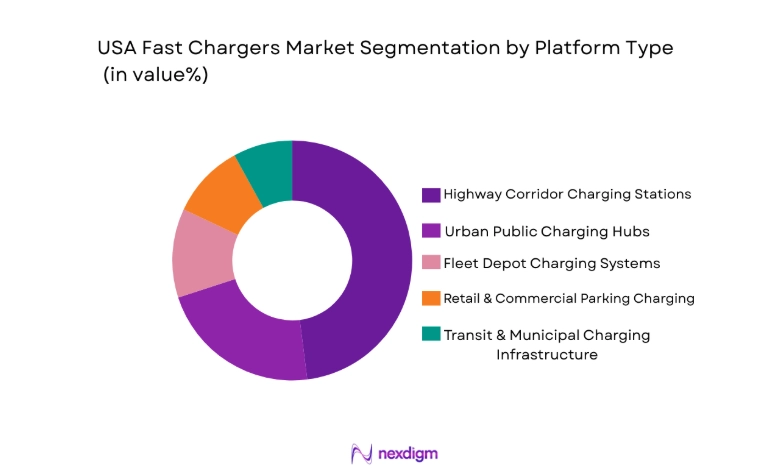
USA Fast Chargers market is segmented by platform type into Highway Corridor Charging Stations, Urban Public Charging Hubs, Fleet Depot Charging Systems, Retail & Commercial Parking Charging, and Transit & Municipal Charging Infrastructure. Recently, Highway Corridor Charging Stations have a dominant market share due to federal corridor electrification programs, interstate travel demand, and strategic deployment along long-distance mobility routes. National infrastructure policies prioritize fast charger installation along highways to reduce range anxiety and enable cross-state electric vehicle travel, driving higher investment concentration and utilization compared with urban or private platforms.
Competitive Landscape
The USA Fast Chargers automotive market demonstrates moderate consolidation with major network operators controlling large interstate corridors and urban hubs, while regional players focus on fleet solutions and retail partnerships. Strategic alliances with automakers, utilities, and oil majors influence competitive positioning. Technology differentiation centers on charging speed, uptime reliability, smart grid integration, and payment interoperability.
|
Company Name |
Establishment Year | Headquarters | Technology Focus | Market Reach | Key Products | Revenue | Charging Speed Capability |
| Tesla Inc | 2003 | Austin, USA | ~ | ~ | ~ | ~ | ~ |
| ChargePoint Inc | 2007 | Campbell, USA | ~ | ~ | ~ | ~ | ~ |
| EVgo Inc | 2010 | Los Angeles, USA | ~ | ~ | ~ | ~ | ~ |
| Electrify America LLC | 2016 | Reston, USA | ~ | ~ | ~ | ~ | ~ |
| Blink Charging Co | 2009 | Miami Beach, USA |
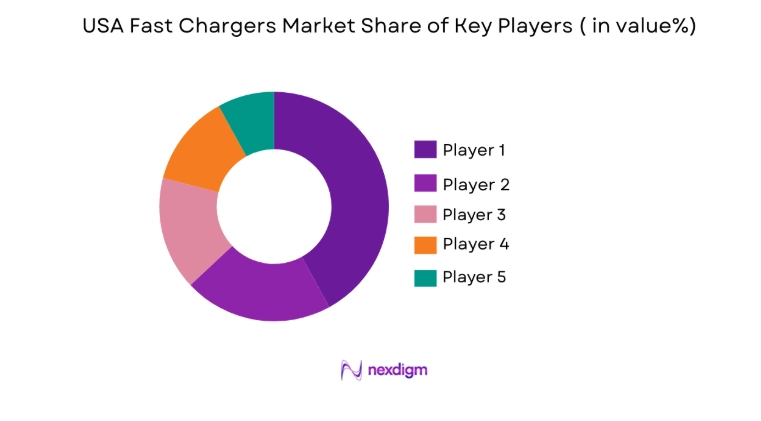
USA Fast Chargers Market Analysis
Growth Drivers
High Grid Upgrade Costs and Interconnection Delays
present significant barriers to scaling automotive fast charging networks across diverse geographic regions. Installation of high-power chargers often requires transformer upgrades, substation expansions, and complex permitting processes that increase capital expenditure. Utilities may require extended technical studies before approving interconnection for systems exceeding certain load thresholds. Rural corridor deployments frequently face limited distribution capacity and long equipment lead times. Demand charges imposed by utilities can reduce profitability during early utilization phases. Coordinating federal funding timelines with state-level grid approvals introduces administrative complexity. Site hosts may experience delays in energization due to supply chain bottlenecks in switchgear and transformers. These infrastructural constraints slow network density expansion despite strong policy support.
Fragmented Standards and Interoperability Constraints
Constraints continue to affect user experience and infrastructure planning within the automotive fast charging market. Transition from proprietary connectors toward standardized charging systems requires equipment retrofits and network upgrades. Variations in payment platforms and software integration create customer friction and inconsistent pricing transparency. Fleet operators managing mixed vehicle brands must ensure compatibility across multiple charging protocols. Cross-network roaming agreements are still evolving, limiting seamless access in certain regions. Hardware suppliers must accommodate multiple voltage architectures and connector configurations, increasing design complexity. Regulatory compliance requirements differ across states, complicating nationwide deployment strategies. Addressing these interoperability gaps remains critical for achieving consistent nationwide fast charging accessibility.
Opportunities
Integration of Ultra-Fast Charging with Renewable Energy and Storage Systems
Represents a transformative opportunity within the automotive fast charging landscape. Co-locating battery storage systems with high-power chargers can mitigate peak demand charges and enhance grid stability. Solar-powered charging plazas provide sustainability branding advantages for operators and automakers. Energy management software can dynamically balance load between grid supply and onsite storage assets. Participation in demand response programs creates additional revenue streams for charging operators. Utilities are increasingly exploring vehicle-to-grid frameworks that could convert fast charging hubs into distributed energy resources. Corporate sustainability mandates are encouraging fleet operators to prioritize renewable-powered charging contracts. Retail centers adopting clean energy charging solutions gain competitive differentiation. This convergence of mobility electrification and distributed energy systems offers long-term strategic expansion potential.
Expansion into Heavy-Duty Electric Truck Charging Corridors
Presents significant growth potential as freight electrification accelerates across interstate logistics networks. Long-haul electric truck manufacturers are introducing models requiring megawatt-scale charging systems capable of rapid turnaround times. Federal infrastructure planning increasingly includes freight corridor electrification strategies. Logistics hubs near ports and distribution centers require high-capacity charging depots integrated with warehouse operations. Public-private partnerships are emerging to develop truck-focused charging plazas along major freight highways. Fleet operators are committing to zero-emission targets that necessitate scalable charging ecosystems. Equipment suppliers are innovating liquid-cooled cable systems to manage higher current loads. Establishing early leadership in heavy-duty corridor charging infrastructure could redefine competitive positioning within the automotive fast charging market.
Future Outlook
Over the next five years, the USA Fast Chargers automotive market is expected to witness sustained expansion driven by federal infrastructure alignment, advancing battery technologies, and rising heavy-duty vehicle electrification. Ultra-fast systems above 350 kW are likely to increase deployment across freight corridors. Standardization of connector technologies will improve interoperability. Continued state-level incentives and utility collaboration are anticipated to reduce deployment bottlenecks while strengthening long-term infrastructure resilience.
Major Players
- Tesla Inc
- ChargePoint Inc
- EVgoInc
- Electrify America LLC
- Blink Charging Co
- ABB Ltd
- Siemens AG
- Tritium DCFC Limited
- WallboxN.V.
- Delta Electronics Inc
- BP Pulse
- Shell Recharge Solutions
- Volta Inc
- EVBoxGroup
- Francis Energy
Key Target Audience
- Investments and venture capitalist firms
- Government and regulatory bodies
- Electric vehicle manufacturers
- Automotive OEM suppliers
- Commercial fleet operators
- Energy utilities and grid operators
- Infrastructure development companies
- Logistics and delivery corporations
Research Methodology
Step 1: Identification of Key Variables
Primary variables including charging capacity, deployment density, grid interconnection cost, and vehicle compatibility standards were identified. Regulatory frameworks, funding allocations, and automaker infrastructure partnerships were also examined to define scope boundaries.
Step 2: Market Analysis and Construction
Market sizing was constructed using public infrastructure databases, Department of Energy charging statistics, and corporate revenue disclosures. Segment allocations were developed based on deployment data and utilization patterns.
Step 3: Hypothesis Validation and Expert Consultation
Industry experts including utility planners, charging network operators, and automotive engineers were consulted to validate assumptions regarding demand growth and infrastructure scaling.
Step 4: Research Synthesis and Final Output
Quantitative data and qualitative insights were synthesized into structured market models, ensuring consistency with publicly reported financials and verified infrastructure counts before final compilation

- Executive Summary
- Research Methodology (Definitions, Scope, Industry Assumptions, Market Sizing Approach, Primary & Secondary Research Framework, Data Collection & Verification Protocol, Analytic Models & Forecast Methodology, Limitations & Research Validity Checks)

- Market Definition and Scope
- Value Chain & Stakeholder Ecosystem
- Regulatory / Certification Landscape
- Sector Dynamics Affecting Demand
- Strategic Initiatives & Infrastructure Growth

- Growth Drivers
Federal funding under national EV infrastructure programs
Rising battery capacities requiring high power charging solutions
Rapid electrification of commercial and last-mile delivery fleets
Expansion of interstate charging corridors
Advancements in silicon carbide power electronics - Market Challenges
Grid capacity constraints and interconnection delays
High capital expenditure for ultra-fast charging installations
Land acquisition and permitting complexities
Interoperability and standardization issues
Utilization variability impacting return on investment - Market Opportunities
Integration of renewable energy and on-site storage with fast chargers
Deployment of megawatt charging systems for heavy-duty vehicles
Expansion of subscription-based charging services - Trends
Shift toward 350 kW and above ultra-fast charging systems
Increasing deployment of battery-buffered charging stations
Adoption of open charge point protocols for interoperability
Strategic partnerships between automakers and charging networks
Growth of fleet-focused charging infrastructure - Government Regulations & Defense Policy
National Electric Vehicle Infrastructure standards compliance requirements
Buy America provisions influencing component sourcing
State-level zero-emission vehicle mandates driving deployment targets - SWOT Analysis
- Stakeholder and Ecosystem Analysis
- Porter’s Five Forces Analysis
- Competition Intensity and Ecosystem Mapping

- By Market Value, 2019-2025
- By Installed Units, 2019-2025
- By Average System Price, 2019-2025
- By System Complexity Tier, 2019-2025

- By System Type (In Value%)
50 kW–150 kW DC Fast Chargers
150 kW–350 kW High Power Chargers
Ultra-Fast Chargers Above 350 kW
Mobile Fast Charging Units
Battery-Integrated Fast Charging Systems - By Platform Type (In Value%)
Highway Corridor Charging Stations
Urban Public Charging Hubs
Commercial Fleet Depots
Retail and Hospitality Locations
Workplace Charging Facilities - By Fitment Type (In Value%)
Standalone Charger Installations
Multi-Dispenser Charging Cabinets
Integrated Solar-Plus-Charging Systems
Grid-Connected Systems with Storage Backup
Modular Expandable Charging Units - By EndUser Segment (In Value%)
Passenger Electric Vehicle Owners
Commercial Fleet Operators
Ride-Hailing and Mobility Service Providers
Logistics and Delivery Companies
Municipal and Government Fleets - By Procurement Channel (In Value%)
Direct OEM Procurement
Public Infrastructure Tenders
Utility Partnership Programs
Private Infrastructure Investors
Charging-as-a-Service Agreements - By Material / Technology (in Value %)
Silicon-Based Power Electronics
Silicon Carbide Power Modules
Liquid-Cooled Charging Cables
Integrated Energy Management Software
Vehicle-to-Grid Compatible Systems

- Market structure and competitive positioning
Market share snapshot of major players - Cross Comparison Parameters (Charging Capacity, Power Output Range, Network Coverage, Hardware Cost Structure, Software Integration Capability, Grid Integration Features, Service & Maintenance Model, Partnership Ecosystem
- SWOT Analysis of Key Competitors
- Pricing & Procurement Analysis
- Key Players
Tesla Inc.
ChargePoint Holdings Inc.
EVgo Inc.
ABB Ltd.
Siemens AG
Blink Charging Co.
Tritium DCFC Limited
Electrify America LLC
Wallbox N.V.
Delta Electronics Inc.
Schneider Electric SE
FreeWire Technologies Inc.
SK Signet Inc.
BTC Power
Francis Energy

- Commercial fleet operators prioritize depot-based high-capacity charging solutions
- Passenger EV owners demand reliable highway fast charging access
- Logistics companies require scalable multi-dispenser systems
- Municipal fleets focus on grant-supported infrastructure deployment

- Forecast Market Value, 2026-2030
- Forecast Installed Units, 2026-2030
- Price Forecast by System Tier, 2026-2030
- Future Demand by Platform, 2026-2030


 Request a Sample
 Ask for Customization
 Get a Quote
 Enquire Now