
 Download PDF
Market Overview
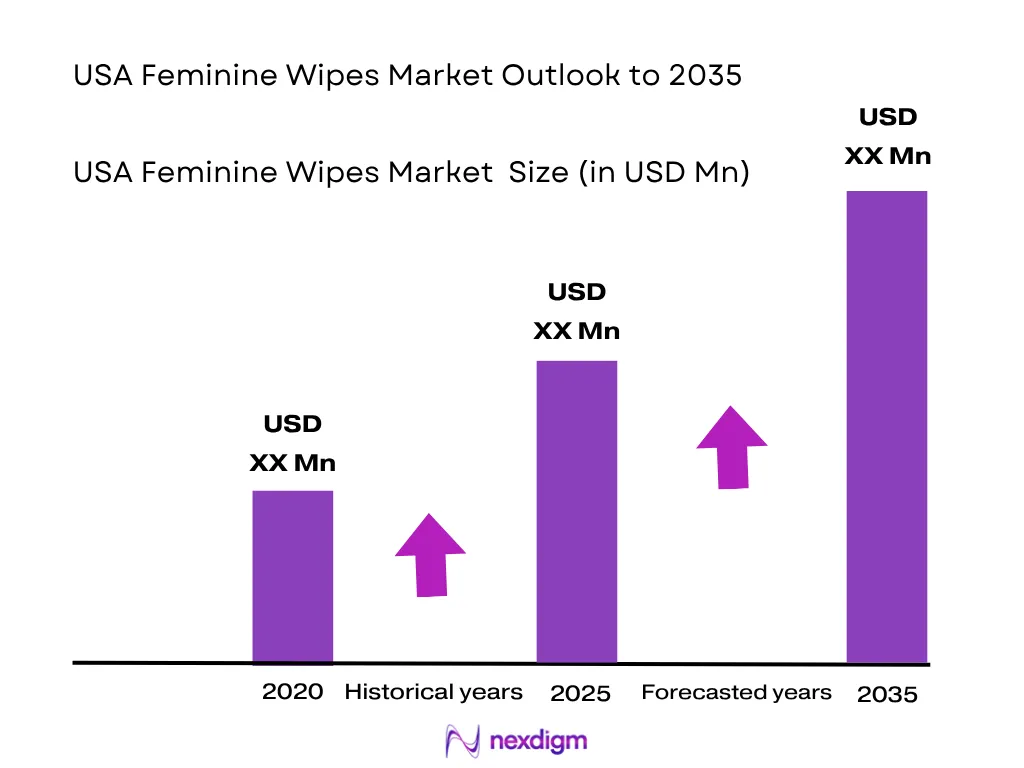
The USA feminine wipes market is valued at approximately USD ~ million in 2025, reflecting robust consumer uptake of on‑the‑go personal hygiene solutions. Growth has been driven by rising female health awareness, increasing preference for portable and discreet products, and expansion of retail and e‑commerce channels supplying a broad array of formulations including sensitive‑skin and natural variants. Rising acceptance of intimate care wipes as part of daily hygiene routines supports ongoing adoption and annual revenue growth.
Key urban centers such as New York, Los Angeles, Chicago, and Miami are dominant consumption zones due to high population densities, significant working female populations with demand for convenient hygiene products, and sophisticated retail and online penetration. Additionally, larger West and Northeast regions demonstrate strong market maturity, largely due to higher disposable incomes, wellness‑oriented consumer behaviour, and a cultural emphasis on personal care standards.
Market Segmentation
By Type
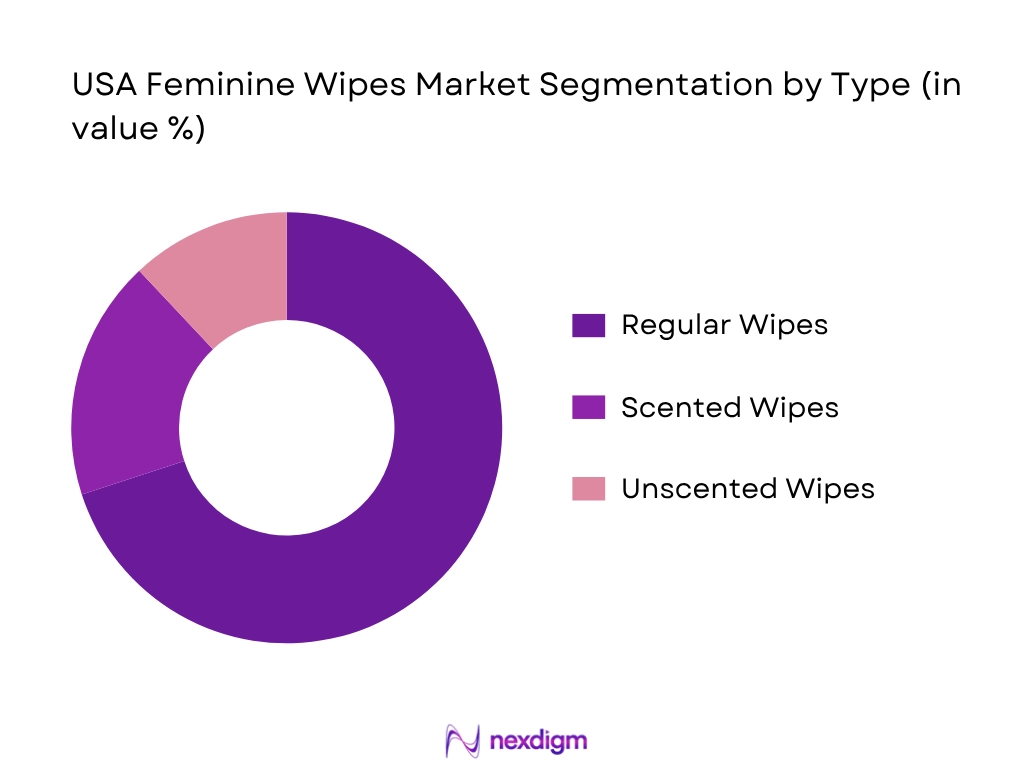
Regular wipes dominate the USA feminine wipes market, accounting for about 70% share because they deliver a balanced combination of convenience, general hygiene suitability, and lower sensory discomfort relative to scented alternatives. Consumers across age groups prefer regular formulations as part of daily routines for freshness after workouts, travel, or during menstruation without the potential irritants of fragrances. Scented variants still capture a minority due to perceived premium feel, whereas unscented options appeal largely to sensitive skin demographics concerned about allergens.
By Application
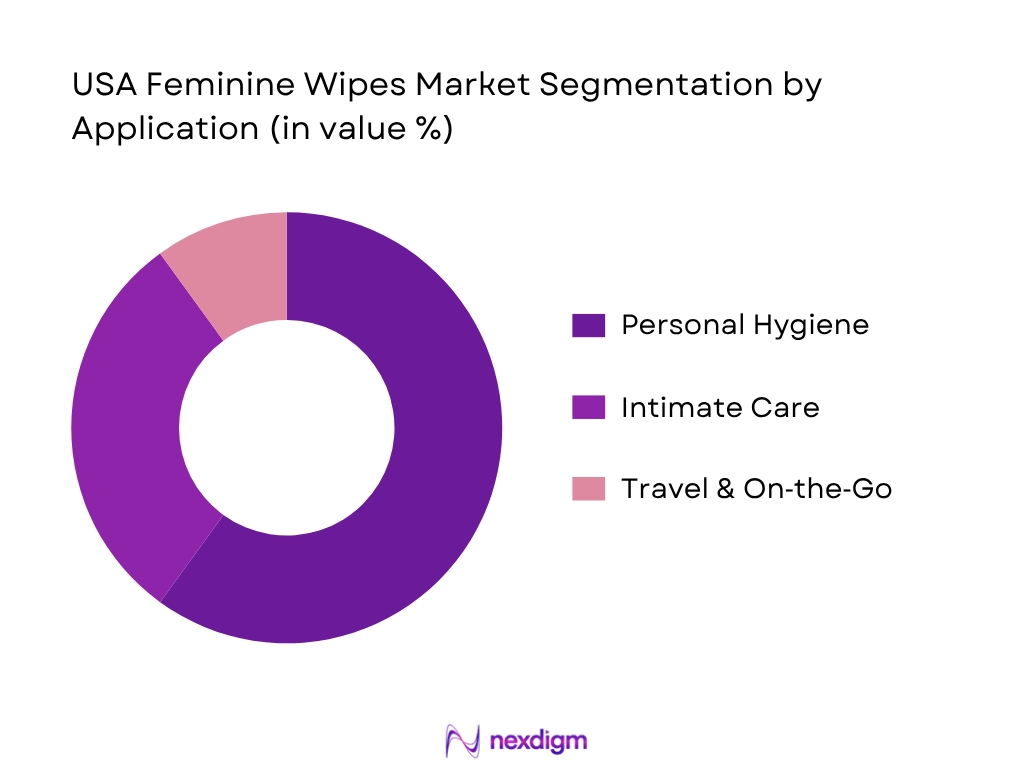
Personal hygiene use is the primary driver of demand, representing around 60% of application share. This is because consumers incorporate wipes into daily routines for quick cleansing when traditional facilities are unavailable (e.g., work, transit, post‑exercise). Intimate care follows, with consumers selecting specially formulated wipes designed to maintain pH balance and gentleness for sensitive areas. The travel/on‑the‑go sub‑segment shows growth potential, particularly among younger, mobile, and professional cohorts who value compact products for convenience.
Competitive Landscape
The USA feminine wipes market exhibits competitive consolidation, with a mix of global personal care giants and specialized hygiene brands. Established multinational and regional companies shape category standards, invest heavily in formulation innovation, distribution expansion, and eco‑friendly product lines. Key competitors differentiate through product attributes (e.g., natural ingredients, pH‑balanced formulas), brand recognition, retail coverage, and online presence, all factors impacting buyer preference in a hygiene‑sensitive category.
| Company | Est. Year | Headquarters | Distribution Reach | Product Portfolio Depth | Innovation Index | Retail Penetration | Online Engagement Level |
| Procter & Gamble | 1837 | Cincinnati, Ohio, USA | ~ | ~ | ~ | ~ | ~ |
| Kimberly‑Clark | 1872 | Irving, Texas, USA | ~ | ~ | ~ | ~ | ~ |
| Johnson & Johnson Services | 1886 | New Jersey, USA | ~ | ~ | ~ | ~ | ~ |
| Edgewell Personal Care | 1996 | Shelton, Connecticut, USA | ~ | ~ | ~ | ~ | ~ |
| Unicharm Corporation | 1961 | Tokyo, Japan | ~ | ~ | ~ | ~ | ~ |
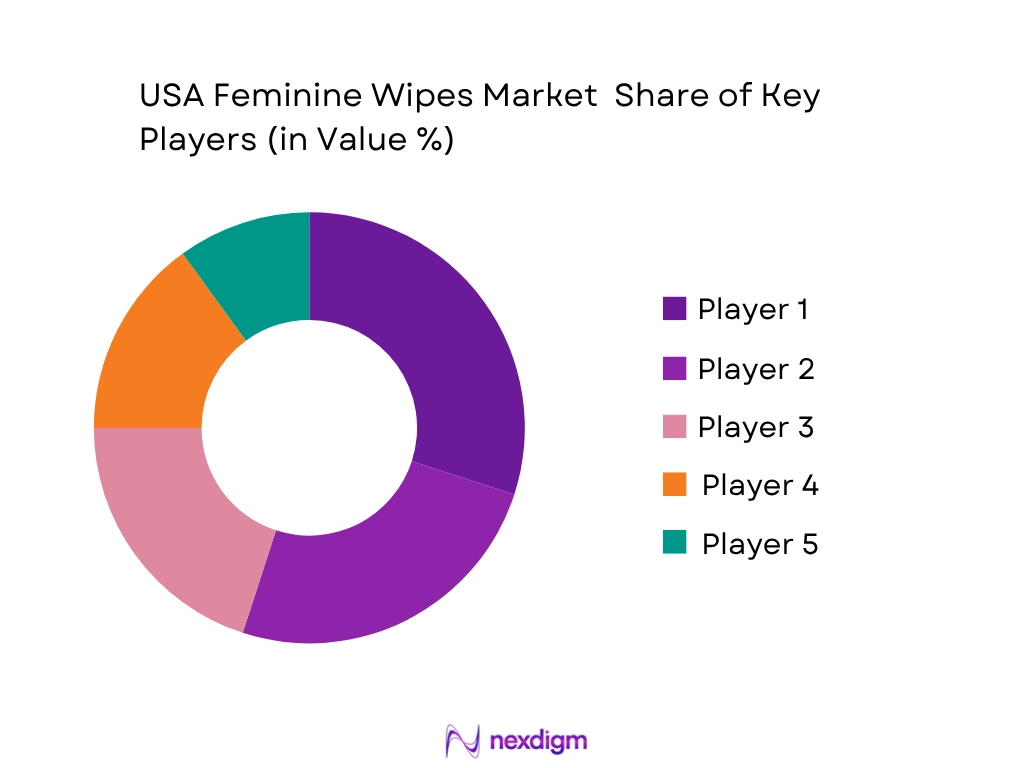
USA Feminine Wipes Market Analysis
Growth Drivers
Consumer Hygiene Awareness
Consumer behavior in the United States reflects sustained priority on personal hygiene and cleanliness habits, creating foundational demand for personal hygiene products such as feminine wipes. In 2024, U.S. households collectively spent about USD 74 billion on personal care products, which includes deodorants, feminine hygiene, and miscellaneous hygiene products indicative of high overall hygiene‑focused consumption patterns. Within this broader hygiene landscape, wipes are increasingly used for everyday cleansing and on‑the‑go freshness, supported by data showing widespread adoption of pre‑moist wipes/cloths, with usage projected to involve 341.96 million Americans by 2024. Additionally, insights from consumer reports indicate that a significant portion of U.S. consumers use wipes multiple times per week, emphasizing routines beyond occasional use and highlighting hygiene prioritization. This macro‑level consumer inclination toward routine hygiene behavior provides a clear behavioral foundation for increased feminine wipes adoption, driven by a general cultural emphasis on cleanliness, personal comfort, and health maintenance.
Product Innovation in Sensitive Skin
In personal care and hygiene categories within the U.S., there is a discernible pivot toward product formulations that are gentler and tailored to specific skin needs, influencing the feminine wipes segment. Consumer insights from wipe usage data underscore that skin‑friendly, gentle formulas are among the top attributes sought by purchasers, as consumers often avoid products with harsh ingredients or irritating compounds. This trend aligns with broader personal care spending behavior where clean, gentle, and skin‑safe products are increasingly prioritized; plain personal care categories (e.g., hair care, deodorant, miscellaneous hygiene) accounted for about USD 8.1 billion of consumer spend in 2024, demonstrating significant demand for body‑applied products. Additionally, hygiene product innovation in plant‑based and natural substrates for wipes including those oriented toward skin sensitivity is highlighted as a consumer priority, with evidence showing a shift toward natural fiber wipes driven by consumer expectations for gentleness and environmental considerations. Taken together, macro consumer spending on personal care and specific consumer demand for gentle wipe formulations substantiate the role of skin‑sensitive product innovation as a strong driver in the feminine wipes category.
Market Challenges
Regulatory Scrutiny on Ingredients & Label Claims
In the United States, personal hygiene and cosmetic categories are subject to regulatory oversight, particularly concerning product safety, formulation transparency, and permissible ingredient claims. Feminine wipes reside within personal care regulation, where compliance with labeling and ingredient safety standards is critical, and failing to meet standards can result in enforcement action or market withdrawal. While specific 2024 regulatory enforcement figures for wipes are not published publicly, the broader personal care and hygiene sector must adhere to standards set by federal agencies, including ingredient approval, allowable claims, and labeling requirements. Regulators routinely review personal care product compositions to ensure consumer safety, and heightened scrutiny has accompanied increased demand for clean‑label and natural formulations within hygiene categories. Additionally, industry observations note that ambiguity in claims such as “flushable” or biodegradable can attract regulatory focus and require clear scientific substantiation. This regulatory landscape creates compliance burdens for feminine wipes manufacturers, who must invest in testing, documentation, and ingredient vetting to avoid adverse regulatory outcomes and maintain consumer trust, a complex environment for a category evolving with novel ingredients and claims.
Environmental Concerns Regarding Disposal
Environmental management of disposable products such as wipes remains a significant concern in the United States. Municipal solid waste (MSW) trends indicate that in 2024, tipping (landfill) fees averaged USD 62.28 per ton, an indicator of the increasing economic cost associated with waste disposal and a proxy for environmental burden. Landfills continue to be a primary MSW destination, and waste from disposable hygiene products contributes to landfill volumes, generating methane. Landfill methane was responsible for over 17 percent of U.S. anthropogenic methane emissions in 2022, illustrating the environmental footprint of disposed materials. Scientific sources also emphasize the persistence of plastics and microplastics components in many wet wipe substrates which do not rapidly degrade and can contribute to ongoing environmental contamination in ecosystems. These environmental concerns complicate product positioning and consumer perception, pressuring manufacturers to either innovate more sustainable wipe substrates or face criticism regarding waste, pollution, and long‑term ecological impact. Addressing these disposal and environmental concerns is therefore a material challenge for the feminine wipes segment in the U.S. market.
Opportunities
Subscription & DTC Models for Convenience
Consumer shopping patterns in the U.S. continue to show growth in online and direct‑to‑consumer (DTC) purchasing models, particularly in personal care categories. Retail analytics in early 2024 indicated that U.S. online retail spending increased to about USD 331.6 billion during the January to April period, with personal care among the discretionary categories benefiting from elevated online demand driven by convenience and affordability considerations. The increase in online spending, along with broader macroeconomic patterns of consumers seeking ease of purchase and subscription services for regular household and personal care items, positions subscription‑based delivery as a compelling opportunity for feminine wipes manufacturers. Subscription services reduce the friction of repeat purchases for products that are used regularly, and the documented trend of consumers trading up or diversifying personal care routines suggests an openness to DTC engagement models. Leveraging the growth in online retail and established consumer behaviors around auto‑ship and subscription services for hygiene essentials can help companies build recurring revenue and deepen customer loyalty in a market increasingly oriented toward digital purchasing habits.
Expansion into Travel & Active Lifestyle Segments
Changing consumer lifestyles in the U.S. demonstrate heightened mobility and demand for convenience‑oriented products that cater to travel, fitness, and active routines. Specifically within the wipes category, consumer data shows widespread daily use with substantial household penetration for general wipes usage (e.g., multiple times per week or daily), indicating a routine integration into on‑the‑go behavior patterns. Given this behavioural insight, feminine wipes can be positioned effectively in segments aligned with travel and active lifestyle needs, such as offering compact packaging or sport‑oriented formulations to meet evolving use cases beyond home settings. Broader personal care industry expenditure patterns, where deodorants and miscellaneous personal care categories account for significant portions of consumer spend, highlight appetite for products that facilitate hygiene in mobile contexts. The alignment of mobile hygiene habits with product extension into travel and active segments presents a tangible commercial opportunity for companies to differentiate offerings and capture incremental demand linked to lifestyle factors.
Future Outlook
The USA feminine wipes market is expected to experience steady long‑term growth as consumer lifestyles continue to favour convenient personal care products. Demand will be bolstered by innovation in gentle and clean‑label formulations, greater acceptance of intimate hygiene products as part of routine self‑care, and expanded distribution via online and subscription models. The market’s maturation will also coincide with increased interest in sustainable materials and eco‑friendly packaging. Based on segment forecasts available from industry projections, the broader regional market is anticipated to exhibit a CAGR of approximately 7.3% during 2026‑2035, reflective of rising health and hygiene preferences and widening product adoption across demographics.
Major Players
- Procter & Gamble
- Kimberly‑Clark
- Johnson & Johnson Services
- Edgewell Personal Care
- Unicharm Corporation
- Bodywise (UK) Limited
- Corman
- Albaad
- Guy & O’Neill, Inc.
- The Honey Pot Company
- Hengan International
- Summer’s Eve
- Natracare
- Vagisil (Reckitt)
- Laclede, Inc.
Key Target Audience
- Strategic Decision‑Makers in Personal Care Brands
- Product Development and Innovation Leads
- Sales & Channel Strategy Executives
- Retail Procurement Heads (Mass Retail, Pharmacies)
- Investments and Venture Capitalist Firms evaluating hygiene product portfolios
- Consumer Packaged Goods Manufacturers
- Government and Regulatory Bodies (e.g., U.S. FDA – Office of Cosmetics and Health Care, Consumer Safety)
- E‑Commerce and Digital Commerce Strategy Teams
Research Methodology
Step 1: Market Definition & Variable Identification
The research begins with defining the feminine wipes category, including product criteria, usage contexts, distribution channels, and regulatory parameters. Extensive secondary research and industry databases establish baseline definitions and market boundaries.
Step 2: Historical Data Collation & Analysis
Historical revenue and volume data for the USA feminine wipes market are compiled (2018‑2024) through verified industry sources (e.g., Grand View, future forecasts) and organized to identify trends, growth inflection points, and segment shifts.
Step 3: Expert Validation & Primary Insights
Hypotheses and preliminary findings are validated through structured interviews with industry experts, product managers, and category buyers. Qualitative insights solidify assumptions on consumer preferences and innovation drivers.
Step 4: Forecast Modeling & Synthesis
Market forecasts (2026‑2035) employ structured growth projection models, integrating demographic trends, consumer behaviour analytics, and distribution channel evolution to produce validated estimates of future market size and CAGR.

- Executive Summary
- Research Methodology (Market Definitions & Assumptions, Abbreviations, Data Collection Framework, Primary & Secondary Research Integration, Size Estimation Models, Forecast Methodology, Validation & Triangulation, Limitations)

- Market Definition and Scope
- Market Genesis & Historical Development
- Feminine Wipes Lifecycle & Usage Evolution
- End‑to‑End Value Chain Mapping
- Industry Structure & Supply Chain
- Regulatory Framework
- Hygiene & Consumer Health Considerations

- Growth Drivers (Consumer Hygiene Awareness & Daily Freshness Adoption, Rising Working Female Population & Urban Lifestyle Needs, Expansion of E‑Commerce & Direct‑to‑Consumer Channels, Product Innovation in Sensitive Skin, Natural & pH‑Balanced Formulations)
- Market Challenges (Regulatory Scrutiny on Ingredients & Label Claims, Environmental Concerns Regarding Disposal & Biodegradability, Price Sensitivity in Mass-Market Segments, Competition from Alternative Hygiene Solutions)
- Opportunities (Eco-Friendly & Biodegradable Product Development, Subscription & DTC Models for Convenience, Expansion into Travel & Active Lifestyle Segments, Integration with Adjacent Hygiene Products like Menstrual Care & Intimate Washes)
- Trends (Increasing Preference for Natural, Organic, and Clean-Label Formulations, Growing Adoption of Compact & Travel-Sized Packs, Online Brand Engagement & Personalized Consumer Experiences, Subscription-Based Hygiene Product Delivery)
- Regulatory Environment (FDA Guidelines for Cosmetics & Personal Care Products, Ingredient Safety Testing Requirements, Label Accuracy and Consumer Disclosure Standards, Import & Domestic Compliance Standards)
- Value Chain and Supply Chain Analysis (Raw Material Sourcing – Non-Woven Fabric, Cleansing Liquids & Natural Extracts; Manufacturing Hubs – Domestic & Contract Manufacturers; Logistics Nodes – Warehousing & Distribution Centers; Wholesale & Retail Channels – Pharmacies, Supermarkets, Online Retail; Quality Assurance & Compliance Checks)
- Private Label vs Branded Landscape (Private Label Wipes Pricing Strategy, Brand Trust & Loyalty Metrics, Frequency of Innovation & New SKU Launches, Exclusive Product Features, Shelf Productivity & Online Visibility Comparisons)
- SWOT Analysis of Industry (Strengths: Strong: Channels, Weaknesses: Environmental Concerns, Opportunities: Subscription Models; Threats: Regulatory Changes, Counterfeit Products)
- Stakeholder Ecosystem (Manufacturers, Distributors, Retailers – Pharmacies & Supermarkets, E-Commerce Platforms, Personal Care Brands, FDA & Consumer Regulatory Agencies)
- Porter’s Five Forces Analysis (Bargaining Power of Suppliers, Bargaining Power of Buyers, Threat of New Entrants, Threat of Substitute Products, Competitive Rivalry Intensity)
- Competitive Landscape Overview (Dominance of Global Brands like Procter & Gamble, Kimberly-Clark, Johnson & Johnson; Market Consolidation Trends; Distribution Reach Across Offline & Online Channels; Pricing Power Differentiation; Innovation Pipeline in Formulation & Packaging)

- By Market Value (2020-2025)
- By Market Volume (2020-2025)
- By Market Growth Dynamics (2020-2025)

- By Product Type (In Value%)
Regular Wipes
Scented Wipes
Unscented Wipe
Natural/Organic Wipes
Biodegradable/Compostable Wipes - By Application (In Value%)
Personal Hygiene
Intimate Care & pH Protection
Menstrual Freshness Support
Travel/On‑the‑Go Freshness
Post‑Workout/Active Lifestyle Use - By Distribution Channel (In Value%)
Supermarkets & Hypermarkets
Pharmacies & Drugstores
Convenience & Specialty Stores
E‑commerce & Direct‑to‑Consumer Sales
Institutional/Private Label Channels - By Material Type (In Value%)
Synthetic Fabric Wipes
Cotton/Cellulose Blend Wipes
Bio‑Based Composite Wipes - By Demographic Usage (In Value%)
Teen & Young Adult Users
Working Women
Mature Adults
Health‑Sensitive Consumers - By Geography (US Regions)
West USA (High Hygiene & Eco Trends)
South USA
Northeast USA
Midwest USA

- Market Share of Major Players (Value share, volume share, pack share, retail shelf share, pharmacy channel share, grocery channel share, online marketplace share)
- Cross‑Comparison Matrix (Product Portfolio Breadth (pH Balanced, Natural), Ingredient Positioning (Sensitive, Organic), Distribution Channel Coverage (Online, Retail), Regional Footprint (US Region Penetration), Brand Equity & Consumer Trust, SKU Pricing & Pack Size Strategy, Innovation Pipeline (New Formats & Eco Solutions), Subscription/Digital Engagement Strength )
- SWOT Analysis of Major Players (Brand equity, retailer coverage, formulation credibility, price competitiveness, sustainability risk, digital visibility, portfolio depth, private-label exposure)
- SKU Benchmarking of Major Players (Pack size, ingredient architecture, substrate claim, fragrance profile, product format, claims hierarchy, disposal instruction, unit economics)
- Pricing Analysis Basis SKUs for Major Players (Entry price, average selling price, price per wipe, promotional depth, multipack price, online marketplace variance, retailer loyalty price, premium uplift)
- Retail Shelf and Digital Shelf Analysis (Search rank, product title optimisation, claim visibility, review count, rating quality, image pack hierarchy, subscription availability, out-of-stock frequency)
- Competitive Company Profiles
Procter & Gamble
Kimberly‑Clark
Johnson & Johnson Services
Essity (via acquisition of Edgewell’s feminine care unit)
Unicharm Corporation
Bodywise (UK) Limited
Guy & O’Neill, Inc.
Corman SpA
Albaad
The Honey Pot Company
Summer’s Eve
Natracare
Pee Safe
Sweetums
Cora (feminine care)

- Buyer Cohort Profiling (age, gender, income level, lifestyle orientation, hygiene-consciousness, urban vs suburban residence)
- Purchase Drivers and Barriers (brand reputation, price sensitivity, product formulation, availability, sustainability perception, environmental concerns)
- Shopper Journey and Decision Funnel (awareness channels, social media influence, trial triggers, reviews & ratings, repurchase motivators)
- Channel Behavior Analysis (discovery channels, purchase channels online/offline, replenishment frequency, basket mission, cross-category bundling)
- E-Commerce, DTC, and Social Commerce Analysis (traffic source, customer acquisition cost, conversion rate, subscription/rental service mix, repeat purchase rate, AR/VR engagement)
- Basket Composition and Repurchase Economics (cross-sell & upsell rates, attach rate per category, replenishment cycles, bundle adoption, seasonal SKU preference)
- Retailer and Influencer/Stylist Influence
(shelf curation, influencer endorsements, stylist recommendation, personal shopper input, promotional events)

- By Market Value (2026-2035)
- By Market Volume (2026-2035)
- By Market Growth Dynamics (2026-2035)


 Request a Sample
 Ask for Customization
 Get a Quote
 Enquire Now