
 Download PDF
 Download PDF
Market Overview
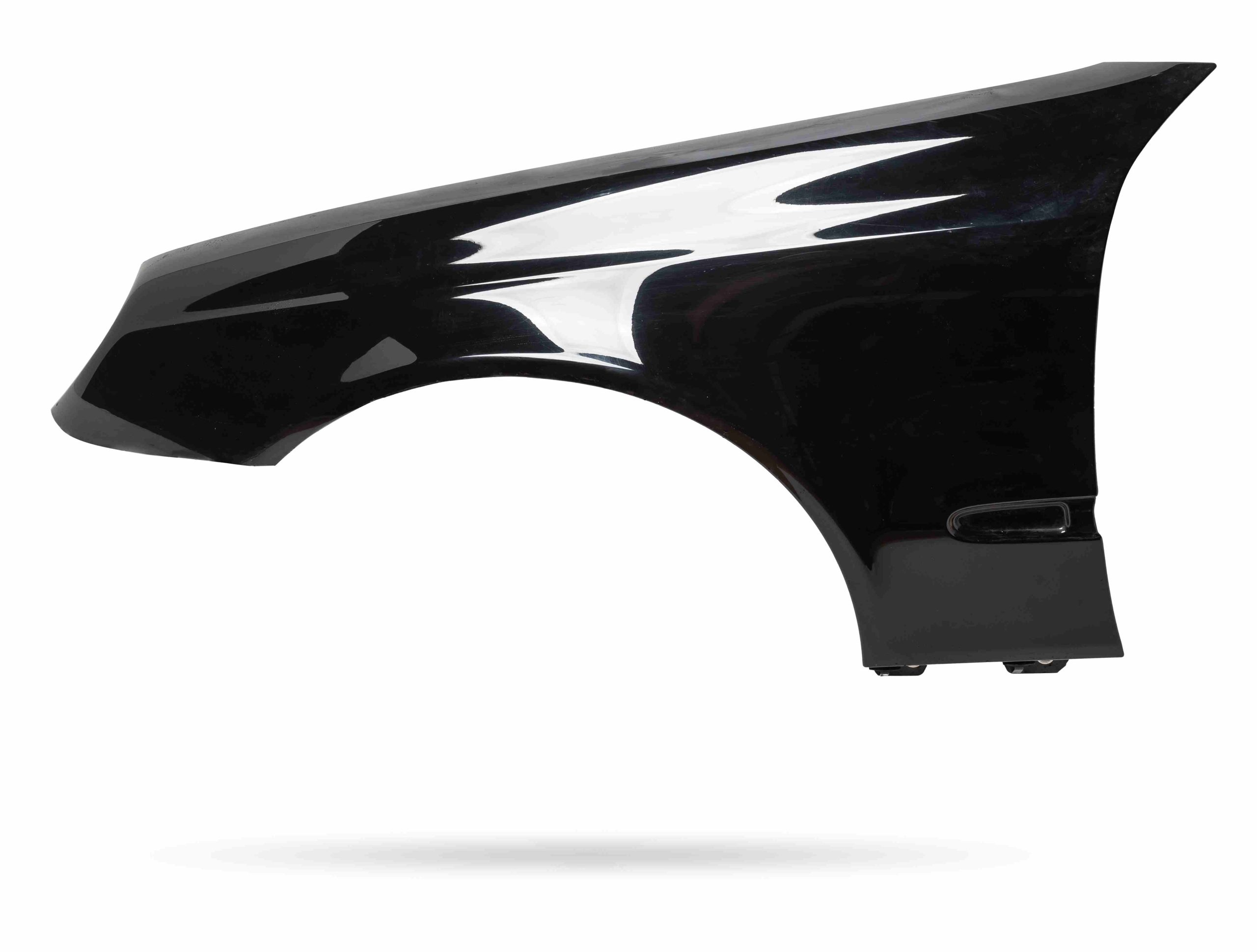
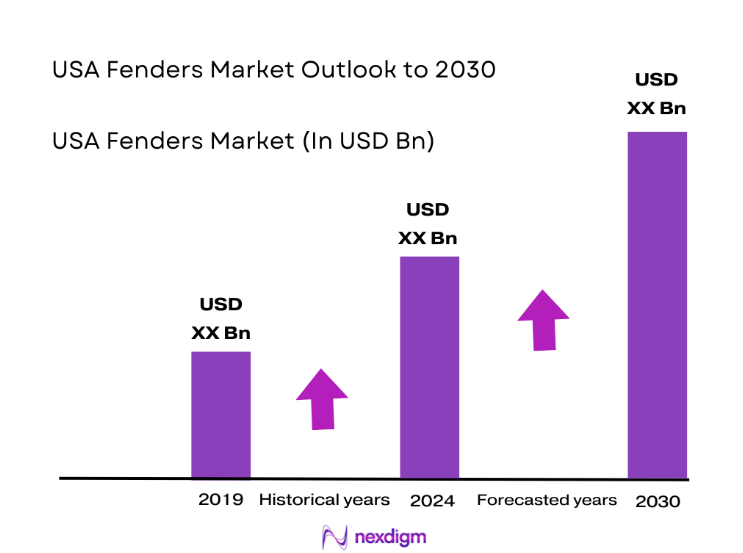
The USA Fenders market current size stands at around USD ~ million, reflecting steady expansion supported by strong replacement demand and sustained OEM sourcing. In the most recent two years, market value advanced from USD ~ million to USD ~ million, while total shipments increased from ~ units to ~ units across OEM and aftermarket channels. Installed base demand linked to collision repair and vehicle parc aging rose from ~ systems to ~ systems, indicating resilient aftermarket momentum and consistent production of exterior body panels across major vehicle segments.
Dominance in the USA Fenders market is concentrated in automotive manufacturing and repair hubs such as Michigan, Ohio, Texas, and California. These regions benefit from dense OEM assembly footprints, large collision repair networks, and established supplier ecosystems that support stamping, coating, and module integration. High vehicle ownership density, strong insurance-driven repair volumes, and proximity to tier one suppliers enhance supply reliability. Supportive state-level manufacturing policies and logistics infrastructure further strengthen regional leadership in fender production and distribution.
Market Segmentation
By Material Type
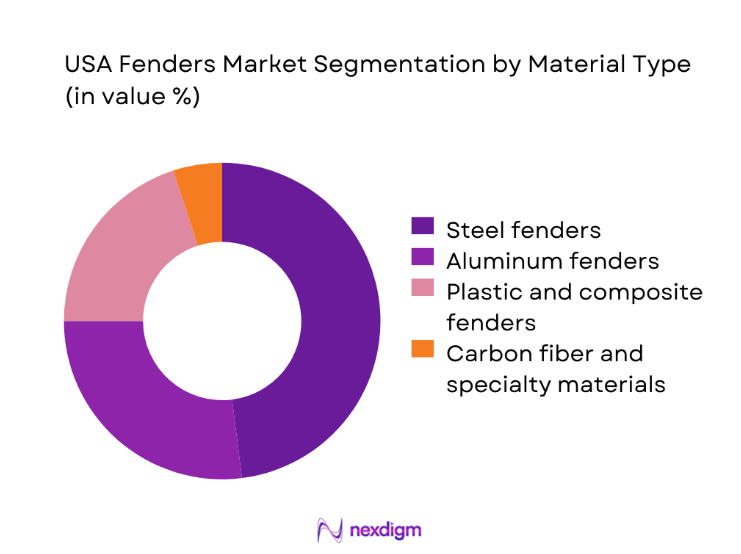
Steel fenders continue to dominate the USA Fenders market due to their cost efficiency, high formability, and deep integration into mass-market vehicle platforms. Aluminum and composite fenders are gaining traction, particularly in electric vehicles and premium SUVs, driven by lightweighting priorities and corrosion resistance requirements. OEMs increasingly balance material selection between performance and total lifecycle economics, while aftermarket suppliers expand offerings in painted and pre-finished variants. The material mix reflects a gradual transition toward advanced substrates without displacing steel in high-volume models, ensuring a diversified and resilient supply landscape.
By Application
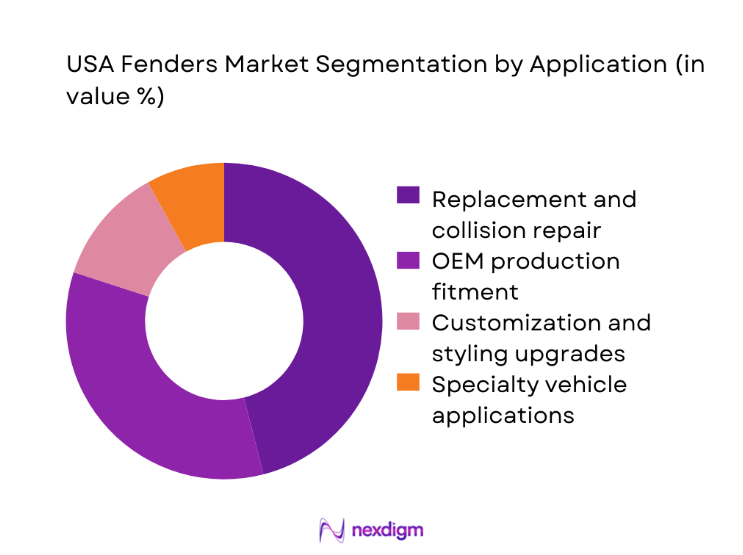
Replacement and collision repair applications represent the largest demand pool in the USA Fenders market, supported by high accident rates and insurance-led part replacement cycles. OEM fitment remains critical for new vehicle programs, while customization and styling upgrades drive niche demand in pickup trucks and performance vehicles. The application mix is shaped by growing vehicle parc age, increasing complexity of body structures, and rising consumer preference for factory-finish components. This structure ensures that aftermarket volumes remain structurally strong alongside steady OEM sourcing for new model launches.
Competitive Landscape
The USA Fenders market exhibits moderate concentration, with a group of large integrated automotive suppliers controlling a significant share of OEM programs, while a fragmented aftermarket supports replacement demand. Tier one suppliers dominate advanced material fenders and module integration, whereas aftermarket distributors and regional manufacturers compete on availability, fitment breadth, and service responsiveness.
| Company Name | Establishment Year | Headquarters | Formulation Depth | Distribution Reach | Regulatory Readiness | Service Capability | Channel Strength | Pricing Flexibility |
| Magna International | 1957 | Canada | ~ | ~ | ~ | ~ | ~ | ~ |
| Flex-N-Gate | 1956 | United States | ~ | ~ | ~ | ~ | ~ | ~ |
| Gestamp | 1997 | Spain | ~ | ~ | ~ | ~ | ~ | ~ |
| OPmobility | 1946 | France | ~ | ~ | ~ | ~ | ~ | ~ |
| LKQ Corporation | 1998 | United States | ~ | ~ | ~ | ~ | ~ | ~ |
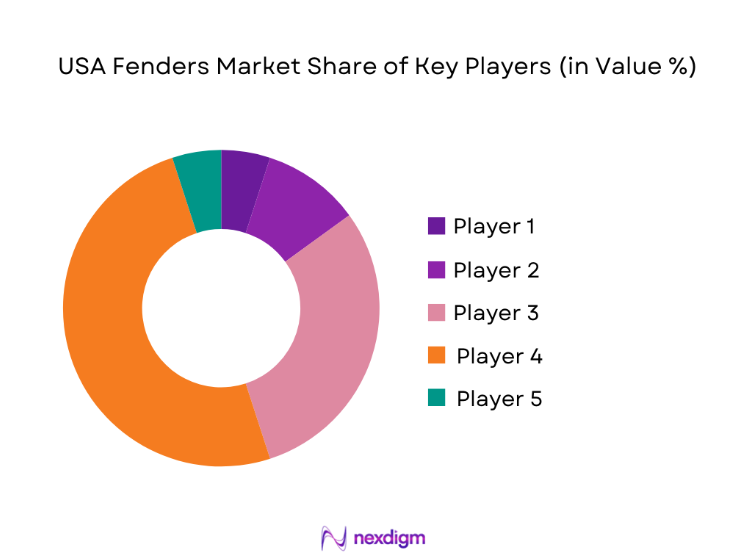
USA Fenders Market Analysis
Growth Drivers
Rising vehicle production and model refresh cycles
Vehicle production volumes in the USA expanded from ~ vehicles to ~ vehicles between recent operating cycles, driving incremental demand for exterior body panels. New model introductions across SUVs and electric vehicles increased sourcing requirements from ~ units to ~ units for fender assemblies, particularly in aluminum and composite formats. OEM tooling programs supported installation of ~ systems in stamping and forming lines, enabling faster ramp-ups for refreshed platforms. This production momentum reinforced baseline procurement from tier suppliers, ensuring stable offtake for both traditional steel fenders and lightweight alternatives across mass-market and premium vehicle segments.
Growth in collision repair and insurance-driven replacements
Collision repair volumes generated replacement demand for ~ units of fenders annually, supported by insurance claim processing across major metropolitan areas. Replacement activity expanded from ~ systems to ~ systems in certified repair networks, reflecting higher vehicle parc density and longer vehicle lifecycles. Aftermarket distribution handled shipments rising from ~ units to ~ units, driven by preference for OEM-equivalent panels and pre-painted components. This structural reliance on replacement cycles provides consistent revenue streams for manufacturers and distributors, insulating the market from short-term fluctuations in new vehicle sales.
Challenges
Volatility in steel and aluminum prices
Material cost volatility affected procurement planning as steel and aluminum inputs fluctuated from USD ~ million to USD ~ million in aggregate sourcing value for major suppliers. OEM contracts adjusted volumes from ~ units to ~ units to manage exposure, while tier suppliers increased inventory buffers from ~ systems to ~ systems. These shifts placed pressure on working capital requirements and complicated long-term pricing stability. For aftermarket players, inconsistent material costs constrained margin predictability, requiring frequent recalibration of supplier agreements and distribution pricing frameworks.
High tooling and stamping capital costs
Capital allocation for new stamping tools and dies increased from USD ~ million to USD ~ million across recent platform programs, limiting entry for smaller manufacturers. Installation of advanced forming lines rose from ~ systems to ~ systems, reflecting the need to support multi-material body panels. These high upfront investments extend payback periods and elevate risk exposure when model lifecycles shorten. As a result, suppliers face tighter capacity planning constraints, reinforcing consolidation trends and reducing competitive intensity in high-volume OEM programs.
Opportunities
Growth in electric vehicle body panel redesigns
Electric vehicle platforms introduced new body architectures that expanded demand for redesigned fenders from ~ units to ~ units across recent launch cycles. Lightweight structures supported installation of ~ systems in aluminum forming and composite molding, enabling improved range performance. OEM sourcing budgets for exterior panels increased from USD ~ million to USD ~ million, creating fresh revenue pools for suppliers with advanced material expertise. This transition positions innovative manufacturers to secure long-term platform contracts tied to next-generation electric vehicle programs.
Rising demand for corrosion-resistant and lightweight materials
Demand for corrosion-resistant coatings and lightweight substrates drove shipments of advanced fenders from ~ units to ~ units in recent procurement cycles. OEMs expanded qualification programs from ~ systems to ~ systems to validate composite and aluminum solutions, particularly for coastal and high-humidity regions. Investment in surface treatment and finishing lines increased from USD ~ million to USD ~ million, enabling suppliers to meet durability standards while reducing total vehicle mass. These material shifts create differentiated value propositions for manufacturers capable of balancing performance with cost efficiency.
Future Outlook
The USA Fenders market is expected to sustain steady expansion through the end of the decade as electric vehicle adoption reshapes exterior body design and materials sourcing strategies. Lightweighting, modularization, and sensor integration will remain central themes influencing product development. Regional manufacturing and aftermarket consolidation will strengthen supply resilience and service reach. As regulatory focus on efficiency and recyclability grows, innovation in sustainable materials is set to define competitive advantage.
Major Players
- Magna International
- Gestamp
- Martinrea International
- Flex-N-Gate
- Autokiniton
- Benteler Automotive
- OPmobility
- Novelis Automotive
- ArcelorMittal Automotive
- Aisin Automotive
- Tower International
- LKQ Corporation
- TYC Genera
- Sherman Parts
- Keystone Automotive
Key Target Audience
- Automotive OEM procurement and platform strategy teams
- Tier one and tier two body panel manufacturers
- Collision repair networks and certified body shops
- Aftermarket distributors and parts retailers
- Fleet maintenance and fleet management companies
- Electric vehicle manufacturers and integrators
- Investments and venture capital firms focused on mobility technologies
- Government and regulatory bodies including the National Highway Traffic Safety Administration and the Environmental Protection Agency
Research Methodology
Step 1: Identification of Key Variables
Core demand drivers, supply constraints, and material trends were mapped to define the operating scope of the USA Fenders market. Key variables included OEM sourcing volumes, aftermarket replacement intensity, and technology adoption rates. Regulatory and compliance factors were aligned with product development cycles to ensure analytical consistency.
Step 2: Market Analysis and Construction
Data frameworks were built around production flows, distribution channels, and application use cases. Segmentation structures were validated through cross-functional industry inputs. Market sizing models integrated shipment patterns, installed base indicators, and revenue streams to create a cohesive analytical baseline.
Step 3: Hypothesis Validation and Expert Consultation
Preliminary findings were tested through structured consultations with industry executives, procurement managers, and technical specialists. Assumptions on material transitions and capacity expansion were refined. Feedback loops ensured that competitive dynamics and buyer behavior were accurately represented.
Step 4: Research Synthesis and Final Output
Insights from quantitative modeling and qualitative validation were consolidated into a unified market narrative. Strategic implications were aligned with operational realities across OEM and aftermarket channels. Final outputs were structured to support decision-making for investors, manufacturers, and policy stakeholders.

- Executive Summary
- Research Methodology (Market definitions and scope boundaries, automotive fender system taxonomy across steel aluminum and composite designs, market sizing logic by vehicle production and fender content value, revenue attribution across panels materials and assembly, primary interview program with OEMs Tier 1 suppliers and body structure manufacturers, data triangulation validation assumptions and limitations)

- Definition and Scope
- Market evolution
- Vehicle design and repair usage pathways
- Ecosystem structure
- Supply chain and channel structure
- Regulatory environment

- Growth Drivers
Rising vehicle production and model refresh cycles
Growth in collision repair and insurance-driven replacements
Lightweighting trends to improve fuel efficiency and EV range
Increased adoption of aluminum and composite body panels
Customization demand in pickup trucks and SUVs
Expansion of advanced driver assistance systems requiring sensor-compatible panels - Challenges
Volatility in steel and aluminum prices
High tooling and stamping capital costs
Complexity in repairing multi-material body structures
Supply chain disruptions and logistics costs
Intense price competition in the aftermarket segment
Quality and fitment issues in low-cost imported panels - Opportunities
Growth in electric vehicle body panel redesigns
Rising demand for corrosion-resistant and lightweight materials
Expansion of certified aftermarket replacement programs
Integration of sensor housings into exterior body components
Localized manufacturing to support OEM nearshoring strategies
Development of recyclable and sustainable body panel materials - Trends
Shift from steel to aluminum and composites in premium vehicles
Increased modularization of front-end body structures
Growing role of tier-one suppliers in exterior module integration
Digital tooling and simulation for faster panel development
Rising penetration of painted and pre-finished fenders
Aftermarket consolidation among distributors and repair networks - Government Regulations
- SWOT Analysis
- Stakeholder and Ecosystem Analysis
- Porter’s Five Forces Analysis
- Competition Intensity and Ecosystem Mapping

- By Value, 2019–2024
- By Volume, 2019–2024
- By Installed Base, 2019–2024
- By Average Selling Price, 2019–2024

- By Fleet Type (in Value %)
Passenger vehicles
Light commercial vehicles
Heavy commercial vehicles
Off-road and specialty vehicles - By Application (in Value %)
Front fenders
Rear fenders and quarter panels
Replacement and collision repair
Customization and styling upgrades - By Technology Architecture (in Value %)
Stamped steel fenders
Aluminum body panels
Plastic and composite fenders
Carbon fiber and advanced materials - By End-Use Industry (in Value %)
Automotive OEM production
Aftermarket and collision repair
Fleet maintenance operators
Specialty vehicle manufacturers - By Connectivity Type (in Value %)
Conventional non-integrated fenders
Sensor-integrated fenders for ADAS
Aero-optimized smart body panels - By Region (in Value %)
Northeast
Midwest
South
West

- Market structure and competitive positioning
- Market share snapshot of major players
- Cross Comparison Parameters (manufacturing footprint, material capability, OEM relationships, aftermarket reach, cost competitiveness, tooling expertise, quality certifications, sustainability initiatives)
- SWOT Analysis of Key Players
- Pricing and Commercial Model Benchmarking
- Detailed Profiles of Major Companies
Magna International
Gestamp
Martinrea International
Flex-N-Gate
Autokiniton
Benteler Automotive
Thyssenkrupp Automotive Body Solutions
OPmobility (Plastic Omnium)
Novelis Automotive
ArcelorMittal Automotive
Aisin Automotive
Tower International
LKQ Corporation (Keystone Automotive)
TYC Genera
Sherman Parts

- Demand and utilization drivers
- Procurement and tender dynamics
- Buying criteria and vendor selection
- Budget allocation and financing preferences
- Implementation barriers and risk factors
- Post-purchase service expectations

- By Value, 2025–2030
- By Volume, 2025–2030
- By Installed Base, 2025–2030
- By Average Selling Price, 2025–2030


 Request a Sample
 Ask for Customization
 Get a Quote
 Enquire Now