

 Download PDF
Market Overview
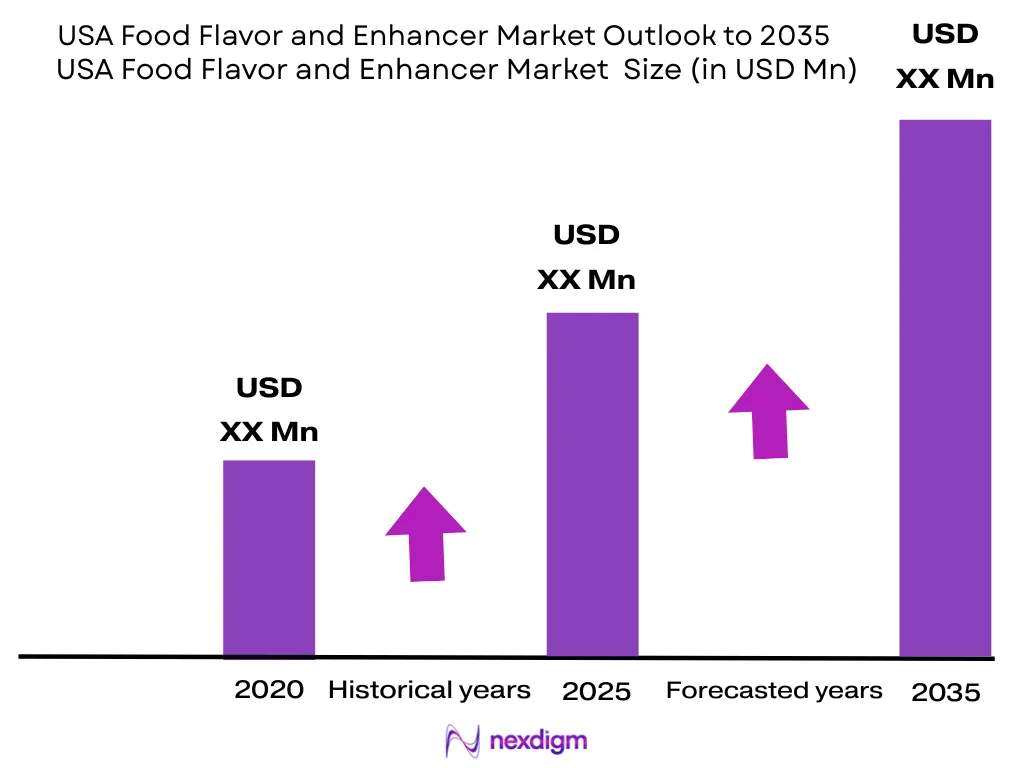
The USA Food Flavor and Enhancer Market is valued at USD ~ million, based on a five-year historical analysis, and is forecast to grow at % CAGR during the forecast period. Demand is driven by beverages, snacks, sauces, dairy, bakery, confectionery, prepared foods, meat, plant-based foods and foodservice menu innovation. USDA ERS reported total U.S. food spending of USD 2.51 trillion, with food-away-from-home spending reaching USD 1.41 trillion, supporting flavor systems across retail and foodservice products. The USA Food Flavor and Enhancer Market is dominated by New Jersey, New York, Illinois, Ohio, Minnesota, California, Texas, Georgia and Pennsylvania. New Jersey-New York dominates through flavor house concentration and consumer goods procurement; Illinois and Minnesota through packaged food and grain-based processing; Ohio through CPG innovation; California through beverages, wellness and plant-based foods; Texas and Georgia through foodservice, snacks and regional processing. BLS identifies food manufacturing as a major industry tracked under NAICS 311, while food preparation and serving occupations employed 13.2 million workers in May 2023.
Market Segmentation
By Product Type
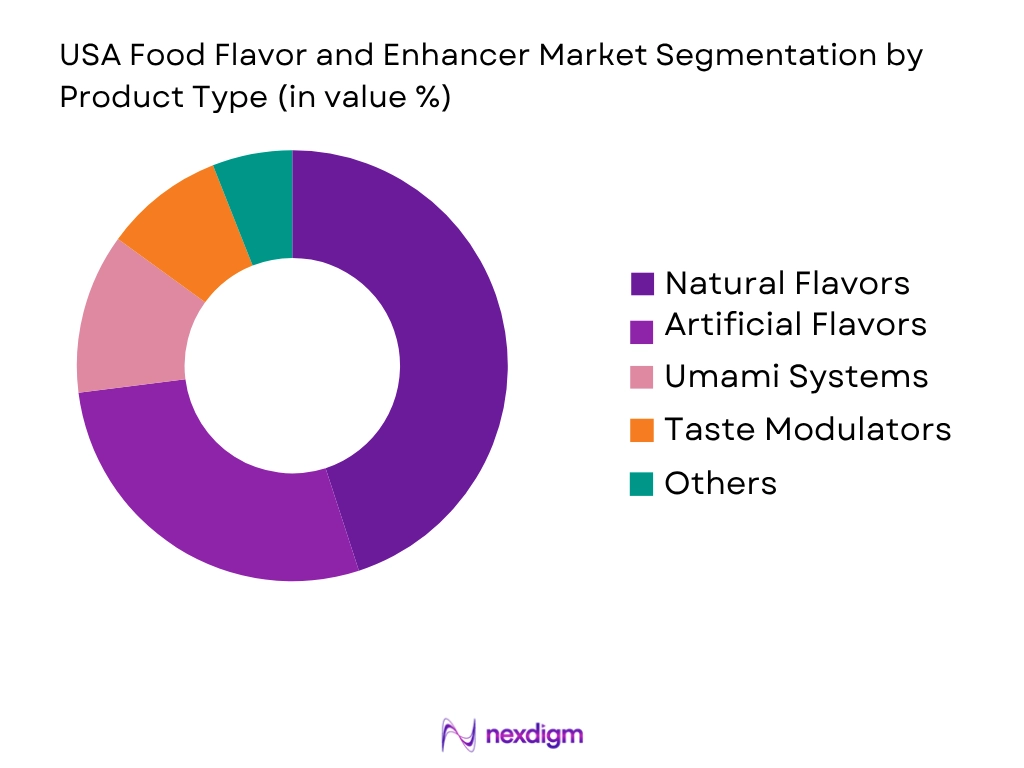
USA Food Flavor and Enhancer Market is segmented by product type into natural flavors, artificial flavors, flavor enhancers, umami systems, taste modulators, masking agents, yeast extracts, hydrolyzed vegetable proteins, smoke flavors, reaction flavors, encapsulated flavors, sweetness enhancers, salt reduction systems and functional masking systems. Recently, natural flavors have a dominant market share in the USA under product type segmentation because beverage, snack, dairy, bakery, confectionery, sauce and prepared food manufacturers increasingly use natural positioning to support clean-label claims and premium product launches. FDA’s 21 CFR 101.22 defines how natural and artificial flavors are labelled, making regulatory classification central to product formulation. Natural flavors also support beverage rotation, fruit profiles, botanical notes, dairy flavors, citrus systems, vanilla-brown notes and plant-based off-note masking. Their dominance is reinforced by large CPG and foodservice brands that need consumer-friendly label declarations while maintaining sensory impact, shelf-life stability and product differentiation.
By Application
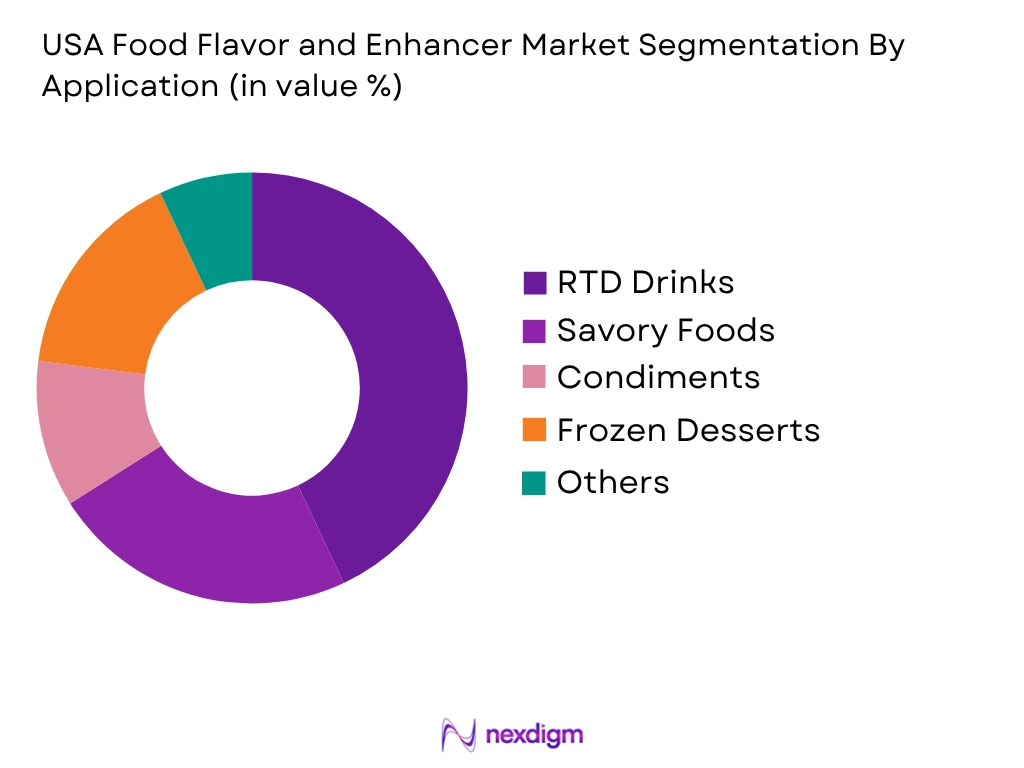
USA Food Flavor and Enhancer Market is segmented by application into beverages, RTD drinks, snacks, savory foods, sauces, dressings, condiments, dairy, frozen desserts, bakery, confectionery, meat, poultry, prepared foods, plant-based foods, functional nutrition and foodservice menu solutions. Recently, beverages and RTD drinks have a dominant market share in the USA under application segmentation because beverage companies rely on flavors for citrus notes, fruit profiles, botanical blends, energy drink differentiation, sugar reduction, functional ingredient masking, cloud systems and seasonal product rotation. The category benefits from rapid innovation across carbonated soft drinks, energy drinks, sports drinks, functional waters, coffee, tea and alcoholic RTDs. Flavor houses support beverage manufacturers with water-soluble flavors, emulsions, natural flavors, sweetness modulation and bitterness masking. The dominance of beverages is also supported by the scale of U.S. food spending and food-away-from-home consumption, where restaurants, cafés, convenience channels and retail beverage aisles require continuous flavor refreshment.
Competitive Landscape
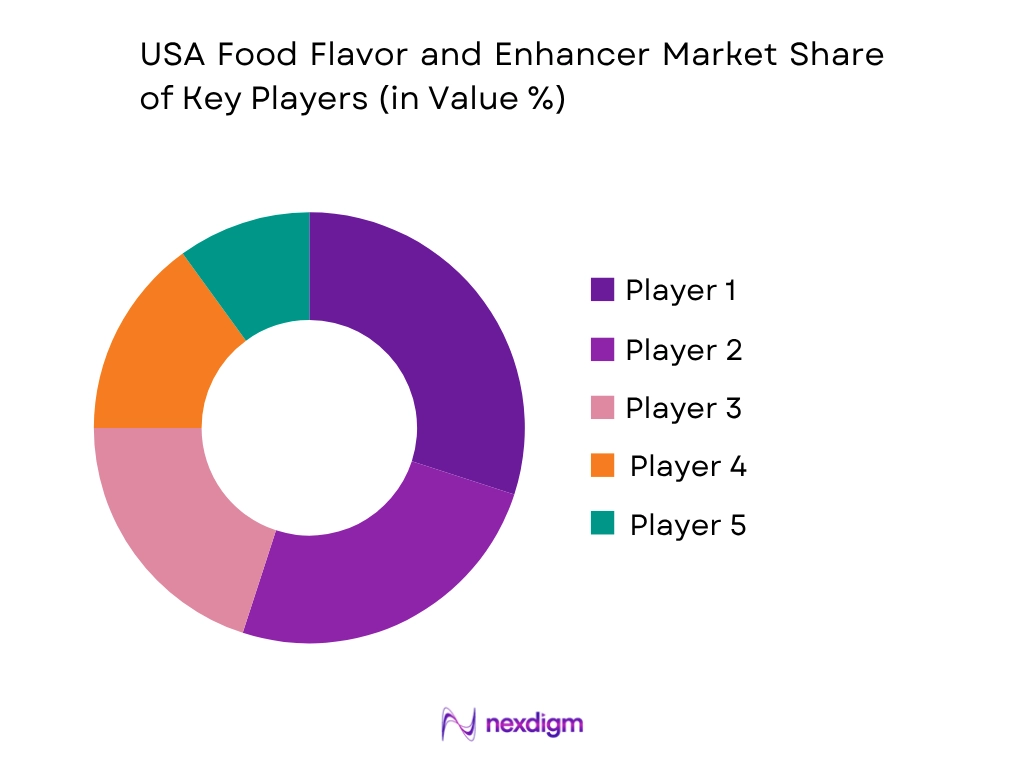
The USA Food Flavor and Enhancer Market is dominated by global flavor houses, U.S.-based flavor specialists, seasoning companies, savory enhancer suppliers, natural extract manufacturers and taste-modulation technology providers. The competitive structure is consolidated at the top because large beverage, snack, dairy, confectionery, prepared food and foodservice customers require sensory science, regulatory documentation, application laboratories, rapid sampling, supply continuity and global sourcing. Competition is increasingly shifting from basic flavor creation toward natural extraction, fermentation-derived flavor systems, plant-based masking, sugar and sodium reduction, AI-assisted flavor design, and FDA/FEMA GRAS documentation strength.
| Company | Establishment Year | Headquarters | Core Flavor Focus | USA Market Role | Key Applications | Regulatory Capability | Innovation Capability | Market-Specific Capability |
| Givaudan North America | 1895 | Vernier, Switzerland | ~ | ~ | ~ | ~ | ~ | ~ |
| International Flavors & Fragrances | 1958 | New York, USA | ~ | ~ | ~ | ~ | ~ | ~ |
| dsm-firmenich North America | 2023 | Kaiseraugst, Switzerland | ~ | ~ | ~ | ~ | ~ | ~ |
| Symrise North America | 2003 | Holzminden, Germany | ~ | ~ | ~ | ~ | ~ | ~ |
| McCormick & Company | 1889 | Hunt Valley, USA | ~ | ~ | ~ | ~ | ~ | ~ |
USA Food Flavor and Enhancer Market Analysis
Growth Drivers
Packaged food, beverage and foodservice innovation
USA Food Flavor and Enhancer Market is driven by the scale of food spending and the need for continuous product innovation across beverages, snacks, sauces, dairy, bakery, prepared foods, meat, plant-based foods and QSR menus. USDA ERS reported total food spending of USD 2.51 trillion and food-away-from-home spending of USD 1.41 trillion in 2025, showing a large current channel for flavor systems used in restaurants, cafés, convenience stores, institutional kitchens and packaged retail products. Flavor suppliers benefit because CPG and foodservice brands use fruit, citrus, botanical, vanilla, chocolate, umami, smoke, grill, spicy, ethnic and dessert-inspired profiles to refresh products and improve repeat purchase. BLS tracks food manufacturing under NAICS 311, covering industries that transform agricultural and livestock inputs into foods for final or intermediate consumption. This processing base supports demand for natural flavors, artificial flavors, yeast extracts, HVPs, taste modulators, masking agents and sodium-reduction systems used to standardize sensory quality across large-scale production.
Clean-label reformulation, sugar reduction and sodium reduction
USA Food Flavor and Enhancer Market is supported by reformulation activity as manufacturers reduce sugar, sodium, fat or artificial ingredients while maintaining taste quality. FDA’s 21 CFR 101.22 governs flavor labelling, including “natural flavor,” “artificial flavor,” and combined natural-and-artificial flavor declarations, making regulatory classification central to formulation decisions. USDA ERS food availability data measures annual supplies of several hundred raw and semi-processed commodities moving through the U.S. marketing system, indicating the breadth of products where flavor systems are used across beverages, dairy, bakery, snacks, sauces and prepared foods. The market relevance is direct: reduced-sugar beverages need sweetness modulators and bitterness blockers; low-sodium snacks and sauces need umami systems, yeast extracts and nucleotide enhancers; plant-based foods need masking technologies for pea, soy, wheat and fava protein off-notes. Food companies therefore require suppliers that combine sensory science, regulatory documentation, clean-label ingredient sourcing and application support for national manufacturing and foodservice launches.
Market Challenges
FDA, GRAS and label-compliance documentation burden
USA Food Flavor and Enhancer Market faces a regulatory challenge because flavor suppliers must support ingredient identity, source classification, use conditions, labelling language, allergen status, GMO status, organic compatibility and GRAS documentation. FDA’s 21 CFR 101.22 specifies how spices, flavorings and colorings are declared, including separate labelling rules for natural flavors, artificial flavors and combined flavor systems. This matters commercially because U.S. food spending reached USD 2.51 trillion and food-away-from-home spending reached USD 1.41 trillion, creating large volumes of products exposed to label scrutiny from regulators, retailers, foodservice buyers and consumers. A flavor system used in beverages, snacks, dairy, plant-based foods, sauces or nutrition products may contain many components, including natural extracts, aroma chemicals, solvents, carriers, enhancers and processing aids. Any documentation gap can delay product launches, supplier approvals or label sign-off. Suppliers must therefore maintain strong regulatory teams, specification systems, certificates of analysis, allergen files, country-of-origin documents and FEMA GRAS alignment for customer approval.
Natural raw material volatility and sensory replication risk
USA Food Flavor and Enhancer Market is constrained by natural-source volatility and sensory replication complexity, especially for vanilla, citrus oils, cocoa-derived notes, botanicals, spices, yeast extracts and specialty savory materials. Natural flavor systems are vulnerable to crop conditions, extraction yields, origin concentration, logistics constraints and customer traceability demands. The challenge is amplified by the size of the U.S. food system: USDA ERS reported USD 2.51 trillion in total food spending, while BLS identifies food manufacturing as the subsector transforming livestock and agricultural products into foods for final or intermediate consumption. Sensory replication risk is material because replacing artificial flavors or conventional enhancers can change beverage top notes, snack seasoning impact, dairy creaminess, reduced-sugar sweetness, low-sodium savory depth, plant-based meat notes and nutrition-product masking. Food manufacturers often demand the same sensory profile while changing label claims, reducing sugar or sodium, or replacing synthetic inputs. This requires repeated bench trials, application testing, shelf-life validation and consumer-facing sensory alignment, raising technical barriers for smaller flavor suppliers.
Market Opportunities
Fermentation-derived natural flavors and biotechnology-enabled taste systems
USA Food Flavor and Enhancer Market has a strong opportunity in fermentation-derived natural flavors, biotechnology-enabled aroma compounds and clean-label taste systems because manufacturers need scalable natural profiles with better supply consistency. Current food-system scale supports this opportunity: USDA ERS reported USD 2.51 trillion in total food spending and USD 1.41 trillion in food-away-from-home spending, creating large channels for beverages, snacks, sauces, dairy, prepared meals and foodservice menu innovation. Fermentation-derived systems can support vanilla-like notes, dairy profiles, savory precursors, fruit notes, botanical compounds and masking systems while reducing dependence on volatile agricultural extraction routes. They are particularly relevant for low-sugar beverages, protein drinks, plant-based foods, reduced-sodium sauces, functional nutrition products and premium dairy applications. FDA’s flavor labelling framework under 21 CFR 101.22 makes correct classification and documentation critical, so suppliers that combine biotechnology capability with regulatory files, application laboratories and sensory validation can capture higher-value demand. This opportunity reflects current reformulation needs, not future consumption projections.
Plant-based masking, functional beverage flavoring and savory enhancement platforms
USA Food Flavor and Enhancer Market has a growth opportunity in plant-based masking, functional beverage flavoring and savory enhancement platforms because U.S. manufacturers need solutions that improve taste while supporting health, nutrition and label requirements. USDA ERS food availability data covers hundreds of raw and semi-processed commodities moving through the U.S. system, showing the breadth of applications where flavor systems shape product acceptance. Food-away-from-home spending of USD 1.41 trillion also supports demand from QSR, cafés, casual dining, convenience foodservice and institutional channels that rely on repeatable sauces, beverages, snacks and prepared foods. Suppliers can target plant-protein off-note masking for soy, pea and wheat systems; bitterness blockers for vitamins, minerals, caffeine and botanicals; sweetness modulators for low-sugar beverages; umami systems for sodium-reduced soups, sauces and snacks; and smoke, grill and meat-like profiles for prepared foods and plant-based meats. Firms with rapid sampling, application testing, sensory analytics and FDA/FEMA documentation can convert these current technical pain points into long-term supply partnerships.
Future Outlook
Over the forecast period, the USA Food Flavor and Enhancer Market is expected to grow through packaged food innovation, foodservice menu development, beverage flavor rotation, snack seasoning, clean-label reformulation, functional nutrition and plant-based food development. Natural flavors, taste modulators, savory enhancers, botanical extracts, yeast extracts, fermentation-derived flavors and masking systems will gain relevance as manufacturers reformulate products for label, health and sensory requirements.
Major Players
- Givaudan North America
- International Flavors & Fragrances
- dsm-firmenich North America
- Symrise North America
- Kerry Group North America
- T. Hasegawa USA
- Sensient Technologies
- McCormick & Company
- Bell Flavors & Fragrances
- Flavorchem Corporation
- Virginia Dare
- Mane USA
- ADM Nutrition
- Takasago International Corporation USA
- Blue Pacific Flavors
Key Target Audience
- Food flavor and enhancer manufacturers
- Beverage and RTD drink manufacturers
- Snack, seasoning and savory food manufacturers
- Bakery, confectionery, dairy and frozen dessert manufacturers
- Sauce, condiment, prepared food and meat product manufacturers
- Plant-based food, functional nutrition and foodservice ingredient suppliers
- Investments and venture capitalist firms
- Government and regulatory bodies
Research Methodology
Step 1: Identification of Key Variables
The initial phase involves constructing an ecosystem map covering flavor houses, aroma chemical suppliers, essential oil processors, botanical extract suppliers, savory enhancer manufacturers, beverage compounders, seasoning blenders, food manufacturers and foodservice chains. This step uses desk research, regulatory review, trade indicators and company-level mapping. The objective is to define variables such as product type, source, form, flavor profile, functionality, application and end-user channel.
Step 2: Market Analysis and Construction
In this phase, historical data is compiled across food spending, food manufacturing, beverage production, snack innovation, foodservice activity, flavor ingredient imports, natural extract sourcing and regulatory requirements. The top-down approach evaluates macro and food-sector indicators, while the bottom-up approach assesses flavor usage across beverages, snacks, dairy, sauces, bakery, confectionery, prepared foods and plant-based products. This supports value, volume and segment-level modelling.
Step 3: Hypothesis Validation and Expert Consultation
Market hypotheses are validated through computer-assisted telephone interviews with flavor suppliers, beverage formulators, snack seasoning specialists, dairy application experts, foodservice innovation teams, natural extract suppliers and ingredient distributors. These consultations help verify natural flavor dominance, beverage application strength, savory enhancer demand, clean-label reformulation pressure and regulatory documentation needs. Expert inputs refine segmentation, competitive positioning and future outlook.
Step 4: Research Synthesis and Final Output
The final phase integrates secondary research, FDA regulatory review, FEMA GRAS context, company benchmarking, application mapping, distributor checks and expert consultations into a consolidated market model. Data triangulation is applied across manufacturer demand, flavor house supply, application usage and sensory requirements. The final output includes market size, segmentation, competitive landscape, future outlook and strategic recommendations for USA Food Flavor and Enhancer Market participants.

- Executive Summary
- Research Methodology (Market Definitions and Assumptions, Abbreviations, Flavor Classification Framework, Natural Flavor Definition Mapping, Artificial Flavor Definition Mapping, Flavor Enhancer and Taste Modulator Mapping, FDA Food Additive and GRAS Review, FEMA GRAS Flavor Ingredient Review, 21 CFR Flavoring Substance Mapping, HS Code Mapping, Market Sizing Approach, Top-Down Analysis, Bottom-Up Analysis, Demand-Side Assessment, Supply-Side Assessment, Food Manufacturer Procurement Checks, Beverage Formulator Interviews, Snack and Savory Application Interviews, Ingredient Distributor Interviews, Primary Industry Interviews, Data Triangulation, Forecasting Framework, Limitations and Future Conclusions)

- Definition and Scope
- Market Evolution and Industry Genesis
- Timeline of Major Industry Developments
- Role of Flavors and Enhancers in U.S. Packaged Food Manufacturing
- FDA Flavoring Substance and Food Additive Regulatory Framework

- Growth Drivers (High U.S. Food and Beverage Spending, Packaged Food Innovation, Foodservice and QSR Menu Development, Snack and Savory Food Consumption, Beverage Flavor Diversification, Clean-Label Reformulation, Sugar and Sodium Reduction, Plant-Based and Functional Nutrition Product Development)
- Market Challenges (FDA and GRAS Compliance Complexity, Natural Flavor Source Traceability, Clean-Label Scrutiny of Enhancers, Synthetic Aroma Chemical Perception Issues, Allergen and GMO Documentation Burden, Volatility in Vanilla, Citrus and Cocoa Inputs, Flavor Stability in Reformulated Products, Sensory Replication Challenges in Sugar, Salt and Fat Reduction)
- Market Opportunities (Natural and Botanical Flavor Expansion, Fermentation-Derived Flavor Development, AI-Assisted Flavor Formulation, Plant-Based Off-Note Masking, Sodium Reduction Flavor Enhancer Systems, Sugar Reduction Taste Modulators, Functional Beverage Flavor Systems, Foodservice Limited-Time Offer Flavor Platforms)
- Market Trends (Premium Natural Flavors, Global and Ethnic Flavor Profiles, Spicy and Heat-Layered Flavors, Citrus and Botanical Beverage Notes, Nostalgia and Dessert-Inspired Flavors, Umami and Savory Enhancement, Clean-Label Masking Systems, Personalized Nutrition Flavor Development)
- SWOT Analysis
- Porter’s Five Forces Analysis
- PESTLE Analysis

- By Market Value (2020-2025)
- By Consumption Volume (2020-2025)
- By Natural Flavor Demand (2020-2025)

- By Product Type (In Value %)
Natural Flavors
Artificial Flavors
Nature-Identical Flavors
Flavor Enhancers
Yeast Extracts - By Application (In Value %)
RTD Drinks
Savory Foods
Condiments
Frozen Desserts - By Distribution Channel (In Value %)
Direct Sales to Food and Beverage Manufacturers
Flavor House Key Account Sales
Specialty Ingredient Distributors
Foodservice Ingredient Suppliers
Beverage Compound Suppliers
Seasoning Blend Suppliers - By Region (In Value %)
Northeast USA
Midwest USA
South USA
West USA

- Market Share of Major Players (By Value, Volume, Product Type, Flavor Profile, Application, End User, Region, Distribution Channel, Natural vs Artificial Portfolio)
- Cross Comparison Parameters (Flavor Portfolio Breadth, Natural Flavor and Extract Capability, Savory Enhancer and Taste Modulation Strength, Beverage Application Lab Capability, Snack and Seasoning Formulation Expertise, FDA/FEMA GRAS Documentation Strength, U.S. Manufacturing and Warehousing Footprint, Clean-Label and Plant-Based Masking Capability)
- SWOT Analysis of Major Players
- Detailed Profiles of Major Companies
Givaudan North America
International Flavors & Fragrances
dsm-firmenich North America
Symrise North America
Kerry Group North America
T. Hasegawa USA
Sensient Technologies
McCormick & Company
Bell Flavors & Fragrances
Flavorchem Corporation
Virginia Dare
Mane USA
ADM Nutrition
Takasago International Corporation USA
Blue Pacific Flavors

- Beverage Manufacturer Analysis
- Snack and Savory Food Manufacturer Analysis
- Bakery and Confectionery Manufacturer Analysis
- Dairy and Frozen Dessert Manufacturer Analysis
- Sauce, Dressing and Condiment Manufacturer Analysis
- Meat, Poultry and Plant-Based Manufacturer Analysis

- By Market Value (2026-2035)
- By Consumption Volume (2026-2035)
- By Natural Flavor Demand (2026-2035)


 Request a Sample
 Ask for Customization
 Get a Quote
 Enquire Now