

 Download PDF
Market Overview
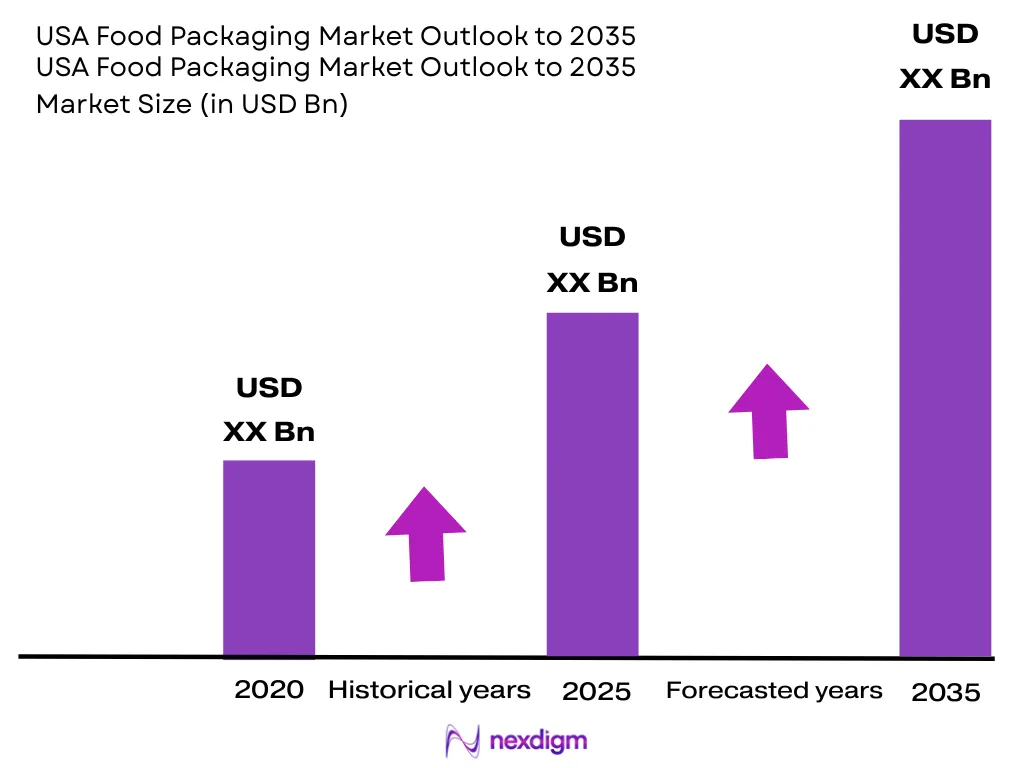
The USA Food Packaging Market was valued at approximately USD ~ billion in 2024 and represents one of the world’s largest and most technologically sophisticated food packaging economies, encompassing the full spectrum of primary, secondary, and tertiary packaging formats across all major food and beverage categories. Market growth is supported by structural expansion in convenience food consumption, the rapid rise of e-commerce food delivery and meal kit services, increasing consumer and regulatory demand for sustainable and reduced-plastic packaging solutions, and continuous innovation in active and intelligent packaging technologies that extend shelf life, reduce food waste, and enhance supply chain traceability. According to the U.S. Food and Drug Administration (FDA), the U.S. Environmental Protection Agency (EPA), and the Flexible Packaging Association (FPA), the food packaging industry is undergoing one of its most significant transformation cycles in decades as sustainability mandates, recycled content legislation, and extended producer responsibility frameworks reshape material choices, investment priorities, and competitive positioning across the entire packaging supply chain. Rising consumer health consciousness, expanding organic and natural food categories, and growth in premium branded food products further support demand for differentiated, high-performance, and visually distinctive packaging formats that deliver superior shelf appeal, product protection, and functional performance.
Market Segmentation
By Material
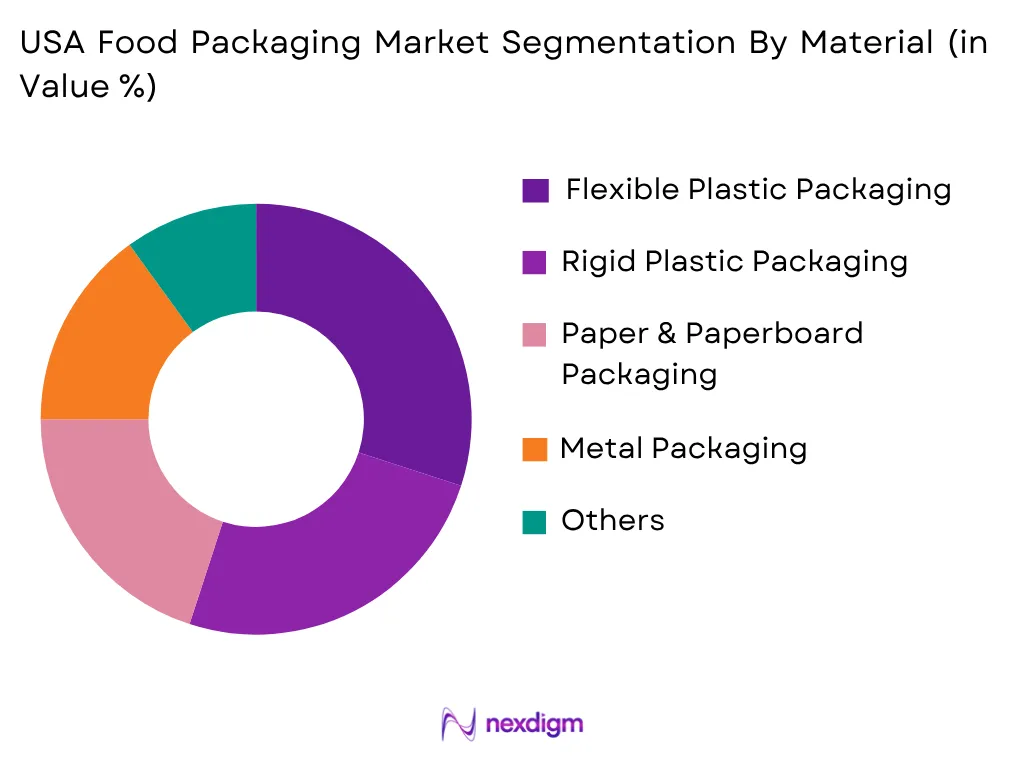
The USA Food Packaging Market is segmented by material type into flexible plastic packaging, rigid plastic packaging, paperboard and cartonboard packaging, glass packaging, metal packaging, biodegradable and compostable packaging, molded fiber and pulp packaging, multilayer and barrier film packaging, active and intelligent packaging, and other specialty packaging materials. Flexible plastic packaging holds the largest market share by value, driven by its exceptional combination of lightweight properties, superior barrier performance, cost-effectiveness, design versatility, and compatibility with high-speed automated filling and sealing equipment across meat, poultry, dairy, snack, and convenience food categories. However, flexible plastic packaging faces growing substitution pressure from paper-based flexible formats and compostable alternatives as brand owners respond to consumer sustainability preferences, retailer sustainability commitments, and state-level extended producer responsibility legislation. Paperboard and cartonboard packaging represents the second largest segment by value, benefiting from its widespread recyclability, renewable material origin, and strong consumer perception as a sustainable alternative to plastic across dry food, cereal, confectionery, beverage, and refrigerated food applications. Metal packaging maintains strong positions in beverage canning, shelf-stable food, and premium specialty food segments. The biodegradable and compostable packaging segment is recording the fastest growth rate in the market, driven by foodservice single-use plastics restrictions, retail sustainability mandates, and brand owner commitments to circular packaging design targets.
By Technology
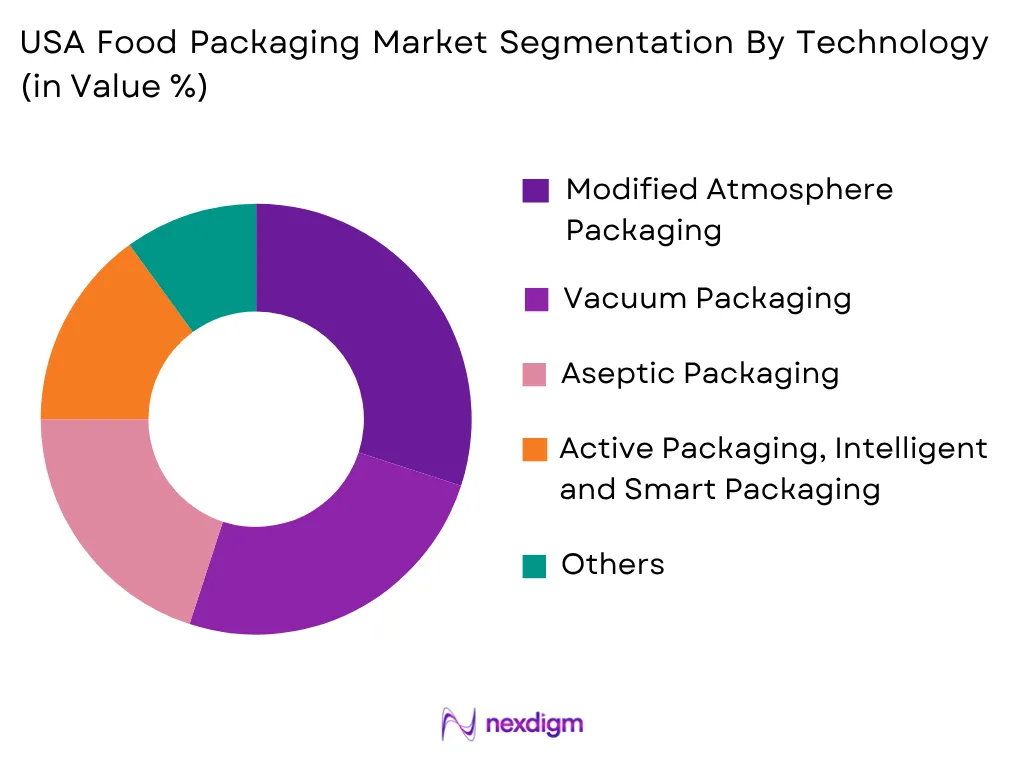
The USA Food Packaging Market is segmented by packaging technology into Modified Atmosphere Packaging (MAP), Vacuum Packaging, Aseptic Packaging, Active Packaging, Intelligent and Smart Packaging, and Retort Packaging. Modified Atmosphere Packaging holds the dominant technology share, widely deployed across fresh meat, poultry, seafood, prepared salads, fresh produce, deli meats, and ready meal categories where precise gas composition control within sealed packaging environments directly extends product shelf life, maintains color and texture, and reduces spoilage losses throughout the refrigerated supply chain. The technology’s compatibility with high-speed automated packaging lines, established retailer infrastructure for MAP products, and proven commercial performance across the full range of chilled food categories has entrenched it as the standard technology for fresh and short-shelf-life food packaging in U.S. supermarket and foodservice supply chains. Vacuum Packaging retains strong adoption in fresh and processed meat, hard cheese, and specialty food categories. Aseptic Packaging commands significant market share in ambient beverage, dairy alternative, and liquid food categories enabling room-temperature distribution. Intelligent and Smart Packaging represents the fastest-growing technology segment, driven by retailer demand for improved supply chain traceability, consumer interest in freshness indicators, and brand owner investment in QR code-enabled packaging digital engagement platforms.
Competitive Landscape
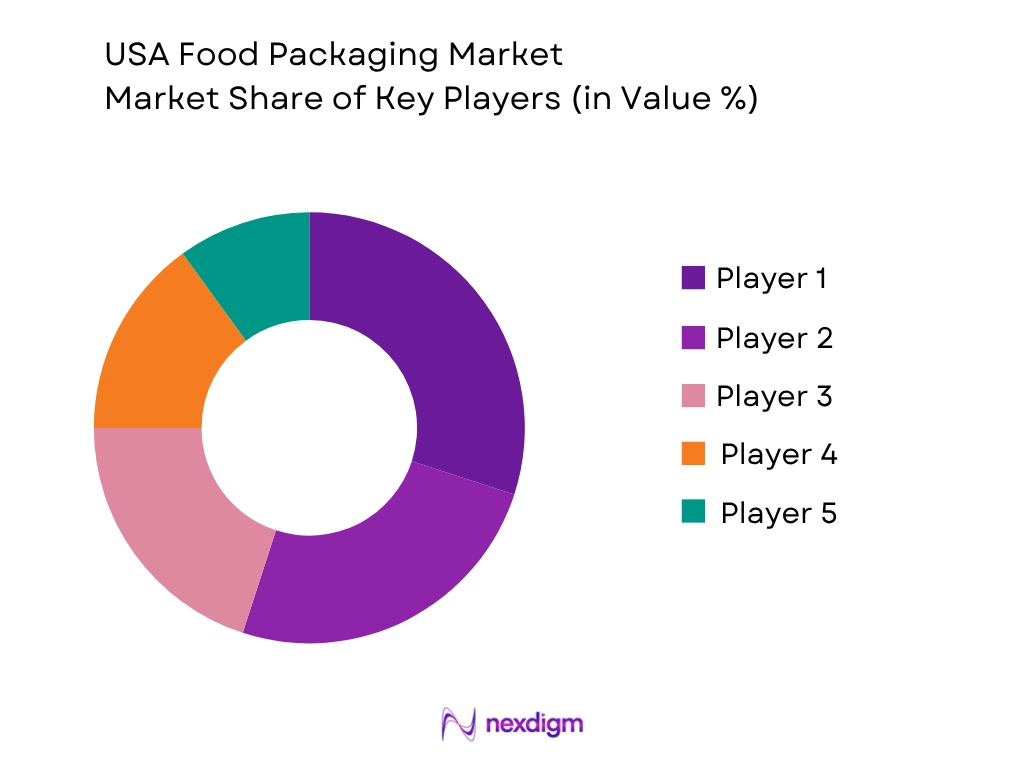
The USA Food Packaging Market is characterized by a concentrated competitive environment dominated by a small number of large-scale, vertically integrated global and domestic packaging conglomerates with diversified material portfolios, multi-format manufacturing capabilities, and established long-term supply relationships with major U.S. food and beverage brand owners, retailers, and foodservice operators. Leading participants including Amcor plc, Berry Global Group, Sealed Air Corporation, Graphic Packaging Holding Company, and Silgan Holdings maintain dominant positions through scale advantages, manufacturing network density, technical innovation in packaging materials and formats, and the ability to offer integrated packaging solutions across multiple categories and regions. The competitive landscape is further shaped by growing sustainability investment requirements that are raising barriers to entry, accelerating consolidation among mid-sized converters, and creating competitive differentiation opportunities for companies that can credibly demonstrate certified recycled content, compostability compliance, and verified sustainability credentials to brand owner and retailer procurement teams operating under increasingly stringent supplier sustainability qualification requirements.
| Company | Establishment Year | Headquarters | Primary Product Portfolio | Food Packaging Portfolio
|
Manufacturing Presence | Major End-Use Industries | Key Strategic Focus | Certifications & Compliance |
| Amcor plc | 1860 | ~ | ~ | ~ | ~ | ~ | ~ | ~ |
| Berry Global Group | 1967 | ~ | ~ | ~ | ~ | ~ | ~ | ~ |
| Sealed Air Corporation | 1960 | ~ | ~ | ~ | ~ | ~ | ~ | ~ |
| Graphic Packaging Holding | 1888 | ~ | ~ | ~ | ~ | ~ | ~ | ~ |
| Silgan Holdings | 1987 | ~ | ~ | ~ | ~ | ~ | ~ | ~ |
USA Food Packaging Market Analysis
Growth Drivers
Surge in Convenience Food Consumption and E-Commerce Food Delivery Growth
The structural expansion of convenience food consumption and the rapid growth of e-commerce food delivery, meal kit services, and direct-to-consumer food platforms are generating sustained and diversified demand for innovative, high-performance, and logistically optimized food packaging formats across the U.S. market. According to the U.S. Bureau of Labor Statistics Consumer Expenditure Survey, American households consistently allocate a growing proportion of food spending toward prepared, ready-to-eat, and convenience food categories, reflecting secular lifestyle changes driven by dual-income household growth, time scarcity, and the post-pandemic normalization of at-home food delivery. The Food and Drug Administration and the U.S. Census Bureau reported that online grocery and food delivery sales continued to record strong growth in 2024, with e-commerce food platforms, meal kit companies, and third-party delivery services generating packaging demand requirements fundamentally different from traditional retail shelf packaging in terms of durability, temperature retention, leakage prevention, and transit protection. The U.S. Department of Agriculture Economic Research Service has documented the long-term structural shift in American food consumption patterns toward packaged, processed, and convenience food formats that generate higher per-capita packaging consumption rates relative to fresh whole food purchases. Major food companies including Kraft Heinz, Conagra Brands, Campbell Soup, and General Mills have consistently increased investment in new product development across premium, health-positioned, and convenience food formats that require differentiated packaging solutions with enhanced barrier performance, extended shelf life, and premium shelf presentation. The continued expansion of quick service restaurant chains, fast casual dining, and institutional foodservice operations generates large and consistent demand for single-serve, portion-controlled, tamper-evident, and delivery-optimized packaging formats across the full range of hot and cold prepared food categories.
Rising Demand for Sustainable, Recyclable, and Reduced-Plastic Packaging
The accelerating demand for sustainable, recyclable, compostable, and reduced-plastic packaging solutions is reshaping the competitive landscape, investment priorities, and material mix of the USA Food Packaging Market with implications across the entire supply chain from resin producers and paper mills through packaging converters to brand owner procurement and sustainability teams. According to the U.S. Environmental Protection Agency, packaging represents a significant and growing component of the U.S. municipal solid waste stream, with plastic packaging in particular facing regulatory and reputational pressure driven by consumer awareness, environmental advocacy, and retail sustainability commitments from major U.S. grocery chains including Walmart, Kroger, Target, and Costco. The Federal Trade Commission’s updated Green Guides create compliance requirements for environmental claims on packaging, while California’s SB 54 Plastic Pollution Prevention and Packaging Producer Responsibility Act mandates that all single-use plastic packaging sold in California be recyclable or compostable by 2032, with recycled content minimums taking effect progressively through the forecast period. Brand owner sustainability commitments — including pledges by major food companies such as Nestle USA, Unilever, PepsiCo, and Danone North America to achieve 100% recyclable, reusable, or compostable packaging by 2025-2030 — have translated into accelerated investment in sustainable packaging formats, certified recycled content specifications, and compostable material trials. The Ellen MacArthur Foundation’s New Plastics Economy Global Commitment, which includes hundreds of U.S.-headquartered signatories, provides a framework for collaborative industry action that is reinforcing sustainability investment momentum throughout the USA food packaging value chain.
Market Challenges
Volatile Raw Material Prices and Resin Supply Chain Disruption
Volatile raw material costs represent one of the most persistent and structurally challenging features of the USA Food Packaging Market, creating margin pressure across the converter value chain and complicating long-term pricing strategies, capital investment planning, and contract negotiations for both packaging manufacturers and their food and beverage brand owner customers. According to the American Chemistry Council and the Plastics Industry Association, polyethylene, polypropylene, polyethylene terephthalate, and other petrochemical-derived packaging resins are subject to price cycles driven by crude oil and natural gas feedstock pricing, Gulf Coast petrochemical complex operating rates, hurricane-related supply disruptions, global resin trade flows, and domestic supply-demand balances that can shift rapidly and with limited predictability. The COVID-19 pandemic demonstrated the extreme supply chain fragility of petrochemical packaging material supply chains, with resin shortages, container shipping disruptions, and logistics cost inflation combining to impose unprecedented cost pressures on U.S. packaging converters and their customers during 2020-2022. Paperboard and cartonboard markets have also experienced significant price volatility driven by recovered fiber input cost fluctuations, energy cost increases at integrated paper mills, and capacity tightness in certain board grades used for food packaging cartons. Aluminum can sheet markets experienced severe tightening during the pandemic-era beverage packaging demand surge, highlighting the vulnerability of metallic packaging materials to supply-demand imbalances. Packaging converters operating under multi-year fixed-price supply contracts with food brand owners face particular exposure when raw material costs escalate rapidly, as contract structures often limit the speed at which input cost increases can be passed through to customers, compressing margins during commodity price upswings.
Stringent Regulatory Compliance and Evolving Sustainability Legislation
The increasingly complex and rapidly evolving regulatory environment governing food contact materials, environmental claims, extended producer responsibility, and plastic packaging restrictions creates significant compliance cost burdens, operational complexity, and strategic uncertainty for USA food packaging manufacturers, converters, and brand owners navigating a patchwork of federal, state, and local requirements that are evolving at different speeds across different jurisdictions. The FDA’s Food Safety Modernization Act and food contact substance notification programme impose rigorous safety assessment, testing, and documentation requirements for all materials in direct contact with food products, with compliance costs particularly significant for companies introducing novel bio-based, compostable, or recycled-content materials that require new food contact authorizations. California, Maine, Oregon, and Colorado have enacted extended producer responsibility frameworks that impose producer financial responsibility for end-of-life packaging collection and recycling infrastructure, with programme structures, covered material categories, and fee schedules varying significantly across state programmes and creating compliance matrix management challenges for nationally operating brands and packaging suppliers. The Federal Trade Commission’s Green Guides enforcement actions against misleading environmental claims — including recyclability claims for materials that lack viable end-market recycling infrastructure — create legal and reputational risk for companies making packaging sustainability communications. The EU’s Packaging and Packaging Waste Regulation, while technically a European requirement, creates de facto supply chain pressure on U.S.-headquartered multinational food companies and their U.S. packaging suppliers who must develop compatible sustainable packaging solutions for European market requirements that can be adapted for U.S. deployment.
Market Opportunities
Bio-Based, Compostable, and Circular Economy Packaging Innovation
The accelerating transition toward bio-based, compostable, and circular economy-aligned packaging solutions presents the single largest medium-term growth opportunity for innovative material developers, packaging converters, and brand owners positioned to meet the emerging generation of sustainability regulations, retailer procurement standards, and consumer preference for environmentally responsible packaging in the U.S. market. According to the Sustainable Packaging Coalition and the Packaging Machinery Manufacturers Institute, the U.S. sustainable packaging market is growing substantially faster than the overall packaging market as brand owners accelerate investment in packaging format transitions from conventional single-use plastic to certified compostable, recycled-content-bearing, and bio-based alternative materials. USDA BioPreferred Programme certification creates a government procurement preference for bio-based packaging products across federal agency purchasing, providing a stable and growing institutional demand channel for certified bio-based material innovators. State-level compostability standards, foodservice single-use plastics restrictions enacted by multiple major U.S. cities and counties, and retail sustainability mandates from major grocery chains are collectively creating a predictable and growing addressable market for certified compostable food packaging formats across foodservice cups, plates, cutlery, clamshells, bags, and wraps. Venture capital and corporate strategic investment in bio-based material startups developing PHA-based, PLA-based, seaweed-derived, mycelium-based, and agricultural residue-based packaging alternatives has accelerated significantly, signaling strong commercial confidence in the long-term trajectory of bio-based packaging adoption. Packaging converters investing early in compostable material processing capabilities, bio-based film extrusion technology, and certified industrial composting-compatible package design are well positioned to capture first-mover advantages in the regulatory-driven transition toward circular packaging formats.
Intelligent and Active Packaging Technology Adoption
The growing adoption of intelligent and active packaging technologies across U.S. food and beverage categories presents a substantial innovation-driven market opportunity for packaging manufacturers capable of integrating electronic, chemical, and biological functionality into conventional packaging substrates to deliver supply chain transparency, freshness monitoring, consumer engagement, and anti-counterfeiting capabilities that command premium pricing and strengthen brand loyalty. According to the FDA and the GS1 U.S. supply chain standards organization, serialized product identification, digital link-enabled packaging, and item-level traceability are becoming increasingly important requirements for food safety recall management, retail shelf management, and consumer transparency communications in the post-FSMA environment. QR code-enabled digital packaging — which links physical packaging to brand digital ecosystems, nutrition information databases, provenance storytelling content, and consumer loyalty programmes — has achieved mainstream adoption among leading U.S. food brands, driving demand for digital printing capabilities that can cost-effectively apply variable QR codes at commercial packaging production speeds. Time-temperature indicator labels and freshness sensor technologies are gaining traction in fresh meat, seafood, and prepared food categories as retailers and brand owners seek to reduce food waste at retail and consumer levels while extending effective shelf life through more accurate freshness communication. Near-field communication and RFID-enabled packaging is expanding beyond premium spirits and luxury food into mainstream food categories as hardware costs decline and retail infrastructure investment in item-level RFID scanning expands. Active packaging technologies including oxygen scavengers, moisture regulators, ethylene absorbers, and antimicrobial packaging coatings are increasingly specified in premium fresh, chilled, and ambient food categories where shelf life extension directly reduces retail and consumer food waste while supporting extended distribution ranges.
Future Outlook
The USA Food Packaging Market is expected to witness sustained expansion over the forecast period, driven by structural growth in convenience food consumption, accelerating regulatory and commercial momentum toward sustainable packaging formats, progressive adoption of intelligent and active packaging technologies, and continuous innovation in packaging materials and manufacturing processes. The market’s transition toward circular, bio-based, and reduced-plastic packaging formats will reshape material mix, capital investment patterns, and competitive positioning across the value chain through the forecast period, with early-investing sustainable packaging leaders expected to consolidate market share at the expense of slower-adapting conventional packaging suppliers. Extended producer responsibility legislation, recycled content mandates, and compostability requirements at state and potentially federal level will create compliance-driven capital investment requirements and accelerate the retirement of non-recyclable and non-compostable packaging formats across food categories. Digital packaging adoption, enabled by declining QR code implementation costs, maturing digital printing infrastructure, and growing retail investment in item-level traceability systems, is expected to become a standard feature of premium food packaging across most major categories by the late forecast period. The U.S. food packaging industry’s well-developed research and development infrastructure, sophisticated material supplier base, large and innovation-receptive brand owner customer community, and extensive packaging testing and validation ecosystem collectively position it to remain one of the world’s most technologically advanced and commercially dynamic food packaging markets through 2035.
Major Players
- Amcor plc
- Berry Global Group
- Sealed Air Corporation
- Graphic Packaging Holding Company
- Silgan Holdings
- Pactiv Evergreen
- Sonoco Products Company
- WestRock Company
- AptarGroup
- Winpak Ltd
- Printpack Inc
- ProAmpac
- Novatek International
- Coveris Holdings
- Packaging Corporation of America
Key Target Audience
- Food Packaging Manufacturers and Material Suppliers
- Food and Beverage Brand Owners and Processors
- Retail Chains, Supermarkets, and Grocery Operators
- Packaging Machinery and Equipment Manufacturers
- Investments and Venture Capitalist Firms
- Government and Regulatory Bodies (FDA, EPA, FTC, USDA, U.S. Customs and Border Protection)
- Sustainable Packaging Material Developers and Bio-Based Resin Producers
- Food Delivery Platforms, E-Commerce Food Operators, and Meal Kit Companies
Research Methodology
Step 1: Identification of Key Variables
The initial phase involves constructing an ecosystem map encompassing all major stakeholders within the USA Food Packaging Market. Extensive secondary research is conducted through industry publications, government databases, company reports, and packaging technology resources. The objective is to identify key variables influencing production capacity, material innovation adoption, sustainability investment levels, regulatory compliance requirements, and market growth.
Step 2: Market Analysis and Construction
This phase focuses on collecting and analyzing historical industry data related to production volume, facility capacity, material mix evolution, technology deployment, and revenue generation. Market segmentation is developed based on packaging material types, packaging formats, technologies, and end-user demand patterns across the USA’s diverse regional food production and consumption markets. Supply-side and demand-side assessments are integrated to establish accurate market estimates.
Step 3: Hypothesis Validation and Expert Consultation
Market assumptions and forecasts are validated through structured interviews with packaging manufacturers, material suppliers, brand owner packaging procurement managers, sustainability directors, regulatory compliance specialists, and industry association representatives. These consultations provide operational insights regarding material cost dynamics, sustainability investment timelines, regulatory compliance strategies, technology adoption roadmaps, and future competitive positioning trends specific to the USA food packaging sector.
Step 4: Research Synthesis and Final Output
The final stage combines insights obtained from primary and secondary research sources. Data triangulation techniques are applied to validate market estimates and segment-level findings. The resulting analysis provides a comprehensive view of competitive dynamics, growth opportunities, future trends, and strategic recommendations within the USA Food Packaging Market.

- Executive Summary
- Research Methodology (Market Definitions and Assumptions, Abbreviations, Market Sizing Approach, Top-Down Analysis, Bottom-Up Analysis, Demand-Side Assessment, Supply-Side Assessment, Primary Industry Interviews, Secondary Research Validation, Data Triangulation, Forecasting Framework, Limitations and Future Conclusions)

- Definition and Scope
- Market Evolution and Industry Genesis
- Timeline of Major Industry Developments
- Food Packaging Industry Value Chain Analysis
- Supply Chain Analysis

- Growth Drivers (Surge in Convenience and Ready Meal Consumption, Rising Demand for Sustainable and Recyclable Packaging, Growth of E-Commerce Food Delivery, Increasing Food Safety and Shelf-Life Extension Requirements, Expansion of Retail Private Label Packaging, Advancements in Intelligent and Active Packaging Technologies)
- Market Challenges (Volatile Raw Material and Resin Prices, Stringent FDA and EPA Regulatory Compliance Requirements, Consumer Plastic Backlash and Extended Producer Responsibility Legislation, Rising Sustainability Investment Requirements, Supply Chain Disruptions and Logistics Cost Inflation)
- Market Opportunities (Bio-Based and Compostable Packaging Innovation, Circular Economy and Recycled Content Mandates, Intelligent Packaging and Traceability Technology Adoption, Mono-Material Packaging Design for Recyclability, Retail and Foodservice Customization and On-Demand Packaging Solutions)
- Market Trends (Monomaterial Packaging for Recyclability, Paper-Based Flexible Packaging Substitution, Digital Printing and Short-Run Customization, Lightweighting and Material Reduction, Blockchain-Enabled Packaging Traceability, Smart Label and QR Code Integration)
- Government Regulations (FDA Food Contact Substance Regulations, EPA Sustainable Packaging Guidelines, FTC Green Guides for Environmental Claims, USDA Organic and Natural Labeling Standards, State-Level Extended Producer Responsibility Laws, California SB 54 Plastic Packaging Requirements)
- SWOT Analysis
- PESTLE Analysis
- Porter’s Five Forces Analysis
- Stakeholder Ecosystem
- Competition Ecosystem

- By Market Value (2020-2025)
- By Volume Consumption (2020-2025)
- By Average Selling Price (2020-2025)

- By Material Type (In Value %)
Flexible Plastic Packaging
Rigid Plastic Packaging
Paperboard and Cartonboard Packaging
Glass Packaging
Metal Packaging (Aluminium and Steel)
Biodegradable and Compostable Packaging
Molded Fiber and Pulp Packaging
Multilayer and Barrier Film Packaging
Active and Intelligent Packaging
Other Specialty Packaging Materials - By Packaging Type (In Value %)
Bags and Pouches
Trays and Clamshells
Bottles and Jars
Cans and Tins
Cartons and Folding Boxes
Wraps and Films
Cups and Tubs
Sachets and Stick Packs - By Technology (In Value %)
Modified Atmosphere Packaging (MAP)
Vacuum Packaging
Aseptic Packaging
Active Packaging
Intelligent and Smart Packaging
Retort Packaging - By Region (In Value %)
Northeast USA
Midwest USA
South USA
West USA - By End User (In Value %)
Meat, Poultry and Seafood Processors
Bakery and Confectionery
Dairy and Chilled Foods
Beverages
Fruits and Vegetables
Convenience and Ready Meals
Snacks and Dry Foods
Condiments and Sauces

- Market Share Analysis of Major Players (By Revenue, Production Volume, Packaging Format Portfolio, Material Category, Regional Presence)
- Market Concentration Analysis
- Cross Comparison Parameters (Annual Production Capacity, Material Portfolio Breadth, Number of Manufacturing Facilities, Sustainable Packaging Revenue Share, R&D Investment as Percentage of Revenue, Key Account Retention Rate, Retail and Foodservice Client Coverage, Digital Printing and Customization Capability)
- SWOT Analysis of Major Players
- Pricing Analysis (Per Unit Pricing, Material-Based Pricing, Volume Discount Structure, Sustainable Premium Pricing, Contract vs Spot Pricing Dynamics)
- Detailed Profiles of Major Companies
Amcor plc
Berry Global Group
Sealed Air Corporation
Graphic Packaging Holding Company
Silgan Holdings
Pactiv Evergreen
Sonoco Products Company
WestRock Company
AptarGroup
Winpak Ltd
Printpack Inc
ProAmpac
Novatek International
Coveris Holdings
Packaging Corporation of America

- Packaging Purchase Decision Assessment (Purchase Frequency, Format Preference, Sustainability Preference, Brand Influence, Price Sensitivity)
- Procurement Behavior Analysis (Contract Duration, Supplier Diversification Strategy, Volume Commitment, Lead Time Requirements)
- Purchasing Power and Spending Analysis
- Sustainability-Driven Purchase Behavior (Recycled Content Preference, Compostability Demand, Reduced Plastic Preference, Carbon Footprint Awareness)
- Premium Packaging Acceptance Analysis

- By Market Value (2026-2035)
- By Volume Consumption (2026-2035)
- By Average Selling Price (2026-2035)


 Request a Sample
 Ask for Customization
 Get a Quote
 Enquire Now