
 Download PDF
 Download PDF
Market Overview
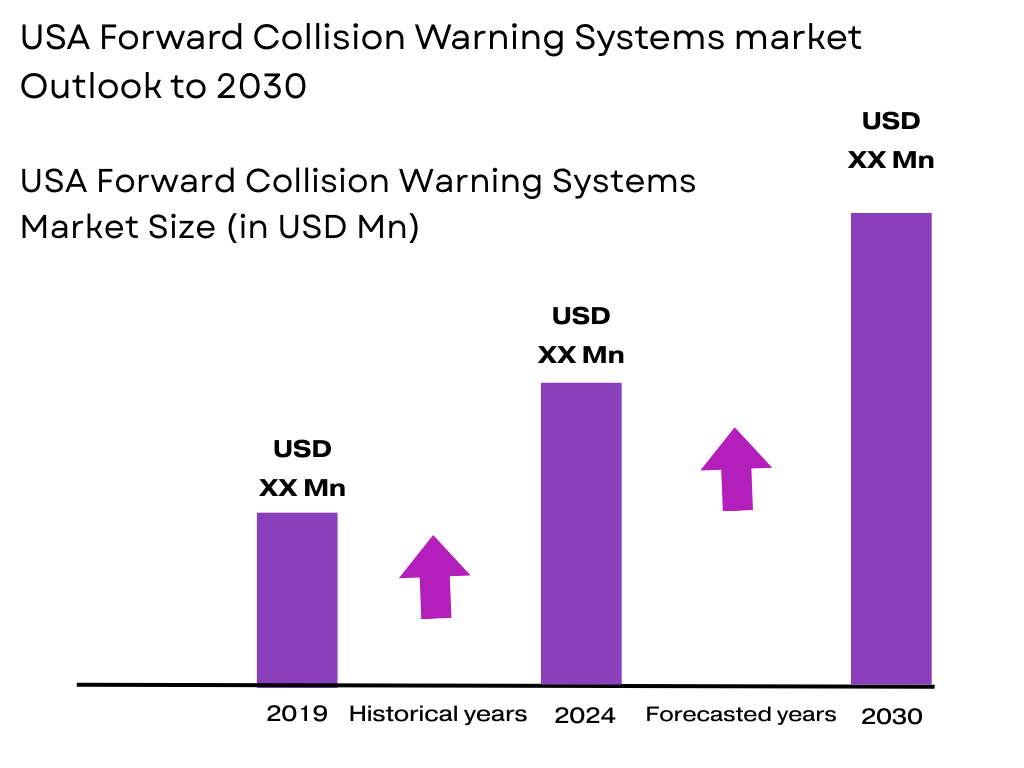
The USA Forward Collision Warning (FCW) Systems market is valued at approximately USD ~ billion, driven by rising consumer demand for advanced driver-assistance systems (ADAS) and the growing need for enhanced vehicle safety features. The market has been growing rapidly due to the introduction of stringent government regulations aimed at reducing road accidents and fatalities. Safety mandates from the National Highway Traffic Safety Administration (NHTSA) and Insurance Institute for Highway Safety (IIHS) have been pivotal in pushing for widespread adoption of FCW systems in vehicles. Increasing consumer awareness and automakers’ push for safety features also significantly contribute to market growth.
The USA remains a dominant player in the FCW systems market due to its robust automotive industry and the growing regulatory landscape for vehicle safety. Major automotive hubs such as Detroit, Michigan, home to the “Big Three” automakers (Ford, GM, Chrysler), have a central role in market dominance. Moreover, cities with large vehicle fleets, such as Los Angeles and New York, contribute to high adoption rates of FCW systems. The USA’s commitment to road safety, coupled with government incentives for the adoption of ADAS technologies, has solidified its position as a leader in the market.
Market Segmentation
By Product Type
The USA Forward Collision Warning Systems market is segmented by product type into radar-based systems, camera-based systems, LiDAR-assisted systems, and ultrasonic-based systems. Radar-based systems dominate the market share due to their proven effectiveness in collision detection and their ability to work under various weather conditions, making them ideal for integration into FCW systems. These systems provide high accuracy and reliability, especially in adverse weather conditions where camera-based systems may fall short. The widespread integration of radar-based systems in vehicles across different price segments has made them the leading choice among automakers. As automotive OEMs increasingly adopt radar-based technology, the segment continues to lead the market.

By End-Vehicle type
The market is also segmented by end-vehicle class into passenger cars, light commercial vehicles, heavy trucks and buses, and electric vehicles (EVs). Passenger cars currently hold the largest market share due to their high production volume and the increasing demand for safety technologies among individual consumers. The adoption of FCW systems in passenger cars is largely driven by consumer preference for enhanced safety features, along with the increasing availability of advanced safety systems in mid-range vehicles. Additionally, regulatory pressures from the NHTSA to make FCW systems standard in passenger vehicles have pushed for broader implementation in this segment.

Competitive Landscape
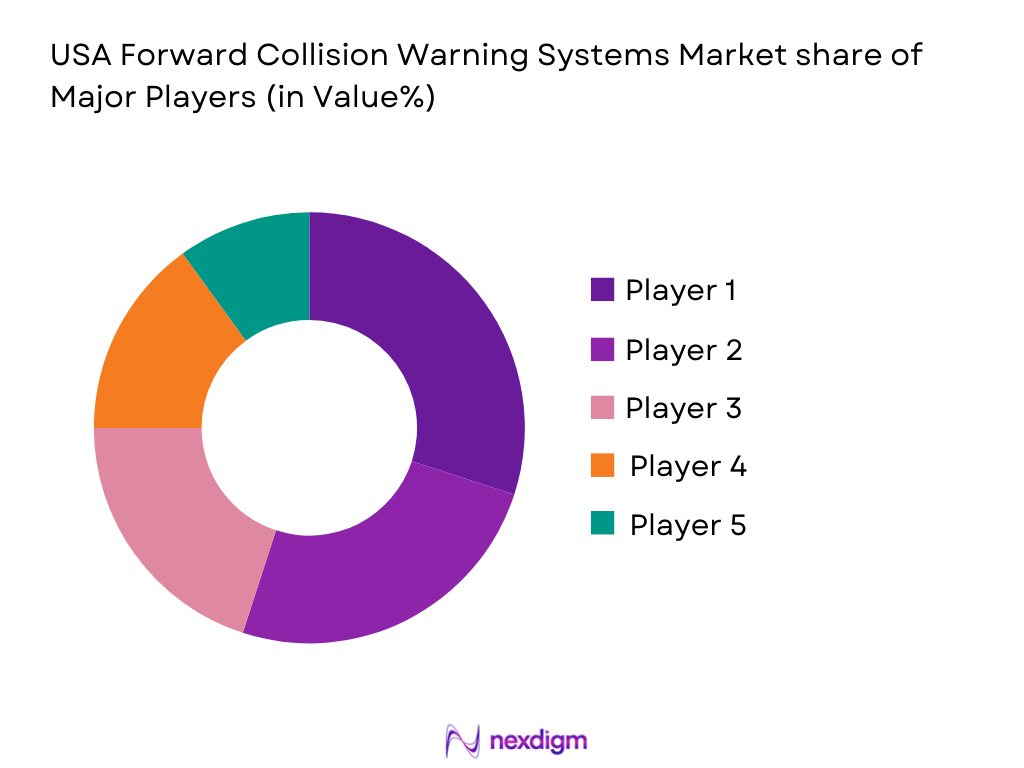
The USA Forward Collision Warning (FCW) Systems market is highly competitive, dominated by global players as well as some regional suppliers. The competition is based on technological innovations, strategic partnerships with OEMs, and adherence to safety standards. Companies like Bosch, Continental, and Mobileye lead the market, providing cutting-edge solutions that integrate radar, camera, and LiDAR technologies. These companies’ competitive edge lies in their extensive R&D investments, partnerships with leading automakers, and strong product portfolios. Their ability to offer complete ADAS solutions, including FCW systems, further consolidates their dominance in the market.
| Company | Establishment Year | Headquarters | Sensor Technology | OEM Partnerships | Market Focus | R&D Investments | Product Portfolio |
| Bosch | 1886 | Stuttgart, Germany | ` | ~ | ~ | ~ | ~ |
| Continental | 1871 | Hanover, Germany | ~ | `~ | ~ | ~ | ~ |
| Mobileye (Intel) | 1999 | Jerusalem, Israel | ~ | ~ | ~ | ~ | ~ |
| Denso | 1949 | ` Kariya, Aichi, Japan | ~ | ~ | ~ | ~ | ~ |
| ZF Friedrichshafen | 1915 | Friedrichshafen, Germany | ~ | ~ | ~ | ~ | ~ |
USA Forward Collision Warning Systems Market Analysis
Growth Drivers
Urbanization
Urbanization has been a significant factor driving the demand for forward collision warning (FCW) systems in the USA. The U.S. urban population has been steadily increasing, with over ~% of the population residing in urban areas as of 2022. This high urbanization rate leads to increased traffic congestion, prompting the need for advanced safety features like FCW systems. Urban areas often face higher rates of traffic accidents, which in turn boost the demand for vehicle safety technologies. According to the U.S. Census Bureau, the population of urban areas is expected to continue rising, putting further emphasis on the need for advanced driver-assistance systems (ADAS) in these regions.
Industrialization
Industrialization in the USA has led to a surge in the number of vehicles on the road, particularly commercial vehicles. The U.S. manufacturing sector continues to grow, with the industrial output reaching USD ~ trillion in 2022. As industrial activities increase, so does the transportation of goods, with more trucks and commercial vehicles on the road. This, in turn, drives the adoption of FCW systems, as these vehicles often operate in high-risk environments with heavy traffic. Increased adoption of ADAS in heavy-duty trucks, such as those seen in the freight industry, further promotes market growth.
Restraints
High Initial Costs
One of the major constraints for the widespread adoption of FCW systems in the USA is the high initial cost of the technology. The integration of FCW requires advanced sensors such as radar and cameras, which can be expensive for manufacturers. As of 2023, the cost of integrating a complete ADAS system, including FCW, AEB, and lane departure warning, can add up to USD ~ to the cost of a vehicle. Despite the long-term benefits of reduced accidents, the high upfront costs remain a barrier for mass adoption, especially in lower-priced vehicle segments.
Technical Challenges
FCW systems rely heavily on sensor technologies such as radar, cameras, and LiDAR, which come with their own technical challenges. Issues related to sensor performance in extreme weather conditions, such as heavy rain, fog, or snow, can limit the effectiveness of FCW systems. Additionally, the calibration and integration of these sensors within vehicles pose significant challenges to automakers. According to NHTSA, system calibration errors have been reported, leading to faulty warnings or missed collision risks. The complexity of achieving optimal performance across diverse environments and road conditions remains a hurdle.
Opportunities
Technological Advancements
Technological advancements in sensor fusion, artificial intelligence (AI), and machine learning offer significant opportunities for the FCW market. The development of more accurate and reliable sensors is expected to enhance the effectiveness of FCW systems. In 2023, the adoption of AI-based perception algorithms in FCW systems helped improve warning accuracy, especially in complex driving environments like urban traffic. As these technologies continue to evolve, they will create new opportunities for more sophisticated FCW systems, driving future market growth.
International Collaborations
Collaboration between U.S.-based automotive manufacturers and international technology firms presents an opportunity for the expansion of FCW systems. For instance, partnerships between U.S. automakers and global tech companies such as Mobileye (Intel) and Bosch have resulted in the integration of cutting-edge FCW technologies. These collaborations not only help enhance the technical capabilities of FCW systems but also ensure their integration into a wide variety of vehicles. Continued international collaboration is expected to fuel innovation and market expansion.
Future Outlook
Over the next several years, the USA Forward Collision Warning Systems market is expected to grow at a robust pace. This growth will be primarily driven by technological advancements in ADAS, such as improved radar and camera integration, as well as growing government support and regulatory mandates for vehicle safety. The increase in vehicle automation, including the development of semi-autonomous and fully autonomous vehicles, will further boost demand for FCW systems. Additionally, the continuous rise in consumer awareness of safety and the push for more eco-friendly vehicles are expected to continue driving the market for FCW systems in the automotive sector.
Major Players in the USA Forward Collision Warning Systems Market
- Bosch
- Continental
- Mobileye
- Denso
- ZF Friedrichshafen
- Aptiv
- Valeo
- Magna International
- Autoliv
- Harman International
- Honeywell
- Panasonic
- NXP Semiconductors
- Infineon Technologies
- Texas Instruments
Key Target Audience
- Automotive OEMs
- Tier-1 and Tier-2 Suppliers
- Investments and Venture Capitalist Firms
- Government and Regulatory Bodies
- Fleet Operators
- Automotive Component Manufacturers
- Insurance Companies
- Automotive Safety Testing Organizations
Research Methodology
Step 1: Identification of Key Variables
The research starts by identifying key variables affecting the market for FCW systems in the USA, including technological advancements, regulations, and market penetration. Desk research is conducted using secondary data sources to map the competitive landscape and gather industry insights.
Step 2: Market Analysis and Construction
In this phase, historical data related to FCW adoption, sensor technology trends, and vehicle production volumes are analyzed. This helps to construct a market model that accounts for various influencing factors such as consumer behavior and regulatory changes.
Step 3: Hypothesis Validation and Expert Consultation
Market hypotheses regarding future growth and trends are validated through interviews with industry experts, including OEMs, suppliers, and technology providers. These consultations help refine the market outlook and validate assumptions made during the research.
Step 4: Research Synthesis and Final Output
Finally, the data gathered from the bottom-up approach is synthesized to provide a comprehensive view of the USA FCW systems market. The final output is validated with key stakeholders, including automotive OEMs and technology developers, to ensure accuracy and reliability of the market data.

- Executive Summary
- Research Methodology (Market Definitions and Assumptions, Abbreviations, Market Sizing Approach, Consolidated Research Approach, Understanding Market Potential Through In-Depth Industry Interviews, Primary Research Approach, Limitations and Future Conclusions)

- Definition and Coverage
- Market Genesis and Tech Evolution
- Key Innovation Timeline
- Automotive Safety Architecture Cycle
- FCW Supply Chain and Value Chain Analysis

- Growth Drivers
Safety Regulation & NHTSA/IIHS Influence
Rising ADAS Penetration Rates
Cost Reductions in Sensors & E/E Platforms - Market Challenges
Integration Complexity & Validation Costs
False Positive/Negative Mitigation Engineering
Aftermarket Compatibility Limitations - Opportunity
SoftwareDefined Safety Platform Expansion
Enhanced Machine Vision & AI Stacking
Insurance Incentives for FCW Adoption - Technology Trends
Sensor Fusion Enhancements
Edge AI in Perception
HighDefinition Mapping Integration - Regulatory & Compliance Framework
Federal/State Safety Requirements
Voluntary OEM Safety Agreements - SWOT Analysis
- Price Analysis
- Porters Five Forces Analysis
- FCW Value Chain Influence Mapping

- FCW Market Value, 2019-25
- FCW Installed Units, 2019-25
- Average Selling Price, 2019-25

- By Sensor Technology (in Value %)
Radar Systems
Vision Camera Based Systems
LiDAR Enabled FCW
Ultrasonic Augmented FCW
Sensor Fusion Systems - By System Integration Tier (in Value %)
OEM Integrated
Aftermarket Retrofit Solutions - By End Vehicle Class (in Unit %)
Passenger Cars
Light Commercial Vehicles
Heavy Trucks & Buses
EV & Autonomous Fleet Vehicles - By Safety Feature Bundling (in Value %)
Standalone FCW
FCW + AEB Bundle
FCW + ACC + AEB Integrated Modules
MultiFunction ADAS Packs - By Sales Channel (in Value %)
OEM Direct Supply Agreements
Tier1/2 Supplier Contracts
Aftermarket Distribution Channels

- Market Concentration by Value & Volume
- Cross comparison parameters (Company Overview, Business Strategies, Recent Developments, Strength, Weakness, Organizational Structure, Revenues, Revenues by Type of Product, Number of Touchpoints, Distribution Channels, Number of Dealers and Distributors, Margins, Production Plant, Capacity, Unique Value Offering, and Others)
- SWOT Analysis
- Pricing Analysis
- Dtailed Company Profiles
Aptiv PLC
Autoliv Inc.
Bosch Mobility Solutions
Continental AG
Denso Corporation
Gentex Corporation
Honeywell International Inc.
Infineon Technologies AG
Magna International Inc.
Mobileye
NXP Semiconductors
Panasonic Automotive
Robert Bosch GmbH
Siemens AG
ZF Friedrichshafen AG

- OEM Design Budget Allocations
- Consumer Willingness to Pay for Safety (WTP Indicators)
- Fleet Buyer Decision Framework
- Safety ROI Metrics

- FCW Market Value Forecast, 2026-2030
- Installed Units Forecast, 2026-2030
- ASP Projection, 2026-2030


 Request a Sample
 Ask for Customization
 Get a Quote
 Enquire Now