

 Download PDF
 Download PDF
Market Overview
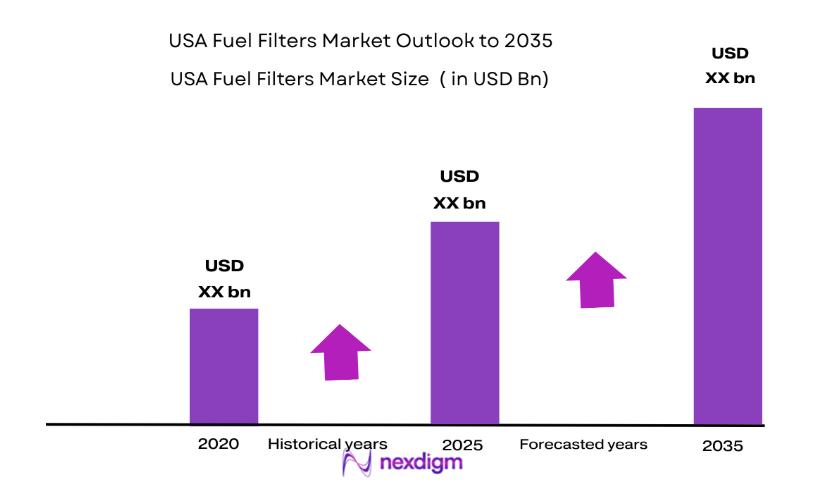
The USA fuel filters market is projected to reach a substantial market size of USD ~ billion based on a recent historical assessment, driven by factors such as increasing automotive production, regulatory pressures, and consumer demand for fuel-efficient technologies. The market’s expansion is also influenced by stringent environmental standards, particularly the need for cleaner emissions and optimized engine performance in both the automotive and industrial sectors. These factors collectively support the sustained growth of the fuel filters market, with substantial investments in research and development driving innovation.
The market is particularly strong in regions with a high concentration of automotive manufacturing and industrial activity. Major cities such as Detroit, California, and Texas have been instrumental in driving market growth due to their extensive automotive production, robust infrastructure, and strong presence of key market players. Additionally, the regulatory frameworks in these regions, aimed at reducing pollution and improving fuel efficiency, have fostered a favorable environment for the adoption of advanced fuel filter technologies. These cities and states remain pivotal in shaping the market’s landscape.
Market Segmentation
By Product Type:
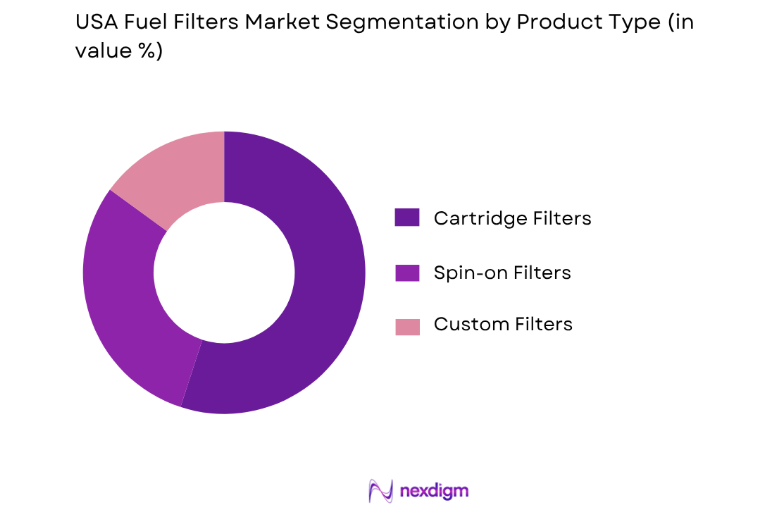
USA fuel filters market is segmented by product type into cartridge filters, spin-on filters, and custom filters. Recently, cartridge filters have captured a dominant market share due to factors such as their widespread application in automotive, industrial, and commercial sectors, the increasing demand for fuel efficiency, and the ease of installation and replacement. Cartridge filters are popular for their cost-effectiveness, reliability, and efficiency in maintaining engine performance, making them the preferred choice for both OEMs and aftermarket service providers. This sub-segment is expected to maintain its leading position due to technological advancements that enhance its filtration capacity, making it suitable for a wide range of applications.
By End-User Type:
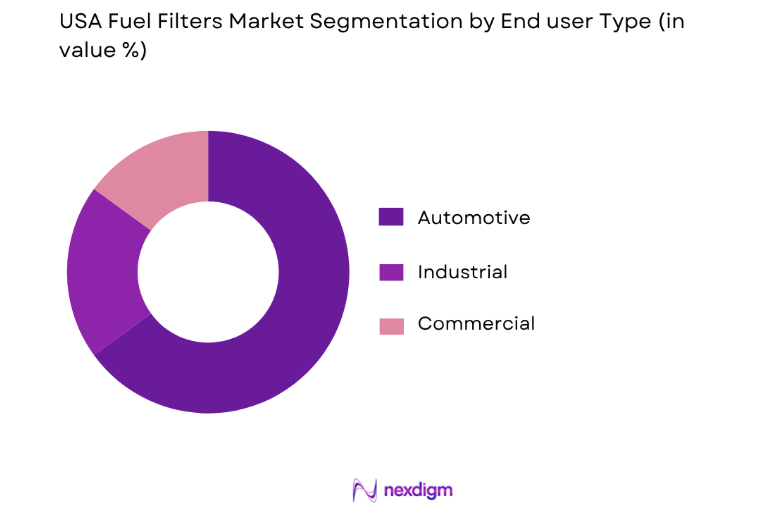
USA fuel filters market is segmented by end-user type into automotive, industrial, and commercial sectors. Among these, the automotive sector holds the largest market share due to the rising production of vehicles, stricter emission standards, and increasing consumer demand for high-performance engines. The automotive industry’s shift toward cleaner energy solutions and fuel-efficient vehicles has significantly boosted the demand for high-quality fuel filters, especially in passenger cars and commercial vehicles. This segment’s dominance is driven by the ongoing development of hybrid and electric vehicles, which require advanced fuel filtration systems to meet performance standards.
Competitive Landscape
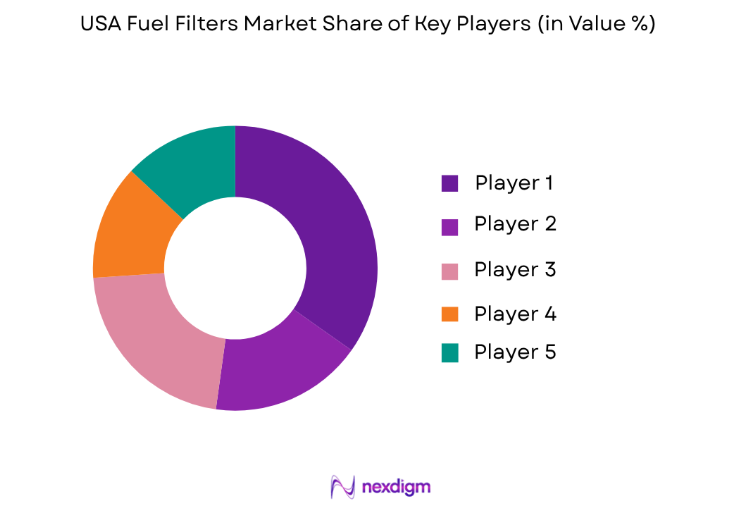
The USA fuel filters market is highly competitive, with a mix of established players and new entrants vying for market share. The market has seen considerable consolidation, with leading companies expanding their portfolios through mergers and acquisitions to meet the growing demand for advanced fuel filtration technologies. Major players continue to focus on innovation, product diversification, and increasing their production capacities to cater to the expanding automotive and industrial sectors. The market is also characterized by ongoing research and development efforts aimed at improving filter efficiency, reducing costs, and meeting increasingly stringent regulatory standards.
| Company Name | Establishment Year | Headquarters | Technology Focus | Market Reach | Key Products | Revenue | Additional Parameter |
| Donaldson Company | 1915 | Minneapolis, MN | ~ | ~ | ~ | ~ | ~ |
| Mann+Hummel | 1941 | Ludwigsburg, Germany | ~ | ~ | ~ | ~ | ~ |
| Bosch | 1886 | Stuttgart, Germany | ~ | ~ | ~ | ~ | ~ |
| Aisin Seiki | 1949 | Kariya, Japan | ~ | ~ | ~ | ~ | ~ |
| Cummins | 1919 | Columbus, IN | ~ | ~ | ~ | ~ | ~ |
USA Fuel Filters Market Analysis
Growth Drivers
Increasing demand for fuel-efficient technologies:
The push for greater fuel efficiency in both the automotive and industrial sectors has significantly boosted the demand for fuel filters. Stricter emission standards have driven the need for efficient fuel filtration systems that can ensure optimal engine performance while reducing harmful emissions. This trend is particularly strong in North America, where vehicle manufacturers are focusing on producing cars and trucks that meet government-mandated fuel efficiency standards. The market for fuel filters is expected to benefit from this ongoing regulatory push, which promotes cleaner fuel usage and better engine performance. This growth is supported by technological advancements in filter media, making it possible to achieve greater filtration efficiency without compromising on cost-effectiveness. Automotive manufacturers and industrial operators alike are increasingly investing in high-quality fuel filters to meet environmental regulations and consumer expectations. Consequently, fuel filters are becoming a key component in achieving fuel-efficient vehicles and optimizing industrial processes.
Technological advancements in filter materials:
Recent advancements in fuel filter materials have played a pivotal role in the growth of the USA fuel filters market. Manufacturers are continuously working on improving filter media to enhance their ability to capture impurities while maintaining flow efficiency. New technologies, such as advanced synthetic media and multi-layer filtration systems, are being integrated into fuel filters to improve their effectiveness. These innovations have led to filters that offer longer lifespans, reduced maintenance costs, and better performance in extreme conditions, making them increasingly attractive to automotive and industrial sectors. The trend toward using advanced materials, such as nanofibers and high-performance polymers, is further driving the market’s growth by offering enhanced filtration capabilities without significantly increasing costs. This has created opportunities for companies to develop more specialized filters for various applications, allowing for greater customization in meeting industry-specific requirements.
Market Challenges
High manufacturing costs:
One of the primary challenges faced by the USA fuel filters market is the high cost of manufacturing advanced filters. The rising cost of raw materials, coupled with the need for cutting-edge manufacturing techniques, has led to increased production expenses for fuel filter manufacturers. These higher costs are passed on to consumers, which can make fuel filters less attractive for price-sensitive customers. The situation is particularly challenging in the aftermarket segment, where low-cost alternatives often dominate. Manufacturers must strike a balance between developing high-performance filters that meet regulatory standards and maintaining competitive pricing in a market that is increasingly cost-conscious. This cost pressure also affects the profitability of fuel filter manufacturers, who must continually innovate to offer value-added solutions while controlling costs. Additionally, global supply chain disruptions and the rising costs of essential materials like steel and plastics have further exacerbated the situation, making it challenging to keep prices stable while ensuring quality and performance.
Regulatory compliance:
Navigating the complex landscape of environmental regulations is a significant challenge for fuel filter manufacturers in the USA market. Federal, state, and local governments impose stringent emission standards that require continuous improvements in fuel filtration technology. Manufacturers must comply with these regulations while maintaining the quality and efficiency of their products, which can be costly and time-consuming. The constant evolution of regulatory frameworks, including the introduction of new standards for fuel quality and emissions, adds an additional layer of complexity for fuel filter producers. Failure to meet these standards can result in penalties, fines, and loss of market access, creating uncertainty for companies operating in the sector. The cost of compliance with these regulations often requires manufacturers to invest heavily in research and development to meet emerging regulatory demands, potentially limiting their ability to focus on other aspects of business growth, such as innovation or market expansion.
Opportunities
Expansion of electric vehicles (EVs):
As the USA market continues to embrace electric vehicles (EVs), there are significant opportunities for fuel filter manufacturers to diversify their portfolios and tap into the growing EV market. While EVs do not require traditional fuel filters, the transition toward electric vehicles is creating demand for other types of filters, such as cabin air filters, battery filters, and air filtration systems for powertrains. Companies can leverage their existing expertise in filtration technologies to develop products for the EV sector, positioning themselves as key players in the electric mobility revolution. Furthermore, the increasing adoption of hybrid vehicles, which combine internal combustion engines with electric powertrains, will continue to fuel the demand for advanced fuel filters. This shift toward EVs and hybrid vehicles provides a new revenue stream for manufacturers traditionally focused on fossil fuel-powered vehicles, helping them maintain market relevance in a rapidly changing automotive landscape.
Growth in the industrial sector:
Another promising opportunity for the USA fuel filters market lies in the expansion of the industrial sector. As industries adopt more automated and fuel-efficient systems, the demand for fuel filters is expected to rise. Sectors such as manufacturing, construction, and agriculture, which rely on heavy machinery, are increasingly looking for ways to enhance the efficiency of their engines and reduce fuel consumption. Fuel filters play a crucial role in optimizing the performance of these engines by preventing contaminants from affecting their operation. This growing industrial demand is driving the need for higher-quality, specialized filters capable of handling a variety of fuels and operating conditions. Manufacturers that can offer customized fuel filters to meet the unique needs of these industries are well-positioned to capitalize on this growing market segment.
Future Outlook
The USA fuel filters market is expected to experience steady growth in the coming years, driven by the increasing demand for fuel-efficient technologies and tighter environmental regulations. Technological advancements in filtration systems will continue to play a key role in the market’s expansion, with innovations aimed at improving filter performance, reducing costs, and enhancing sustainability. Regulatory support, particularly from the automotive and industrial sectors, will further propel market growth, as stricter emission standards and fuel efficiency requirements are expected to remain a priority. Additionally, the ongoing shift toward electric and hybrid vehicles presents both challenges and opportunities for the fuel filter market, encouraging diversification and innovation in product offerings.
Major Players
- Donaldson Company
- Mann+Hummel
- Bosch
- Aisin Seiki
- Cummins
- Mahle
- Sogefi
- Fram Group
- Purflux
- Denso
- Valeo
- Bosch
- Baldwin Filters
- Hengst
- Ryco Filters
Key Target Audience
- Investments and venture capitalist firms
- Government and regulatory bodies
- Automotive OEMs
- Aftermarket parts suppliers
- Industrial equipment manufacturers
- Energy sector companies
- Fleet operators
- Consumers focused on high-performance vehicles
Research Methodology
Step 1: Identification of Key Variables
The initial step involves identifying the critical factors affecting the fuel filters market, including product types, end-use sectors, and regulatory frameworks.
Step 2: Market Analysis and Construction
Next, we perform an extensive analysis of market data, including segmentation and competitive dynamics, to create a structured market model.
Step 3: Hypothesis Validation and Expert Consultation
We validate the findings through consultations with industry experts and stakeholders, ensuring that the conclusions align with current market trends.
Step 4: Research Synthesis and Final Output
Finally, the findings are synthesized into a comprehensive report, providing actionable insights and strategic recommendations for stakeholders.

- Executive Summary
- Research Methodology (Definitions, Scope, Industry Assumptions, Market Sizing Approach, Primary & Secondary Research Framework, Data Collection & Verification Protocol, Analytic Models & Forecast Methodology, Limitations & Research Validity Checks)

- Market Definition and Scope
- Value Chain & Stakeholder Ecosystem
- Regulatory / Certification Landscape
- Sector Dynamics Affecting Demand

- Growth Drivers
Rising Demand for Fuel-Efficient Vehicles
Government Regulations for Fuel Emission Standards
Technological Advancements in Filtration Systems - Market Challenges
High Costs of Advanced Filtration Systems
Issues with Compatibility in Aftermarket Solutions
Stringent Regulatory Standards in Manufacturing - Market Opportunities
Growing Demand in Emerging Markets
Technological Innovations in Fuel Filter Materials
Rise of Electric and Hybrid Vehicle Adoption - Trends
Shift Toward Eco-Friendly and Sustainable Fuel Filters
Advancements in Nanotechnology for Fuel Filtration
Integration of Smart Technologies in Filtration Systems - Government Regulations
- SWOT Analysis of Key Competitors

- By Market Value, 2020-2025
- By Installed Units, 2020-2025
- By Average System Price, 2020-2025
- By System Complexity Tier, 2020-2025

- By System Type (In Value%)
Automotive Fuel Filters
Industrial Fuel Filters
Marine Fuel Filters
Aerospace Fuel Filters
Construction Equipment Fuel Filters - By Platform Type (In Value%)
Passenger Vehicles
Commercial Vehicles
Heavy-Duty Vehicles
Motorcycles
Aircraft - By Fitment Type (In Value%)
OEM (Original Equipment Manufacturer)
Aftermarket Replacement
Custom Fitment Solutions
Standard Fitment Solutions
Integrated Fuel Filter Systems - By EndUser Segment (In Value%)
Automotive Industry
Aerospace Industry
Marine Industry
Industrial Machinery

- Market Share Analysis
- CrossComparison Parameters (System Type, Platform Type, Procurement Channel, EndUser Segment, Fitment Type)
- SWOT Analysis of Key Competitors
- Pricing & Procurement Analysis
- Porter’s Five Forces
- Key Players
Mann+Hummel
Baldwin Filters
Donaldson Company
Mahle
Fleetguard
K&N Engineering
WIX Filters
Bosch
Denso Corporation
Hengst
Sogefi Group
Ahlstrom-Munksjö
Filtration Group
Lydall
Purolator Filters

- Automotive Manufacturers Seeking Efficiency
- Aerospace Companies Focusing on Fuel Reliability
- Marine Industry’s Increasing Demand for Durability
- Construction Machinery Operators Seeking Cost Reduction

- Forecast Market Value, 2026-2035
- Forecast Installed Units, 2026-2035
- Price Forecast by System Tier, 2026-2035
- Future Demand by Platform, 2026-2035


 Request a Sample
 Ask for Customization
 Get a Quote
 Enquire Now