
 Download PDF
 Download PDF
Market Overview
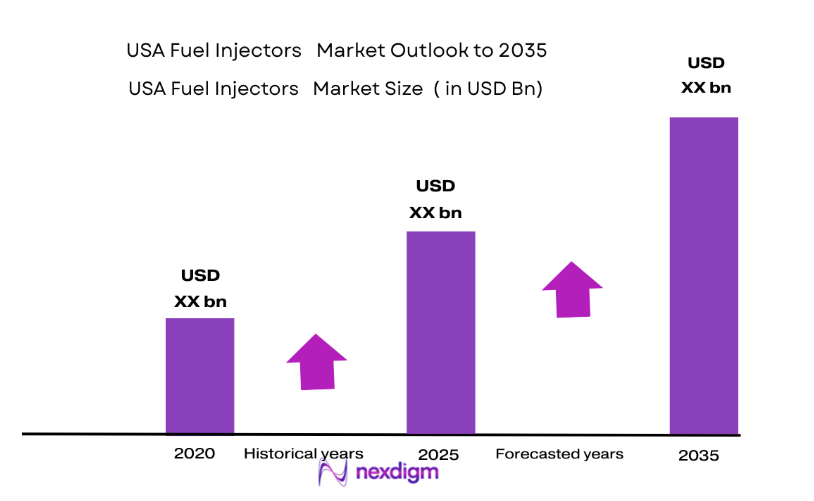
The USA Fuel Injectors market is projected to experience strong growth due to rising automotive production, stringent emission regulations, and growing consumer preference for fuel-efficient vehicles. The market size, based on recent assessments, stands at approximately USD ~ billion, driven by both technological advancements and regulatory pressures. As the demand for advanced fuel injection systems increases, automotive manufacturers are investing heavily in R&D to enhance performance and meet environmental standards. These factors collectively support sustained market growth, making the USA one of the leading regions for fuel injectors in the automotive industry.
The dominance of the USA in the fuel injectors market is attributed to its large automotive manufacturing sector, including key players such as General Motors, Ford, and Chrysler. States like Michigan, Ohio, and California have become hubs for automotive innovation, further propelling the demand for fuel injectors. The USA’s stringent environmental regulations, coupled with its expansive transportation infrastructure, ensure that demand for high-performance fuel injection systems remains high. These factors enable USA-based companies to maintain a significant share in the global market, driving the overall growth of the sector.
Market Segmentation
By Product Type:
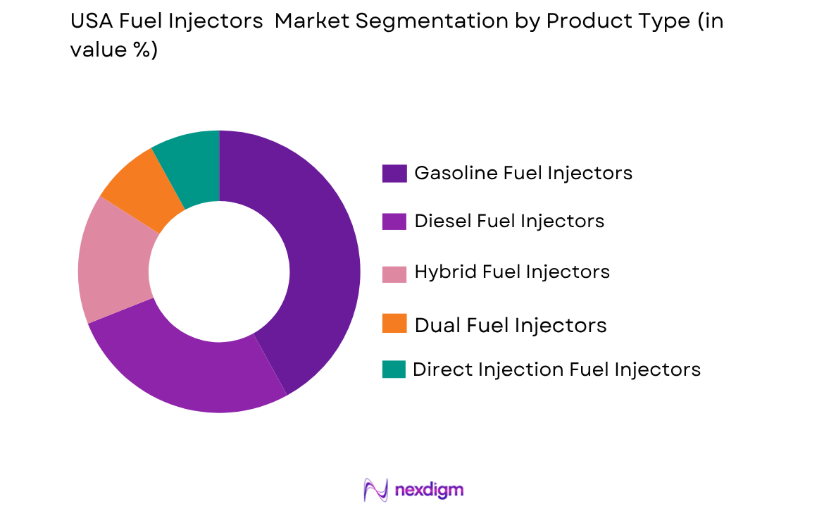
USA Fuel Injectors market is segmented by product type into Gasoline Fuel Injectors, Diesel Fuel Injectors, Hybrid Fuel Injectors, Dual Fuel Injectors, and Direct Injection Fuel Injectors. Recently, Gasoline Fuel Injectors have gained a dominant market share due to the increasing demand for gasoline-powered vehicles and advancements in gasoline direct injection (GDI) technology. The shift toward fuel-efficient and performance-oriented vehicles has led to higher adoption of GDI systems, which improves fuel efficiency and reduces emissions. Additionally, the widespread adoption of gasoline-powered vehicles in urban and suburban areas further supports the strong position of this sub-segment in the market.
By End-User Segment:
USA Fuel Injectors market is segmented by end-user segment into Automotive Manufacturers, Aftermarket Suppliers, OEM Suppliers, Vehicle Maintenance Providers, and Automotive Distributors. Recently, Automotive Manufacturers have dominated the market share due to the increasing production of vehicles equipped with advanced fuel injection systems. As automakers strive to meet stricter emission standards and improve fuel efficiency, fuel injectors have become integral to vehicle performance. The demand for higher quality and more efficient fuel injectors has increased, with automakers making significant investments to incorporate cutting-edge technology into their vehicles, further supporting the dominance of this segment. 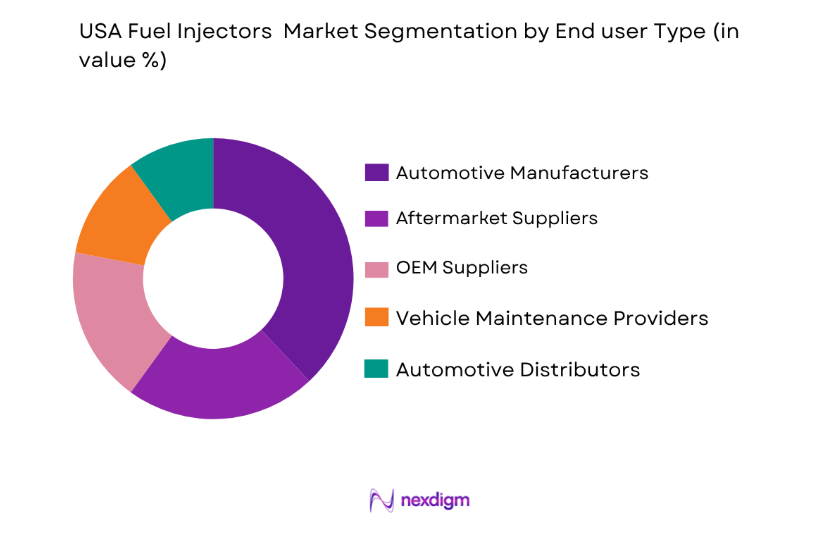
Competitive Landscape
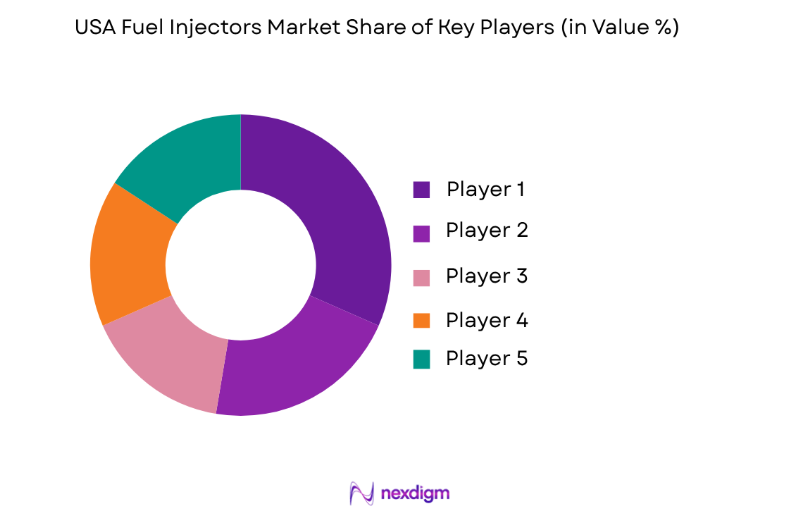
The competitive landscape of the USA Fuel Injectors market is characterized by significant consolidation, with major players leading innovation and production capabilities. The market is highly influenced by established companies such as Bosch, Denso, and Delphi Technologies, which hold substantial market shares due to their technological expertise and long-standing presence in the industry. These companies continue to dominate the market by focusing on R&D to create more fuel-efficient and environmentally friendly solutions, enabling them to capture a significant portion of the growing demand. Smaller companies also contribute to the market by specializing in niche segments, often focusing on aftermarket solutions or specific fuel injection technologies.
| Company Name | Establishment Year | Headquarters | Technology Focus | Market Reach | Key Products | Revenue (USD) | Innovation Focus |
| Bosch | 1886 | Germany | ~ | ~ | ~ | ~ | ~ |
| Denso | 1949 | Japan | ~ | ~ | ~ | ~ | ~ |
| Delphi Technologies | 1994 | UK | ~ | ~ | ~ | ~ | ~ |
| Continental | 1871 | Germany | ~ | ~ | ~ | ~ | ~ |
| Magna International | 1957 | Canada | ~ | ~ | ~ | ~ | ~ |
USA Fuel Injectors Market Analysis
Growth Drivers
Technological Advancements in Fuel Injection Systems:
The continuous advancement in fuel injection technology is a key driver of the USA Fuel Injectors market. Over the years, fuel injectors have evolved from basic systems to highly sophisticated components capable of improving fuel efficiency and reducing emissions. One of the most notable advancements is the development of gasoline direct injection (GDI) technology, which allows for better fuel combustion, resulting in improved engine performance and reduced fuel consumption. This technological evolution is driven by the increasing demand for vehicles with lower emissions and better fuel efficiency, in line with government regulations. Furthermore, advancements in diesel and hybrid fuel injectors are also gaining traction due to the demand for cleaner energy solutions. As more automakers adopt these advanced technologies, the demand for high-performance fuel injectors increases, driving market growth.
Increasing Consumer Demand for Fuel-Efficient Vehicles:
Rising fuel prices and growing environmental concerns have led to increased consumer demand for fuel-efficient vehicles. As consumers seek better fuel economy, manufacturers are focusing on improving vehicle efficiency through technological innovations in fuel injection systems. Fuel injectors play a crucial role in optimizing fuel consumption by providing precise fuel delivery to the engine, which directly impacts fuel efficiency. This growing consumer preference for fuel-efficient vehicles is expected to drive the demand for advanced fuel injectors. As a result, automotive manufacturers are investing in the development of new and improved fuel injection systems to meet the evolving needs of consumers. The shift toward electric vehicles (EVs) and hybrid vehicles also supports this trend, as these vehicles rely heavily on fuel-efficient technologies to optimize performance.
Market Challenges
High Cost of Advanced Fuel Injection Systems:
One of the main challenges faced by the USA Fuel Injectors market is the high cost of advanced fuel injection systems. While innovations in fuel injection technology have brought about significant improvements in vehicle performance and fuel efficiency, these systems come at a higher cost compared to traditional injectors. This cost factor poses a challenge, particularly for consumers in the lower-income segment who may find it difficult to afford vehicles equipped with advanced fuel injection systems. Additionally, manufacturers of fuel injectors face the challenge of balancing technological advancements with cost-effectiveness. As automakers strive to meet emission standards and consumer demand for fuel efficiency, the high cost of incorporating these advanced systems into mass-market vehicles remains a barrier to wider adoption.
Regulatory Compliance and Emission Standards:
Stringent regulatory frameworks and emission standards continue to challenge the USA Fuel Injectors market. Governments around the world, including in the USA, have imposed increasingly strict regulations to reduce vehicle emissions and promote environmental sustainability. While this regulatory push has driven the development of more efficient and eco-friendly fuel injectors, it also creates challenges for manufacturers. Meeting these regulations often requires significant investment in research and development to create new solutions that comply with the standards. Moreover, regulatory changes and delays in policy implementation can create uncertainty for manufacturers, making it difficult to plan for long-term production. As emission standards continue to tighten, fuel injector manufacturers must invest in advanced technologies that ensure compliance, which adds to production costs and complexity.
Opportunities
Adoption of Hybrid and Electric Vehicles:
The growing adoption of hybrid and electric vehicles presents a significant opportunity for the USA Fuel Injectors market. As governments worldwide push for cleaner energy solutions and consumers become more environmentally conscious, the demand for hybrid and electric vehicles is expected to increase. While electric vehicles do not require traditional fuel injectors, hybrid vehicles rely heavily on advanced fuel injection systems to optimize fuel efficiency and reduce emissions. The demand for fuel-efficient solutions in hybrid vehicles creates an opportunity for fuel injector manufacturers to develop specialized systems tailored to the needs of these vehicles. As the hybrid vehicle market continues to expand, fuel injectors will play a critical role in enhancing vehicle performance and meeting the demand for lower-emission, fuel-efficient transportation options.
Technological Integration in Autonomous Vehicles:
The rise of autonomous vehicles is another opportunity for the USA Fuel Injectors market. As the automotive industry shifts toward self-driving technology, fuel injectors will play an important role in ensuring the efficiency and performance of these vehicles. Autonomous vehicles are expected to rely on a combination of advanced sensors, control systems, and fuel injection technologies to optimize performance. The integration of fuel injectors into these next-generation vehicles will require innovations to accommodate their specific powertrain and energy demands. This trend presents an opportunity for fuel injector manufacturers to develop solutions tailored for autonomous vehicles, which could significantly boost market growth in the coming years. As the technology continues to evolve, the demand for sophisticated fuel injectors will increase, creating new avenues for innovation and growth in the market.
Future Outlook
Over the next five years, the USA Fuel Injectors market is expected to witness steady growth driven by advancements in fuel injection technologies, increased demand for fuel-efficient vehicles, and tightening emission regulations. Technological developments such as gasoline direct injection (GDI) and improvements in diesel and hybrid injectors will continue to drive market growth. Furthermore, the growing adoption of hybrid and electric vehicles, combined with the increasing focus on reducing carbon emissions, will contribute to the expansion of the fuel injector market. As the market evolves, the demand for advanced fuel injectors will continue to rise, with manufacturers investing heavily in innovation to meet environmental standards and consumer preferences.
Major Players
- Bosch
- Denso
- Delphi Technologies
- Continental
- Magna International
- Hitachi Automotive Systems
- ZF Friedrichshafen
- Aisin Seiki
- Valeo
- Johnson Controls
- BorgWarner
- TRW Automotive
- Mahle
- Honeywell International
- Eaton
Key Target Audience
- Investments and venture capitalist firms
- Government and regulatory bodies
- Automotive manufacturers
- Aftermarket suppliers
- OEM suppliers
- Vehicle maintenance providers
- Automotive distributors
- Energy companies focusing on green technologies
Research Methodology
Step 1: Identification of Key Variables
The first step involves identifying the key variables that influence the USA Fuel Injectors market, including technological advancements, consumer demand, and regulatory factors.
Step 2: Market Analysis and Construction
In this step, a comprehensive analysis of the market is conducted to construct an accurate market model, utilizing data from primary and secondary sources.
Step 3: Hypothesis Validation and Expert Consultation
This step focuses on validating the hypotheses derived from market data and seeking expert consultation to ensure the accuracy and relevance of the findings.
Step 4: Research Synthesis and Final Output
The final step involves synthesizing all research data and presenting the findings in a comprehensive report that highlights market trends, opportunities, and challenges.

- Executive Summary
- Research Methodology (Definitions, Scope, Industry Assumptions, Market Sizing Approach, Primary & Secondary Research Framework, Data Collection & Verification Protocol, Analytic Models & Forecast Methodology, Limitations & Research Validity Checks)

- Market Definition and Scope
- Value Chain & Stakeholder Ecosystem
- Regulatory / Certification Landscape
- Sector Dynamics Affecting Demand

- Growth Drivers
Increasing Vehicle Production
Technological Advancements in Fuel Injection Systems
Stringent Emission Regulations - Market Challenges
High Cost of Advanced Fuel Injection Systems
Compatibility Issues with Older Vehicles
Fluctuating Raw Material Prices - Market Opportunities
Rising Demand for Electric Vehicles
Increasing Focus on Fuel Efficiency
Growing Adoption of Hybrid Vehicles - Trends
Shift Toward Direct Injection Technology
Rising Adoption of Turbocharged Engines
Growing Focus on Environmentally Friendly Technologies - Government Regulations
- SWOT Analysis of Key Competitors

- By Market Value, 2020-2025
- By Installed Units, 2020-2025
- By Average System Price, 2020-2025
- By System Complexity Tier, 2020-2025

- By System Type (In Value%)
Gasoline Fuel Injectors
Diesel Fuel Injectors
Hybrid Fuel Injectors
Dual Fuel Injectors
Direct Injection Fuel Injectors - By Platform Type (In Value%)
Passenger Vehicles
Commercial Vehicles
Two-Wheelers
Off-road Vehicles
Electric Vehicles - By Fitment Type (In Value%)
OEM (Original Equipment Manufacturer)
Aftermarket
Refurbished
Remanufactured
Retrofitted - By EndUser Segment (In Value%)
Automotive Manufacturers
Aftermarket Suppliers
OEM Suppliers
Vehicle Maintenance Providers
Automotive Distributors

- Market Share Analysis
- CrossComparison Parameters (System Type, Platform Type, Procurement Channel, EndUser Segment, Fitment Type)
- SWOT Analysis of Key Competitors
- Pricing & Procurement Analysis
- Porter’s Five Forces
- Key Players
Bosch
Denso
Delphi Technologies
Magneti Marelli
Continental
Valeo
Schaeffler
Hitachi Automotive Systems
Honeywell International
Eaton
TI Automotive
BorgWarner
Wabco
Webasto
Aisin Seiki

- Automotive Manufacturers Increasing Focus on Injection Systems
- Automotive Aftermarket Expanding Demand for Fuel Injectors
- Rising Demand for High-Performance Engines
- Growth in Electric and Hybrid Vehicle Markets

- Forecast Market Value 2026-2035
- Forecast Installed Units 2026-2035
- Price Forecast by System Tier 2026-2035
- Future Demand by Platform 2026-2035


 Request a Sample
 Ask for Customization
 Get a Quote
 Enquire Now