

 Download PDF
 Download PDF
Market Overview
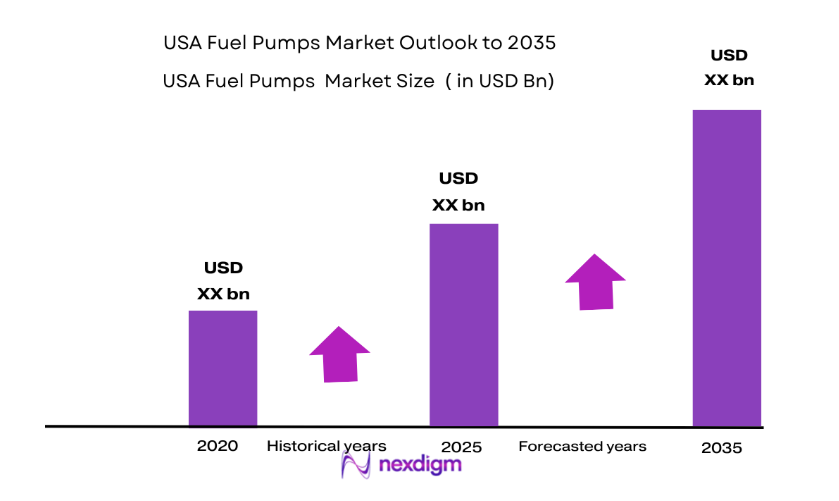
The USA fuel pumps market is projected to reach approximately USD ~ billion based on recent assessments, driven by the increasing demand for efficient fueling infrastructure. rising number of vehicles, and stringent government regulations promoting fuel dispensing technologies contribute significantly to market growth. Additionally, technological advancements in automation and self-service systems have provided further expansion opportunities for market players. The market continues to be supported by ongoing infrastructure upgrades in both urban and rural areas.
The United States remains a dominant player in the fuel pumps market, primarily due to the high demand from a large network of retail fueling stations and industrial facilities. Key cities and states such as California, Texas, and New York have been driving growth due to their substantial transportation infrastructure and extensive fuel station networks. Additionally, government initiatives focused on environmental sustainability and energy efficiency in fueling systems have contributed to the market’s growth in these regions. The shift toward automation and energy-efficient solutions in major metropolitan areas also supports the market’s dominance.
Market Segmentation
By System Type:
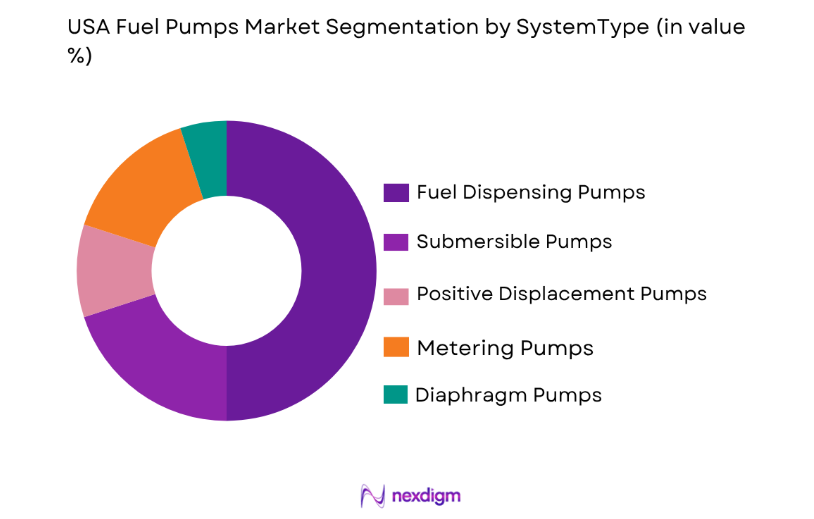
The USA fuel pumps market is segmented by system type into fuel dispensing pumps, submersible pumps, positive displacement pumps, metering pumps, and diaphragm pumps. Among these, fuel dispensing pumps have maintained a dominant market share, owing to their widespread use in fueling stations and their ability to cater to high demand for both gasoline and diesel fuel. Fuel dispensing pumps are preferred due to their advanced metering technologies, speed of operation, and ease of use, making them a popular choice for retail stations and commercial applications. Their versatility in handling various fuel types and integration with automated payment systems has further solidified their position in the market.
By Platform Type:
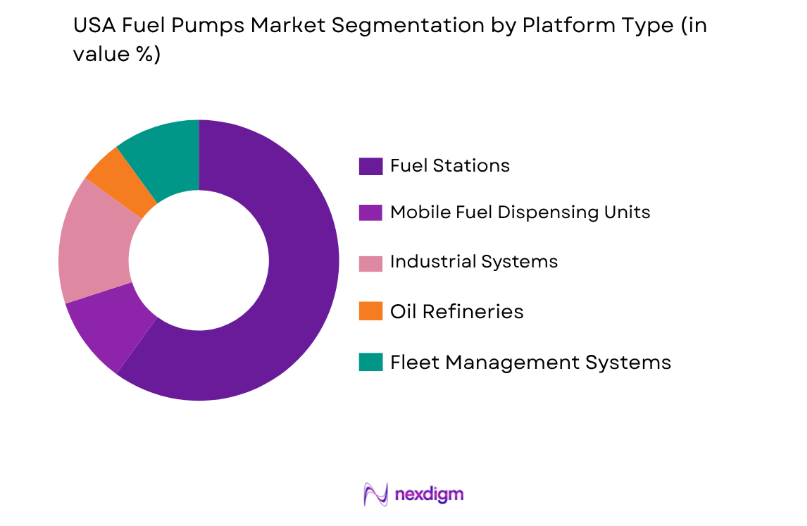
The USA fuel pumps market is segmented by platform type into fuel stations, mobile fuel dispensing units, industrial systems, oil refineries, and fleet management systems. Fuel stations, as the dominant sub-segment, hold the highest market share due to the expansive network of fuel outlets across the country. These stations benefit from high demand for refueling services, especially in urban areas and along major highways. The growing number of vehicles and government policies encouraging the installation of automated fueling systems contribute to the growth of fuel stations as the primary platform for fuel pump installations.
Competitive Landscape
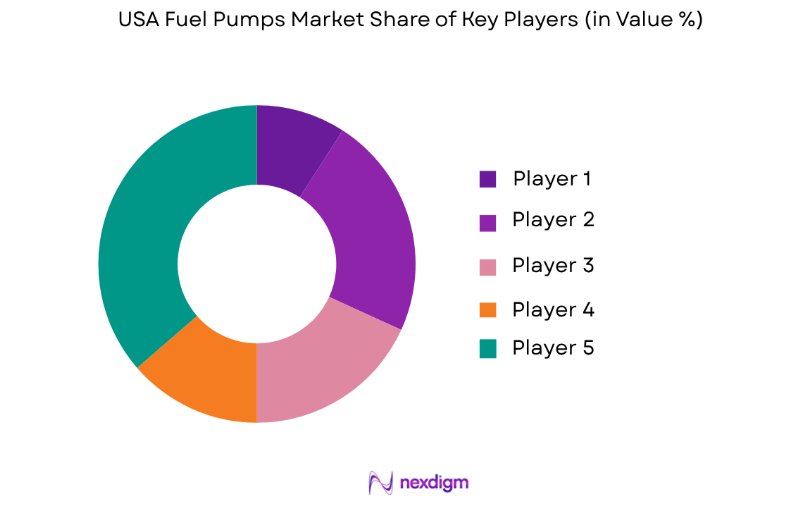
The USA fuel pumps market is highly competitive with several major players focusing on technological innovation and infrastructure expansion. Companies continue to drive consolidation within the market through acquisitions and collaborations. These major players leverage their global presence and technical expertise to cater to a broad customer base, including both small retail fuel stations and large industrial clients. With government regulations pushing for smarter, more efficient fueling solutions, companies are increasingly adopting automation and digital payment solutions.
| Company Name | Establishment Year | Headquarters | Technology Focus | Market Reach | Key Products | Revenue (USD) | Market-Specific Parameter |
| Gilbarco Veeder-Root | 1865 | Greensboro, NC | ~ | ~ | ~ | ~ | ~ |
| Wayne Fueling Systems | 2006 | Austin, TX | ~ | ~ | ~ | ~ | ~ |
| Dover Fueling Solutions | 2005 | Austin, TX | ~ | ~ | ~ | ~ | ~ |
| OPW Fueling Components | 1892 | Hamilton, OH | ~ | ~ | ~ | ~ | ~ |
| Tokheim | 1901 | Paris, France | ~ | ~ | ~ | ~ | ~ |
USA Fuel Pumps Market Analysis
Growth Drivers
Technological Advancements in Fuel Pump Systems:
Technological advancements in fuel pump systems have been a significant driver of the market’s growth. The integration of automation, digital payment systems, and improved metering technologies has made fuel pumps more efficient and user-friendly. This shift toward advanced technologies allows fuel stations to reduce operational costs, improve service speed, and enhance customer satisfaction. The introduction of self-service and mobile payment-enabled systems also contributes to market growth by meeting the evolving needs of consumers. As a result, fuel pump manufacturers are focusing on innovative solutions to meet consumer demands, driving the expansion of the market.
Government Regulations and Sustainability Initiatives:
Government regulations related to fuel quality and environmental standards have significantly influenced the fuel pumps market. Various regulatory bodies have enforced stringent standards on fuel dispensing systems to ensure environmental sustainability and safety. Policies that require fuel stations to adopt more energy-efficient and eco-friendly fueling systems have also contributed to the demand for modern fuel pumps. As sustainability initiatives continue to gain momentum, fuel pump manufacturers are focusing on producing pumps that adhere to these regulations, further driving market growth.
Market Challenges
High Initial Installation Costs:
One of the primary challenges faced by the USA fuel pumps market is the high initial cost of installing fuel dispensing systems. The significant capital investment required to purchase and install advanced fueling equipment poses a barrier for smaller retail fuel stations, particularly in rural areas. Additionally, the costs associated with maintaining and upgrading existing systems also add to the financial burden. Despite the long-term benefits of modern fuel pumps, such as improved efficiency and reduced labor costs, the high upfront expenditure remains a key challenge in expanding fuel pump adoption.
Regulatory Compliance and Technological Compatibility:
The regulatory environment surrounding fuel pumps is complex and varies across states, which can pose challenges for market players. Adhering to multiple sets of standards while ensuring compatibility between new and existing fueling systems can be a time-consuming and costly process for fuel station operators. Manufacturers need to continuously update their products to meet changing regulations, while also ensuring that their systems are compatible with various fuel types and payment platforms. The challenge of maintaining compliance with evolving regulations can slow down the pace of innovation in the market.
Opportunities
Expansion of Electric Vehicle Charging Infrastructure:
The growing adoption of electric vehicles (EVs) presents a significant opportunity for the USA fuel pumps market. As more consumers switch to EVs, the need for charging stations is increasing, creating a demand for electric vehicle charging systems. Fuel pump manufacturers are looking to diversify their offerings by integrating EV charging solutions into their portfolios. This transition is expected to benefit the fuel pump market by encouraging the installation of hybrid systems that cater to both traditional fuel and electric vehicle charging needs, driving revenue growth in the industry.
Integration of IoT and Smart Fueling Systems:
The integration of the Internet of Things (IoT) and smart technologies into fuel pumps presents a key growth opportunity. IoT-enabled fuel dispensers can collect and analyze data in real-time, enabling fuel stations to improve operational efficiency and enhance customer experience. Features such as remote monitoring, predictive maintenance, and real-time fuel usage tracking are increasingly in demand. The growth of smart fueling systems is expected to drive the development of more innovative products in the fuel pumps market, with manufacturers investing in advanced sensors and automation technologies to capitalize on the trend.
Future Outlook
The future of the USA fuel pumps market is poised for growth, driven by technological advancements, regulatory support, and increasing demand for fuel-efficient solutions. Over the next five years, the market is expected to witness significant expansion due to the ongoing development of automated and smart fueling systems. In particular, the integration of IoT technologies and the shift toward sustainability will continue to shape the market’s trajectory. Additionally, the growing adoption of electric vehicles and the demand for hybrid fueling solutions are likely to create new opportunities for manufacturers. As regulations evolve, the market will also see an increased focus on compliance and environmental standards, which will further drive innovation.
Major Players
- Gilbarco Veeder-Root
- Wayne Fueling Systems
- Dover Fueling Solutions
- OPW Fueling Components
- Tokheim
- Hydrastar
- Tatsuno
- Kohler
- Sanki Engineering
- Liquid Controls
- Bennett Pump Company
- Emco Wheaton
- Piusi
- Schlumberger
- Tokheim
Key Target Audience
- Investments and venture capitalist firms
- Government and regulatory bodies
- Fuel station owners
- Industrial fuel users
- Transportation companies
- Fleet operators
- Oil and gas distributors
- Large enterprises with fueling needs
Research Methodology
Step 1: Identification of Key Variables
We define the market’s key variables through extensive secondary research and expert consultations, ensuring a comprehensive understanding of market dynamics.
Step 2: Market Analysis and Construction
Market segmentation is conducted by evaluating primary and secondary data sources, including sales records, product installations, and geographical distribution.
Step 3: Hypothesis Validation and Expert Consultation
Consultations with industry experts and stakeholders are carried out to validate hypotheses and refine market assumptions for more accurate forecasting.
Step 4: Research Synthesis and Final Output
All gathered data is synthesized into a final market report, which includes detailed analysis, forecasts, and strategic insights into the fuel pumps market.

- Executive Summary
- Research Methodology (Definitions, Scope, Industry Assumptions, Market Sizing Approach, Primary & Secondary Research Framework, Data Collection & Verification Protocol, Analytic Models & Forecast Methodology, Limitations & Research Validity Checks)

- Market Definition and Scope
- Value Chain & Stakeholder Ecosystem
- Regulatory / Certification Landscape
- Sector Dynamics Affecting Demand

- Growth Drivers
Growing Demand for Efficient Fueling Systems
Rising Fuel Consumption in Emerging Economies
Technological Advancements in Fuel Pump Systems - Market Challenges
High Installation and Maintenance Costs
Lack of Standardization in Fuel Pump Technologies
Regulatory Constraints in Certain Regions - Market Opportunities
Expansion of Electric Vehicle Charging Infrastructure
Development of Smart Fuel Pumps
Integration of IoT in Fuel Pump Systems - Trends
Shift Toward Renewable and Alternative Fuels
Increasing Adoption of Automation in Fuel Stations
Use of Data Analytics for Fuel Pump Efficiency

- By Market Value, 2020-2025
- By Installed Units, 2020-2025
- By Average System Price, 2020-2025
- By System Complexity Tier, 2020-2025

- By System Type (In Value%)
Fuel Dispensing Pumps
Submersible Pumps
Positive Displacement Pumps
Metering Pumps
Diaphragm Pumps - By Platform Type (In Value%)
Fuel Stations
Mobile Fuel Dispensing Units
Industrial Systems
Oil Refineries
Fleet Management Systems - By Fitment Type (In Value%)
Aftermarket Solutions
OEM Solutions
Modular Solutions
Integrated Solutions
Custom Solutions - By EndUser Segment (In Value%)
Automotive
Industrial
Transportation
Agriculture
Oil & Gas

- Market Share Analysis
- CrossComparison Parameters (System Type, Platform Type, Procurement Channel, EndUser Segment, Fitment Type)
- SWOT Analysis of Key Competitors
- Pricing & Procurement Analysis
- Porter’s Five Forces
- Key Players
Gilbarco Veeder-Root
Wayne Fueling Systems
Tokheim
Dover Fueling Solutions
Hydrastar
OPW Fueling Components
Emco Wheaton
Kohler
Tatsuno
Lafon
Schlumberger
Liquid Controls
Piusi
Sanki Engineering
Bennett Pump Company

- Increased Demand from Retail Fuel Stations
- Growth in Industrial Applications
- Automation in Transportation Sectors
- Rising Focus on Energy Efficiency

- Forecast Market Value, 2026-2035
- Forecast Installed Units, 2026-2035
- Price Forecast by System Tier, 2026-2035
- Future Demand by Platform, 2026-2035


 Request a Sample
 Ask for Customization
 Get a Quote
 Enquire Now