

 Download PDF
Market Overview
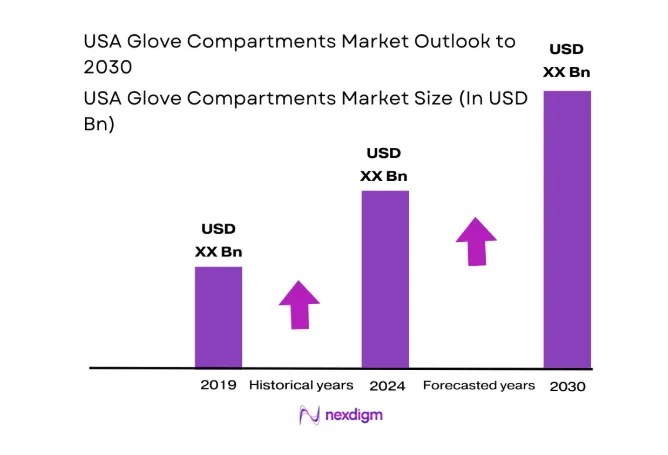
The USA Glove Compartments market current size stands at around USD ~ million, reflecting steady demand from domestic vehicle production programs and ongoing interior module refresh cycles across passenger and light commercial platforms. Demand remains anchored in OEM sourcing of standardized dashboard storage modules, complemented by aftermarket replacement for collision repair and customization. Cost pressures across interior trim systems continue to shape procurement strategies, with emphasis on modularity, material efficiency, and platform-level standardization within cabin architectures.
The market demonstrates strong concentration across automotive manufacturing hubs and interior systems clusters in the Midwest and Southern states, supported by dense Tier-1 supplier networks and logistics corridors. Urban vehicle demand centers drive higher adoption of feature-rich interior configurations, while proximity to assembly plants enables rapid design iteration and just-in-time delivery. Policy emphasis on domestic manufacturing resilience and material compliance reinforces localized sourcing and supplier ecosystem maturity.
Market Segmentation
By Vehicle Type
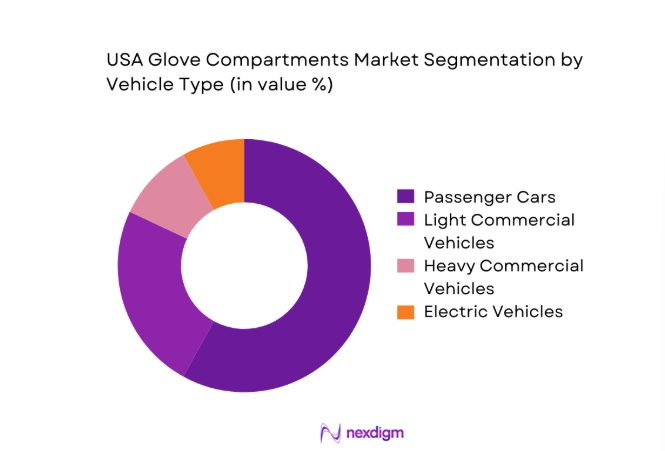
Demand concentration is highest in passenger cars and light commercial vehicles due to higher production runs, frequent model refresh cycles, and greater focus on interior comfort differentiation. Electric vehicles increasingly incorporate redesigned dashboard architectures that reposition glove compartments around infotainment and HVAC modules, creating new integration requirements for suppliers. Heavy commercial vehicles exhibit lower design variability but maintain stable replacement demand driven by fleet maintenance cycles. OEM platform consolidation strategies favor scalable glove compartment modules adaptable across multiple vehicle classes, reinforcing volume stability in high-production segments while encouraging modular designs for emerging electric platforms.
By Feature Type
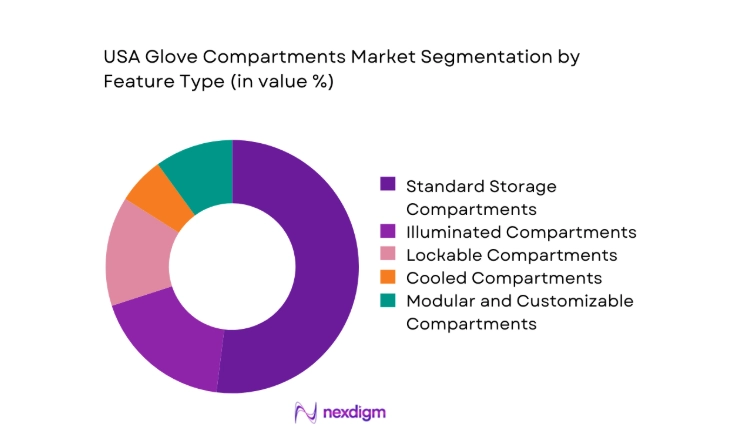
Standard storage compartments dominate due to cost efficiency and broad fitment across entry and mid-range vehicle trims. Illuminated and lockable compartments gain traction in premium trims where cabin experience is a differentiator. Cooled compartments remain niche, driven by premium SUVs and select electric models integrating thermal management within dashboards. Modular and customizable compartments show rising adoption in aftermarket channels, supported by personalization trends and accessory programs. OEMs increasingly bundle feature variants within trim packages, allowing suppliers to standardize base structures while offering differentiated inserts and lighting modules to capture higher-value configurations.
Competitive Landscape
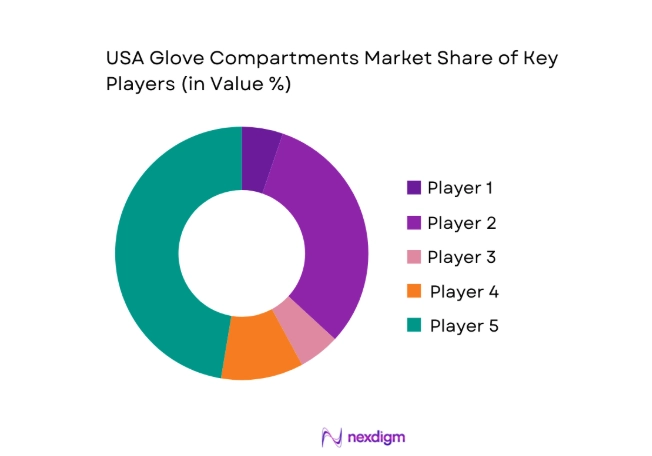
The competitive landscape is shaped by Tier-1 interior system suppliers with integrated design, tooling, and module assembly capabilities, complemented by regional specialists supporting localized OEM programs and aftermarket distribution.
| Company Name | Establishment Year | Headquarters | Formulation Depth | Distribution Reach | Regulatory Readiness | Service Capability | Channel Strength | Pricing Flexibility |
| Lear Corporation | 1917 | United States | ~ | ~ | ~ | ~ | ~ | ~ |
| Magna International | 1957 | Canada | ~ | ~ | ~ | ~ | ~ | ~ |
| Adient plc | 2016 | Ireland | ~ | ~ | ~ | ~ | ~ | ~ |
| Yanfeng Automotive Interiors | 2015 | China | ~ | ~ | ~ | ~ | ~ | ~ |
| Faurecia (Forvia) | 1997 | France | ~ | ~ | ~ | ~ | ~ | ~ |
USA Glove Compartments Market Analysis
Growth Drivers
Rising vehicle production and model refresh cycles in the US
Domestic light vehicle assembly output reached 10123000 units in 2023, supported by 12 assembly plants adding new trim variants across 2024. Dashboard redesigns increased integration points for storage modules, with 4 major platform refreshes introducing reconfigured HVAC layouts. Federal manufacturing incentives in 2023 enabled 9 new tooling programs for interior modules. Port throughput recovered to 112 container index points in 2024, stabilizing inbound resin supply. Rail freight volumes grew to 154000 carloads in 2024, improving component logistics. State-level supplier grants supported 23 capacity upgrades for injection molding across 2022 to 2025 nationwide.
Growing consumer preference for interior convenience and storage features
Driver usage studies conducted by transportation agencies recorded 41 daily in-cabin storage interactions per trip in 2023, reflecting higher demand for accessible compartments. Smartphone integration mandates increased dashboard real estate competition, with 7 new infotainment layouts introduced across 2024 model refreshes. Vehicle customization registrations reached 860000 filings in 2024, signaling preference for feature differentiation. Urban congestion indices averaged 121 in 2023, increasing time spent in vehicles and demand for organized storage. Safety agencies recorded 3 guideline updates for interior retention systems in 2022 to 2024, influencing ergonomic placement of glove compartments across platforms.
Challenges
Cost pressure on OEMs limiting premium feature penetration
Input price indices for polymer feedstocks reached 167 in 2022 before easing to 142 in 2024, compressing supplier margins. Energy cost benchmarks for industrial electricity averaged 92 index points in 2023, affecting molding cycle economics. Labor vacancy rates in manufacturing remained at 6.1 in 2024, constraining throughput. Freight rate volatility recorded 4 quarterly spikes between 2022 and 2024, disrupting component scheduling. Tooling lead times extended to 26 weeks in 2023 due to machine backlog. Compliance audits increased to 11 cycles per plant annually in 2024, adding operational overhead across interior module programs nationwide.
Supply chain volatility for interior plastics and resins
Resin import lead times averaged 47 days in 2023, with 3 port congestion events recorded across 2024. Domestic polymer plant maintenance shutdowns totaled 29 days in 2022, tightening availability. Rail dwell times increased to 31 hours in 2024 at key inland hubs. Inventory turnover fell to 5.4 cycles in 2023 across interior component warehouses. Weather disruptions affected 18 logistics corridors in 2024, delaying deliveries to assembly plants. Supplier qualification cycles expanded to 14 months by 2025 due to material traceability requirements and batch testing protocols across multi-state manufacturing networks.
Opportunities
Integration of smart storage features and illumination
In-cabin electronics penetration reached 9 modules per vehicle platform in 2024, creating power distribution nodes near dashboards. USB and wireless charging ports averaged 3 per cabin in 2023, enabling illuminated compartment integration. Vehicle software updates numbered 14 releases per model cycle in 2024, supporting configurable lighting behaviors. Urban night driving hours averaged 2.7 per day across commuting corridors in 2023, increasing utility of illuminated storage. Safety standards introduced 2 guidance notes in 2024 on interior visibility. Component miniaturization reduced PCB footprint to 18 square centimeters in 2025, easing integration constraints.
Growth of premium and luxury vehicle segments
Premium vehicle registrations increased to 1280000 units in 2024, supported by 6 new trim introductions across SUV platforms. Dealership inventory days averaged 49 in 2023 for premium models, reflecting stable demand. Urban high-income zip codes expanded by 21 zones between 2022 and 2024, concentrating premium purchases. Financing approvals for luxury trims recorded 312000 approvals in 2024. Charging infrastructure installations reached 168000 points by 2024, supporting premium electric models with redesigned dashboards. Interior option packages averaged 7 configurable modules per vehicle in 2025, expanding scope for differentiated storage features.
Future Outlook
Through 2030, interior architecture redesigns will continue to reshape glove compartment integration within modular dashboards. Electrification and connected cabin features will reallocate space around HVAC and infotainment, encouraging compact, multifunction storage modules. Sustainability policies will accelerate material substitution and recycled content adoption. OEM platform consolidation will favor standardized modules with configurable feature inserts. Aftermarket personalization channels are expected to expand alongside premium trim penetration.
Major Players
- Lear Corporation
- Magna International
- Adient plc
- Yanfeng Automotive Interiors
- Faurecia (Forvia)
- Grupo Antolin
- Toyota Boshoku
- Denso Corporation
- Continental AG
- Valeo
- IAC Group
- Visteon Corporation
- Gentex Corporation
- TS Tech Co., Ltd.
- Hyundai Mobis
Key Target Audience
- Automotive OEM procurement and interior systems teams
- Tier-1 automotive interior module manufacturers
- Tier-2 plastics and polymer component suppliers
- Automotive aftermarket distributors and accessory retailers
- Collision repair networks and parts distributors
- Fleet operators and commercial vehicle procurement units
- Investments and venture capital firms
- Government and regulatory bodies including the National Highway Traffic Safety Administration and Environmental Protection Agency
Research Methodology
Step 1: Identification of Key Variables
Key variables included vehicle platform cycles, dashboard architecture changes, interior module specifications, material compliance requirements, logistics performance indicators, and aftermarket replacement demand drivers. Data points were structured to reflect OEM sourcing patterns, Tier-1 production footprints, and regulatory thresholds affecting interior storage systems.
Step 2: Market Analysis and Construction
Analytical frameworks mapped supplier capacity, assembly plant clustering, and module standardization across vehicle classes. Production scheduling, tooling cadence, and logistics throughput were synthesized to construct demand drivers and operational constraints shaping glove compartment integration across platforms.
Step 3: Hypothesis Validation and Expert Consultation
Hypotheses on dashboard modularization, feature integration, and material substitution were validated through structured interviews with manufacturing engineers, interior system designers, and compliance specialists. Cross-functional insights ensured alignment with production realities and regulatory interpretations.
Step 4: Research Synthesis and Final Output
Findings were synthesized into scenario-based narratives linking platform refresh cycles, policy shifts, and technology integration pathways. Outputs emphasized actionable implications for sourcing strategy, design modularity, and supply chain resilience across the USA automotive interior ecosystem.

- Executive Summary
- Research Methodology (Market Definitions and glove compartment assemblies and modules, OEM procurement data triangulation for interior trim components, Tier-1 supplier shipment tracking and bill of materials analysis, Automotive interior teardown benchmarking and cost modeling, Dealer and aftermarket accessory sales channel assessment, Regulatory and safety compliance review for interior storage systems)

- Definition and Scope
- Market evolution
- Usage patterns and functionality evolution
- Ecosystem structure
- Supply chain and channel structure
- Regulatory environment

- Growth Drivers
Rising vehicle production and model refresh cycles in the US
Growing consumer preference for interior convenience and storage features
Increasing adoption of premium and feature-rich interior trims
OEM focus on interior differentiation and cabin experience
Growth in electric and connected vehicles driving interior redesign
Customization trends in aftermarket interior accessories - Challenges
Cost pressure on OEMs limiting premium feature penetration
Supply chain volatility for interior plastics and resins
Design constraints due to dashboard electronics integration
Durability and quality issues under thermal cycling conditions
Regulatory compliance related to interior safety and materials
Low differentiation perception in entry-level vehicle segments - Opportunities
Integration of smart storage features and illumination
Growth of premium and luxury vehicle segments
Lightweight material innovation for interior components
Aftermarket customization and replacement demand
Partnerships between OEMs and Tier-1 interior system suppliers
Design localization for US consumer preferences - Trends
Shift toward modular dashboard architectures
Use of recycled and sustainable interior materials
Increasing incorporation of ambient lighting in storage modules
Integration with infotainment and connected cabin ecosystems
Adoption of soft-touch and premium surface finishes
Standardization of glove compartment modules across vehicle platforms - Government Regulations
- SWOT Analysis
- Stakeholder and Ecosystem Analysis
- Porter’s Five Forces Analysis
- Competition Intensity and Ecosystem Mapping

- By Value, 2019–2024
- By Shipment Volume, 2019–2024
- By Installed Base, 2019–2024
- By Average Selling Price, 2019–2024

- By Vehicle Type (in Value %)
Passenger Cars
Light Commercial Vehicles
Heavy Commercial Vehicles
Electric Vehicles - By Material Type (in Value %)
ABS Plastic
Polypropylene
Thermoplastic Elastomers
Metal and Composite Inserts - By Feature Type (in Value %)
Standard Storage Compartments
Illuminated Glove Compartments
Cooled or Climate-Controlled Compartments
Lockable and Secure Compartments
Modular and Customizable Compartments - By Sales Channel (in Value %)
OEM Fitment
Aftermarket Replacement
Aftermarket Customization - By Installation Position (in Value %)
Upper Dashboard Mounted
Lower Dashboard Mounted
Dual Compartment Configurations

- Market structure and competitive positioning
Market share snapshot of major players - Cross Comparison Parameters (product portfolio breadth, OEM relationships, manufacturing footprint in the US, cost competitiveness, innovation in interior modules, quality and reliability metrics, regulatory compliance capabilities, aftermarket channel strength)
- SWOT Analysis of Key Players
- Pricing and Commercial Model Benchmarking
- Detailed Profiles of Major Companies
Lear Corporation
Magna International
Adient plc
Yanfeng Automotive Interiors
Faurecia (Forvia)
Grupo Antolin
Toyota Boshoku
Denso Corporation
Continental AG
Valeo
Johnson Controls Interiors (legacy assets)
IAC Group
Visteon Corporation
Gentex Corporation
TS Tech Co., Ltd.

- Demand and utilization drivers
- Procurement and tender dynamics
- Buying criteria and vendor selection
- Budget allocation and financing preferences
- Implementation barriers and risk factors
- Post-purchase service expectations

- By Value, 2025–2030
- By Shipment Volume, 2025–2030
- By Installed Base, 2025–2030
- By Average Selling Price, 2025–2030


 Request a Sample
 Ask for Customization
 Get a Quote
 Enquire Now