
 Download PDF
 Download PDF
Market Overview
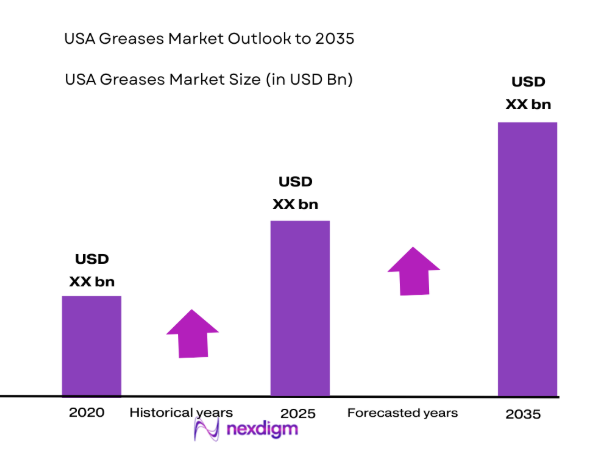
The USA Greases market is valued in billions ~ USD, driven by factors like the demand from automotive, industrial, and marine sectors. The growth is supported by the increasing requirement for lubricants in high-performance applications, including vehicles and manufacturing machinery. With robust infrastructure and technological advancements, the market is expanding steadily across various industries. This increase is attributed to the automotive sector’s rising demand for long-lasting, high-performance lubricants, and the industrial sector’s need for reliable machinery maintenance.
Dominant regions in the USA Greases market include cities with industrial hubs such as Detroit, Houston, and Chicago. These cities are significant due to their automotive manufacturing bases, energy sector relevance, and large-scale industrial production. The strong presence of key players and a concentration of demand in these regions contribute to their dominance. Additionally, regulatory support and infrastructure development in these cities further strengthen their position in the market.
Market Segmentation
By Product Type
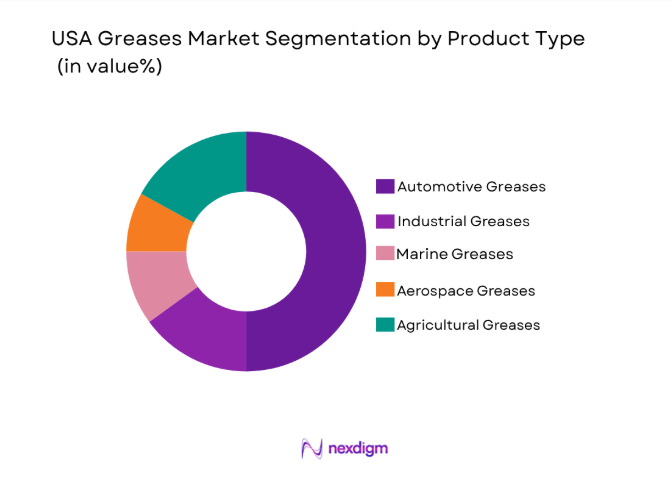
The USA Greases market is segmented by product type into automotive greases, industrial greases, marine greases, aerospace greases, and agricultural greases. Recently, automotive greases have dominated the market share, driven by increased automotive production and a growing preference for high-performance lubricants in vehicles. This dominance is further propelled by advancements in grease technology that enhance fuel efficiency, reduce maintenance costs, and increase the lifespan of automotive components.
By Platform Type
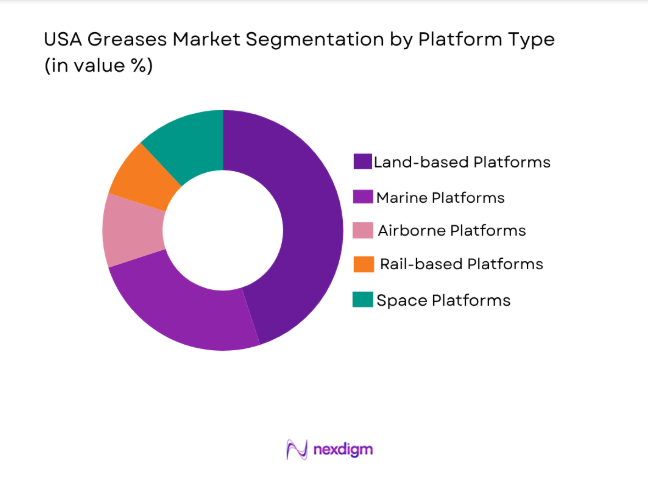
The USA Greases market is segmented by platform type into land-based platforms, marine platforms, airborne platforms, rail-based platforms, and space platforms. Recently, land-based platforms have shown a dominant market share due to their use in automotive and industrial applications, which require constant lubrication. The extensive use of vehicles and heavy machinery in land-based operations has significantly contributed to this dominance. Moreover, advancements in industrial machinery and vehicle engine technology have bolstered the demand for high-performance greases in land-based applications.
Competitive Landscape
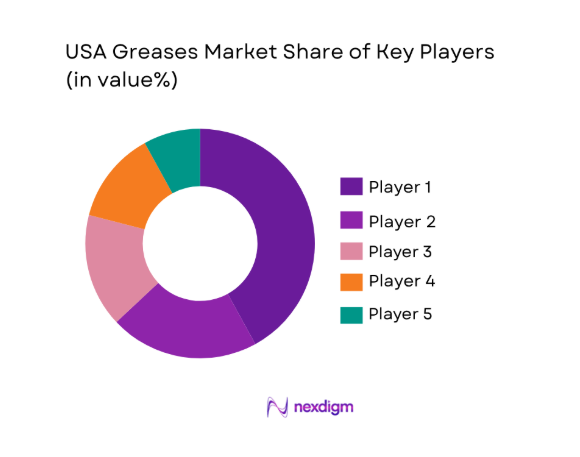
The competitive landscape of the USA Greases market reflects a consolidated environment, with major players focusing on innovation, acquisition strategies, and expanding their product portfolios. The market is highly competitive due to the presence of established international brands, which influence technological advancements and pricing strategies. Major players continue to expand production capabilities and strengthen their foothold in key regions.
| Company Name | Establishment Year | Headquarters | Technology Focus | Market Reach | Key Products | Revenue | R&D Investment |
| Chevron | 1879 | San Ramon, CA | ~ | ~ | ~ | ~ | ~ |
| ExxonMobil | 1870 | Irving, TX | ~ | ~ | ~ | ~ | ~ |
| Shell | 1907 | The Hague | ~ | ~ | ~ | ~ | ~ |
| BP | 1908 | London, UK | ~ | ~ | ~ | ~ | ~ |
| Castrol | 1899 | Pangbourne, UK | ~ | ~ | ~ | ~ | ~ |
USA Greases Market Analysis
Growth Drivers
Increasing Demand for Automotive Lubrication
The USA Greases market has witnessed significant growth driven by the automotive industry’s increasing demand for high-performance lubricants. With the rise in vehicle production and the demand for more efficient and durable vehicles, automotive greases have become essential in ensuring optimal performance and reduced wear and tear. The shift toward electric vehicles (EVs) also drives demand for specialized greases that can meet the unique requirements of EVs, such as enhanced thermal stability and resistance to high temperatures. Moreover, advancements in grease technology, such as improved formulations to increase fuel efficiency and reduce emissions, further boost the market. The growing awareness of maintenance costs and the need for long-lasting, eco-friendly solutions are also contributing to the widespread adoption of these lubricants across different automotive segments. These factors combined are making automotive lubrication a key growth driver in the greases market, reinforcing the overall demand in the USA market.
Rising Industrial Production
The growth of industrial production, especially in manufacturing sectors such as machinery, automotive parts, and heavy equipment, has substantially fueled the demand for greases in the USA. Industrial greases are essential for maintaining machinery and ensuring operational efficiency in production environments. As industries continue to expand, particularly in sectors such as construction, mining, and energy, the need for high-quality greases that can handle extreme pressures, temperatures, and environments becomes critical. The increasing trend towards automation and the rise of machine-based production in industries further boosts the demand for specialized greases, ensuring their application in advanced machinery. These greases are designed to withstand the challenges posed by modern equipment, improving reliability and extending service life. As industrial production grows, the requirement for efficient lubricants that reduce downtime and prevent costly repairs continues to drive the market for greases.
Market Challenges
Environmental Regulations on Lubricants
One of the key challenges faced by the USA Greases market is the growing pressure from environmental regulations on the formulation and disposal of lubricants. As sustainability concerns rise, manufacturers are under increasing scrutiny to develop greases that meet stringent environmental standards. This includes reducing the impact of lubricants on soil and water, as well as minimizing hazardous chemicals in their composition. Although the industry is making strides toward creating eco-friendly alternatives, the transition from traditional lubricants to more sustainable products comes with its own set of challenges. The high costs of developing and testing environmentally compliant products, as well as the logistical challenges of adapting to new regulations, create barriers for manufacturers, potentially hindering market growth. Moreover, the need to balance performance with eco-friendliness increases production complexity, further complicating efforts to meet regulatory standards.
Volatile Raw Material Prices
Another significant challenge facing the USA Greases market is the volatility in the prices of raw materials used in the production of greases. The key components in grease formulations, such as base oils, thickeners, and additives, are subject to fluctuating prices due to supply chain disruptions, geopolitical tensions, and demand-supply imbalances. For example, fluctuations in the price of crude oil directly affect the cost of petroleum-based greases, which make up a large portion of the market. Manufacturers are often forced to absorb these price increases or pass them onto consumers, which can affect their competitiveness. Additionally, the availability of high-quality raw materials is sometimes restricted, leading to challenges in maintaining consistent product quality. As the demand for specialty greases grows, the pressure on raw material costs is expected to intensify, posing a challenge for manufacturers aiming to maintain affordable prices and high product performance.
Opportunities
Expansion of Electric Vehicle Market
The rise of electric vehicles (EVs) presents a major opportunity for the USA Greases market. As EV adoption grows, the need for specialized lubricants that cater to the unique requirements of electric motors, batteries, and other components increases. Greases used in EVs must offer enhanced thermal stability, resistance to corrosion, and the ability to function under high loads while ensuring minimal friction. The demand for efficient greases that contribute to the overall longevity and performance of EVs is expected to drive market expansion. Furthermore, the ongoing development of EV infrastructure and technological advancements in battery technology will further increase the need for high-quality greases in the automotive sector. As automakers continue to develop new EV models, the greases market will have the opportunity to innovate and meet the demands of this rapidly growing industry.
Growing Industrial Automation
The growing trend of industrial automation presents a significant opportunity for the USA Greases market. As industries increasingly adopt automated machinery and robotics to enhance production efficiency and reduce labor costs, the demand for high-performance greases to lubricate these systems has surged. Automated systems, including conveyors, robotic arms, and assembly lines, require specialized lubricants to ensure smooth operations and minimize downtime. These greases must be able to withstand continuous operation under varying temperatures and pressures. The expansion of automation in industries such as manufacturing, automotive, and food processing creates a new avenue for grease manufacturers to provide customized lubricants designed for automated systems. This trend is expected to accelerate in the coming years as industries seek to enhance productivity and operational reliability, providing a promising opportunity for the market.
Future Outlook
The USA Greases market is expected to experience continued growth over the next five years, driven by advancements in grease technology and increasing demand from the automotive and industrial sectors. Technological innovations in grease formulations, particularly for electric vehicles and industrial automation, are likely to shape market trends. Regulatory support for environmentally friendly lubricants will spur the development of sustainable greases. Demand for long-lasting, high-performance lubricants will continue to grow, particularly in industries requiring machinery maintenance and enhanced operational efficiency.
Major Players
- Chevron
- ExxonMobil
- Shell
- BP
- Castrol
- TotalEnergies
- Fuchs Petrolub
- Lubrizol
- Petro-Canada
- Schaeffer Manufacturing
- Klüber Lubrication
- Liqui Moly
- Gulf Oil
- Valvoline
- Castrol
Key Target Audience
- Investments and venture capitalist firms
- Government and regulatory bodies
- Automotive manufacturers
- Industrial equipment suppliers
- Energy companies
- Manufacturers of lubricants
- Supply chain management firms
Research Methodology
Step 1: Identification of Key Variables
The initial phase involves identifying key variables that impact the USA Greases market, including demand drivers, regulatory influences, and technological advancements.
Step 2: Market Analysis and Construction
We analyze the market based on historical data, current trends, and future projections, constructing a detailed picture of the greases industry.
Step 3: Hypothesis Validation and Expert Consultation
Expert consultations and market validation through surveys and interviews with industry stakeholders validate the initial hypotheses and refine the market forecast.
Step 4: Research Synthesis and Final Output
The final output synthesizes all collected data into a comprehensive market report, ensuring all variables and factors are accounted for and interpreted accurately.

- Executive Summary
- Research Methodology (Definitions, Scope, Industry Assumptions, Market Sizing Approach, Primary & Secondary Research Framework, Data Collection & Verification Protocol, Analytic Models & Forecast Methodology, Limitations & Research Validity Checks)

- Market Definition and Scope
- Value Chain & Stakeholder Ecosystem
- Regulatory / Certification Landscape
- Sector Dynamics Affecting Demand
- Strategic Initiatives & Infrastructure Growth

- Growth Drivers
Increasing Demand for Automotive Lubrication
Rising Industrial Production
Advancements in Grease Technologies - Market Challenges
Environmental Regulations on Lubricants
Volatile Raw Material Prices
Maintenance of Grease Quality - Market Opportunities
Expansion of Electric Vehicle Market
Growing Industrial Automation
Technological Advancements in Grease Composition - Trends
Shift Toward Eco-friendly Grease Solutions
Increase in Demand for High-performance Greases - Government Regulations
- SWOT Analysis
- Porter’s Five Forces

- By Market Value, 2020-2025
- By Installed Units, 2020-2025
- By Average System Price, 2020-2025
- By System Complexity Tier, 2020-2025

- By System Type (In Value%)
Automotive Greases
Industrial Greases
Marine Greases
Aerospace Greases
Agricultural Greases - By Platform Type (In Value%)
Land-based Platforms
Marine Platforms
Airborne Platforms
Rail-based Platforms
Space Platforms - By Fitment Type (In Value%)
On-premise Solutions
Hybrid Solutions
Modular Solutions
Integrated Solutions - By End User Segment (In Value%)
Automotive Industry
Manufacturing Industry
Aerospace & Defense
Agriculture Industry

- Market Share Analysis
- Cross Comparison Parameters (System Type, Platform Type, End User Segment, Fitment Type, Technology, Pricing, Procurement Channels)
- SWOT Analysis of Key Competitors
- Pricing & Procurement Analysis
- Key Players
Chevron
ExxonMobil
Shell
TotalEnergies
BP
Castrol
Klüber Lubrication
Lubrizol
Fuchs Petrolub
Liqui Moly
Gulf Oil
Valvoline
Petro-Canada
Schaeffer Manufacturing
Bel-Ray

- Increased Adoption in the Automotive Sector
- Focus on Long-life Greases for Industrial Applications
- Demand for Aerospace-grade Lubricants
- Government Regulations Impacting Industrial Use

- Forecast Market Value, 2026-2035
- Forecast Installed Units, 2026-2035
- Price Forecast by System Tier, 2026-2035
- Future Demand by Platform, 2026-2035


 Request a Sample
 Ask for Customization
 Get a Quote
 Enquire Now