
 Download PDF
Market Overview
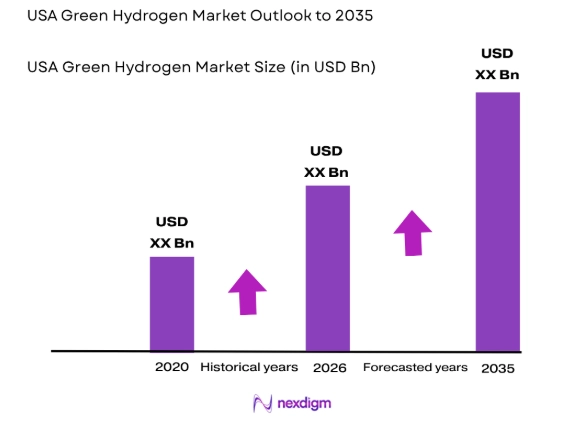
The USA Green Hydrogen market is expected to reach approximately USD ~ billion based on a recent historical assessment. The market is driven by the U.S. government’s push for clean energy solutions and carbon neutrality by 2050. With green hydrogen production becoming more cost-effective due to technological advancements in electrolysis and renewable energy integration, there has been a significant rise in its demand across sectors such as transportation, industry, and power generation. Additionally, the federal and state incentives, including tax credits and grants, have further accelerated the adoption of green hydrogen in the U.S.
California, Texas, and the Midwest are key regions driving the growth of the USA Green Hydrogen market. California has positioned itself as a leader in renewable energy and green hydrogen through government initiatives, vast renewable energy resources, and a growing demand for sustainable solutions. Texas benefits from abundant wind and solar resources that are used to produce low-cost green hydrogen. The Midwest, with its expanding industrial base, is also seeing increased adoption of green hydrogen as an energy solution for heavy industries and transportation sectors.
Market Segmentation
By Production Method
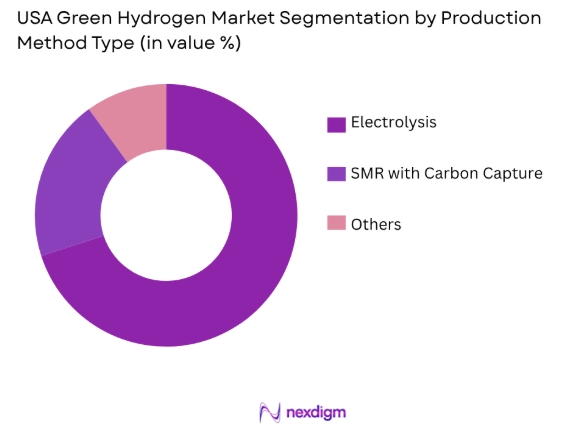
The USA Green Hydrogen market is segmented by production method into electrolysis, steam methane reforming (SMR) with carbon capture, and others. Recently, electrolysis has dominated the market due to its alignment with renewable energy sources like wind and solar. Electrolyzers powered by clean electricity are used to split water into hydrogen and oxygen, making it a sustainable and carbon-free process. The rise in the availability of renewable energy and declining costs of electrolyzer technology has made electrolysis the preferred method of green hydrogen production, especially in regions with abundant renewable resources such as California and Texas.
By End-User
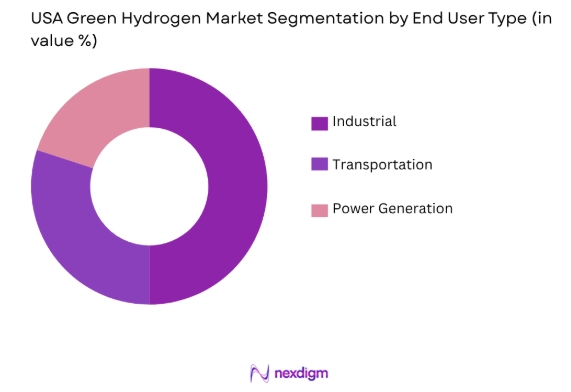
The USA Green Hydrogen market is segmented by end-user into industrial, transportation, and power generation. The industrial sector has been the dominant sub-segment due to the increasing use of green hydrogen in heavy industries like steel, cement, and chemicals, where it serves as a cleaner alternative to conventional fossil fuels. Industrial players are looking to reduce their carbon footprints and meet decarbonization goals. Moreover, green hydrogen is used as a feedstock in the production of ammonia and methanol, further driving its adoption in the industrial sector.
Competitive Landscape
The competitive landscape of the USA Green Hydrogen market is emerging with increasing participation from both established energy companies and new entrants. Companies are focusing on the integration of renewable energy with hydrogen production technologies to reduce costs and improve efficiency. Strategic partnerships and collaborations between hydrogen producers, utilities, and technology developers are common, as these players seek to scale up green hydrogen production. Additionally, government initiatives and regulatory support are fostering innovation and competition among market participants.
| Company Name | Establishment Year | Headquarters | Technology Focus | Market Reach | Key Products | Revenue (USD Billion) | Market-Specific Parameter |
| Air Products and Chemicals | 1940 | Allentown, USA | ~ | ~ | ~ | ~ | ~ |
| Plug Power | 1997 | Latham, USA | ~ | ~ | ~ | ~ | ~ |
| Nikola Corporation | 2014 | Phoenix, USA | ~ | ~ | ~ | ~ | ~ |
| Cummins Inc. | 1919 | Columbus, USA | ~ | ~ | ~ | ~ | ~ |
| Bloom Energy | 2001 | San Jose, USA | ~ | ~ | ~ | ~ | ~ |
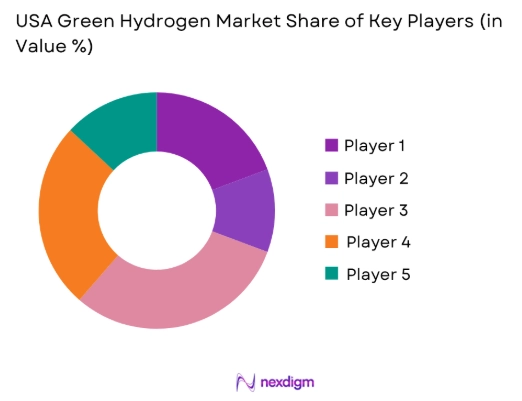
USA Green Hydrogen Market Analysis
Growth Drivers
Government Policies and Incentives
The USA Green Hydrogen market is being driven by strong government policies and incentives aimed at fostering the adoption of clean energy solutions. The U.S. government has committed to reducing greenhouse gas emissions to net-zero by 2050, with hydrogen playing a pivotal role in achieving this goal. In particular, the U.S. Department of Energy (DOE) has allocated significant funding for green hydrogen projects, including research into electrolyzer efficiency, and carbon capture technologies. Additionally, the Biden administration’s infrastructure plan includes provisions for the development of hydrogen hubs, which will further support the widespread use of green hydrogen. State-level incentives such as tax credits for green hydrogen production and infrastructure development are also contributing to market growth, particularly in renewable energy-rich regions like California and Texas.
Technological Advancements in Electrolysis
Technological advancements in electrolysis have significantly contributed to the growth of the USA Green Hydrogen market. Electrolysis is the process of using electricity to split water into hydrogen and oxygen, and recent innovations have made this process more cost-effective and energy-efficient. The development of high-efficiency electrolyzers powered by renewable energy sources such as solar and wind has made green hydrogen production more scalable and commercially viable. Companies are continuously working on improving the efficiency of electrolyzers, reducing their costs, and enhancing their durability, which is critical for large-scale hydrogen production. These technological improvements are expected to drive further adoption of green hydrogen, especially as the costs of renewable energy continue to decline, making electrolysis more affordable and accessible.
Market Challenges
High Production Costs
One of the significant challenges in the USA Green Hydrogen market is the high production costs associated with green hydrogen. While green hydrogen offers significant environmental benefits, the process of producing hydrogen through electrolysis remains expensive compared to traditional hydrogen production methods, such as steam methane reforming (SMR). The high costs are primarily due to the expensive electrolyzer technology and the need for a consistent and low-cost renewable energy source to power the process. Although the cost of electrolyzers has been falling in recent years, it still represents a significant barrier to widespread adoption. This challenge is particularly pronounced in industries such as steel production, where the demand for green hydrogen is growing but cost considerations remain a key obstacle to scaling production.
Infrastructure and Storage Issues
The lack of adequate infrastructure for transporting and storing green hydrogen is another challenge in the market. Hydrogen is difficult to store and transport due to its low energy density and the need for specialized tanks and pipelines. The current infrastructure for hydrogen distribution is limited, and existing natural gas pipelines are not equipped to handle hydrogen at the scale required for widespread use. Developing hydrogen storage facilities, transportation systems, and refueling infrastructure will require substantial investments in both infrastructure and technology. This lack of infrastructure development limits the market’s potential and could slow down the adoption of green hydrogen as a mainstream energy source.
Opportunities
Integration of Green Hydrogen in Heavy Industry
The increasing adoption of green hydrogen in heavy industry offers significant growth opportunities for the USA Green Hydrogen market. Industries such as steel, cement, and chemicals, which are traditionally reliant on fossil fuels, are increasingly looking to green hydrogen as a cleaner alternative. Green hydrogen can replace coal and natural gas in high-heat processes, such as steel manufacturing, reducing carbon emissions. As part of their decarbonization strategies, many large industrial players are investing in hydrogen technologies to meet sustainability goals and comply with stringent environmental regulations. The industrial sector, therefore, presents a significant opportunity for the green hydrogen market, especially as companies look for more sustainable energy sources to power their operations.
Green Hydrogen in Transportation
The growing demand for green hydrogen-powered vehicles presents a promising opportunity in the USA market. The transportation sector is one of the largest contributors to carbon emissions in the U.S., and green hydrogen presents a viable solution to reduce emissions in hard-to-electrify sectors such as heavy-duty trucking, buses, and trains. Companies such as Nikola and Cummins are developing hydrogen-powered vehicles, while hydrogen refueling stations are being set up in key regions to support these vehicles. Additionally, green hydrogen can be used as a fuel for trains and ships, further expanding its use in the transportation sector. As hydrogen fuel cell technology becomes more advanced and cost-effective, the demand for green hydrogen in transportation is expected to grow significantly, offering a valuable opportunity for market participants.
Future Outlook
The future of the USA Green Hydrogen market looks promising, with continued growth driven by technological advancements and strong government support for clean energy. As the U.S. moves towards its goal of achieving net-zero emissions by 2050, green hydrogen will play an increasingly vital role in decarbonizing heavy industries and the transportation sector. Innovations in electrolyzer technology and the expansion of hydrogen infrastructure will drive further adoption, while partnerships and investments in green hydrogen hubs will create more market opportunities. Over the next five years, the integration of green hydrogen into the national energy mix is expected to accelerate, supported by both public and private sector efforts.
Major Players
- Air Products and Chemicals
- Plug Power
- Nikola Corporation
- Cummins Inc.
- Bloom Energy
- Iwatani Corporation
- Linde plc
- Ballard Power Systems
- McPhy Energy
- Thyssenkrupp
- Siemens Energy
- Mitsubishi Power
- Bosch
- Hydrogenics
- Nel ASA
Key Target Audience
- Investments and venture capitalist firms
- Government and regulatory bodies
- Energy producers and developers
- Heavy industry players
- Renewable energy equipment manufacturers
- Hydrogen storage and transport solution providers
- Electric vehicle and fuel cell companies
Research Methodology
Step 1: Identification of Key Variables
Key market drivers, challenges, and opportunities impacting the USA Green Hydrogen market are identified. This includes analyzing government policies, technological innovations, and industrial demand.
Step 2: Market Analysis and Construction
Market segmentation and detailed analysis of green hydrogen production methods, key end-users, and technological trends are conducted. Historical data and current market conditions are assessed.
Step 3: Hypothesis Validation and Expert Consultation
Consultation with industry experts, policymakers, and technology providers is performed to validate the assumptions and refine the market forecasts. This ensures accuracy and relevance.
Step 4: Research Synthesis and Final Output
The collected data is synthesized into a comprehensive market report, offering detailed insights into the growth trends, opportunities, and challenges in the USA Green Hydrogen market.

- Executive Summary
- Research Methodology (Definitions, Scope, Industry Assumptions, Market Sizing Approach, Primary & Secondary Research Framework, Data Collection & Verification Protocol, Analytic Models & Forecast Methodology, Limitations & Research Validity Checks)

- Market Definition and Scope
- Value Chain & Stakeholder Ecosystem
- Regulatory / Certification Landscape
- Sector Dynamics Affecting Demand

- Growth Drivers
Government Incentives for Green Hydrogen Production
Technological Advancements in Electrolysis
Growing Demand for Clean Fuel Alternatives - Market Challenges
High Capital Costs for Green Hydrogen Production
Regulatory and Policy Uncertainty
Hydrogen Storage and Distribution Challenges - Market Opportunities
Integration of Green Hydrogen with Renewable Energy Sources
Development of Hydrogen Fuel Cell Vehicles
Scaling up Hydrogen Infrastructure for Large-Scale Deployment - Trends
Increasing Investment in Hydrogen Research
Rising Adoption of Hydrogen in Industrial Applications - Government Regulations
- SWOT Analysis
- Porter’s Five Forces

- By Market Value, 2020-2025
- By Installed Units, 2020-2025
- By Average System Price, 2020-2025
- By System Complexity Tier, 2020-2025

- By System Type (In Value%)
Electrolyzers
Green Hydrogen Production Plants
Hydrogen Storage Systems
Hydrogen Transportation Systems
Hydrogen Distribution Networks - By Platform Type (In Value%)
Onshore Platforms
Offshore Platforms
Integrated Platforms
Modular Platforms - By Fitment Type (In Value%)
Fixed Solutions
Mobile Solutions
Hybrid Solutions
Modular Solutions - By End User Segment (In Value%)
Industrial Sector
Energy Utilities
Transportation Sector

- Market Share Analysis
- Cross Comparison Parameters (System Type, Platform Type, Procurement Channel, End User Segment, Fitment Type, Hydrogen Storage Capacity, Technological Integration)
- SWOT Analysis of Key Competitors
- Pricing & Procurement Analysis
- Key Players
Plug Power
Nel ASA
ITM Power
Ballard Power Systems
Cummins Inc.
Air Products and Chemicals
Bloom Energy
Siemens Energy
McPhy Energy
Envision Group
Hydrogenics
Linde Group
Engie
RWE
Ørsted

- Growth in Industrial Hydrogen Use
- Energy Utilities Increasing Investment in Hydrogen Infrastructure
- Transportation Sector’s Adoption of Hydrogen Fuel Cells
- Government Support for Hydrogen Technologies

- Forecast Market Value, 2026-2035
- Forecast Installed Units, 2026-2035
- Price Forecast by System Tier, 2026-2035
- Future Demand by Platform, 2026-2035


 Request a Sample
 Ask for Customization
 Get a Quote
 Enquire Now