
 Download PDF
Market Overview
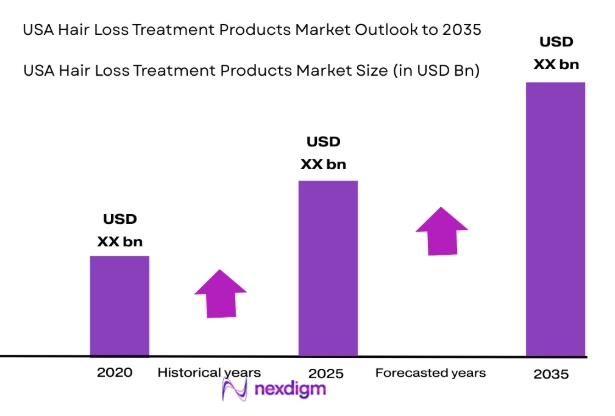
The USA Hair Loss Treatment Products Market is valued at approximately USD ~ billion, with an expected growth trajectory driven by increased consumer awareness, advancements in hair restoration technologies, and rising incidences of hair loss among both men and women. This market has experienced consistent growth as more people seek treatments, ranging from over-the-counter products to advanced clinical therapies. The driving force behind this market’s growth is the expanding availability of treatment options and rising healthcare accessibility. Furthermore, increased consumer spending on personal care and wellness products has further contributed to market expansion.
The USA Hair Loss Treatment Products Market is largely dominated by cities like New York, Los Angeles, and Chicago, where there is significant disposable income and an affluent consumer base. These cities also have a higher concentration of dermatology clinics, hair transplant centers, and retail stores that provide a wide variety of hair loss solutions. The dominance of these areas can be attributed to their larger population sizes, consumer awareness, and the growing demand for aesthetic services. Furthermore, these regions are home to a mix of both local and global brands that shape the competitive landscape of the market.
Market Segmentation
By Treatment Modality Type
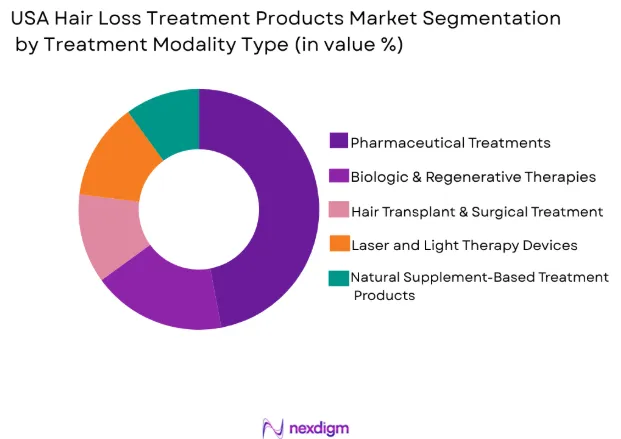
The USA Hair Loss Treatment Products Market is segmented into pharmaceutical treatments, biologic and regenerative therapies, hair transplant & Surgical Treatment, laser and light therapy devices, and natural supplement-based treatments Products. Among these, pharmaceutical treatments, specifically Minoxidil and Finasteride, hold a dominant share due to their widespread usage and availability in retail outlets and pharmacies. These products are well-established in the market, widely recommended by dermatologists, and backed by significant clinical evidence. Moreover, they are cost-effective compared to surgical treatments, making them accessible to a broader consumer base. Brands like Rogaine (Minoxidil) and Propecia (Finasteride) are popular choices, further bolstering the dominance of pharmaceutical treatments.
By Distribution Channel Type
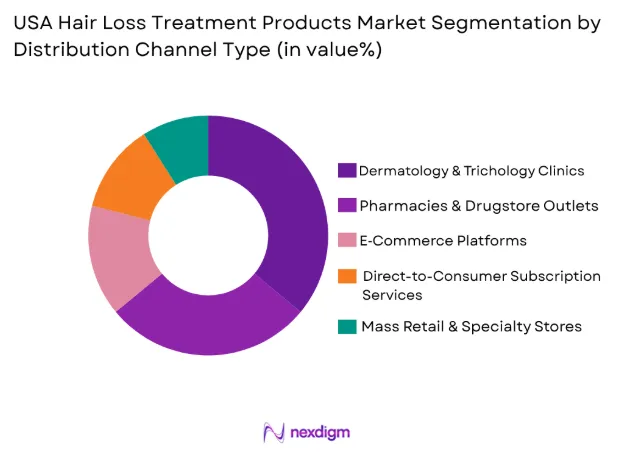
The market is further segmented by distribution channels, including dermatology and trichology clinics, pharmacies and drugstore outlets, e-commerce platforms, direct-to-consumer subscription services, and mass retail & Specialty stores. Dermatology and trichology clinics dominate this segment due to their ability to offer personalized treatment plans and more advanced solutions, such as hair transplants and biologic therapies. These services are typically recommended by healthcare professionals and attract a higher number of consumers seeking long-term, reliable solutions. The convenience and trust associated with these clinical settings have made them the preferred choice for individuals looking to address severe cases of hair loss.
Competitive Landscape
The USA Hair Loss Treatment Products Market is dominated by both established pharmaceutical companies and specialized players offering advanced hair loss treatments. Leading companies in the market include global brands such as Pfizer and Johnson & Johnson, alongside specialized providers like Hims & Hers Health, Inc. and Keeps. These companies leverage extensive R&D, strong brand loyalty, and established consumer trust to retain a competitive edge. Additionally, some niche players have capitalized on the growing demand for biologic treatments and natural products.
| Company | Establishment Year | Headquarters | Product Portfolio | Distribution Channels | R&D Investment | Market Reach |
| Pfizer | 1849 | New York, USA | ~ | ~ | ~ | ~ |
| Johnson & Johnson | 1886 | New Jersey, USA | ~ | ~ | ~ | ~ |
| Hims & Hers Health, Inc. | 2017 | San Francisco, USA | ~ | ~ | ~ | ~ |
| Keeps | 2018 | New York, USA | ~ | ~ | ~ | ~ |
| Bosley | 1974 | Beverly Hills, USA | ~ | ~ | ~ | ~ |
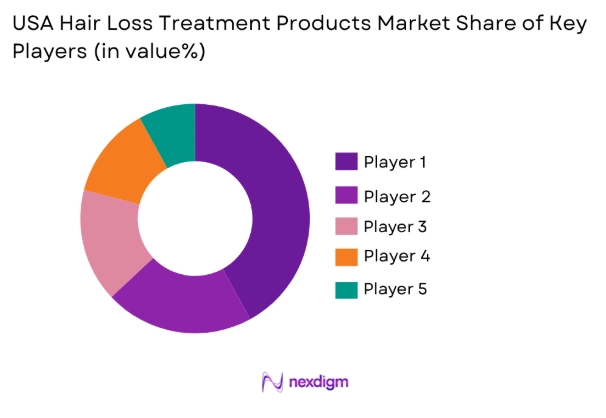
USA Hair Loss Treatment Products Market Analysis
Growth Drivers
Consumer Awareness
Consumer awareness about hair loss treatment has seen an increase in recent years due to the proliferation of information on social media, health blogs, and public campaigns. This awareness is also supported by an increase in health-related expenditures. The healthcare expenditure in the United States was approximately USD 4.3 trillion in 2021 and is expected to continue growing. Consumers are now more informed about available treatment options such as Minoxidil and Finasteride, leading to higher demand for effective products. This trend is driven by an increasing desire to improve self-image, with a noticeable shift towards proactive solutions for hair loss. Government programs, especially in the public health sphere, have also emphasized awareness in dealing with various physical conditions, indirectly supporting hair loss treatments. With the aging population, awareness of treatments such as PRP therapy has also grown substantially.
Aging Demographics
The aging population is one of the key driving factors for the growth of the hair loss treatment market. The number of individuals aged 65 and older in the U.S. was 56 million in 2020, and this is expected to grow to over 80 million by 2040. Aging naturally contributes to hair thinning and loss, which drives the demand for effective treatments. According to the U.S. Census Bureau, the share of the population over the age of 65 is projected to reach 21% by 2030, with a significant portion of this group seeking hair restoration solutions. The increasing focus on aging healthily and improving appearance has further accelerated this demand for hair loss products, as older adults look to enhance their self-esteem through treatments that offer more youthful looks.
Market Challenges
High-Cost Therapies
The high cost of hair loss treatments, especially advanced clinical procedures like hair transplants, is a significant barrier for many consumers. The average cost of a hair transplant in the U.S. ranges from USD 4,000 to USD 15,000, depending on the extent of treatment. This price range excludes potential follow-up treatments, medication costs, and maintenance. The high cost is primarily attributed to the need for skilled specialists, advanced technology, and post-surgical care. The financial burden makes it less accessible to a broader consumer base, despite the rising demand. The cost of these treatments and related products (such as supplements) continues to be a key challenge, particularly in an economic environment where consumer spending has been constrained due to inflationary pressures. The U.S. inflation rate was 6.5% in 2023, further intensifying the challenge of affording expensive hair restoration treatments.
Treatment Adherence Barriers
Treatment adherence continues to be a significant challenge in the hair loss treatment market, particularly for long-term therapies such as Minoxidil and Finasteride. Studies have shown that non-adherence rates for these treatments can range from 30% to 50%, primarily due to dissatisfaction with results, perceived ineffectiveness, or side effects. In the U.S., the 2023 healthcare spending report from the Centers for Medicare & Medicaid Services reveals that over 30% of patients abandon treatment after the first few months, particularly in areas like dermatology where patient satisfaction is critical. The lack of ongoing results can discourage users from staying consistent with prescribed treatments, impacting the overall effectiveness and long-term success of hair restoration programs. This makes adherence programs and the development of more effective, user-friendly treatment options essential for improving market growth and engagement.
Opportunities
Personalized Treatment Algorithms
Personalized treatment algorithms represent a growing opportunity in the hair loss treatment market. Advances in biotechnology and genetic testing have enabled healthcare providers to develop more tailored solutions for individuals based on their specific genetic makeup and treatment response. A report from the National Institutes of Health (NIH) states that personalized medicine, which takes into account individual genetic profiles, is expected to continue growing, with more hair loss solutions incorporating genetic testing to optimize treatment. This shift towards personalized treatments ensures higher efficacy and satisfaction rates among consumers, as tailored therapies can address the underlying causes of hair loss specific to each patient. In addition, personalized treatments are seen as a luxury service, which fits well into the broader wellness and premium treatment markets. The trend of tailoring treatments to individual needs aligns with the rising consumer demand for more effective, customized healthcare solutions.
Subscription Economy
The subscription-based model in the hair loss treatment market has witnessed increasing adoption. With the ongoing growth of e-commerce and the shift towards direct-to-consumer services, subscription-based treatments for hair loss are expected to expand. In the U.S., the e-commerce industry saw a 16.3% increase in retail sales in 2023, illustrating the growing preference for online purchases. Services like Keeps and Hims, which offer recurring delivery of hair loss products on a subscription basis, have capitalized on this trend, providing customers with the convenience of automatic shipments and cost savings over time. The subscription model not only allows companies to retain customers longer but also provides consumers with a convenient, reliable, and often more affordable option for maintaining treatment. As more people embrace the subscription economy, companies offering such services are expected to expand their market share in the coming years.
Future Outlook
Over the next five years, the USA Hair Loss Treatment Products Market is expected to show significant growth, driven by continuous advancements in treatment technologies, increased consumer interest in personal appearance, and the ongoing trend of aging populations seeking medical solutions to hair loss. Additionally, the growing acceptance of non-invasive treatments, such as laser therapy and biologic therapies, combined with the expansion of e-commerce platforms for easy access to treatments, will further drive market expansion. As consumer demand for both affordable and effective solutions continues to rise, the market is anticipated to grow at a robust rate, with a forecasted compound annual growth rate (CAGR) of 5.8% from 2024 to 2030.
Major Players
- Pfizer
- Johnson & Johnson
- Hims & Hers Health, Inc.
- Keeps
- Bosley
- Merck & Co.
- L’Oréal
- Viviscal (Lifestream Brands)
- Nutrafol
- Rogaine (Church & Dwight)
- Capillus
- Theradome
- HairMax
- Aderans Hair Restoration
- RevitaLash Cosmetics
Key Target Audience
- Investments and Venture Capitalist Firms
- Government and Regulatory Bodies (e.g., FDA, FTC)
- Dermatologists and Trichologists
- Private Healthcare Providers (Specialized Clinics, Hospitals)
- Hair Restoration Professionals (Hair Transplant Surgeons)
- Retail Chains (Pharmacies, Drugstores)
- E-commerce Companies (Online Platforms)
- Consumer Goods Companies (Brands & Product Manufacturers)
Research Methodology
Step 1: Identification of Key Variables
The initial phase involves constructing an ecosystem map encompassing all stakeholders in the USA Hair Loss Treatment Products Market. This step draws on extensive secondary research from proprietary databases to gather market-specific information. The primary objective is to identify and define the key variables that influence market dynamics.
Step 2: Market Analysis and Construction
Historical data on market penetration, the ratio of clinical to retail sales, and the revenue generation in each segment is collected. A careful assessment of the performance of various treatments and distribution channels is performed to ensure accurate market construction.
Step 3: Hypothesis Validation and Expert Consultation
Market hypotheses are validated through consultations with industry experts representing dermatology clinics, hair treatment professionals, and product manufacturers. These consultations offer valuable insights into operational practices and consumer preferences.
Step 4: Research Synthesis and Final Output
Direct engagement with manufacturers and service providers helps refine product segment details, consumer purchasing behavior, and distribution patterns. This phase ensures the final report is accurate, complete, and well-validated through a bottom-up approach.

- Executive Summary
- Research Methodology (Market Definitions and Technical Scope, Key Abbreviations, Primary vs Secondary Research Weightages, Modeling and Forecasting Techniques, Data Triangulation Method, Confidence & Error Margins, Market Reconciliation Process, Research Limitations and Responses)

- Market Definition and Core Scope
- Clinical and Consumer Classification
- Genesis of Hair Loss Treatment Market Dynamics
- Treatment Adoption Lifecycle Curve
- Supply Chain Structure & Value Chain Mapping
- Market Interfaces with Dermatologists, Trichologists
- Clinics and Retail Channels

- Growth Drivers
Consumer Awareness
Aging Demographics - Market Challenges
High Cost Therapies
Treatment Adherence Barriers - Opportunities
Personalized Treatment Algorithms
Subscription Economy - Regulatory Landscape
Key Product Innovations
FDA & OTC Monograph Impacts
Clinical Trial Landscape
Reimbursement and Insurance Dynamics
Consumer Behavioral Trends - Swot Analysis
- Porter’s Five Forces

- By Market Value, 2020-2025
- By Volume Metrics, 2020-2025
- BY Average Selling Price,2020-2025

- By Treatment Modality (Value %)
Pharmaceutical Treatments
Biologic & Regenerative Therapies
Hair Transplant & Surgical Treatments
Laser and Light Therapy Devices
Natural / Supplement Based Treatment Products - By Distribution Channel (Value %)
Dermatology & Trichology Clinics
Pharmacies & Drugstore Outlets
E‑Commerce Platforms
Direct‑to‑Consumer Subscription Services
Mass Retail & Specialty Stores - By End User (Value %)
Male Consumers
Female Consumers
Millennials & Gen Z Adults
Middle‑Aged Adults
Senior Population - By Treatment Stage (Value %)
Preventive / Early Stage
Moderate Hair Loss
Advanced/Clinical Hair Loss
Post‑Surgical Maintenance - By Price Tier (Retail Market %)
Premium
Mid‑Tier
Mass Market / Economy

- Market Share of Major Players (by Value and Volume)
- Cross‑Comparison Parameters (Company Overview, Product Portfolio Depth & Regulatory Approvals, Clinical Evidence Score, Pricing Strategy & ASP Positioning, Channel Penetration & Distribution Network Scale, R&D Investment & Pipeline Intensity, Digital and Telehealth Enablement, Brand Loyalty & Customer Lifetime Value, Market Share by Treatment Type, SKU Diversity & Innovation Index)
- Competitive Positioning Matrix
- Pricing Matrix by SKU and Distribution Channel
- Detailed Company Profiles
Pfizer
Johnson & Johnson
AbbVie (Allergan Aesthetics)
Merck & Co.
Hims & Hers Health, Inc.
Keeps
Rogaine® (Church & Dwight)
Bosley Professional Strength
Nutrafol
Viviscal (Lifestream Brands)
Capillus
Theradome
HairMax
Bosidin
Nutranext / HairAnew

- Consumer Decision Journey
- Demographic and Socioeconomic Profiling
- Treatment Experience, Satisfaction and Pain Point Metrics
- Pricing Sensitivity and Value Perception Models
- Provider Prescribing Behavior

- By Market Value, 2026-2035
- By Volume Metrics, 2026-2035
- BY Average Selling Price, 2026-2035


 Request a Sample
 Ask for Customization
 Get a Quote
 Enquire Now