
 Download PDF
 Download PDF
Market Overview
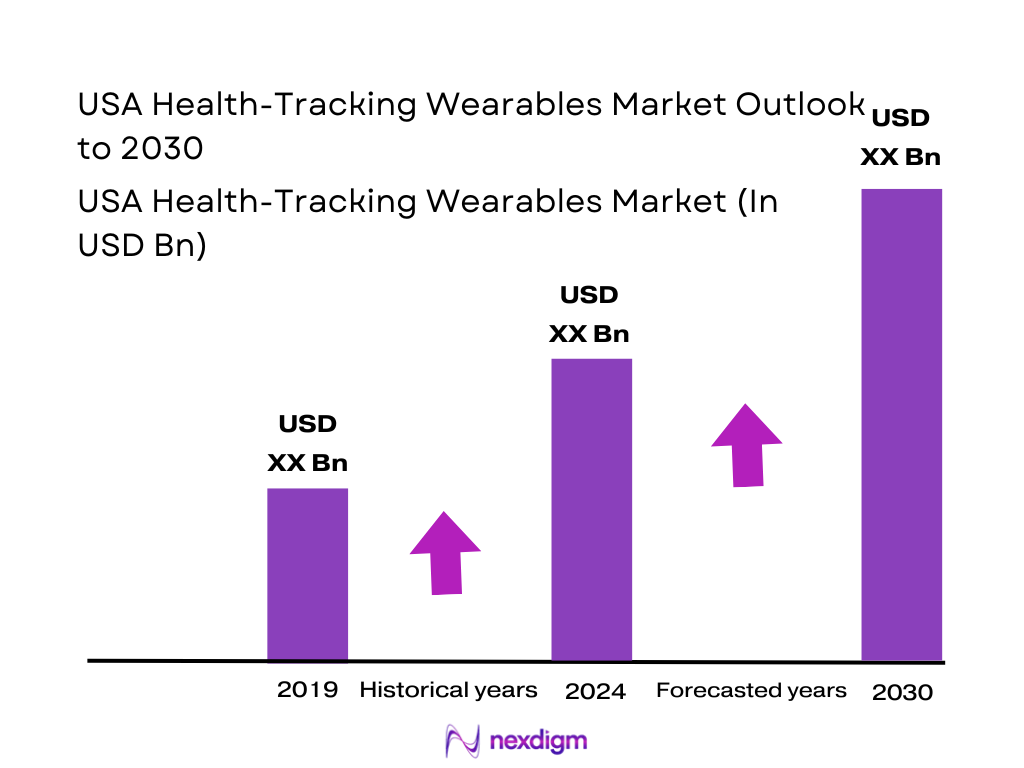
The USA health-tracking wearables market, aligned with the U.S. wearable medical devices category, is currently valued at about USD ~ billion, based on the latest published estimates, up from roughly USD ~ billion in the immediately preceding period. Nova One Advisor reports the present market value at USD ~ billion. Within the USA, health-tracking wearable demand concentrates in large metro hubs such as New York, Los Angeles and Chicago, where high technology adoption, dense fitness-conscious populations and strong retail ecosystems underpin smartwatch and fitness band uptake. Research on the U.S. smartwatch and smart wearables market highlights these metros as leading regions due to their large installed base of smartphones, affluent consumer segments and concentration of tech-savvy users who prioritise continuous health and fitness monitoring.
Market Segmentation
By Device Form Factor
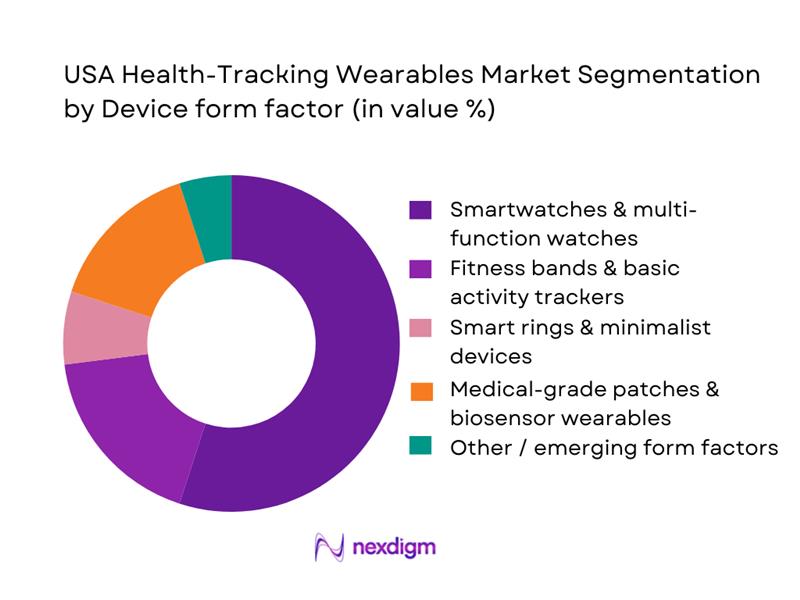
The USA health-tracking wearables market is segmented by device form factor into smartwatches & multi-function watches, fitness bands & basic activity trackers, smart rings & minimalist devices, medical-grade patches & biosensor wearables, and other emerging form factors. Recently, smartwatches & multi-function watches have a dominant market share in the USA under this segmentation, due to their central role as “wrist hubs” combining notifications, payments and rich health features. Apple Watch and Samsung Galaxy Watch anchor this segment, while Garmin and Google Pixel Watch extend to performance and Android ecosystems. FDA-cleared ECG and atrial-fibrillation notifications on mainstream watches, plus seamless integration with iOS and Android health apps, make smartwatches the default choice for consumers who want both lifestyle and health tracking in a single device.
By Primary Use Case
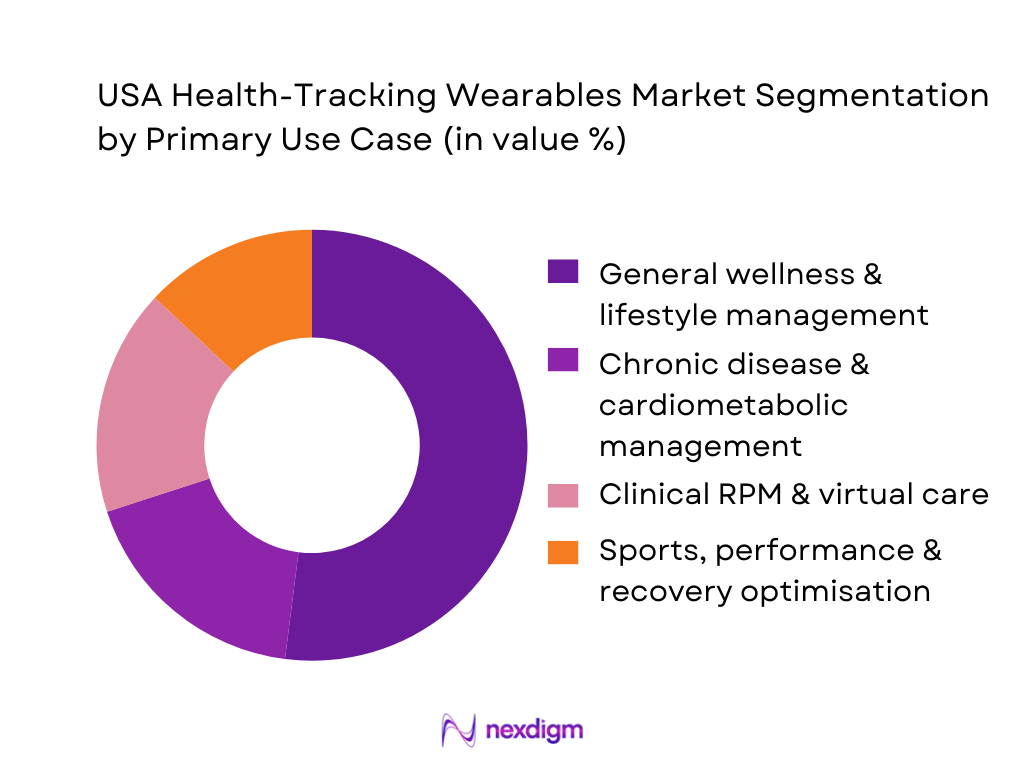
The USA health-tracking wearables market is segmented by primary use case into general wellness & lifestyle management, chronic disease & cardiometabolic management, clinical RPM & virtual care, and sports, performance & recovery optimisation. Recently, general wellness & lifestyle management has a dominant market share in the USA under this segmentation, as mass-market consumers primarily use wearables for steps, activity goals, calorie balance and sleep hygiene. The consistent growth in U.S. smartwatch adoption among adults, alongside booming sales of multipurpose devices and apps that gamify daily movement and sleep, keeps wellness the largest demand pool. Fitness-first brands like Fitbit and Garmin, combined with Apple’s deep ecosystem integration and subscription services, ensure that everyday wellness tracking remains the entry point into more advanced health and medical use cases.
Competitive Landscape
The USA health-tracking wearables market is shaped by a mix of big-tech ecosystem leaders and focused health-tracking specialists. Apple, Google (Fitbit), Samsung and Garmin dominate wrist-based platforms, while WHOOP and Oura have carved out strong positions in performance recovery and sleep-centric analytics. Medical device and biosensor players such as Abbott and Dexcom extend the market into regulated chronic-disease monitoring, increasingly integrating with consumer platforms. This concentrated yet diversifying landscape amplifies the strategic influence of a few large ecosystems while leaving room for niche innovation in form factors and conditions.
| Company | Establishment Year | Headquarters | Core Health-Tracking Device Focus (USA) | Key Biometrics Tracked | Primary Target Users / Segments | Clinical / Regulatory Positioning | Data Platform / Ecosystem Focus | Primary Go-to-Market Channels |
| Apple | 1976 | Cupertino, California, USA | ~ | ~ | ~ | ~ | ~ | ~ |
| Fitbit (Google) | 2007 | San Francisco, California, USA | ~ | ~ | ~ | ~ | ~ | ~ |
| Garmin | 1989 | Olathe, Kansas, USA | ~ | ~ | ~ | ~ | ~ | ~ |
| WHOOP | 2012 | Boston, Massachusetts, USA | ~ | ~ | ~ | ~ | ~ | ~ |
| Oura Health | 2013 | Oulu, Finland / San Francisco, USA | ~ | ~ | ~ | ~ | ~ | ~ |
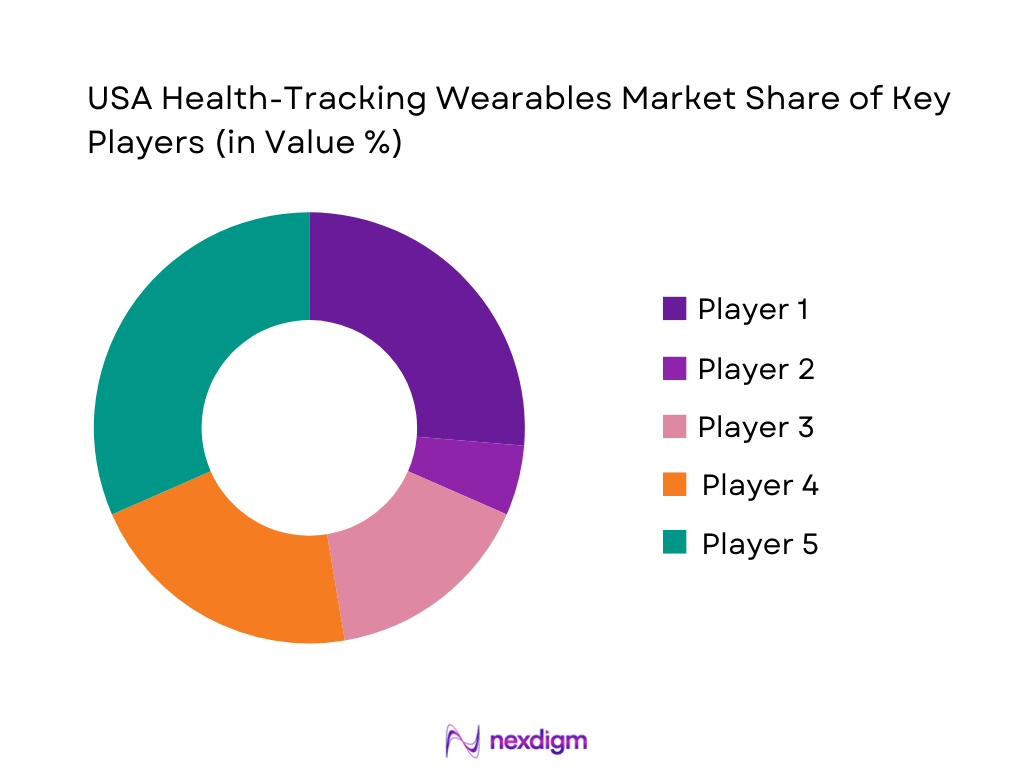
USA Health-Tracking Wearables Market Analysis
Growth Drivers
Chronic disease burden
The USA Health-Tracking Wearables Market is anchored in the country’s heavy chronic disease load. More than ~ million people in the United States are living with diabetes, the majority with type 2. Cardiovascular disease remains the leading killer, with ~ heart-disease deaths recorded in the country in a single year, accounting for nearly a quarter of all deaths. An aging population of ~ million people aged 65 and over, many managing multiple conditions, further intensifies demand for continuous monitoring and early-warning tools that wearables provide, especially for glucose, blood pressure, arrhythmias and sleep-related risk factors.
Consumer health spend
High and rising health expenditure gives the USA Health-Tracking Wearables Market a strong spending base. U.S. healthcare spending reached ~ trillion USD in 2022 and climbed to about ~ trillion USD the following year as utilization and insurance coverage increased. Per-person health spending has surged to roughly ~ USD annually, reflecting substantial outlays on chronic disease management, preventive care and outpatient services where wearables are increasingly used to generate longitudinal data. Hospital care alone absorbed around ~ trillion USD in 2023, pointing to a large cost pool that payers and providers seek to optimize using remote monitoring and early-intervention programs supported by health-tracking devices.
Challenges
Data privacy concerns
Systemic privacy risk is a structural challenge for the USA Health-Tracking Wearables Market. Analysis of federal breach notifications shows 720 reported healthcare breaches involving 500 or more individuals in 2022 and 725 such breaches in 2023, exposing over ~ million records in a single year. Small breaches are also pervasive: OCR or misdirected electronic information. High-profile cyberattacks against large health-IT intermediaries have compromised sensitive claims, diagnostic and treatment information at national scale, reinforcing consumer anxiety about continuous data streams from wearables feeding into clinical and insurance systems.
Device fatigue
Despite strong digital access, sustained engagement with health tools can lag, creating “device fatigue” risk for the USA Health-Tracking Wearables Market. A 2024 federal-supported analysis found that in 2024, a majority of individuals had more than one online medical record or patient portal, yet only about one in fourteen used an app to combine information across systems, indicating limited appetite for continuously managing multiple digital channels. National telehealth studies using Census data show utilization stabilizing rather than accelerating after the pandemic, with use levels staying above one in five visits but no longer rising sharply, suggesting that digital care has hit a behavioral plateau for parts of the population, which can similarly constrain long-term wearable engagement.
Opportunities
Underserved cohorts
Large, clinically high-risk but digitally underserved populations create substantial upside for the USA Health-Tracking Wearables Market. The U.S. Census Bureau reports ~ million people aged 65 and over in the country, a cohort expanding faster than the under-18 population and carrying high burdens of diabetes, cardiovascular disease and frailty that benefit from continuous monitoring. World Bank–linked estimates indicate more than ~ million residents living in rural areas in 2024, where access to specialist care is limited and travel burdens are high. Extending connected wearables with cellular or low-bandwidth capabilities into these aging and rural segments offers a clear pathway for volume growth, clinical impact and value-based contracting.
Condition-specific devices
Condition-focused devices represent another strong opportunity vector for the USA Health-Tracking Wearables Market. More than ~ million Americans living with diabetes face daily risks from glucose variability, neuropathy and cardiovascular complications, making them prime candidates for integrated glucose, activity and sleep-tracking solutions. Cardiovascular disease generated ~ deaths in a recent year, with ischemic and other heart conditions together representing nearly a quarter of all deaths in the country. Federal spending data show national healthcare expenditures of ~ trillion USD in 2022 climbing to roughly ~ trillion USD in 2023, much of it concentrated in chronic cardiometabolic care where continuous rhythm, blood-pressure, cardiac rehabilitation and sleep-apnea monitoring can be delivered via targeted wearable platforms rather than episodic clinic visits.
Future Outlook
Over the next six years, the USA health-tracking wearables market is expected to expand aggressively as devices shift from lifestyle companions to integral components of care pathways. The U.S. wearable medical devices market will grow from USD ~ billion in 2024 to USD ~ billion by 2030, implying a CAGR of 23.4% over 2024–2030. Chronic disease prevalence, ageing demographics, value-based care models and employer focus on productivity and well-being will underpin demand for continuous monitoring. At the same time, regulators are increasingly comfortable with software-as-a-medical-device and remote monitoring codes, allowing more of these devices to be prescribed, reimbursed and embedded within virtual care and hospital-at-home offerings.
Advances in sensor miniaturisation, non-invasive glucose and cuffless blood-pressure monitoring, and AI-driven risk scoring will progressively blur the line between consumer and clinical wearables. Smart rings, patches and sub-clinical biosensors are likely to gain share alongside smartwatches, while insurers and large employers will steer members toward device-plus-programme bundles with clear outcome guarantees. As ecosystem wars between big tech, EHR vendors and virtual-care platforms intensify, strategic control over data platforms and integration into clinician workflows may matter more than the hardware form factor itself.
Major Players
- Apple
- Fitbit
- Samsung
- Garmin
- WHOOP
- Oura Health
- Withings
- Amazon
- Abbott
- Dexcom
- Philips
- Medtronic
- BioIntelliSense
- iRhythm Technologies
Key Target Audience
- Wearable device manufacturers and consumer electronics companies
- Digital health, telehealth and remote-care platforms
- Hospitals, integrated delivery networks and physician groups
- Health insurers, managed care organisations and PBMs
- Employer benefits, corporate wellness and occupational health leaders
- Pharmaceutical and MedTech companies
- Investments and venture capitalist firms
- Government and regulatory bodies
Research Methodology
Step 1: Identification of Key Variables
The initial phase involves constructing an ecosystem map covering all major stakeholders in the USA Health-Tracking Wearables Market, including device OEMs, platforms, payers, providers, employers and regulators. Extensive desk research using syndicated reports, regulatory filings, analyst notes and digital-health databases is undertaken to identify critical variables such as device installed base, active users, subscription penetration, RPM adoption and reimbursement pathways. These variables define how value flows across the ecosystem and where revenue pools concentrate.
Step 2: Market Analysis and Construction
In this phase, we compile and analyse historical data for the USA Health-Tracking Wearables Market, combining bottom-up device and subscription counts with top-down health-spend and consumer-electronics benchmarks. We assess metrics such as smartwatch and fitness-tracker penetration, RPM enrolment levels and connected-device density per covered life to estimate revenues by form factor and use case. Cross-validation against U.S. wearable medical device market sizes reported by leading analysts ensures that segment-level estimates remain consistent with published totals and forecast intervals.
Step 3: Hypothesis Validation and Expert Consultation
Market hypotheses—such as the dominance of smartwatches, expected growth of smart rings and trajectory of clinical RPM—are validated through structured interviews and computer-assisted calls with device manufacturers, digital health platforms, clinicians, payer RPM leaders and employer benefits managers. These discussions provide practical insight into device attach rates, programme adherence, pricing models, regulatory bottlenecks and evolving partnership structures, enabling robust refinement of demand, pricing and margin assumptions across segments.
Step 4: Research Synthesis and Final Output
The final phase integrates quantitative modelling with qualitative insights to produce a cohesive view of the USA Health-Tracking Wearables Market. Direct inputs from leading OEMs and RPM vendors on product roadmaps, sales mix and churn are used to stress-test the bottom-up models. The resulting synthesis offers calibrated market size and growth projections, segmentation tables, competitive benchmarking and scenario analysis, forming the basis for strategic recommendations for investors, device manufacturers, payers, providers and other stakeholders.

- Executive Summary
- Research Methodology (Market Definitions and Scope, Market Segmentation Framework, Sources and Triangulation Approach, Market Sizing and Forecasting Methodology, Primary Research Approach, Assumptions, Limitations and Sensitivity Checks)

- Definition and Scope
- Evolution of Health-Tracking Wearables and Digital Health Integration
- Role of Health-Tracking Wearables in the US Health and Wellness Ecosystem
- Positioning Within Consumer Electronics, Digital Health and RPM Stacks
- Business Cycle: From Sensor and SoC to Device, App, Data Platform and Care Pathway

- Growth Drivers
Chronic disease burden
Consumer health spend
Digital health acceptance - Challenges
Data privacy concerns
Device fatigue
Interoperability gaps - Opportunities
Underserved cohorts
Condition-specific devices
Payer-employer coalitions - Trends
Sensor fusion
AI coaching
Multimodal biosignal analytics - Business and Revenue Model Evolution
- Ecosystem and Partnership Models
- Value Chain and Supply Chain Analysis
- Stakeholder Power Map and Influence Analysis
- Competitive Intensity and Market Structure
- Regulatory, Reimbursement and Data Governance Landscape

- By Value, 2019-2024
- By Volume, 2019-2024
- Average Revenue per User and per Active Device, 2019-2024
- By Consumer Wellness vs Clinical and Employer-Backed Use Cases, 2019-2024

- By Device Form Factor (in Value %)
Smartwatches and Multi-Function Devices
Fitness Bands and Activity Trackers
Smart Rings and Minimal-Form Devices
Health Patches and Biosensors
Smart Garments and Specialized Wearables - By Biometric and Parameter Monitored (in Value %)
Activity and Movement
Cardio-Respiratory Parameters
Metabolic and Chronic Disease Parameters
Sleep, Recovery and Circadian Metrics
Women’s Health, Fertility and Hormonal Metrics - By Primary Use Case Cluster (in Value %)
General Wellness and Lifestyle Management
Sports, Performance and Recovery Optimization
Chronic Disease Management and Cardiometabolic Risk
Clinical-Grade Remote Patient Monitoring and Virtual Care
Occupational Health, Safety and First Responder Monitoring - By End-User Segment (in Value %)
Direct-to-Consumer Users
Employers and Corporate Wellness Buyers
Health Insurers and Payers
Hospitals, Health Systems and Physician Groups
Digital Health, Telehealth and Virtual Care Platforms - By Connectivity and Data Architecture (in Value %)
Smartphone-Tethered Bluetooth Devices
Embedded Cellular and eSIM-Based Devices
Wi-Fi and Hub-Connected RPM Kits
Offline and Store-and-Forward Devices
Multi-Modal and Edge-Analytics Devices - By Sales and Distribution Channel (in Value %)
Brand Online Stores and OEM E-Commerce
General E-Commerce Marketplaces
Electronics and Specialty Retail Chains
Carrier and Pay-TV Bundling Channels
Healthcare and RPM Integrator Channels - By Region and Population Density (in Value %)
Northeast
Midwest
South
West
Urban, Suburban and Rural Adoption Pockets

- Market Share of Major Players by Value
Market Share of Major Players by Active Installed Base
Market Share of Major Players by Device Form Factor and Use Case Cluster - Cross Comparison Parameters (Clinical Validation and Regulatory Status, Breadth and Depth of Biometrics and Health Use Cases Covered, EHR, Telehealth, RPM Platform and Payer Integration Footprint, Subscription and Service Revenue Mix, Battery Life, Wearability and User Experience, Employer, Payer and Provider Partnership Network Strength, AI and Analytics Capabilities, Data Governance, Privacy Controls and Patient/Member Trust Enablers)
- SWOT Analysis of Major Players
- Pricing and Monetization Analysis
- Detailed Profiles of Major Companies
Apple
Fitbit
Garmin
Samsung
WHOOP
Oura Health
Google
Amazon
Withings
Abbott
Dexcom
Philips
Medtronic
BioIntelliSense

- Consumer Adoption Archetypes and Personas
- Engagement and Adherence Metrics
- Drivers of Device Choice and Switching
- Pain-Point and Unmet-Need Mapping
- Patient and Care Team Workflow Integration (alert routing, escalation paths, documentation burden)

- By Value, 2025-2030
- By Volume, 2025-2030
- Average Revenue per User and per Active Device, 2025-2030
- By Consumer Wellness vs Clinical and Employer-Backed Use Cases, 2025-2030


 Request a Sample
 Ask for Customization
 Get a Quote
 Enquire Now