

 Download PDF
 Download PDF
Market Overview
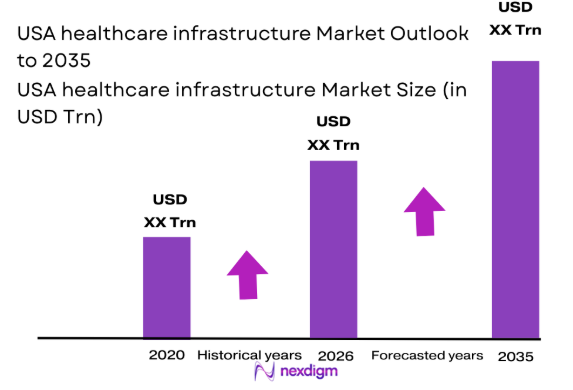
The USA healthcare infrastructure market, based on a recent historical assessment, is valued at approximately USD ~ trillion. This market is driven by significant government investments, increasing healthcare demand, and technological advancements in medical equipment and IT infrastructure. Additionally, the demand for healthcare facilities is spurred by an aging population and the growing prevalence of chronic diseases. As healthcare systems modernize to accommodate these demands, the market continues to expand.
The dominant regions within the USA healthcare infrastructure market include California, Texas, and New York. These states are home to a high concentration of healthcare facilities, advanced medical technology, and top-tier research institutions. Factors such as population density, access to healthcare funding, and well-established healthcare policies make these regions highly influential in driving infrastructure development. Their commitment to improving healthcare access and integrating new technologies further cements their dominance in the market.
Market Segmentation
By System Type
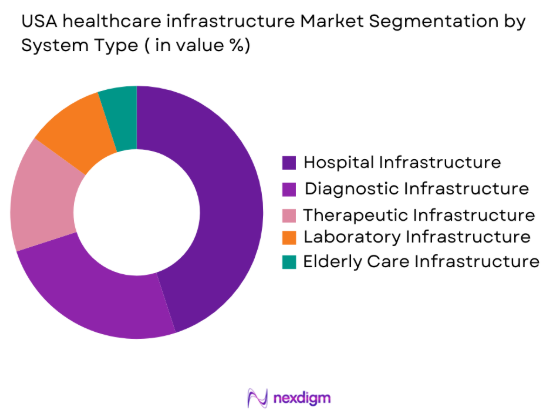
The USA healthcare infrastructure market is segmented by system type into hospital infrastructure, diagnostic infrastructure, therapeutic infrastructure, laboratory infrastructure, and elderly care infrastructure. Recently, hospital infrastructure has maintained a dominant market share due to its central role in providing acute care, trauma services, and specialized treatments. The expansion of hospital networks, especially in underserved areas, has driven this dominance.
By Platform Type
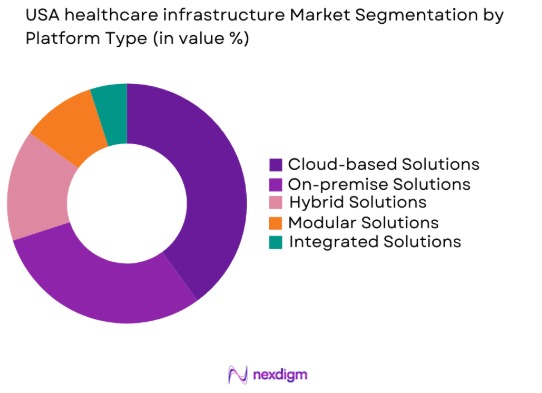
The USA healthcare infrastructure market is also segmented by platform type into on-premise solutions, cloud-based solutions, hybrid solutions, modular solutions, and integrated solutions. Recently, cloud-based solutions have gained a dominant market share due to the growing adoption of digital healthcare platforms, enabling remote monitoring and data storage. Cloud solutions offer scalability, data security, and cost-effectiveness, which appeal to both large hospitals and smaller clinics.
Competitive Landscape
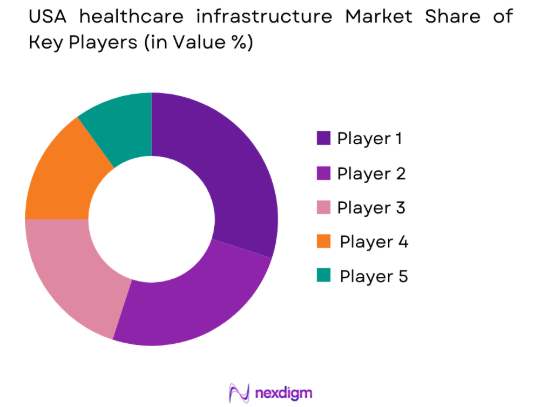
The USA healthcare infrastructure market is highly competitive, with consolidation occurring due to mergers and acquisitions among key players. Major players are focused on enhancing their portfolios by integrating advanced technologies such as AI, machine learning, and robotics into their infrastructure systems. These innovations are vital for improving the efficiency and scalability of healthcare services. Additionally, large healthcare providers are forming partnerships with tech firms to integrate digital solutions into traditional infrastructures.
| Company Name | Establishment Year | Headquarters | Technology Focus | Market Reach | Key Products | Revenue (USD) | Additional Parameter |
| HCA Healthcare | 1968 | Nashville, TN | ~ | ~ | ~ | ~ | ~ |
| Cleveland Clinic | 1921 | Cleveland, OH | ~ | ~ | ~ | ~ | ~ |
| Kaiser Permanente | 1945 | Oakland, CA | ~ | ~ | ~ | ~ | ~ |
| Ascension Health | 1999 | St. Louis, MO | ~ | ~ | ~ | ~ | ~ |
| Medtronic | 1949 | Dublin, Ireland | ~ | ~ | ~ | ~ | ~ |
USA healthcare infrastructure Market Analysis
Growth Drivers
Technological Advancements in Healthcare
The USA healthcare infrastructure market has seen significant growth due to advancements in medical devices, healthcare IT, and AI integration. As healthcare increasingly transitions to digital solutions, the adoption of cloud-based platforms, electronic health records (EHR), and robotic-assisted surgeries is accelerating. These innovations have improved diagnostic accuracy, streamlined operations, and enhanced patient care delivery, contributing to market expansion. Additionally, the integration of AI and machine learning is revolutionizing predictive healthcare, enabling providers to anticipate patient needs and optimize treatment plans. These technologies are not only improving the quality of care but also making healthcare systems more efficient and scalable, supporting the ongoing growth of the healthcare infrastructure market in the USA.
Government Healthcare Spending
Government spending on healthcare infrastructure is a key driver of market growth. The USA government has steadily increased investments in healthcare facilities, technology upgrades, and programs aimed at expanding healthcare access. This funding addresses the healthcare needs of an aging population, combats rising chronic diseases, and enhances access in rural areas. Federal programs like Medicare and Medicaid also continue to expand, fueling demand for healthcare services and further boosting market growth. These investments are crucial in supporting the modernization of healthcare infrastructure, ensuring it can meet the evolving needs of a growing and aging population while improving healthcare delivery across diverse regions.
Market Challenges
Regulatory Challenges in Healthcare
The USA healthcare infrastructure market faces considerable challenges due to stringent regulatory requirements. Compliance with federal regulations, such as HIPAA for patient data security and FDA approval for medical devices, is both time-consuming and costly. Healthcare providers must continuously adapt to evolving regulations to maintain accreditation and ensure reimbursement eligibility. These regulatory hurdles often delay the adoption of new healthcare technologies and can create barriers to market entry for smaller firms. For established players, navigating these complex regulatory environments increases operational costs and can slow down innovation. As a result, healthcare providers face the ongoing challenge of balancing regulatory compliance with the need to modernize and expand their services to meet growing patient demands.
High Infrastructure Costs
The high costs of building and maintaining healthcare infrastructure remain a significant challenge. Hospitals and healthcare centers must invest heavily in medical equipment, construction, IT infrastructure, and staffing. Despite rising demand for healthcare services, many providers, particularly in underserved areas, struggle with budget constraints that limit modernization efforts. The high capital expenditure required for new facilities and the ongoing maintenance costs create barriers to expanding healthcare services. This is especially challenging for smaller providers in rural areas, where financial limitations hinder their ability to adopt new technologies and improve service delivery. These cost pressures can delay necessary upgrades and limit access to quality healthcare, further exacerbating healthcare disparities in certain regions.
Opportunities
Expansion of Telemedicine
The rapid adoption of telemedicine has created new growth opportunities for the USA healthcare infrastructure market. Telehealth platforms allow healthcare providers to deliver consultations, diagnoses, and follow-up care to patients in remote areas, improving accessibility. This growth is supported by advancements in broadband internet, mobile technologies, and favorable regulatory policies, such as telemedicine reimbursement. As demand for telehealth services continues to rise, infrastructure providers are presented with opportunities to develop integrated solutions that incorporate telemedicine features. This includes the expansion of virtual care capabilities and the integration of digital health platforms, enabling healthcare systems to enhance service delivery and reach a broader patient base.
Investment in Preventive Healthcare
As the healthcare system shifts towards preventive care, there is a rising opportunity to invest in infrastructure that facilitates early disease detection, patient education, and wellness programs. Preventive care is increasingly seen as more cost-effective compared to treating chronic illnesses, driving both public and private investments. This shift is prompting infrastructure investments in areas such as diagnostic centers, wellness facilities, and outpatient care services. As a result, demand for solutions that support these areas is expected to grow, providing significant opportunities for companies offering related services and technologies. These investments will play a crucial role in enhancing healthcare efficiency, improving patient outcomes, and reducing long-term healthcare costs.
Future Outlook
The future outlook of the USA healthcare infrastructure market is optimistic, with continued growth driven by technological innovations, government investments, and increasing healthcare demand. Over the next few years, telemedicine and digital health solutions are expected to play an integral role in expanding access to healthcare, particularly in rural and underserved areas. The market will also see continued advancements in AI, robotics, and healthcare IT, making healthcare delivery more efficient and personalized. Additionally, increased investments in preventive healthcare infrastructure will support long-term market growth.
Major Players
- HCA Healthcare
- Cleveland Clinic
- Kaiser Permanente
- Ascension Health
- Medtronic
- Philips Healthcare
- GE Healthcare
- Cerner Corporation
- McKesson Corporation
- Siemens Healthineers
- IBM Watson Health
- Johnson & Johnson
- Stryker Corporation
- Baxter International
- UnitedHealth Group
Key Target Audience
- Investments and venture capitalist firms
- Government and regulatory bodies
- Healthcare providers (hospitals, clinics, diagnosticcenters)
- Medical device manufacturers
- Pharmaceutical companies
- Private equity firms
- Technology providers for healthcare systems
- Insurance companies
Research Methodology
Step 1: Identification of Key Variables
Identify key market factors such as technology adoption, regulatory requirements, demographic trends, and government policies.
Step 2: Market Analysis and Construction
Analyze existing data, industry reports, and historical trends to construct an accurate market model.
Step 3: Hypothesis Validation and Expert Consultation
Validate market hypotheses through consultations with industry experts, healthcare providers, and technology developers.
Step 4: Research Synthesis and Final Output
Synthesize all collected data, validate findings, and prepare the final market report, ensuring accuracy and clarity.

- Executive Summary
- Research Methodology (Definitions, Scope, Industry Assumptions, Market Sizing Approach, Primary & Secondary Research Framework, Data Collection & Verification Protocol, Analytic Models & Forecast Methodology, Limitations & Research Validity Checks)

- Market Definition and Scope
- Value Chain & Stakeholder Ecosystem
- Regulatory / Certification Landscape
- Sector Dynamics Affecting Demand
- Strategic Initiatives & Infrastructure Growth

- Growth Drivers
Government Investments in Healthcare Infrastructure
Technological Advancements in Medical Devices
Increasing Aging Population - Market Challenges
Regulatory Hurdles in Healthcare Infrastructure
High Capital Requirements for Healthcare Projects
Integration of Advanced Technologies into Legacy Systems - Market Opportunities
Expansion of Telemedicine and Digital Health Solutions
Public-Private Partnerships in Healthcare Infrastructure
Increased Focus on Preventive Healthcare Infrastructure - Trends
Increase in Smart Healthcare Solutions
Rise in AI and Automation for Healthcare Services
Growth of Healthcare Infrastructure in Rural Areas - Government Regulations
- SWOT Analysis of Key Competitors
- Porter’s Five Forces

- By Market Value, 2020-2025
- By Installed Units, 2020-2025
- By Average System Price, 2020-2025
- By System Complexity Tier, 2020-2025

- By System Type (In Value%)
Hospital Infrastructure
Diagnostic Infrastructure
Therapeutic Infrastructure
Laboratory Infrastructure
Elderly Care Infrastructure - By Platform Type (In Value%)
On-premise Solutions
Cloud-based Solutions
Hybrid Solutions
Modular Solutions
Integrated Solutions - By Fitment Type (In Value%)
Fixed Installations
Mobile Installations
Modular Installations
Hybrid Installations
Integrated Installations - By End User Segment (In Value%)
Hospitals
Diagnostic Centers
Elderly Care Facilities
Specialized Clinics
Rehabilitation Centers - By Procurement Channel (In Value%)
Direct Procurement
Government Tenders
Private Sector Procurement
Online Platforms
Third-party Distributors

- Market Share Analysis
- Cross Comparison Parameters (System Type, Platform Type, Procurement Channel, End User Segment, Fitment Type, Geographic Region, Technology Integration, Market Share, Capital Investment, Regulatory Compliance)
- SWOT Analysis of Key Competitors
- Pricing & Procurement Analysis
- Key Players
HCA Healthcare
Cleveland Clinic
Kaiser Permanente
Ascension Health
Mayo Clinic
McKesson Corporation
Philips Healthcare
GE Healthcare
Siemens Healthineers
Cerner Corporation
Medtronic
Johnson & Johnson
Roche Diagnostics
Stryker Corporation
Baxter International

- Demand from Aging Population for Specialized Facilities
- Increased Investment by Private Healthcare Providers
- Government’s Role in Hospital Infrastructure Development
- Expansion of Diagnostic Infrastructure to Meet Rising Healthcare Demands

- Forecast Market Value, 2026-2035
- Forecast Installed Units, 2026-2035
- Price Forecast by System Tier, 2026-2035
- Future Demand by Platform, 2026-2035


 Request a Sample
 Ask for Customization
 Get a Quote
 Enquire Now