
 Download PDF
Market Overview
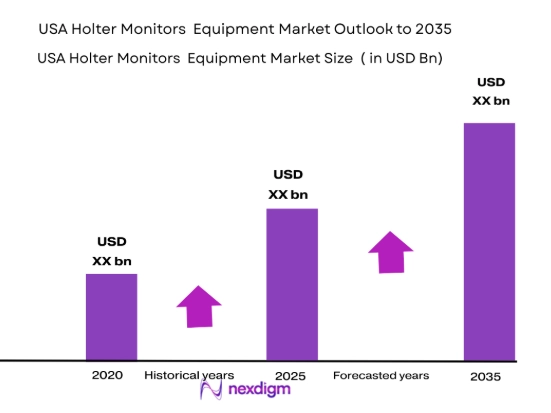
The USA Holter Monitors Equipment market, based on a recent historical assessment, is expected to reach USD ~ billion in 2024, driven by the growing prevalence of cardiovascular diseases and the increasing demand for efficient, portable monitoring systems. The market has been evolving with advancements in wearable technology and remote monitoring solutions, which has spurred the demand for Holter monitors, particularly in outpatient and home healthcare settings. The push towards more affordable and patient-centric healthcare solutions, along with favorable reimbursement policies, has further contributed to this growth trajectory.
In terms of geographical dominance, major cities and countries in the USA, including New York, California, and Texas, are leading the market due to the concentration of hospitals, diagnostic centers, and advanced healthcare infrastructure. These regions benefit from higher healthcare expenditure, access to cutting-edge medical technologies, and a robust healthcare ecosystem. Additionally, state-of-the-art medical research facilities and an increase in healthcare awareness are driving the growth of the market in these areas, making them key contributors to the national market share for Holter monitors.
Market Segmentation
By Product Type:
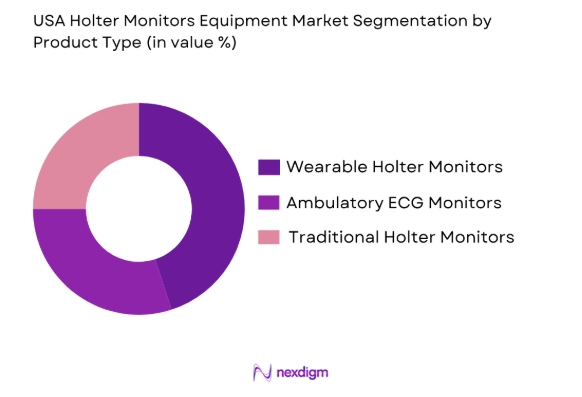
The USA Holter Monitors Equipment market is segmented by product type into wearable Holter monitors, ambulatory ECG monitors, and traditional Holter monitors. Recently, wearable Holter monitors have captured the dominant market share due to factors such as rising demand for convenience, portability, and the integration of real-time data collection with mobile platforms. These monitors allow patients to be actively monitored outside hospital settings, contributing to the increasing shift towards home-based healthcare and telemedicine solutions. Furthermore, the integration of advanced features such as mobile app compatibility and data cloud storage has enhanced the popularity of wearable devices.
By End-User Segment:
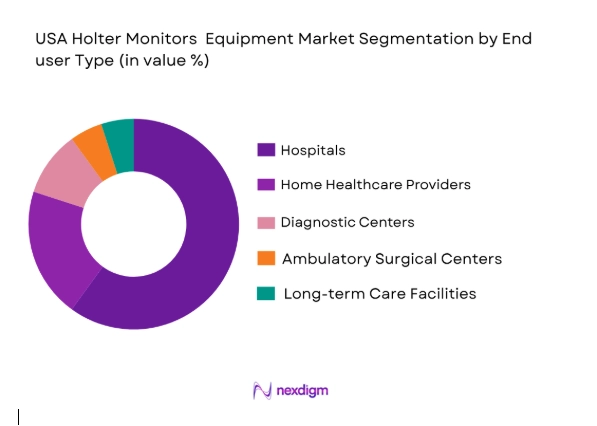
The USA Holter Monitors Equipment market is segmented by end-user segment into hospitals, home healthcare providers, diagnostic centers, ambulatory surgical centers, and long-term care facilities. The hospital segment dominates the market due to the high demand for Holter monitors in both emergency and routine cardiovascular diagnostics. Hospitals provide a broad range of healthcare services, and Holter monitoring remains essential for identifying arrhythmias, detecting heart-related abnormalities, and managing cardiac patients, particularly in intensive care units. The integration of Holter monitoring systems in hospitals allows healthcare providers to offer more personalized and efficient care, which further enhances the market’s dominance in this segment.
Competitive Landscape
The USA Holter Monitors Equipment market is highly competitive, with both established medical device manufacturers and newer companies vying for market share. Major players focus on product innovation, improved accuracy, and integration with digital platforms to maintain their competitive edge. Industry consolidation is evident, as larger companies continue to acquire smaller, innovative startups to expand their product portfolios and geographic reach. These companies are also leveraging strategic partnerships and acquisitions to drive technological advancements and cater to the growing demand for remote monitoring solutions. Furthermore, players are working towards gaining regulatory approvals to ensure compliance with strict health regulations, which also drives competition in the market.
| Company Name | Establishment Year | Headquarters | Technology Focus | Market Reach | Key Products | Revenue (USD) |
| GE Healthcare | 1892 | Chicago, IL, USA | ~ | ~ | ~ | ~ |
| Philips Healthcare | 1891 | Amsterdam, Netherlands | ~ | ~ | ~ | ~ |
| Medtronic | 1949 | Dublin, Ireland | ~ | ~ | ~ | ~ |
| Nihon Kohden | 1951 | Tokyo, Japan | ~ | ~ | ~ | ~ |
| Abbott Laboratories | 1888 | Abbott Park, IL, USA | ~ | ~ | ~ | ~ |
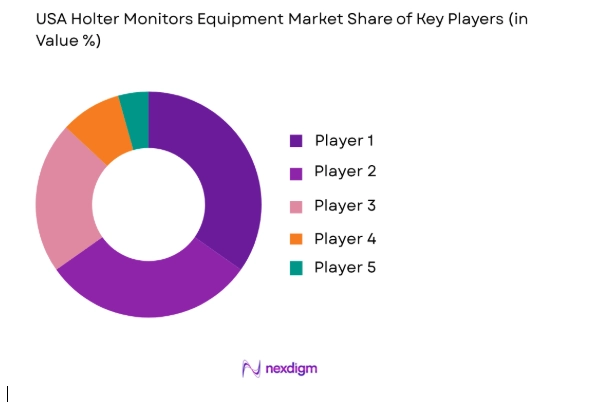
USA Holter Monitors Equipment Market Analysis
Growth Drivers
Technological Advancements in Cardiac Monitoring:
Technological advancements in Holter monitoring systems have been a significant driver for market growth. Innovations such as wireless connectivity, cloud-based data storage, and integration with mobile applications have revolutionized how patients are monitored remotely. These innovations allow for more accurate and real-time data collection, improving both diagnosis and patient outcomes. The increased adoption of remote patient monitoring (RPM) solutions, facilitated by the advancements in wireless technology, is making Holter monitoring devices more accessible to patients, enabling continuous monitoring from the comfort of their homes. Additionally, the integration of AI and machine learning algorithms to interpret ECG signals is further enhancing the diagnostic accuracy, reducing human error, and allowing for faster decision-making. These technological advancements are meeting the growing demand for efficient, cost-effective solutions to monitor patients with cardiovascular conditions. As more hospitals, clinics, and home healthcare providers adopt these technologies, the growth of the Holter monitors market continues to accelerate.
Increased Prevalence of Cardiovascular Diseases:
The rise in the prevalence of cardiovascular diseases (CVD) is a crucial growth driver for the Holter monitors market. As CVDs become more common due to factors such as aging populations, sedentary lifestyles, poor dietary habits, and increasing stress levels, there is a growing need for continuous monitoring of heart health. Holter monitors play a critical role in diagnosing arrhythmias, detecting heart abnormalities, and assessing heart function in patients with suspected cardiovascular conditions. Additionally, with the increasing burden of heart disease, healthcare systems worldwide are focusing on early diagnosis and preventive care. The ability of Holter monitors to provide real-time, continuous ECG data over a prolonged period is a key feature that meets the needs of clinicians and patients alike. Consequently, the rising incidence of heart-related issues worldwide is directly contributing to the expansion of the Holter monitors market, as the demand for these diagnostic tools continues to grow.
Market Challenges
High Cost of Advanced Holter Monitors:
One of the major challenges facing the Holter monitors market is the high cost of advanced monitoring devices. While these devices offer advanced features such as wireless connectivity, real-time data transmission, and integration with cloud platforms, their price point can be prohibitive for smaller clinics, home care providers, and patients in low-income regions. The high initial investment required to purchase and implement these devices can deter healthcare facilities from adopting the latest technology. Additionally, the cost of maintenance, calibration, and software updates for these devices adds to the overall expenditure, further limiting their accessibility to a broader segment of the market. This challenge is particularly significant in developing countries where healthcare budgets are constrained, and hospitals may prioritize basic healthcare infrastructure over more expensive diagnostic tools. As a result, the high cost of Holter monitors may hinder widespread adoption, limiting market growth in certain regions and sectors.
Regulatory Hurdles and Compliance Issues:
The Holter monitors market is heavily regulated, with manufacturers required to comply with stringent regulatory standards before their products can be sold in different regions. These regulations are designed to ensure patient safety, product quality, and efficacy. However, the complex and time-consuming regulatory approval process can delay product launches and increase costs for manufacturers. In some regions, regulatory standards vary, requiring companies to obtain separate approvals for each market, further complicating the process. Additionally, ensuring compliance with these regulatory requirements demands significant investment in research, development, and quality control. Smaller manufacturers may struggle to meet these rigorous standards, potentially limiting competition and stalling innovation. The regulatory burden is particularly challenging for new entrants to the market, who must navigate these requirements while competing with established players who already have the resources to manage compliance. As a result, the regulatory hurdles present a significant challenge to the growth of the Holter monitors market.
Opportunities
Growth of Home Healthcare:
The increasing demand for home healthcare services presents a significant opportunity for the Holter monitors market. With the rising number of elderly individuals and the growing preference for home-based healthcare, there is a greater need for remote monitoring solutions that allow patients to manage their health outside of hospital settings. Holter monitors, especially wearable and mobile-integrated versions, provide a perfect solution for continuous heart health monitoring in the comfort of one’s home. These devices enable patients to track their heart rate, detect arrhythmias, and monitor other vital signs in real time without frequent hospital visits. As healthcare providers shift towards more patient-centric models, the demand for devices like Holter monitors is expected to increase. In addition, the growing popularity of telemedicine and virtual consultations is boosting the market for remote patient monitoring technologies, creating a favorable environment for the adoption of Holter monitors in home healthcare settings.
Emerging Markets Expansion:
Emerging markets, particularly in Asia-Pacific and Latin America, represent a significant growth opportunity for the Holter monitors market. With improving healthcare infrastructure, rising disposable incomes, and an increasing awareness of heart diseases, demand for diagnostic tools such as Holter monitors is expected to surge in these regions. Governments in emerging markets are investing heavily in healthcare systems to address the growing burden of chronic diseases, and there is a strong push towards improving access to healthcare in rural and underserved areas. As a result, there is a growing need for affordable, portable monitoring devices that can be used in these regions. Holter monitors, with their ability to provide continuous, non-invasive heart health monitoring, are well-positioned to meet this demand. Manufacturers who can tailor their products to suit the needs of emerging markets, including offering more affordable versions of Holter monitors, will be well-placed to capture a significant share of these expanding markets.
Future Outlook
The future outlook for the Holter monitors market is promising, with a continued focus on technological advancements and increased adoption of remote healthcare solutions. The market is expected to benefit from innovations in wearable devices, cloud-based data storage, and AI integration for improved diagnostics. Regulatory support and an aging population will drive sustained demand, particularly in North America and Europe. However, challenges such as high costs and regulatory complexities may slow growth in certain regions. Overall, the market is poised for steady expansion as demand for continuous heart monitoring continues to rise.
Major Players
- GE Healthcare
- Philips Healthcare
- Medtronic
- Nihon Kohden
- Abbott Laboratories
- Spacelabs Healthcare
- Mindray
- Biotronik
- Welch Allyn
- Hill-Rom
- Zoll Medical Corporation
- Fujifilm Holdings Corporation
- Siemens Healthineers
- Honeywell Life Care Solutions
- Canon Medical Systems
Key Target Audience
- Investments and venture capitalist firms
- Government and regulatory bodies
- Healthcare providers and hospitals
- Medical device manufacturers
- Cardiology clinics and research institutions
- Diagnostic centers and laboratories
- Health insurance companies
- Elderly care facilities
Research Methodology
Step 1: Identification of Key Variables
The research starts by identifying key variables such as market size, growth drivers, and segmentation factors that will impact the overall market. Data collection methods include both primary and secondary research to capture comprehensive market dynamics.
Step 2: Market Analysis and Construction
Data from various sources, including industry reports, company financials, and expert insights, are analyzed and synthesized to develop market models that accurately reflect current and future trends.
Step 3: Hypothesis Validation and Expert Consultation
Hypotheses regarding market trends, growth drivers, and forecasts are validated through expert consultations, including interviews with industry leaders, manufacturers, and analysts.
Step 4: Research Synthesis and Final Output
The final step synthesizes all collected data and expert insights to generate a clear, comprehensive market report, which serves as the foundation for strategic decision-making for stakeholders.

- Executive Summary
- Research Methodology (Definitions, Scope, Industry Assumptions, Market Sizing Approach, Primary & Secondary Research Framework, Data Collection & Verification Protocol, Analytic Models & Forecast Methodology, Limitations & Research Validity Checks)

- Market Definition and Scope
- Value Chain & Stakeholder Ecosystem
- Regulatory / Certification Landscape
- Sector Dynamics Affecting Demand
- Strategic Initiatives & Infrastructure Growth

- Growth Drivers
Increasing Prevalence of Cardiovascular Diseases
Technological Advancements in Monitoring Systems
Growing Demand for Remote Patient Monitoring Solutions - Market Challenges
High Costs of Advanced Holter Monitors
Regulatory Hurdles for New Technologies
Shortage of Skilled Technicians for Installation and Maintenance - Market Opportunities
Rising Adoption of Wearable Devices
Growing Aging Population and Related Healthcare Needs
Expansion in Emerging Markets - Trends
Shift Towards Wireless and Portable Monitoring Devices
Increased Integration with Cloud and AI Technologies
Surge in Home-Based Healthcare Solution - Government Regulations
- SWOT Analysis of Key Competitors
- Porter’s Five Forces

- By Market Value, 2020-2025
- By Installed Units, 2020-2025
- By Average System Price, 2020-2025
- By System Complexity Tier, 2020-2025

- By System Type (In Value%)
Cardiac Event Monitors
Ambulatory Electrocardiograms (ECG)
Wireless Holter Monitors
Wearable ECG Monitors
Multi-Parameter Patient Monitoring Systems - By Platform Type (In Value%)
Cloud-Based Systems
Portable Monitors
Hospital-Based Systems
Smartphone-Integrated Platforms
Standalone ECG Monitors - By Fitment Type (In Value%)
Portable Holter Monitors
Wearable Holter Monitors
Mobile Device-Connected Monitors
Traditional System Monitors
Integrated Patient Monitoring Systems - By EndUser Segment (In Value%)
Hospitals and Clinics
Home Care Providers
Ambulatory Surgical Centers
Diagnostic Laboratories
Long-Term Care Facilities - By Procurement Channel (In Value%)
Direct Sales
Online Retailers
Third-Party Distributors
Medical Device Distributors
Healthcare Group Purchasing Organizations

- Market Share Analysis
- CrossComparison Parameters (Price, Technology Integration, Product Availability, Regulatory Compliance, Market Reach)
- SWOT Analysis of Key Competitors
- Pricing & Procurement Analysis
- Porter’s Five Forces
- Key Players
GE Healthcare
Philips Healthcare
Medtronic
Nihon Kohden Corporation
Abbott Laboratories
Schiller AG
Bard Medical
Hill-Rom
Spacelabs Healthcare
Mindray
Biotronik
Xorcom
Wellness Instruments
Teleflex
Fukuda Denshi
Stryker Corporation

- Demand from Hospitals and Healthcare Providers
- Growth of Home Healthcare Monitoring
- Surge in Demand for Mobile and Wireless Solutions
- Impact of Insurance Policies on Adoption Rates

- Forecast Market Value, 2026-2035
- Forecast Installed Units, 2026-2035
- Price Forecast by System Tier, 2026-2035
- Future Demand by Platform, 2026-2035


 Request a Sample
 Ask for Customization
 Get a Quote
 Enquire Now