
 Download PDF
Market Overview
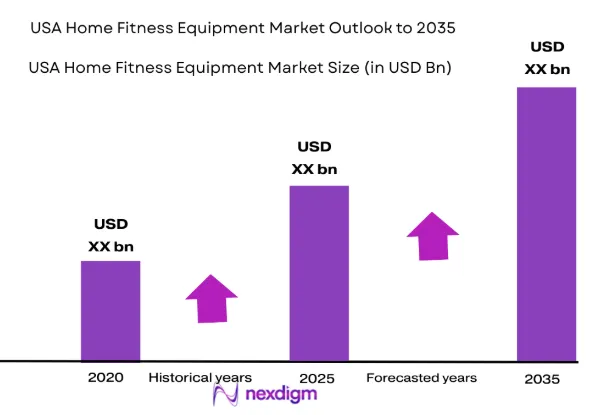
The USA Home Fitness Equipment market has witnessed significant growth due to increasing health awareness and the demand for convenient, in-home workout solutions. Valued at approximately USD ~ billion in 2025, the market is driven by technological advancements in fitness devices, including connected fitness solutions and smart equipment. The growing trend of fitness-centric lifestyles and the increasing adoption of remote work are further propelling market growth. These factors combined have created a strong demand for high-quality, accessible fitness equipment for home use.
Several key cities and regions dominate the USA Home Fitness Equipment market, driven by high population density, strong disposable income, and fitness-focused lifestyles. Cities such as Los Angeles, New York, and Miami lead the market due to their cultural inclination toward health and wellness. These regions benefit from a high concentration of fitness enthusiasts, along with the presence of major fitness equipment retailers and online marketplaces that cater to these demands. Additionally, metropolitan areas with higher disposable incomes are witnessing greater investment in home fitness solutions.
Market Segmentation
By Product Type
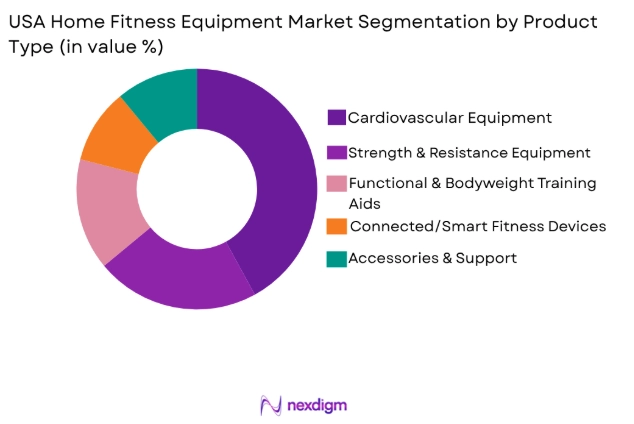
The USA Home Fitness Equipment market is segmented into various product categories, including cardiovascular equipment, strength & resistance training, functional &Bodyweight training aids, connected/smart fitness devices, and accessories. Among these, cardiovascular equipment holds the dominant market share in 2024. This segment includes products like treadmills, ellipticals, and stationary bikes, which have long been the backbone of home fitness. The demand for these products is driven by their widespread popularity and proven effectiveness in cardiovascular health and weight management. Treadmills, for instance, continue to see high sales due to their versatility and ease of use, making them a favorite for home gym setups.
By Distribution Channel Type
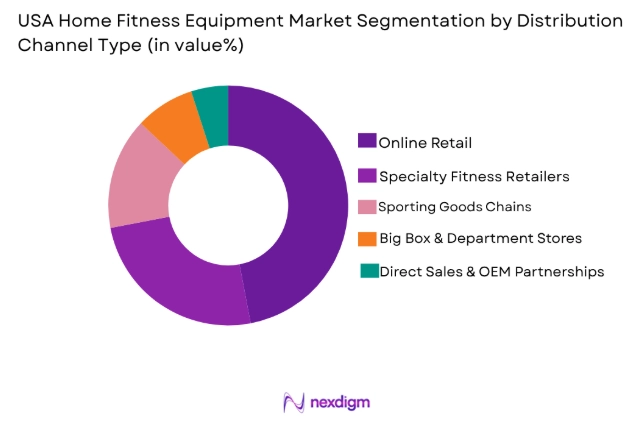
The USA Home Fitness Equipment market is also segmented by distribution channel, with the primary categories being online retail, specialty fitness retailers, sporting goods chains, big box stores, and direct sales. Online retail has emerged as the leading segment in 2024, capturing a significant share of the market. The rise of e-commerce giants like Amazon and dedicated fitness equipment platforms has made it easier for consumers to purchase equipment from the comfort of their homes. Furthermore, the ability to review customer feedback and compare prices has enhanced the appeal of online purchasing. This shift toward digital sales channels is further supported by the growing demand for home fitness solutions that can be easily ordered and delivered.
Competitive Landscape
The USA Home Fitness Equipment market is characterized by the presence of major players such as Peloton, Nautilus, Life Fitness, NordicTrack, and Bowflex. These companies dominate the market due to their strong brand recognition, broad product portfolios, and significant investments in technology. Peloton, for example, has capitalized on the growing trend of connected fitness by integrating live streaming and on-demand classes with its equipment, making it a leader in the premium fitness equipment market. Similarly, companies like Nautilus and NordicTrack continue to expand their product offerings to include smart, connected devices to meet the growing consumer demand for interactive fitness experiences.
| Company | Establishment Year | Headquarters | Product Portfolio | Technology Integration | Brand Loyalty | Distribution Channels | Geographic Reach |
| Peloton | 2012 | New York, USA | ~ | ~ | ~ | ~ | ~ |
| Nautilus | 1986 | Vancouver, USA | ~ | ~ | ~ | ~ | ~ |
| Life Fitness | 1968 | Rosemont, USA | ~ | ~ | ~ | ~ | ~ |
| NordicTrack (ICON) | 1975 | Logan, USA | ~ | ~ | ~ | ~ | ~ |
| Bowflex | 1986 | Vancouver, USA | ~ | ~ | ~ | ~ | ~ |
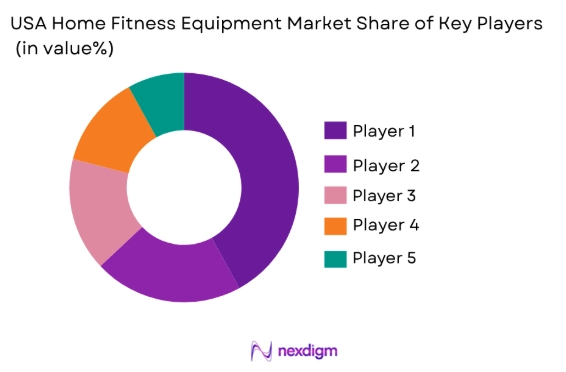
USA Home Fitness Equipment Market Analysis
Growth Drivers
Rising Health Awareness & Preventive Fitness
The rising health consciousness among U.S. consumers has become a significant driver of the home fitness equipment market. According to the Centers for Disease Control and Prevention (CDC), 53% of American adults aged 18 and older met the aerobic activity guideline in 2022. The increasing focus on preventive health and the avoidance of chronic diseases, such as obesity and heart disease, is a major catalyst. This societal shift toward healthier lifestyles is pushing individuals to invest in home fitness equipment as part of a broader wellness initiative. Additionally, government policies aimed at increasing physical activity, such as the “Healthy People 2030” initiative, which targets improving physical activity levels, further supports this growth in demand for fitness products.
Connected Fitness Adoption & Digital Integration
The demand for connected fitness equipment has seen a surge as consumers increasingly seek personalized, on-demand workout experiences. In 2023, over 25% of U.S. households used a fitness app or connected fitness equipment, driven by the rise of virtual workouts. Furthermore, data from the International Trade Administration reveals that the global fitness app market alone was valued at USD 4.4 billion in 2022 and is projected to continue growing. The integration of IoT-enabled devices allows users to track progress, participate in live classes, and monitor health metrics, which aligns with the growing trend of home-based digital fitness solutions. The U.S. government’s 2023 “Physical Activity Guidelines” also underscore the growing reliance on technology to facilitate at-home fitness routines, further fueling this adoption.
Source: International Trade Administration
Market Challenges
Price Sensitivity for Premium Products
Price sensitivity remains a key challenge in the U.S. home fitness equipment market, especially among the middle-income segment. A report by the U.S. Bureau of Economic Analysis (BEA) indicates that U.S. disposable personal income growth slowed to 2.3% in 2023, making high-end fitness equipment less accessible to many consumers. The market for premium equipment, such as high-end smart treadmills or connected bikes, is often limited by high upfront costs, which can deter potential buyers. The rise in living expenses and inflation rates also forces consumers to prioritize essential goods over luxury fitness products. As of 2024, inflation in the U.S. stands at approximately 3.7%, directly impacting consumer purchasing power.
Source: U.S. Bureau of Economic Analysis
Space & Housing Constraints
Space constraints have been a persistent challenge for the widespread adoption of large fitness equipment, especially in densely populated urban areas. The U.S. Census Bureau reports that nearly 80% of Americans live in cities or suburban areas, where apartment living and smaller homes are more common. Many consumers face limitations in dedicating significant space to large gym equipment, which hinders sales of bulky items like treadmills and ellipticals. The median size of newly built single-family homes in 2023 was around 2,300 square feet, and the average apartment size is approximately 900 square feet. With limited space in many homes, consumers are opting for more compact and multifunctional fitness equipment to fit into their living areas.
Opportunities
B2C Connected Subscriptions & Hybrid Fitness Models
As consumers increasingly demand flexible fitness solutions, there is significant potential in B2C connected subscriptions and hybrid fitness models. According to Statista, in 2023, the digital fitness market saw over 40 million U.S. subscribers, indicating a clear demand for remote and on-demand fitness services. Companies offering hybrid models that combine physical equipment with digital platforms, like Peloton and Tonal, are seeing tremendous success. These models allow consumers to access personalized workout programs and classes from home, combining the benefits of professional gym equipment with the convenience of home use. Furthermore, the ongoing trend towards remote work and increased time spent at home boosts the long-term appeal of such connected fitness solutions.
Aftermarket Services & Refurbishment
The opportunity for aftermarket services and equipment refurbishment is gaining traction in the home fitness equipment market. In 2022, 13.5 million used fitness equipment units were sold in the U.S., according to a report by the U.S. Environmental Protection Agency (EPA). As the adoption of fitness equipment continues to rise, consumers are looking for cost-effective solutions for maintaining or upgrading their equipment. Companies that offer repair services, equipment refurbishment, and resale of pre-owned items are capturing this emerging demand. The U.S. recycling and refurbishment market, valued at USD 7.2 billion in 2023, shows strong growth potential for businesses focusing on this segment.
Future Outlook
Over the next 5 years, the USA Home Fitness Equipment market is expected to continue its growth trajectory, supported by technological innovations and an increasing shift towards healthier lifestyles. The market is anticipated to be fueled by the expanding adoption of smart and connected fitness equipment, with consumers increasingly seeking equipment that integrates with fitness apps and provides personalized workout experiences. The rise in home gym setups driven by remote work and the ongoing focus on wellness will also contribute to market growth, ensuring a continued upward trend in demand for fitness equipment across the United States.
Major Players
- Peloton Interactive, Inc.
- Nautilus, Inc.
- Life Fitness LLC
- NordicTrack (ICON Health & Fitness)
- Bowflex (Brand/Successor)
- Precor, Inc.
- Technogym USA
- ProForm (ICON)
- Schwinn Fitness
- Rogue Fitness
- Tonal Systems
- Echelon Fitness
- TRUE Fitness Technology
- Mirror (Lululemon)
- Hydrow
Key Target Audience
- Fitness Equipment Manufacturers
- Fitness Equipment Retailers
- Investments and Venture Capitalist Firms
- Health & Wellness Program Providers
- Government and Regulatory Bodies
- Corporate Wellness Program Directors
- Home Fitness Enthusiasts and Early Adopters
- Fitness Tech Companies
Research Methodology
Step 1: Identification of Key Variables
This step involves identifying the major stakeholders in the USA Home Fitness Equipment market through secondary research and evaluating key variables such as technological adoption rates, equipment sales, and consumer preferences. This helps in defining the scope and structure of the market report.
Step 2: Market Analysis and Construction
Historical data analysis is conducted to understand trends in equipment sales, consumer demographics, and channel distribution. This phase includes a comprehensive evaluation of market penetration and consumer behavior to ensure the accuracy of the data.
Step 3: Hypothesis Validation and Expert Consultation
We conduct interviews with industry experts, including fitness equipment manufacturers and retail distributors, to validate the assumptions and hypotheses formed in earlier stages. This step provides operational insights that refine our market model.
Step 4: Research Synthesis and Final Output
The final phase combines the results from expert consultations, secondary research, and quantitative analysis. The output is a synthesized report with actionable insights, covering market forecasts, key trends, and competitive landscape analysis.

- Executive Summary
- Research Methodology (Market Definitions and Assumptions, Abbreviations, Primary & Secondary Sources, Data Triangulation, Forecasting Models, Market Sizing Basis, Product Classification Logic, Channel & End‑User Definition, Connected vs Conventional Equipment Definitions)

- Market Definition and Scope
- Industry Genesis & Evolution
- Installation & Usage Trends
- Home vs Commercial Boundary Clarification
- Value Chain & Ecosystem Mapping
- Sector Drivers, Restraints, and Enablers

- Growth Drivers
Rising Health Awareness & Preventive Fitness
Connected Fitness Adoption & Digital Integration
- Market Challenges
Price Sensitivity for Premium Products
Space & Housing Constraints
- Opportunities
B2C Connected Subscriptions & Hybrid Fitness Models
Aftermarket Services & Refurbishment - SWOT Analysis
- Stakeholder Ecosystem
- Porter’s Five Forces
- Competition Ecosystem

- By Market Value, 2020-2025
- By Market Volume, 2020-2025
- By Average Selling Price Dynamics, 2020-2025
- By Penetration & Adoption Rates, 2020-2025
- By Replacement Frequency & Durability Insights, 2020-2025

- By Product Category (in Value %)
Cardiovascular Equipment
Strength & Resistance Equipment
Functional & Bodyweight Training Aids
Connected / Smart Fitness Devices
Accessories & Support - By Technology Adoption Level (in Value %)
Conventional Mechanical Equipment
Bluetooth‑Enabled Fitness
Wi‑Fi/Connected Platforms
Subscription & Content Integrated Systems - By Price Category (in Value %)
Mass / Economy Tier
Mid‑Range Products
Premium Tier Equipment - By Distribution Channel (in Value %)
Online Retail
Specialty Fitness Retailers
Sporting Goods Chains
Big Box & Departmental Stores
Direct Sales & OEM Partnerships - By End User (in Value %)
Individual Households
Small Office / Home Office Users
Multi‑Family Residential Installations
Health & Wellness Concierge Programs - By Region / Sub‑Market (in Value %)
East Coast
West Coast
South
Midwest

- Market Share of Major Players on the Basis of Revenue / Units
- Cross‑Comparison Parameters(Company Overview, Product Portfolio Breadth, Connected Technology Integration, Innovation & R&D Investment, Geographic Penetration, Price Positioning, Channel Strength & E‑Commerce Footprint, After‑Sales Service & Warranty Terms, Competitive Intensity & Tier Structure, Pricing Architecture by SKU and Segment, Strategic Alliances & Platform Partnerships)
- SWOT Analysis of Major Players
- Pricing Analysis by SKUs for Major Players in the USA Home Fitness Equipment Market
- Detailed Profiles Key Players
Peloton Interactive, Inc.
Nautilus, Inc.
Life Fitness LLC
NordicTrack (ICON Health & Fitness)
Bowflex (Brand / Successor)
Precor, Inc.
Technogym USA
ProForm (ICON)
Schwinn Fitness
Rogue Fitness
Tonal Systems
Echelon Fitness
TRUE Fitness Technology
Mirror (Lululemon)
Hydrow
Additional OEMs & Emerging Innovators

- Purchasing Patterns (User Budgets, Replacement Cycles)
- Decision Drivers & Brand Preferences
- Satisfaction & Pain Point Mapping
- Fitness Engagement Patterns (Digital vs Physical)

- Market Value, 2026-2035
- Market Volume, 2026-2035
- Average Selling Price Dynamics, 2026-2035
- Penetration & Adoption Rates, 2026-2035
- Replacement Frequency & Durability Insights, 2026-2035


 Request a Sample
 Ask for Customization
 Get a Quote
 Enquire Now