
 Download PDF
Market Overview
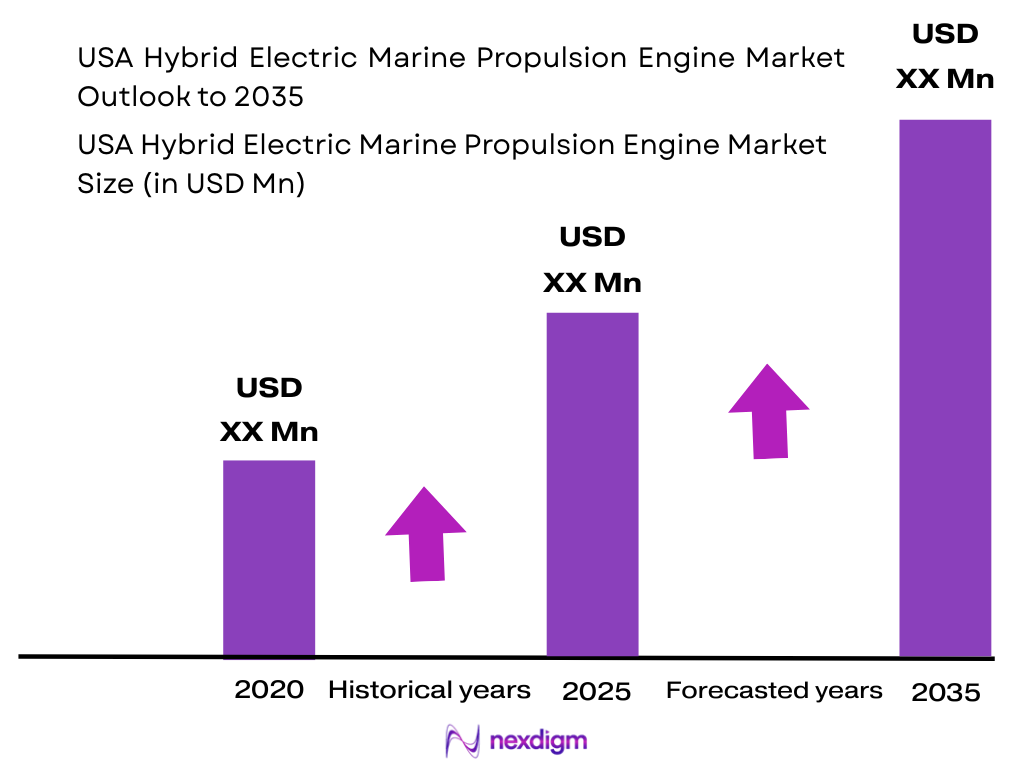
Market Size Analysis and Growth Dynamics: The USA Hybrid Electric Marine Propulsion Engine Market is valued at approximately USD ~ billion in 2024, compared with USD ~ billion in 2023, based on industry shipment analysis, marine propulsion system deployment data, OEM disclosures, and secondary databases including maritime industry associations and energy transition reports. The market size is primarily driven by increasing adoption of low-emission propulsion systems, rising marine fuel costs, stricter vessel emission regulations, and growing investments in sustainable maritime transportation infrastructure.
Dominant Cities and Regional Market Concentration: The USA Hybrid Electric Marine Propulsion Engine Market is concentrated across major coastal and maritime hubs including Seattle, Washington; San Diego, California; Houston, Texas; Miami, Florida; Boston, Massachusetts; and New Orleans, Louisiana. These regions demonstrate strong adoption due to their established marine manufacturing ecosystems, commercial vessel operations, naval activities, port modernization programs, and increasing deployment of hybrid propulsion technologies in ferries, workboats, offshore vessels, and recreational marine applications.
Market Segmentation
By Vessel Type
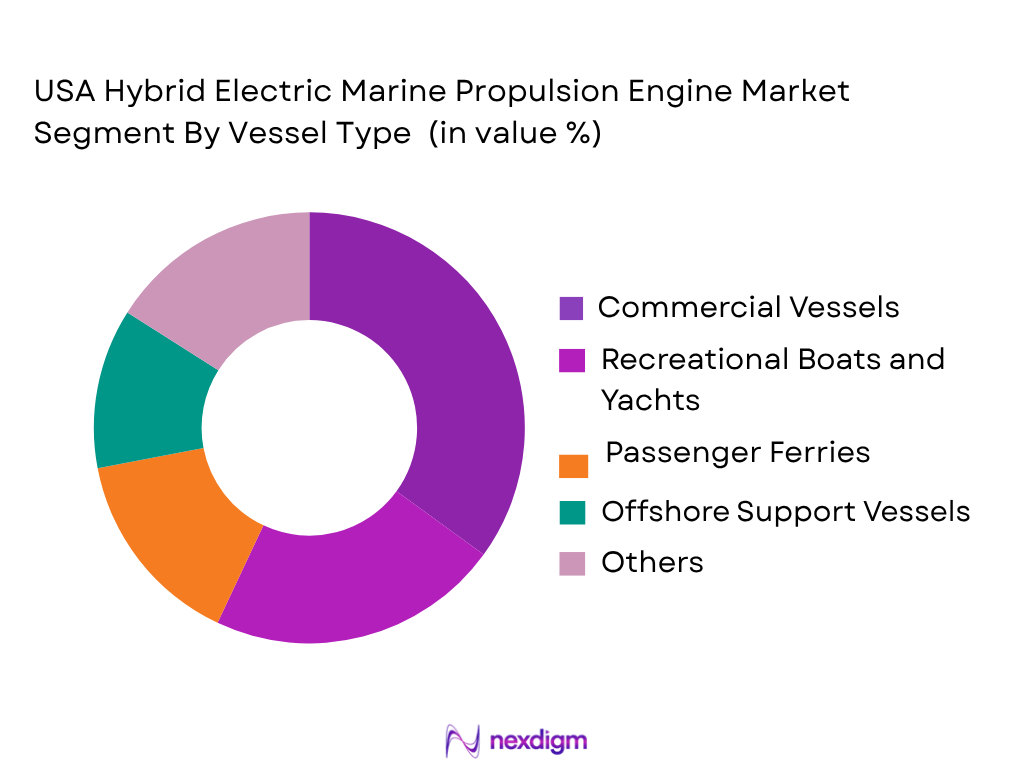
The USA Hybrid Electric Marine Propulsion Engine Market is segmented by vessel type into commercial vessels, recreational boats and yachts, passenger ferries, offshore support vessels, fishing vessels, military and defense vessels, and research vessels. Among these, commercial vessels hold a dominant position due to increasing fleet modernization initiatives, operational cost reduction requirements, and regulatory pressure to reduce marine emissions. Commercial operators including ferry companies, tugboat operators, and port service providers are increasingly integrating hybrid propulsion systems to improve fuel efficiency, reduce maintenance expenses, and comply with emission reduction targets. The segment benefits from higher vessel utilization rates compared with recreational applications, making the return on investment for hybrid propulsion systems more attractive. Additionally, government-backed maritime electrification programs and port sustainability initiatives are accelerating hybrid adoption among commercial operators.
By Propulsion System Type
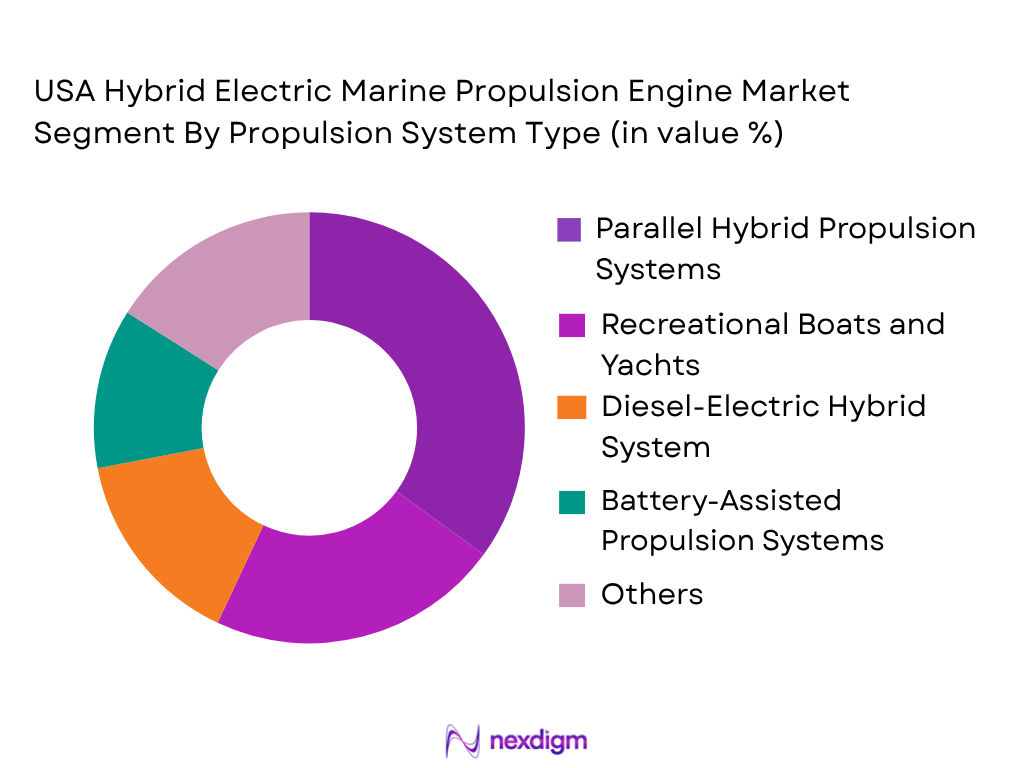
The USA Hybrid Electric Marine Propulsion Engine Market is segmented by propulsion system type into parallel hybrid systems, series hybrid systems, series-parallel hybrid systems, diesel-electric hybrid systems, battery-assisted propulsion systems, and fuel cell hybrid propulsion systems. Parallel hybrid propulsion systems represent the leading segment due to their compatibility with existing marine diesel engines, easier integration into current vessel designs, and ability to provide fuel savings without requiring complete propulsion replacement. These systems allow vessels to operate through conventional engines during high-power requirements while utilizing electric motors during low-speed operations and maneuvering. The segment is preferred among commercial fleet operators seeking gradual electrification pathways and retrofit solutions. Strong availability of marine-grade components and established OEM support networks further contribute to the adoption of parallel hybrid propulsion architectures.
Competitive Landscape
The USA Hybrid Electric Marine Propulsion Engine Market is characterized by competition among global marine engine manufacturers, electric propulsion technology providers, battery system developers, and marine automation companies. The market includes established players such as Volvo Penta, Cummins, Caterpillar, Wärtsilä, and ABB, which compete through integrated propulsion solutions, technological innovation, strategic partnerships, and expansion into sustainable marine technologies.
| Company | Establishment Year | Headquarters | Hybrid Propulsion Solutions | Marine Battery Integration | Key Vessel Applications | India Market Presence | Strategic Focus |
| Volvo Penta | ~1907 | Gothenburg, Sweden | ~ | ~ | ~ | ~ | ~ |
| Cummins Inc. | ~1919 | Columbus, USA | ~ | ~ | ~ | ~ | ~ |
| Caterpillar Inc. | ~1925 | Irving, USA | ~ | ~ | ~ | ~ | ~ |
| ABB Ltd. | ~1883 | Zurich, Switzerland | ~ | ~ | ~ | ~ | ~ |
| Wärtsilä Corporation | ~1834 | Helsinki, Finland | ~ | ~ | ~ | ~ | ~ |
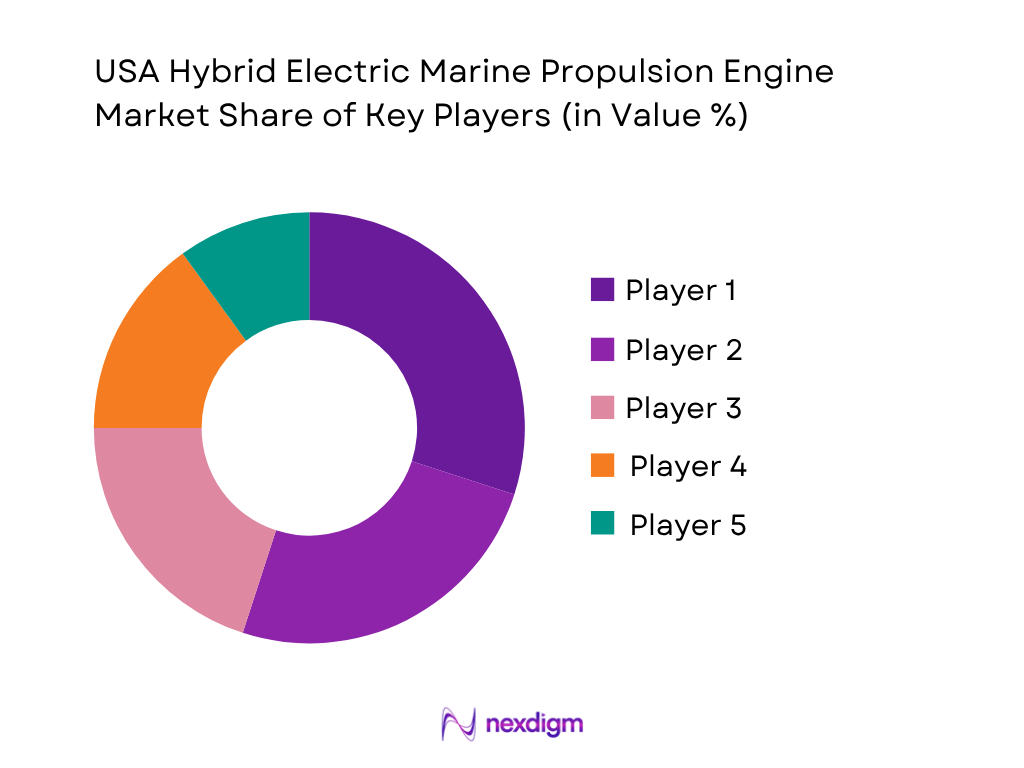
USA Hybrid Electric Marine Propulsion Engine Market Analysis
Growth Drivers
Increasing Maritime Decarbonization Initiatives and Regulatory Push for Low-Emission Propulsion Systems
The USA Hybrid Electric Marine Propulsion Engine Market is being supported by increasing regulatory focus on reducing emissions from maritime transportation and improving vessel energy efficiency. The U.S. maritime sector handles approximately 99% of overseas trade by volume, making cleaner propulsion technologies strategically important for national logistics and environmental objectives. The U.S. Department of Energy has identified approximately 40,000 commercial vessels and 360 commercial seaports operating across the country, creating a broad addressable ecosystem for hybrid propulsion adoption. Additionally, around 10.5 million motorized recreational boats operate in the United States, expanding opportunities beyond commercial shipping applications. Maritime transportation contributes approximately 3% of global annual greenhouse gas emissions, increasing pressure on vessel operators to transition toward hybrid-electric systems. Federal initiatives led by agencies such as the Department of Energy, Maritime Administration, Environmental Protection Agency, and U.S. Coast Guard are supporting cleaner vessel technologies through emission reduction programs, port modernization initiatives, and research funding. The increasing requirement for fuel-efficient propulsion, reduced local air pollutants, and compliance with evolving maritime environmental standards is encouraging ship operators, fleet owners, and vessel manufacturers to integrate hybrid electric propulsion solutions.
Expansion of Marine Electrification Infrastructure and Adoption Across Diverse Vessel Applications
The USA Hybrid Electric Marine Propulsion Engine Market is gaining momentum due to increasing investments in marine electrification infrastructure and growing suitability of hybrid systems across multiple vessel categories. The United States has approximately 360 commercial seaports, with major coastal regions developing cleaner port ecosystems to support electrified maritime operations. The Department of Energy highlights that approximately 12% of the U.S. population lives near seaports, increasing the importance of reducing emissions from marine activities affecting coastal communities. Hybrid propulsion systems are increasingly relevant for ferries, tugboats, offshore support vessels, workboats, and recreational vessels because these applications frequently operate on fixed routes or require variable power output. Research supported by the U.S. Department of Transportation Maritime Administration indicates that approximately 6,323 domestic vessels have potential relevance for battery-electric conversion analysis, demonstrating significant electrification opportunities within domestic shipping operations. Furthermore, charging demand analysis indicates that approximately 46% of electricity requirements could be concentrated across only 20 major U.S. ports, highlighting opportunities for targeted infrastructure development. The combination of port electrification programs, vessel modernization requirements, and technological improvements in energy storage systems is strengthening the adoption environment for hybrid marine propulsion engines.
Market Challenges
High Infrastructure Requirements and Technical Limitations Associated with Marine Electrification
The USA Hybrid Electric Marine Propulsion Engine Market faces challenges due to the complexity of developing supporting infrastructure and adapting hybrid systems to diverse vessel operating requirements. Unlike road transportation, marine electrification requires specialized charging infrastructure capable of handling high power requirements at ports and terminals. The U.S. Department of Energy identifies that maritime electrification remains challenging because of the wide variation in vessel types, operating patterns, vessel sizes, and energy requirements. The U.S. maritime ecosystem includes approximately 40,000 commercial vessels, creating significant technical diversity for propulsion system integration. Battery-electric and hybrid propulsion adoption is affected by limitations related to vessel range, battery energy density, charging availability, and operational reliability for long-duration maritime routes. Analysis conducted for U.S. domestic shipping electrification indicates that major infrastructure upgrades would be required, with approximately 46% of charging electricity demand concentrated among 20 of 150 major ports. This concentration creates challenges related to grid capacity, port infrastructure investment, and coordination between vessel operators and utility providers. Additionally, hybrid propulsion retrofits require detailed engineering modifications because existing vessels have different propulsion layouts, operating profiles, and power requirements, increasing implementation complexity for fleet operators.
Supply Chain Constraints for Advanced Components and Marine-Grade Electrification Technologies
The USA Hybrid Electric Marine Propulsion Engine Market faces supply chain challenges due to dependence on advanced components including lithium-ion battery systems, power electronics, electric motors, control systems, and semiconductor technologies. Hybrid marine propulsion systems require components designed specifically for harsh marine environments, including resistance to corrosion, vibration, and continuous operational stress. The expansion of maritime electrification increases demand for specialized battery manufacturing capacity and marine-grade energy storage solutions. The U.S. Department of Energy recognizes that maritime innovation requires coordinated development across technology suppliers, shipbuilders, ports, and government agencies because marine systems involve large energy requirements and complex operating environments. The maritime sector supports approximately 10 million jobs in the United States and contributes more than USD 500 billion to economic activity, making supply chain resilience important for maintaining industrial competitiveness. However, limited domestic production capacity for certain advanced electrification components can increase dependence on international supply networks. The availability of skilled technical personnel, specialized installation capabilities, and marine engineering expertise also influences the speed of hybrid propulsion deployment. Addressing these supply chain constraints requires expansion of domestic manufacturing capabilities, stronger supplier ecosystems, and greater collaboration between marine technology developers and infrastructure providers.
Market Opportunities
Growth Potential Through Commercial Fleet Modernization and Domestic Vessel Electrification
The USA Hybrid Electric Marine Propulsion Engine Market presents significant opportunities through modernization of commercial fleets and replacement of conventional propulsion systems with hybrid-electric alternatives. The United States operates a large maritime ecosystem consisting of approximately 40,000 commercial vessels, creating opportunities for propulsion upgrades across transportation, logistics, offshore services, and port operations. Domestic shipping electrification studies conducted for U.S. maritime applications indicate substantial potential for battery and hybrid propulsion adoption across thousands of vessels, particularly vessels operating predictable routes such as passenger ferries, inland vessels, and tugboats. Hybrid propulsion provides fleet operators with opportunities to improve operational efficiency, reduce emissions, and optimize energy consumption without requiring complete transition to fully electric systems. The presence of approximately 360 commercial ports provides a strong foundation for developing marine charging infrastructure and supporting cleaner vessel operations. Federal focus on maritime innovation through agencies including the Department of Energy, Maritime Administration, and Environmental Protection Agency is encouraging technology development and infrastructure improvements. Increasing attention toward sustainable logistics networks and cleaner port operations is expected to create new opportunities for propulsion manufacturers, battery suppliers, and marine technology companies operating in the hybrid electric propulsion ecosystem.
Increasing Adoption Opportunities from Port Sustainability Programs and Clean Maritime Investments
The USA Hybrid Electric Marine Propulsion Engine Market is positioned to benefit from expanding clean port initiatives and investments aimed at reducing emissions from maritime activities. Ports are becoming important centers for electrification because they connect vessel operations, cargo handling equipment, and regional transportation networks. The Environmental Protection Agency’s Clean Ports Program provided more than USD 3 billion in grants during 2024 to support zero-emission port equipment, charging infrastructure, and related sustainability initiatives. These investments create opportunities for hybrid propulsion providers by improving the surrounding infrastructure required for cleaner vessel operations. The United States has approximately 150 major ports evaluated for battery-electric shipping infrastructure requirements, demonstrating the scale of potential infrastructure transformation. Additionally, approximately 12% of the U.S. population lives near seaport communities, increasing government and community focus on reducing marine-related emissions and improving air quality. Hybrid propulsion systems can serve as an intermediate technology pathway for operators that require improved efficiency while infrastructure and battery technologies continue to develop. Growing collaboration between port authorities, vessel operators, technology companies, and government agencies is expected to support wider adoption of hybrid electric marine propulsion solutions across commercial and specialized marine applications.
Future Outlook
Over the next decade, the USA Hybrid Electric Marine Propulsion Engine Market is expected to demonstrate significant expansion driven by maritime decarbonization initiatives, advancements in battery technology, increasing vessel electrification programs, and rising demand for fuel-efficient propulsion systems. The market will witness increased adoption across commercial vessels, passenger transportation, offshore operations, and recreational marine applications. Growing collaboration between propulsion manufacturers, shipbuilders, and technology providers will further accelerate hybrid marine technology deployment.
Major Players
- Volvo Penta
- Cummins Inc.
- Caterpillar Inc.
- ABB Ltd.
- Wärtsilä Corporation
- MAN Energy Solutions
- Siemens Energy
- Danfoss
- Schneider Electric
- Torqeedo
- Yanmar Holdings
- BAE Systems
- Echandia
- General Electric Vernova
- Aquamot
Key Target Audience
- Marine engine manufacturers and propulsion system developers
- Shipbuilders and vessel construction companies
- Commercial fleet operators and maritime transportation companies
- Offshore energy companies and marine service operators
- Investments and venture capitalist firms (Clean maritime technology investors, sustainable transportation investment funds, maritime infrastructure investors)
- Government and regulatory bodies (United States Coast Guard, Environmental Protection Agency, Department of Energy, Maritime Administration)
- Battery technology companies and marine energy storage providers
- Port authorities and marine infrastructure operators
Research Methodology
Step 1: Identification of Key Variables
The initial stage involves developing a comprehensive ecosystem map covering manufacturers, vessel operators, shipbuilders, battery suppliers, regulatory authorities, and technology providers operating within the USA Hybrid Electric Marine Propulsion Engine Market. Extensive secondary research is conducted through industry publications, maritime databases, OEM reports, regulatory documents, and proprietary market intelligence sources to identify key variables influencing market development.
Step 2: Market Analysis and Construction
This phase focuses on compiling historical market information related to hybrid marine propulsion adoption, vessel installations, technology penetration, and revenue contribution across applications. The analysis evaluates propulsion system demand, vessel electrification trends, component pricing structures, and supply chain dynamics to construct a detailed market estimation framework.
Step 3: Hypothesis Validation and Expert Consultation
Market assumptions are validated through discussions with industry stakeholders including propulsion manufacturers, shipbuilders, fleet operators, battery suppliers, and maritime technology specialists. Primary interviews provide operational insights regarding adoption barriers, technology preferences, purchasing decisions, and future investment trends within the hybrid marine propulsion ecosystem.
Step 4: Research Synthesis and Final Output
The final stage combines primary research findings with secondary data analysis to validate market estimates and forecasts. Data triangulation is performed by comparing supply-side production information, demand-side adoption trends, regulatory developments, and company-level operational insights to generate a comprehensive market assessment.

- Executive Summary
- Research Methodology (Market Definitions and Scope, Hybrid Electric Marine Propulsion Engine Classification, Propulsion System Categorization, Engine Power Range Classification, Vessel Application Mapping, Market Sizing Methodology, Top-Down Market Assessment, Bottom-Up Market Assessment, Demand-Side Analysis, Supply-Side Analysis, Primary Interviews with OEMs, Shipbuilders, Fleet Operators and Technology Providers, Secondary Research Framework, Data Triangulation, Forecasting Model, Assumptions and Limitations)

- Definition and Scope
- Hybrid Electric Marine Propulsion Engine Industry Evolution
- USA Marine Propulsion Industry Landscape
- Hybrid Electric Marine Propulsion Engine Technology Architecture
- Hybrid Electric Marine Propulsion Engine Value Chain Analysis
- Hybrid Electric Marine Propulsion Engine Supply Chain Analysis
- Regulatory and Policy Framework Impacting Hybrid Marine Propulsion Adoption

- Market Growth Drivers (Emission Reduction Requirements, Maritime Decarbonization Initiatives, Rising Fuel Cost Pressure, Expansion of Electric Vessel Adoption, Increasing Demand for Low-Noise Propulsion Systems, Government Electrification Incentives, Growth of Sustainable Marine Transportation)
- Market Challenges (High Initial System Cost, Battery Weight and Energy Density Limitations, Charging Infrastructure Constraints, Limited Hybrid Marine Maintenance Expertise, Supply Chain Dependency for Battery Materials, Vessel Retrofit Complexity)
- Market Opportunities (Commercial Fleet Electrification, Hybrid Retrofit Market Expansion, Advanced Marine Battery Development, Autonomous Vessel Integration, Port Electrification Infrastructure Development, Defense Hybrid Propulsion Adoption)
- Market Trends (Integrated Hybrid Propulsion Platforms, Intelligent Energy Management Systems, Modular Marine Battery Systems, Digital Twin-Based Propulsion Optimization, Renewable Energy Integration, Software-Defined Marine Propulsion)
- SWOT Analysis
- Porter’s Five Forces Analysis
- PESTLE Analysis
- Stakeholder Ecosystem Analysis
- Competition Ecosystem Analysis

- By Market Value (2020-2025)
- By Installed Propulsion Capacity (2020-2025)
- By Hybrid Electric Marine Propulsion Engine Shipments (2020-2025)
- By Average System Selling Price (2020-2025)
- By Propulsion System Revenue Contribution (2020-2025)

- By Propulsion System Type (In Value %)
Parallel Hybrid Propulsion Systems
Series Hybrid Propulsion Systems
Series-Parallel Hybrid Propulsion Systems
Diesel-Electric Hybrid Propulsion Systems
Battery Hybrid Propulsion Systems
Fuel Cell Hybrid Marine Propulsion Systems - By Component Type (In Value %)
Electric Motors
Marine Engines
Generators
Battery Energy Storage Systems
Power Conversion Systems
Inverters and Controllers
Energy Management Systems
Propulsion Control Software - By Battery Technology (In Value %)
Lithium-Ion Battery Systems
Lithium Iron Phosphate (LFP) Batteries
Nickel Manganese Cobalt (NMC) Batteries
Solid-State Battery Systems
Advanced Marine Battery Storage Solutions - By Vessel Type (In Value %)
Commercial Vessels
Passenger Ferries
Workboats and Tugboats
Offshore Support Vessels
Fishing Vessels
Recreational Boats and Yachts
Military and Defense Vessels
Research and Survey Vessels - By Region (In Value %)
Northeast USA
Midwest USA
South USA
West USA
Pacific Northwest USA
Gulf Coast USA

- Market Share Analysis of Major Players
- Cross Comparison Parameters (Product Portfolio Breadth, Hybrid Propulsion System Capacity Range, Battery Integration Capability, Electric Motor Efficiency Rating, Marine Vessel Application Coverage, Retrofit Solution Capability, Global Installation Base, Aftermarket Service Network Strength)
- Competitive Benchmarking Analysis (Technology Leadership, Product Reliability, Pricing Strategy, Partnership Ecosystem, Innovation Pipeline)
- Pricing Analysis (By Propulsion System Type, Engine Power Rating, Vessel Category, Battery Configuration, Installation Complexity)
- Detailed Profiles of Major Companies
Volvo Penta
Cummins Inc.
Caterpillar Inc.
Yanmar Holdings Co., Ltd.
Torqeedo
ABB Ltd.
Siemens Energy
Wärtsilä Corporation
MAN Energy Solutions
Danfoss
Schneider Electric
General Electric Vernova
Echandia
BAE Systems
Aquamot

- Vessel Operator Adoption Analysis
- Purchasing Decision Analysis
- Fleet Electrification Assessment
- End-User Preference Analysis
- Hybrid Propulsion Investment Evaluation
- Adoption Barrier Assessment

- By Market Value (2026-2035)
- By Installed Propulsion Capacity (2026-2035)
- By Hybrid Electric Marine Propulsion Engine Shipments (2026-2035)
- By Average System Selling Price (2026-2035)
- By Propulsion System Revenue Contribution (2026-2035)


 Request a Sample
 Ask for Customization
 Get a Quote
 Enquire Now