
 Download PDF
Market Overview
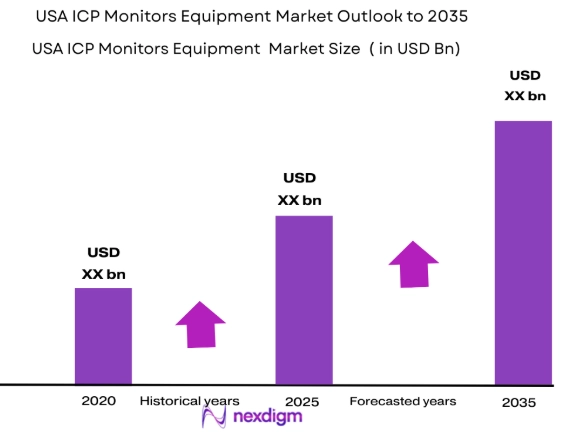
The ICP monitors equipment market has seen substantial growth due to the increasing demand for precise measurement technologies in various industries. Based on a recent historical assessment, the market is estimated to reach USD ~ billion in 2024. Key factors contributing to the growth include advancements in industrial automation, a growing need for real-time data monitoring, and regulatory pressures on environmental standards. The rise in demand for high-efficiency equipment in sectors like manufacturing, pharmaceuticals, and environmental monitoring has further accelerated the market expansion. Market drivers such as technological innovations, product affordability, and a growing base of consumers are shaping the market’s trajectory in the short and medium-term.
North America, particularly the United States, stands out as a dominant region in the ICP monitors equipment market, owing to its robust industrial infrastructure and regulatory environment that drives adoption of advanced monitoring solutions. Key cities like New York, San Francisco, and Chicago are central hubs for industries relying on ICP technology, such as environmental monitoring, manufacturing, and research laboratories. Additionally, Europe, led by Germany and the United Kingdom, remains a key market due to strong regulatory frameworks and the growing emphasis on environmental protection. Asia-Pacific regions, including China and Japan, are witnessing significant growth owing to industrialization and stringent environmental regulations, further adding to the global demand.
Market Segmentation
By Product Type
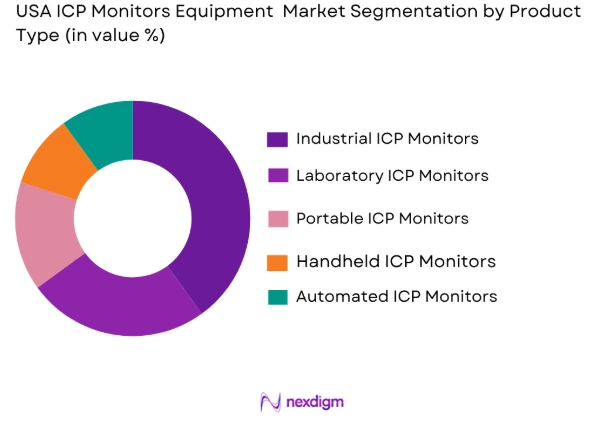
ICP monitors equipment market is segmented by product type into Industrial ICP Monitors, Laboratory ICP Monitors, Portable ICP Monitors, Handheld ICP Monitors, and Automated ICP Monitors. Recently, Industrial ICP Monitors have a dominant market share due to factors such as the need for precise data collection in large-scale industrial settings, their robustness, and ease of integration with existing systems. These monitors are crucial in sectors such as manufacturing, chemical processing, and environmental monitoring, where consistency and accuracy are critical. Moreover, technological advancements, including automation and integration with real-time data analytics, are further increasing the demand for industrial-grade ICP monitors in production facilities and research settings.
By Platform Type
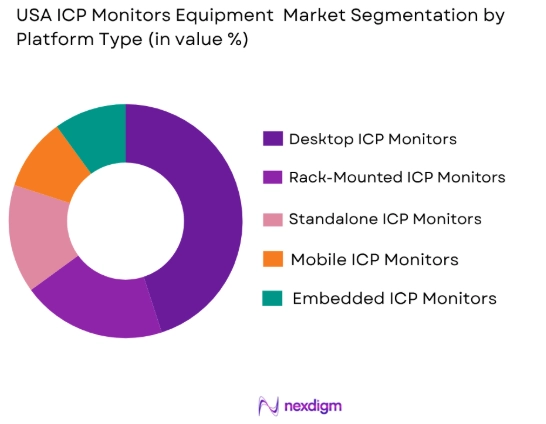
ICP monitors equipment market is segmented by platform type into Desktop ICP Monitors, Rack-Mounted ICP Monitors, Standalone ICP Monitors, Mobile ICP Monitors, and Embedded ICP Monitors. Recently, Desktop ICP Monitors have a dominant market share due to their versatility, ease of use, and widespread adoption in laboratory settings. These monitors are essential for detailed and controlled experiments, offering precision in various testing and analytical applications. The increasing demand for stationary solutions in research and testing environments, coupled with the rise in laboratory automation, is contributing to the significant market share of desktop ICP monitors, which are ideal for high-precision, stationary analysis.
Competitive Landscape
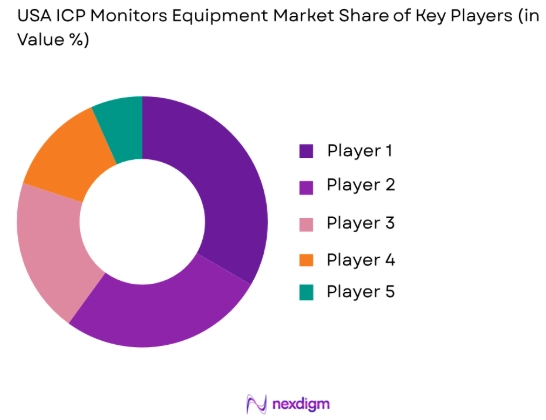
The ICP monitors equipment market is highly competitive, with significant consolidation among major players. The key players are increasingly focusing on innovation and technological advancements to maintain market leadership. Many companies are forming strategic alliances and acquiring smaller firms to expand their product offerings and gain access to new markets. The market sees a mix of established players and emerging firms, with competition intensifying in the development of specialized and automated ICP monitoring systems to cater to evolving industrial and environmental needs. As a result, competitive strategies such as pricing optimization, product differentiation, and continuous technological innovation remain critical.
| Company Name | Establishment Year | Headquarters | Technology Focus | Market Reach | Key Products | Revenue (USD) | Additional Parameter |
| Thermo Fisher Scientific | 1956 | Waltham, Massachusetts | ~ | ~ | ~ | ~ | ~ |
| PerkinElmer Inc. | 1937 | Waltham, Massachusetts | ~ | ~ | ~ | ~ | ~ |
| Horiba Ltd. | 1945 | Kyoto, Japan | ~ | ~ | ~ | ~ | ~ |
| Agilent Technologies | 1999 | Santa Clara, California | ~ | ~ | ~ | ~ | ~ |
| Shimadzu Corporation | 1875 | Kyoto, Japan | ~ | ~ | ~ | ~ | ~ |
USA ICP Monitors Equipment Market Analysis
Growth Drivers
Increasing Demand for Environmental Monitoring
The increasing emphasis on environmental protection is a significant growth driver for the ICP monitors equipment market. Governments and regulatory bodies across the globe are tightening environmental standards, driving industries to adopt advanced monitoring technologies to ensure compliance. Environmental monitoring is critical for tracking pollutants and emissions, which necessitates the use of precise and real-time data analytics systems. Furthermore, industries involved in chemical processing, waste management, and power generation are increasingly integrating ICP monitoring solutions to comply with stringent environmental laws. With growing concerns over air and water quality, the demand for ICP monitors, which provide accurate and reliable measurements, is expected to rise significantly. As environmental regulations become more stringent, the adoption of ICP monitors will become integral to industries looking to reduce their ecological footprint while ensuring regulatory compliance.
Technological Advancements in Industrial Automation
The rise in industrial automation is another key growth driver for the ICP monitors equipment market. Industries are increasingly adopting automated solutions to improve efficiency, reduce human error, and lower operational costs. ICP monitors, integrated with automation systems, provide real-time data that enables better decision-making in manufacturing processes. The demand for automation in sectors like automotive, pharmaceuticals, and chemicals is further propelling the need for ICP monitors that can work seamlessly within automated control systems. As the industrial automation market continues to grow, the adoption of ICP monitoring solutions will become a necessity to ensure high-precision measurements for quality control and operational efficiency. The integration of artificial intelligence and machine learning with ICP monitoring systems further enhances their capabilities, making them a preferred choice for industries focusing on improving their production processes.
Market Challenges
High Initial Investment Cost
One of the major challenges faced by the ICP monitors equipment market is the high initial investment cost associated with these devices. While ICP monitors offer high-precision measurements and real-time data analytics, the upfront costs of purchasing and installing these systems can be prohibitively expensive for small and medium-sized enterprises (SMEs). The cost of advanced features, including automation, integration with other systems, and compliance with stringent regulatory standards, further increases the total investment required. Despite the long-term cost benefits and operational efficiencies that ICP monitors offer, the initial capital expenditure remains a significant barrier for many companies, particularly in developing regions. This cost challenge limits the accessibility of advanced monitoring technology to a select few industries, thereby slowing the broader adoption of ICP monitors across various sectors. To overcome this challenge, manufacturers are focusing on developing more cost-effective solutions without compromising on performance, which is expected to drive future market growth.
Lack of Skilled Technicians
The lack of skilled technicians proficient in operating and maintaining ICP monitors is another challenge that could impede market growth. While ICP monitors are becoming increasingly integrated with automated systems, the complexity of these systems requires a high level of expertise in both hardware and software. The absence of adequately trained personnel to operate and maintain these systems could lead to inefficiencies, errors, and an overall lack of effective utilization. Moreover, industries may face difficulty in finding technicians capable of troubleshooting or repairing complex ICP systems, further contributing to downtime and reduced productivity. To address this challenge, companies in the ICP monitors equipment market are investing in training programs, but the global shortage of skilled labor in this field is still a significant hurdle that may slow the market’s growth in certain regions.
Opportunities
Expansion of ICP Monitoring Solutions in Agriculture
One of the emerging opportunities in the ICP monitors equipment market is the adoption of these systems in the agricultural sector. With the growing focus on food safety, sustainable farming practices, and environmental regulations, agricultural companies are seeking advanced technologies to monitor soil and water quality. ICP monitors, with their ability to provide precise and real-time data on various environmental parameters, are well-suited to meet the needs of modern agriculture. The integration of ICP monitors into precision farming techniques allows farmers to optimize irrigation, assess soil health, and detect potential pollutants, improving both crop yields and sustainability. As the global demand for food production increases and environmental concerns rise, the agricultural sector presents a significant opportunity for ICP monitors to enhance productivity while ensuring compliance with environmental standards. This trend is expected to drive market growth, particularly in regions where agriculture plays a key economic role.
Growing Integration with IoT-enabled Systems
Another major opportunity in the ICP monitors equipment market is the growing integration of these devices with IoT-enabled systems. The Internet of Things (IoT) is revolutionizing various industries, and the ICP monitors sector is no exception. IoT integration allows ICP monitors to communicate with other devices and systems in real time, providing actionable insights and enabling remote monitoring and control. This feature is particularly beneficial in sectors such as industrial automation, environmental monitoring, and healthcare, where real-time data is critical for decision-making. The ability to monitor and control ICP systems remotely increases operational efficiency, reduces downtime, and enhances data accuracy. As the IoT market continues to expand, the demand for connected ICP monitors is expected to increase, presenting a significant opportunity for market players to develop innovative solutions that cater to this growing trend.
Future Outlook
The future outlook for the ICP monitors equipment market appears promising, with several factors poised to drive growth over the next five years. The integration of advanced technologies, such as artificial intelligence and machine learning, with ICP monitors is expected to improve their efficiency and functionality, making them even more attractive to industries seeking high-precision monitoring solutions. Regulatory support for environmental monitoring and sustainability practices will further boost demand, especially in regions like North America and Europe. Additionally, as industries continue to embrace automation, the need for real-time data analysis will increase, providing additional growth opportunities for ICP monitor manufacturers. Technological developments in portable and mobile ICP monitors are also likely to enhance market accessibility, catering to a wider range of industries and applications.
Major Players
- ThermoFisher Scientific
- PerkinElmer Inc.
- Horiba Ltd.
- Agilent Technologies
- Shimadzu Corporation
- ABB Ltd.
- Sartorius AG
- Milestone Inc.
- AnalytikJena AG
- Hitachi High-Technologies Corporation
- Jasco Corporation
- SUEZ Group
- Teledyne Leeman Labs
- Seiko Instruments Inc.
- EltraGmbH
Key Target Audience
- Investments and venture capitalist firms
- Government and regulatory bodies
- Manufacturers in the industrial automation sector
- Environmental agencies and organizations
- Research and development institutions
- Industrial engineering firms
- Agriculture and farming industries
- Pharmaceutical manufacturers
Research Methodology
Step 1: Identification of Key Variables
The first step involves defining the key variables affecting the ICP monitors equipment market, such as technological advancements, regulatory pressures, and market trends.
Step 2: Market Analysis and Construction
This step focuses on gathering data from credible sources, including industry reports and surveys, to assess the current market size and growth patterns.
Step 3: Hypothesis Validation and Expert Consultation
Industry experts are consulted to validate market assumptions and refine the analysis, ensuring the insights are accurate and relevant.
Step 4: Research Synthesis and Final Output
Data is synthesized, analyzed, and compiled into a comprehensive market report that outlines key findings and actionable insights for stakeholders.

- Executive Summary
- Research Methodology (Definitions, Scope, Industry Assumptions, Market Sizing Approach, Primary & Secondary Research Framework, Data Collection & Verification Protocol, Analytic Models & Forecast Methodology, Limitations & Research Validity Checks)

- Market Definition and Scope
- Value Chain & Stakeholder Ecosystem
- Regulatory / Certification Landscape
- Sector Dynamics Affecting Demand
- Strategic Initiatives & Infrastructure Growth

- Growth Drivers
Advancements in ICP Technology
Increase in Environmental Regulations
Growth in Industrial Automation - Market Challenges
High Initial Investment Cost
Lack of Skilled Technicians
Fluctuations in Raw Material Costs - Market Opportunities
Emerging Markets in Asia-Pacific
Adoption of ICP Monitors in Agriculture
Development of IoT-enabled ICP Monitors - Trends
Integration of Artificial Intelligence in ICP Systems
Increasing Demand for Portable ICP Monitors
Shift Toward Eco-friendly ICP Monitoring Solutions - Government Regulations
- SWOT Analysis of Key Competitors
- Porter’s Five Forces

- By Market Value, 2020-2025
- By Installed Units, 2020-2025
- By Average System Price, 2020-2025
- By System Complexity Tier, 2020-2025

- By Product Type (In Value%)
Industrial ICP Monitors
Laboratory ICP Monitors
Portable ICP Monitors
Handheld ICP Monitors
Automated ICP Monitors - By Platform Type (In Value%)
Desktop ICP Monitors
Rack-Mounted ICP Monitors
Standalone ICP Monitors
Mobile ICP Monitors
Embedded ICP Monitors - By End User Segment (In Value%)
Environmental Monitoring
Industrial Manufacturing
Research Laboratories
Healthcare & Pharmaceuticals
Agricultural Applications - By Procurement Channel (In Value%)
Direct Sales
Distributors
E-commerce Platforms
OEMs
Retailers

- Market Share Analysis
- Cross Comparison Parameters (Price, System Type, Platform Type, Fitment Type, End User Segment, Signal Accuracy, Channel Capacity, Portability, Software Integration, Ease of Use, Diagnostic Application Range, Regulatory Compliance, Market Presence, After-sales Support, Technology Innovation)
- SWOT Analysis of Key Competitors
- Pricing & Procurement Analysis
- Key Players
Thermo Fisher Scientific
PerkinElmer Inc.
Horiba Ltd.
Agilent Technologies
Shimadzu Corporation
ABB Ltd.
Sartorius AG
Milestone Inc.
Analytik Jena AG
Hitachi High-Technologies Corporation
Jasco Corporation
SUEZ Group
Teledyne Leeman Labs
Seiko Instruments Inc.
Eltra GmbH

- Environmental Monitoring Agencies
- Industrial Manufacturing Plants
- Government Research Organizations
- Academic Research Institutions

- By Market Value, 2026-2035
- By Installed Units, 2026-2035
- By Average System Price, 2026-2035
- By System Complexity Tier, 2026-2035


 Request a Sample
 Ask for Customization
 Get a Quote
 Enquire Now