
 Download PDF
Market Overview
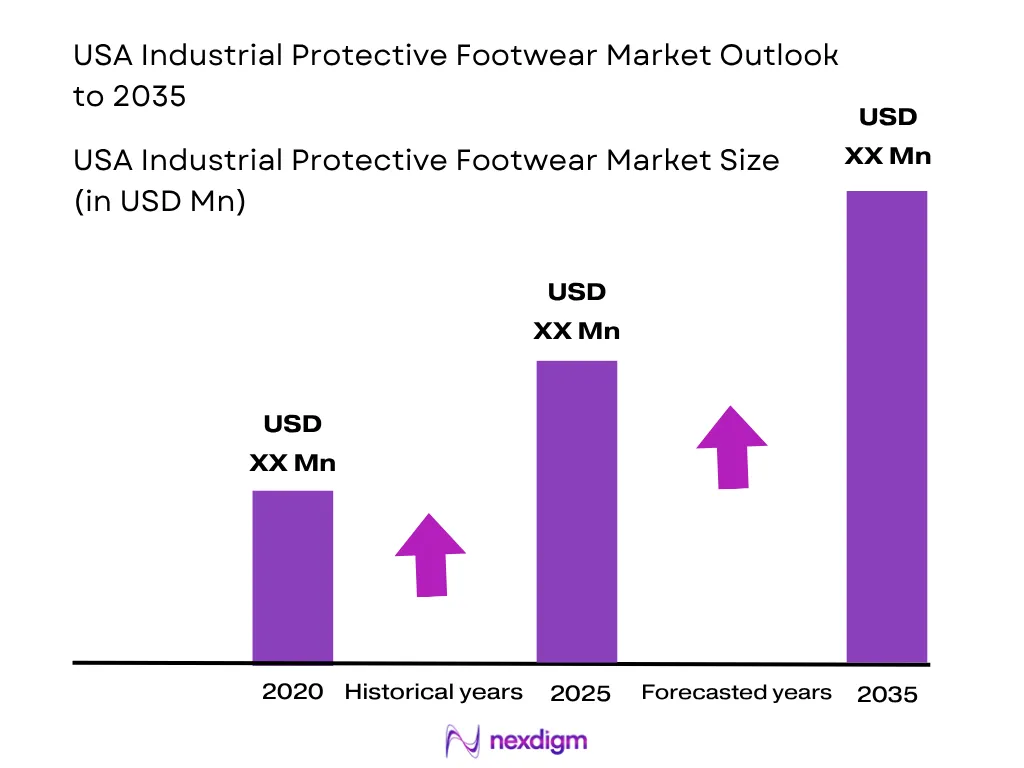
The USA industrial protective footwear market is valued at USD ~ billion, with growth primarily driven by increasing demand for safety solutions across industrial sectors such as manufacturing, construction, and oil & gas. The demand is fueled by stringent safety regulations from organizations like OSHA and ASTM, which mandate the use of protective footwear in high-risk environments. In addition, technological advancements such as the introduction of more comfortable and lightweight safety shoes, combined with growing awareness of worker safety, contribute significantly to the market’s expansion.
The USA industrial protective footwear market is dominated by key industrial hubs such as Texas, California, and Ohio. These regions are home to major industries like oil & gas, manufacturing, and construction, which require high safety standards, driving footwear demand. Texas, with its expansive oil fields and industrial growth, sees consistent demand for durable safety footwear. Similarly, California and Ohio, with their advanced manufacturing and construction industries, form the backbone of this market’s dominance. The presence of manufacturing units, along with high injury risk profiles, propels growth in these cities.
Market Segmentation
By Product Type
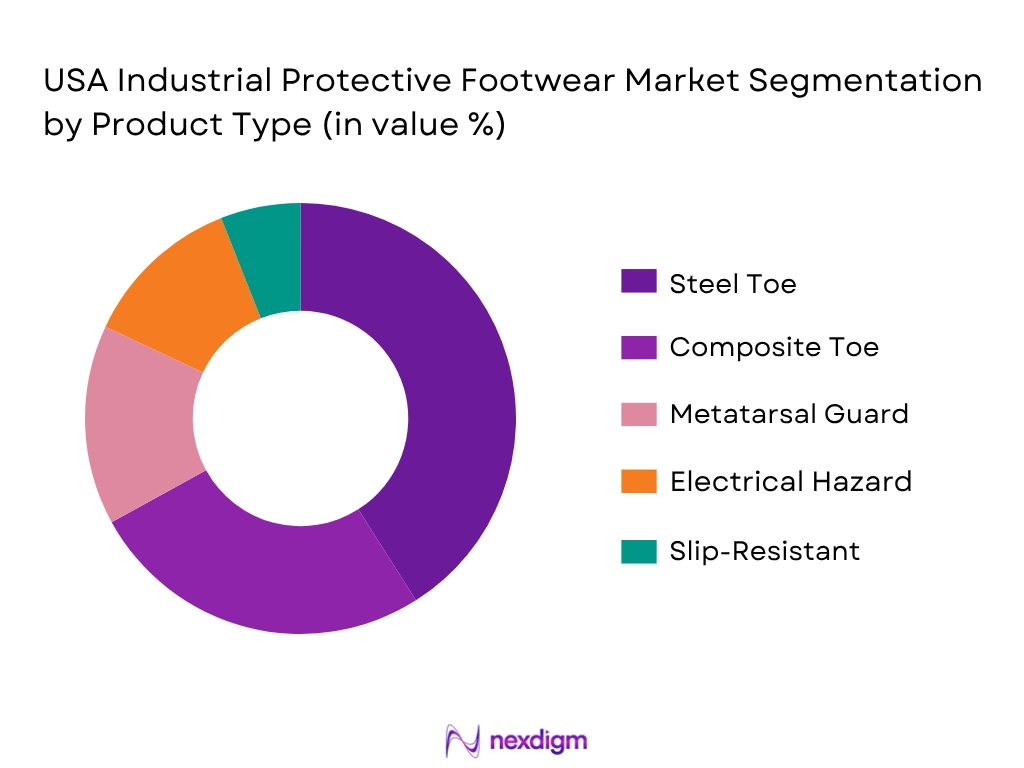
The USA industrial protective footwear market is segmented by product type into steel toe, composite toe, metatarsal guard, electrical hazard, and slip-resistant footwear. Steel-toe footwear currently dominates the market, primarily due to its long-established presence and ability to provide superior protection from impact and compression. This footwear type is widely used in high-risk environments like construction, manufacturing, and mining, where foot injuries from heavy machinery and falling objects are common. The steel toe segment benefits from its strong reputation for durability, coupled with industry regulations requiring it in many sectors.
By Material Type
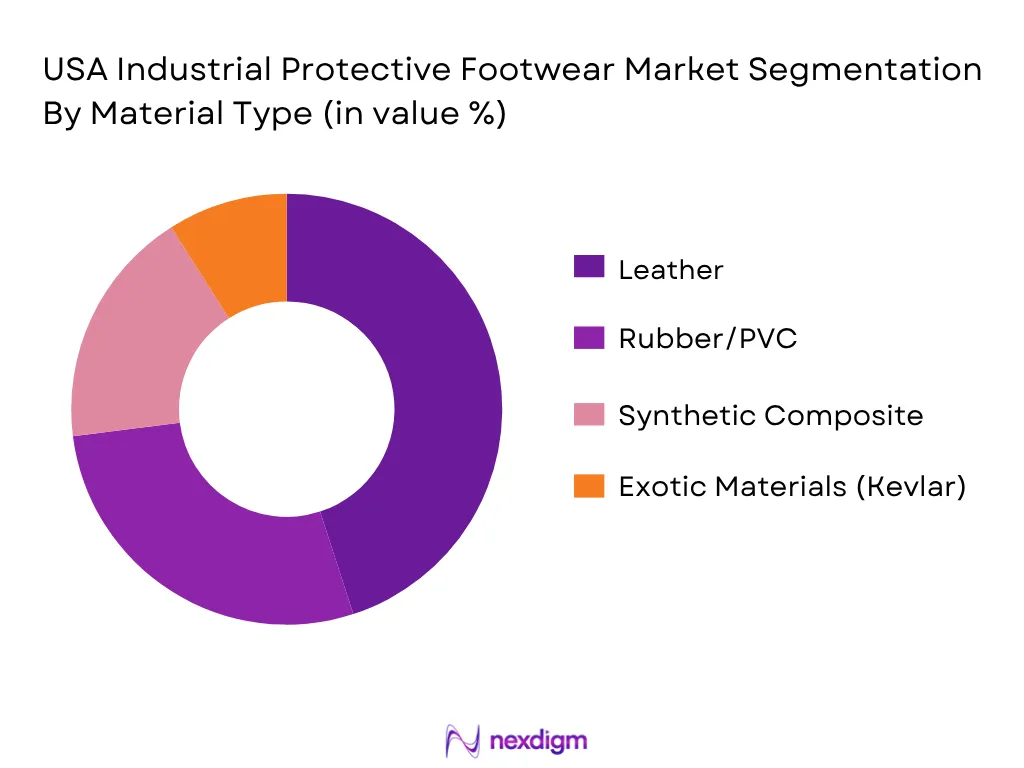
The market is also segmented by material, including leather, rubber/PVC, synthetic composite, and exotic materials like Kevlar and carbon fiber. Leather footwear continues to dominate this segment, largely due to its durability, comfort, and versatility. Leather offers enhanced protection against hazards such as abrasion and punctures, making it ideal for industrial environments like mining and construction, where the risk of injury is high. Rubber/PVC-based footwear is also growing in demand due to its superior performance in wet environments and its cost-effectiveness for workers in sectors like manufacturing.
Competitive Landscape
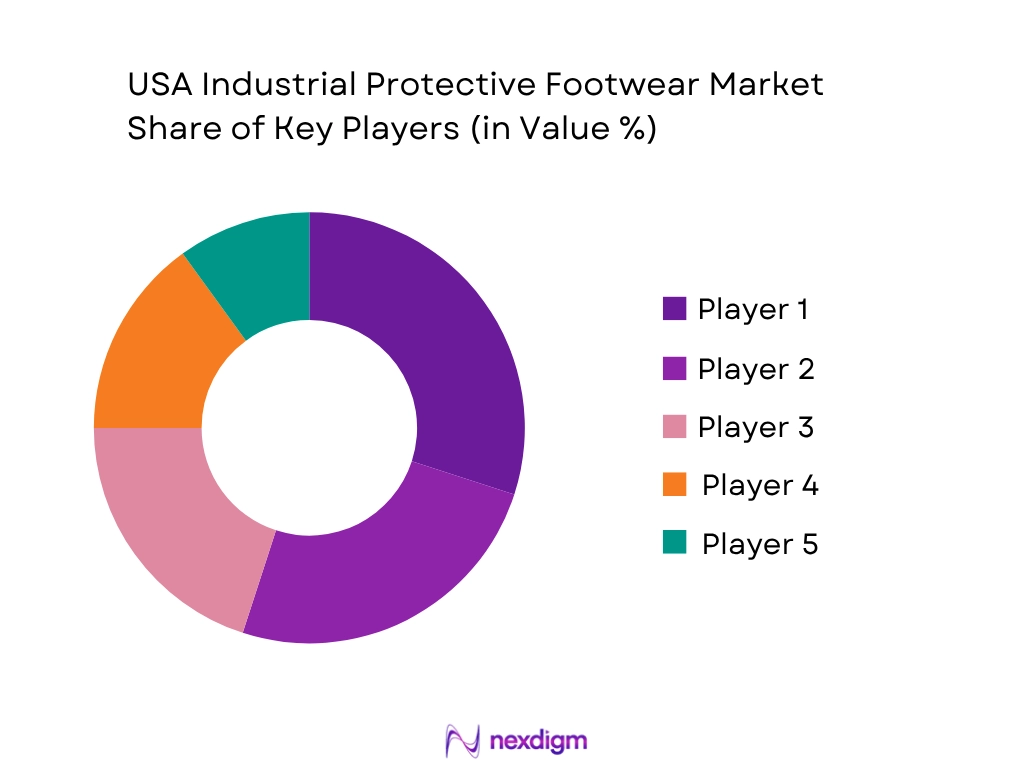
The USA industrial protective footwear market is characterized by the presence of several key players. Major manufacturers include Honeywell International, Wolverine World Wide, Bata Industrials, and Red Wing Shoe Company. These companies have a significant influence on the market due to their established brand reputation, product innovation, and extensive distribution networks. The competition is fierce as companies strive to differentiate their products through enhanced safety features, ergonomic designs, and eco-friendly materials.
| Company | Establishment Year | Headquarters | Revenue (USD) | Market Focus | Key Products | Distribution Channels |
| Honeywell International | 1906 | Morris Plains, New Jersey | ~ | ~ | ~ | ~ |
| Wolverine World Wide | 1883 | Rockford, Michigan | ~ | ~ | ~ | ~ |
| Bata Industrials | 1894 | Belgium | ~ | ~ | ~ | ~ |
| Red Wing Shoe Company | 1905 | Red Wing, Minnesota | ~ | ~ | ~ | ~ |
| Uvex Safety Group | 1926 | Germany | ~ | ~ | ~ | ~ |
USA Industrial Protective Footwear Market
Growth Drivers
Industrial Automation & Worker Safety Protocols
Industrial automation and the enforcement of worker safety protocols are major growth drivers in the industrial protective footwear market. In the U.S., the industrial automation market was valued at approximately USD 157 billion in 2023 and is expected to expand as businesses continue to invest in automation technologies. These advancements increase the need for protective gear, particularly in sectors such as manufacturing, logistics, and oil & gas, where automation is heavily employed. Additionally, OSHA’s enforcement of workplace safety regulations, including mandatory protective footwear, further propels the demand for compliant footwear. For instance, OSHA’s recent updates to its standards for general industry (29 CFR 1910) in 2023 emphasize the importance of protective equipment for workers exposed to hazardous conditions in highly automated environments. These dynamics collectively contribute to heightened demand for high-quality, compliant industrial footwear.
Lightweight & Ergonomic Foot Protection Adoption
As industries prioritize worker comfort and productivity, the demand for lightweight and ergonomic industrial protective footwear continues to rise. In the U.S., productivity growth in non-farm business sectors reached an annual rate of 2.5% in 2023, reflecting a focus on optimizing workforce efficiency. Workers in industries like construction, warehousing, and manufacturing, which face long working hours and high physical demands, are increasingly adopting ergonomic footwear to reduce fatigue and injury. Companies are now prioritizing shoes that balance protective features with comfort, leading to innovations in lighter materials and better design. The increasing focus on reducing occupational injuries aligns with OSHA’s support for footwear that enhances worker comfort and safety, reflecting a growing industry trend.
Market Restraints
Cost Pressures from SMEs
Small and medium-sized enterprises (SMEs) are facing significant cost pressures, which is one of the key constraints in the industrial protective footwear market. As of 2023, SMEs in the U.S. accounted for over 99% of all businesses and employed more than 47% of the workforce. These businesses are highly sensitive to fluctuations in production costs, especially with the rising prices of raw materials like rubber and leather, which are essential for manufacturing protective footwear. Additionally, as inflationary pressures in the U.S. reached 4.3% in 2023, SMEs are further constrained by increasing operational costs, including the procurement of safety equipment. Many SMEs struggle to afford high-quality protective footwear, which limits their ability to invest in products that meet stringent safety standards.
Fragmented Demand in Downstream Sectors
Fragmented demand in downstream sectors such as manufacturing, agriculture, and construction poses another restraint in the industrial protective footwear market. For instance, while the construction sector in the U.S. showed growth in 2023, with investments reaching USD 1.4 trillion, demand for protective footwear is inconsistent across smaller contractors and regional players. The decentralized nature of these industries means that smaller businesses may not prioritize safety regulations as strongly as larger enterprises, leading to uneven demand for safety footwear across different sub-sectors. This fragmentation complicates supply chain logistics for manufacturers and affects their ability to meet demand predictably.
Market Opportunities
Adoption of Sustainable Materials
The growing demand for sustainability in the industrial protective footwear market presents a significant opportunity. In 2023, the U.S. manufacturing sector saw a rise in the adoption of sustainable practices, with 60% of manufacturers citing sustainability as a key priority for business growth. The integration of eco-friendly materials, such as recycled rubber and biodegradable compounds, into protective footwear aligns with broader global trends toward greener production methods. This shift is further supported by regulatory bodies pushing for sustainability in the industrial sector, like the Environmental Protection Agency (EPA), which in 2023 continued to promote environmental standards for manufacturing processes. As environmental concerns rise among consumers and workers alike, brands that incorporate sustainable materials into their footwear are well-positioned for future market success.
Technological Integration in Footwear
Technological advancements in industrial protective footwear are poised to revolutionize the market. Innovations like integrated sensors for monitoring worker health and safety, and footwear that provides real-time data on environmental conditions, are expected to grow in popularity. In 2023, the wearable technology market in the U.S. was valued at over USD 18 billion, a significant portion of which is driven by industrial applications. Sensors embedded in footwear to detect pressure points, temperature, and slip risks can help prevent injuries and enhance productivity. This technological shift aligns with industry trends focused on worker safety and data-driven decision-making. Companies investing in smart footwear technologies will have a competitive edge as industrial sectors continue to prioritize safety and efficiency.
Future Outlook
Over the next decade, the USA industrial protective footwear market is poised for substantial growth driven by advancements in technology, increasing workplace safety regulations, and rising awareness among employers about the importance of protecting workers. Furthermore, the growing adoption of sustainable and lightweight materials is expected to enhance market appeal, particularly as younger generations of workers seek comfort alongside safety. The market is expected to see a surge in demand across industries like construction, oil & gas, and manufacturing as these sectors expand and prioritize worker protection.
Major Players
- Honeywell International
- Wolverine World Wide
- Bata Industrials
- Red Wing Shoe Company
- Uvex Safety Group
- Timberland PRO (VF Corporation)
- Caterpillar Inc.
- KEEN Footwear
- Carhartt Inc.
- Steel Blue
- ELTEN GmbH
- Rahman Group
- Dunlop Protective Footwear
- U‑Power Group S.p.A.
- Safetyking Industrial Footwear
Key Target Audience
- Investments and Venture Capitalist Firms
- Government and Regulatory Bodies (OSHA, EPA)
- Industrial OEMs
- Construction & Manufacturing Companies
- Oil & Gas Operators
- Safety Equipment Distributors
- Retailers of Workwear & Safety Products
- Footwear Product Designers and Innovators
Research Methodology
Step 1: Identification of Key Variables
The initial phase involves defining critical variables in the USA industrial protective footwear market, including product types, materials, industry demand, and safety regulations. Secondary research methods will collect relevant industry data from sources such as OSHA and ASTM standards, market reports, and various databases. The goal is to provide clarity on the drivers, restraints, and opportunities shaping the market.
Step 2: Market Analysis and Construction
We will compile and analyze data from the USA industrial protective footwear market using both primary and secondary research. Historical data will be used to understand trends, growth patterns, and the impact of various factors, such as labor regulations, on product demand. Additionally, market penetration and the role of safety standards in footwear selection will be analyzed.
Step 3: Hypothesis Validation and Expert Consultation
To validate market hypotheses, we will engage with industry experts and professionals through structured interviews and surveys. These experts will provide insights into the practical challenges of meeting safety requirements in high-risk industries. This data will help refine market forecasts and validate research findings.
Step 4: Research Synthesis and Final Output
The final step will involve consolidating data from all sources and synthesizing the findings. Interviews with manufacturers and product distributors will provide qualitative insights into market dynamics. This will ensure a comprehensive understanding of trends, growth opportunities, and competitive strategies in the USA industrial protective footwear market.

- Executive Summary
- Research Methodology (Market definitions and assumptions, industrial protective footwear classification parameters, Data sources (Primary: industry experts, secondary: trade & public databases), Market sizing approach (bottom‑up and top‑down integration), Forecasting models (CAGR, unit volume vs. revenue), Assumptions and limitations)

- Definition and Scope
- Market Genesis and Evolution
- Value Chain and Supply Chain Analysis
- Industry Safety Standards & Certification Framework
- Retailer & Distribution Network Structure

- Growth Drivers(OSHA & ANSI compliance enforcement (usage mandates), Industrial automation & worker safety protocols, Lightweight & ergonomic foot protection adoption)
- Market Restraints(Cost pressures from SMEs, Fragmented demand in downstream sectors)
- Market Opportunities (Adoption of Sustainable Materials, Technological integration in footwear, Expansion into emerging markets, Growing demand in the E-commerce sector, Shift to Lightweight and comfortable footwear)
- Key Trends(Smart safety footwear (sensor integration & data telemetry), Sustainability & eco‑material uptake)
- Regulatory & Standards Landscape (OSHA protective footwear mandates, ASTM/ANSI testing frameworks, Building codes & buyer procurement specifications)
- Porter’s Five Forces (Competitive intensity & supplier dynamics)
- SWOT Analysis (Market structural insights)

- By Value (2020-2025)
- By Volume (2020-2025)
- By Average Selling Price Trends (2020-2025)
- By Channel Sales Breakdown (2020-2025)

- By Product Type (In Value%)
Steel Toe
Composite Toe
Metatarsal Guard
Electrical Hazard
Slip‑Resistant / Puncture‑Resistant - By Material (In Value%)
Leather
Rubber/PVC
Synthetic Fiber Composite
Exotic Materials (Kevlar, Carbon Fiber) - By End‑Use Industry (In Value%)
Construction
Manufacturing
Oil & Gas
Mining & Heavy Industries
Transportation & Warehousing - By Distribution Channel (In Value%)
Industrial Distributors
Safety PPE Specialist Retailers
B2B Procurement Portals
E‑commerce / Online Direct Sales
OEM Safety Contracts - By Geography (In Value%)
Northeast
South
Midwest
West

- Competitive Market Share (Value & Volume)
- Cross‑Comparison Parameters (Market focus, Brand equity, OEM penetration, Channel footprint, Innovation & product breadth, Average list pricing tiers, Safety certification coverage, Vertical service integration, After‑sales support)
- SWOT Analysis of Major Players(Brand Equity, Channel Coverage, Product Innovation, Premiumization Capability, Pricing Pressure, Regulatory Exposure)
- Pricing Analysis Basis SKUs
- Competitive Positioning Matrix (Price vs tech leadership)
- Pricing Benchmarking by SKU
- Innovation Radar (Embedded tech + ergonomic features)
- Major Players
Honeywell International Inc. (Safety Footwear division)
VF Corporation – Timberland PRO
Wolverine World Wide Inc. (CAT & Wolverine brands)
Bata Industrials
Dunlop Protective Footwear
Red Wing Shoe Company
KEEN Footwear (Industrial segment)
Caterpillar Inc. (Safety footwear line)
Carhartt Inc. (Work boot division)
ELTEN GmbH
Uvex Safety Group
Rahman Group
Safetyking Industrial Footwear
Steel Blue
U‑Power Group S.p.A.

- Procurement Drivers (Cost vs Protection efficacy)
- Buyer Segmentation (Enterprise OEMs, small business PPE buyers)
- Purchasing Decision Criteria (Certification, comfort, total cost of ownership)
- Replacement Cycles & Wear‑Rate Analytics
- Market Demand and Utilization (Consumption by Industry)
- Needs, Pain Points and Preferences (Fit, Availability, After-sales)
- Decision-Making Process (Safety Officers, Procurement, Compliance)

- By Value (2026-2035)
- By Volume (2026-2035)
- By Average Price Outlook (2026-2035)
- By E-Commerce Contribution (2026-2035)


 Request a Sample
 Ask for Customization
 Get a Quote
 Enquire Now