
 Download PDF
 Download PDF
Market Overview
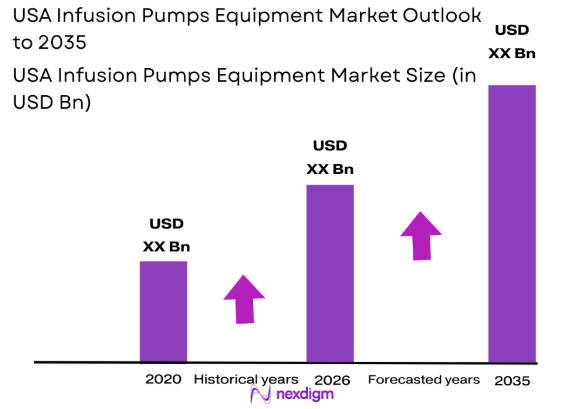
The USA infusion pumps equipment market is projected to reach approximately USD ~ billion, driven by the increasing demand for advanced healthcare solutions and the growing prevalence of chronic diseases. The market is also propelled by innovations in infusion pump technology, including wireless systems, smart pumps, and integrated drug delivery systems. The surge in home healthcare solutions and hospital usage is contributing significantly to market growth, as healthcare providers increasingly focus on reducing errors and improving patient outcomes.
Major players in the USA infusion pumps equipment market are concentrated in regions like California, Texas, and New York, driven by their robust healthcare infrastructure, technological advancements, and strong research and development initiatives. The growing healthcare demand in urban areas is further accelerated by the adoption of advanced healthcare systems. Additionally, government support and regulatory policies in the USA play a significant role in fostering the growth of infusion pump technologies, contributing to the nation’s dominance in the market.
Market Segmentation
By Product Type
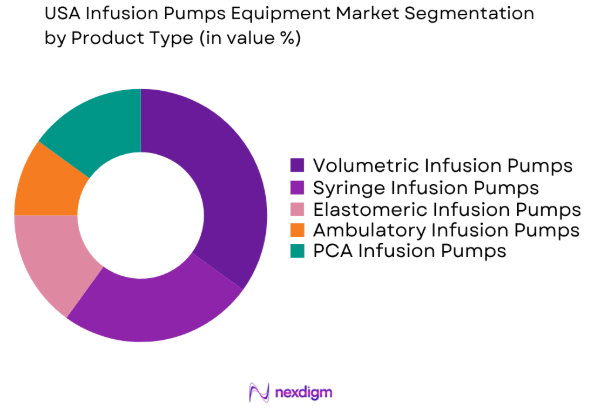
The USA infusion pumps equipment market is segmented by product type into volumetric infusion pumps, syringe infusion pumps, elastomeric infusion pumps, ambulatory infusion pumps, and patient-controlled analgesia (PCA) pumps. Recently, volumetric infusion pumps have dominated the market share due to their widespread adoption across hospitals and healthcare facilities. These pumps offer high precision, reliability, and flexibility in delivering fluids to patients, especially in critical care settings. Their ability to handle various medications and fluids at accurate rates has made them the preferred choice among healthcare providers, ensuring their market dominance.
By End User Segment
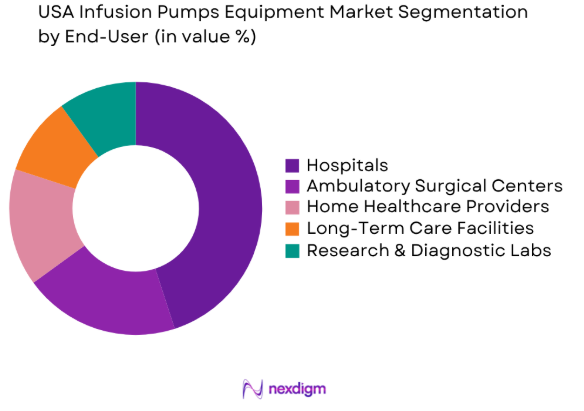
The USA infusion pumps equipment market is segmented by end-user into hospitals, ambulatory surgical centers (ASCs), home healthcare providers, long-term care facilities, and research & diagnostic laboratories. Hospitals have dominated the market share due to their extensive use of infusion pumps in critical care units, emergency departments, and surgical units. The high demand for infusion pumps in hospitals stems from the need for precise drug delivery in patients undergoing major surgeries or receiving intensive treatments. The constant evolution of hospital infrastructure and advancements in medical technologies have ensured hospitals’ dominance in the infusion pumps market.
Competitive Landscape
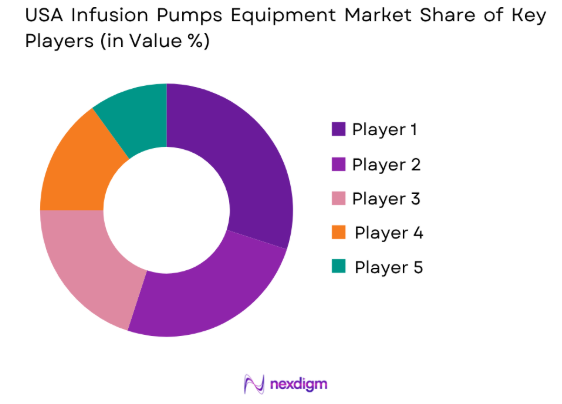
The competitive landscape of the USA infusion pumps equipment market is characterized by high levels of consolidation and a few dominant players who shape the market dynamics. These major players invest heavily in research and development and possess extensive distribution networks. There is a focus on acquiring innovative technologies and expanding product portfolios to cater to the evolving healthcare needs. Strategic collaborations, partnerships, and mergers are commonly seen as companies aim to enhance their market presence.
| Company Name | Establishment Year | Headquarters | Technology Focus | Market Reach | Key Products | Revenue | Market-Specific Parameter |
| Baxter International | 1931 | Deerfield, Illinois | ~ | ~ | ~ | ~ | ~ |
| Medtronic | 1949 | Minneapolis, Minnesota | ~ | ~ | ~ | ~ | ~ |
| B. Braun Medical | 1839 | Melsungen, Germany | ~ | ~ | ~ | ~ | ~ |
| ICU Medical | 1984 | San Clemente, California | ~ | ~ | ~ | ~ | ~ |
| Fresenius Kabi | 1999 | Bad Homburg, Germany | ~ | ~ | ~ | ~ | ~ |
USA Infusion Pumps Equipment Market Analysis
Growth Drivers
Technological Advancements in Infusion Pumps
Infusion pump technology is advancing rapidly, with many systems now incorporating smart features like wireless integration, advanced drug libraries, and alarms to prevent medication errors. These innovations are driving significant market growth, as healthcare providers and hospitals increasingly favor these systems for their enhanced patient safety, improved accuracy, and ease of management. Additionally, the rising demand for patient-controlled analgesia (PCA) pumps, which allow patients to manage their own pain relief, and mobile infusion pumps, which offer greater autonomy and comfort, is further contributing to the market’s expansion. These technologies help optimize treatment and improve patient outcomes, making them a key factor in the market’s development.
Expansion of Home Healthcare Solutions
The growing adoption of home healthcare services is driving the infusion pumps equipment market. Homecare offers cost-effective, convenient, and patient-centered care, leading to an increased demand for homecare infusion pumps. As more patients with chronic conditions like diabetes and cancer receive treatment at home, there is a rising need for portable, user-friendly, and affordable infusion pumps. This shift toward home healthcare is significantly contributing to market growth, especially for ambulatory infusion pumps and elastomeric infusion pumps. These solutions enable patients to manage their treatment in a comfortable environment, enhancing care efficiency and improving outcomes, which in turn accelerates market demand for such devices.
Market Challenges
High Cost of Infusion Pumps
A major challenge for the USA infusion pumps equipment market is the high cost of advanced infusion pump systems. Although these systems offer significant benefits such as enhanced precision and patient safety, their initial investment can be prohibitive for many healthcare facilities, particularly small and medium-sized hospitals. Additionally, maintenance costs and the need for ongoing training and software updates contribute to the total cost, making it difficult for some institutions to adopt these technologies despite their potential advantages. This high cost also hinders the widespread implementation of advanced infusion pump systems in emerging markets, limiting the accessibility of these innovations to a broader range of healthcare providers.
Regulatory and Compliance Barriers
The infusion pumps market in the USA is subject to strict regulation by the Food and Drug Administration (FDA) and other regulatory bodies. Manufacturers must comply with complex procedures to ensure their products meet safety and performance standards, which involves extensive testing and documentation. This regulatory process can delay product development and market entry, impacting time-to-market for new innovations. Additionally, companies must adhere to evolving healthcare regulations and data security standards, such as HIPAA, to protect patient information. These compliance requirements present ongoing challenges for manufacturers, as they work to maintain market access, ensure product safety, and uphold consumer trust in an increasingly regulated healthcare environment.
Opportunities
Rising Prevalence of Chronic Diseases
The rising prevalence of chronic conditions like diabetes, cardiovascular diseases, and cancer presents a significant opportunity for the infusion pumps market. Chronic patients often require long-term infusion therapies, such as insulin and chemotherapy, which increases the demand for infusion pumps. With the global aging population steadily growing, the need for advanced, precise infusion therapy systems is expected to rise as well. This trend offers companies the opportunity to develop specialized infusion pumps tailored for the treatment of chronic diseases, meeting the needs of this expanding patient population. By focusing on these market demands, manufacturers can position themselves to capitalize on the growing demand for effective and reliable infusion solutions.
Expanding Market for Wireless and Remote Monitoring Infusion Pumps
The rise of telemedicine and remote patient monitoring presents a growing opportunity for wireless infusion pumps, enabling healthcare providers to monitor patient conditions in real time. Wireless connectivity allows for continuous monitoring, improving patient safety and reducing the risk of medication errors. As healthcare providers focus on enhancing patient outcomes and reducing hospital readmission rates, the demand for wireless infusion systems is expected to increase. This shift toward remote care creates a prime opportunity for manufacturers to innovate and develop wireless infusion pump solutions. By offering real-time monitoring capabilities, these systems can help healthcare providers deliver better, more efficient care while improving patient experiences and safety.
Future Outlook
Over the next five years, the USA infusion pumps equipment market is expected to continue its upward trajectory, driven by innovations in smart and wireless technologies, along with the growing demand for patient-centered care. The market will witness increased adoption of ambulatory and home healthcare solutions, as more patients are treated outside of traditional hospital settings. Additionally, regulatory support for medical technologies and the growing focus on patient safety will play a crucial role in shaping the future of the market. Technological developments, such as real-time monitoring and integration with electronic health records, will further enhance the demand for infusion pumps.
Major Players
- Baxter International
- Medtronic
- B. Braun Medical
- ICU Medical
- Fresenius Kabi
- Smiths Medical
- Terumo Corporation
- Johnson & Johnson
- Philips Healthcare
- Mindray Medical
- ConvaTec
- Abbott Laboratories
- 3M Healthcare
- Hospira (Pfizer)
- Zyno Medical
Key Target Audience
- Healthcare providers
- Hospitals and healthcare institutions
- Pharmaceutical companies
- Medical equipment distributors
- Home healthcare service providers
- Medical technology developers
- Investments and venture capitalist firms
- Government and regulatory bodies
Research Methodology
Step 1: Identification of Key Variables
Key market variables such as product types, technologies, and regulatory requirements are identified to create a comprehensive analysis of the infusion pumps equipment market.
Step 2: Market Analysis and Construction
Detailed analysis is conducted on market trends, drivers, challenges, and opportunities to construct a well-rounded view of the market landscape.
Step 3: Hypothesis Validation and Expert Consultation
Market hypotheses are validated through consultations with industry experts, healthcare professionals, and medical device manufacturers to ensure the accuracy and reliability of the findings.
Step 4: Research Synthesis and Final Output
The collected data and insights are synthesized to create the final market report, which provides actionable recommendations and forecasts for market stakeholders.

- Executive Summary
- Research Methodology (Definitions, Scope, Industry Assumptions, Market Sizing Approach, Primary & Secondary Research Framework, Data Collection & Verification Protocol, Analytic Models & Forecast Methodology, Limitations & Research Validity Checks)

- Market Definition and Scope
- Value Chain & Stakeholder Ecosystem
- Regulatory / Certification Landscape
- Sector Dynamics Affecting Demand
- Strategic Initiatives & Infrastructure Growth

- Growth Drivers
Advancements in Smart Infusion Pump Technology
Increasing Prevalence of Chronic Diseases
Growing Demand for Homecare and Ambulatory Infusion Solutions - Market Challenges
High Cost of Infusion Pump Systems
Regulatory and Compliance Challenges
Risk of Infusion Pump Misuse and Safety Issues - Market Opportunities
Expansion of Homecare Infusion Solutions
Integration of AI and Machine Learning for Enhanced Infusion Management
Emerging Markets for Infusion Pumps in Developing Countries - Trends
Shift Towards Wireless and Remote Monitoring Capabilities
Growth in Patient-Controlled Analgesia (PCA) Pumps
Integration of Infusion Pumps with Hospital Information Systems (HIS) - Government Regulations
- SWOT Analysis of Key Competitors
- Porter’s Five Forces

- By Market Value, 2020-2025
- By Installed Units, 2020-2025
- By Average System Price, 2020-2025
- By System Complexity Tier, 2020-2025

- By System Type (In Value%)
Volumetric Infusion Pumps
Syringe Infusion Pumps
Elastomeric Infusion Pumps
Ambulatory Infusion Pumps
Patient-Controlled Analgesia (PCA) Pumps - By Platform Type (In Value%)
Smart Infusion Pumps
Traditional Infusion Pumps
Wireless Infusion Pumps
Multi-Channel Infusion Pumps
Infusion Pumps with Drug Libraries - By Fitment Type (In Value%)
Hospital-Based Infusion Pumps
Homecare Infusion Pumps
Clinical Care Infusion Pumps
Mobile Infusion Pumps
Standalone Infusion Pumps - By End User Segment (In Value%)
Hospitals
Ambulatory Surgical Centers (ASCs)
Home Healthcare Providers
Long-Term Care Facilities
Research & Diagnostic Laboratories - By Procurement Channel (In Value%)
Direct Sales
Distributor Sales
Online/Direct Online Purchase
Government Procurement
Group Purchasing Organizations (GPOs)

- Market Share Analysis
- Cross Comparison Parameters(System Type, Platform Type, End User Segment, Procurement Channel, Regulatory Compliance, Technological Innovation, Price Sensitivity, Market Accessibility, Safety & Risk Management, Customer Support and Service)
- SWOT Analysis of Key Competitors
- Pricing & Procurement Analysis
- Key Players
Baxter International
Medtronic
Smiths Medical
B. Braun Medical
ICU Medical
Fresenius Kabi
Johnson & Johnson
Terumo Corporation
Mindray Medical
Abbott Laboratories
ConvaTec
Hospira (Pfizer)
Philips Healthcare
3M Healthcare
Zyno Medical

- Hospitals (Critical Care Units)
- Homecare Providers
- Ambulatory Surgical Centers (ASCs)
- Long-Term Care Facilities

- Forecast Market Value, 2026-2035
- Forecast Installed Units, 2026-2035
- Price Forecast by System Tier, 2026-2035
- Future Demand by Platform, 2026-2035


 Request a Sample
 Ask for Customization
 Get a Quote
 Enquire Now