

 Download PDF
Market Overview
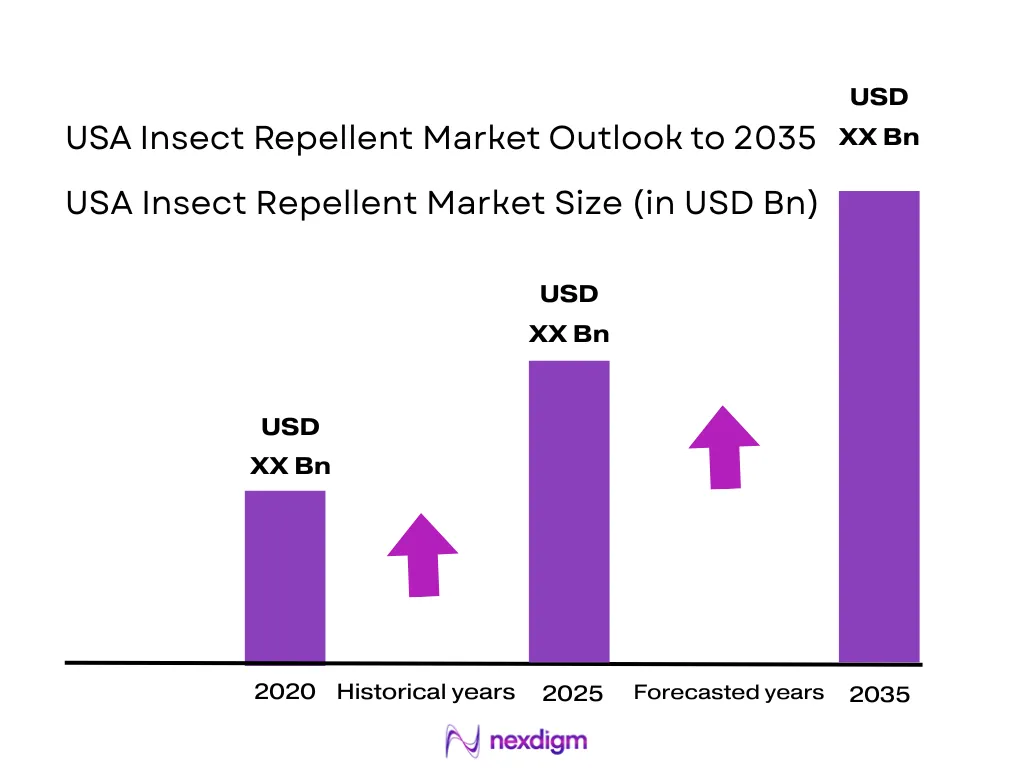
The USA insect repellent market is valued at approximately USD ~ billion in 2025, based on comprehensive industry estimates that capture consumer and commercial product revenue across sprays, lotions, wipes, and other repellent formats. This market scale is strongly driven by growing consumer awareness of insect‑borne disease risks, including mosquito‑ and tick‑related illnesses, and increasing outdoor recreational participation, which elevates demand for effective personal protection products. The shift toward health‑conscious and eco‑friendly solutions including natural repellents also underpins ongoing market expansion.
The market’s regional leadership is concentrated in urban and suburban hubs with high outdoor activity levels and mosquito/tick exposure risk. States such as Florida, Texas, California, and North Carolina demonstrate high adoption due to warm climates that sustain insect populations year‑round and robust outdoor lifestyles. In addition, Northeast coastal and Great Lakes regions exhibit significant consumption owing to heightened awareness of Lyme disease and other vector‑borne illnesses. These demand patterns reflect consumer behaviour toward protective health products and targeted public health education efforts in high‑risk zones.
Market Segmentation
By Product Type
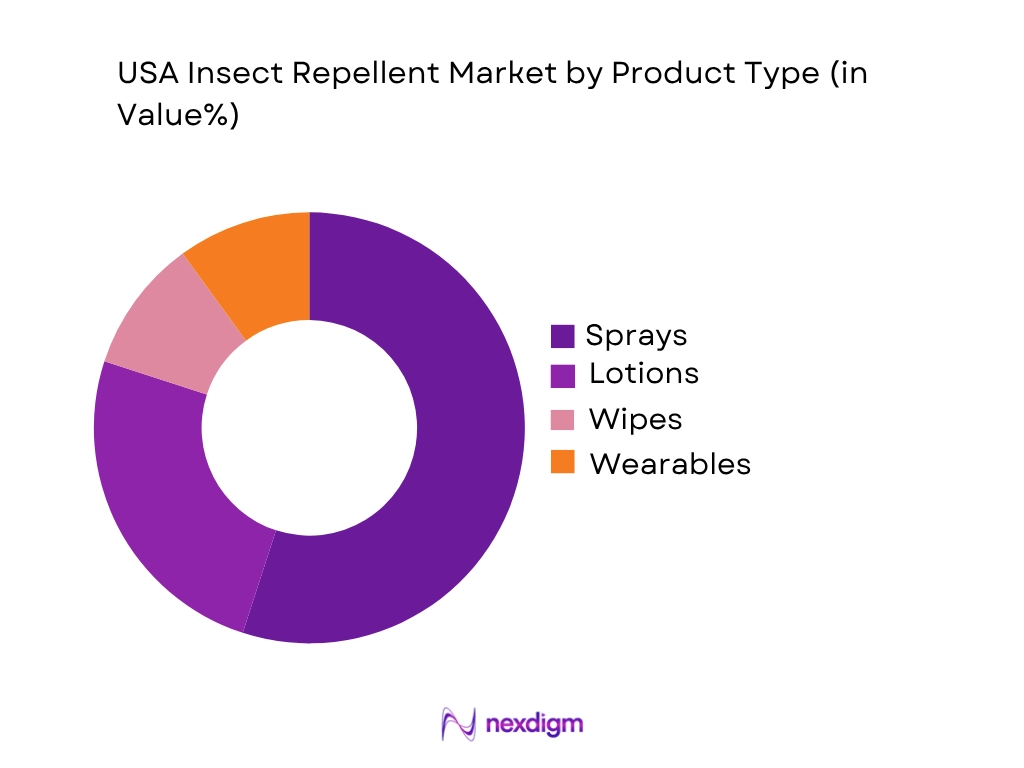
The USA insect repellent market is segmented into sprays/aerosols, lotions/creams, wipes, and wearables/other formats. Among these, sprays and aerosols retain dominant market share due to their immediate convenience, ease of application, and broad preference among outdoor and household consumers. Their portability and rapid protective coverage support strong retail demand across age groups, particularly among active outdoor users and families preparing for travel or visits to parks and recreational areas. Lotions and creams are gaining traction due to their prolonged coverage and suitability for sensitive skin, but sprays remain the default choice for general use. Wipes and wearable formats address specific use cases such as travel kits and children’s products, contributing moderate yet growing shares as consumer interest in convenient, non‑spray formats increases.
By Active Ingredient Type
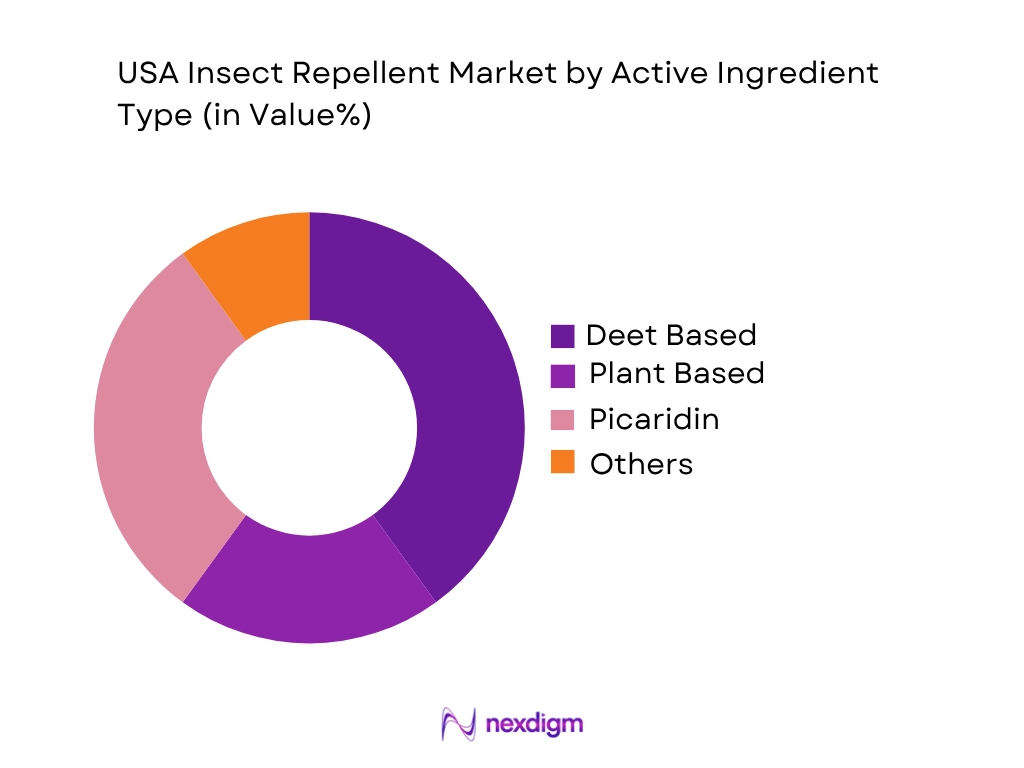
The market is segmented by DEET‑based, Picaridin, natural/plant‑based, and IR3535 & other ingredient categories. DEET‑based repellents remain the largest segment, retaining preference among consumers seeking robust protection due to broad efficacy against mosquitoes and ticks. DEET formulations are widely recognised in public health guidance for long‑term outdoor exposure, which sustains their adoption in high‑risk insect zones. Natural and plant‑based products, including essential oil‑derived repellents such as citronella and lemon eucalyptus, are rapidly expanding as health‑aware consumers seek non‑synthetic alternatives. Picaridin is recognised for balanced protection and is boosting its adoption, but remains secondary to DEET and natural options. IR3535 and other emerging actives contribute smaller shares but support diversification in formulation strategies.
Competitive Landscape
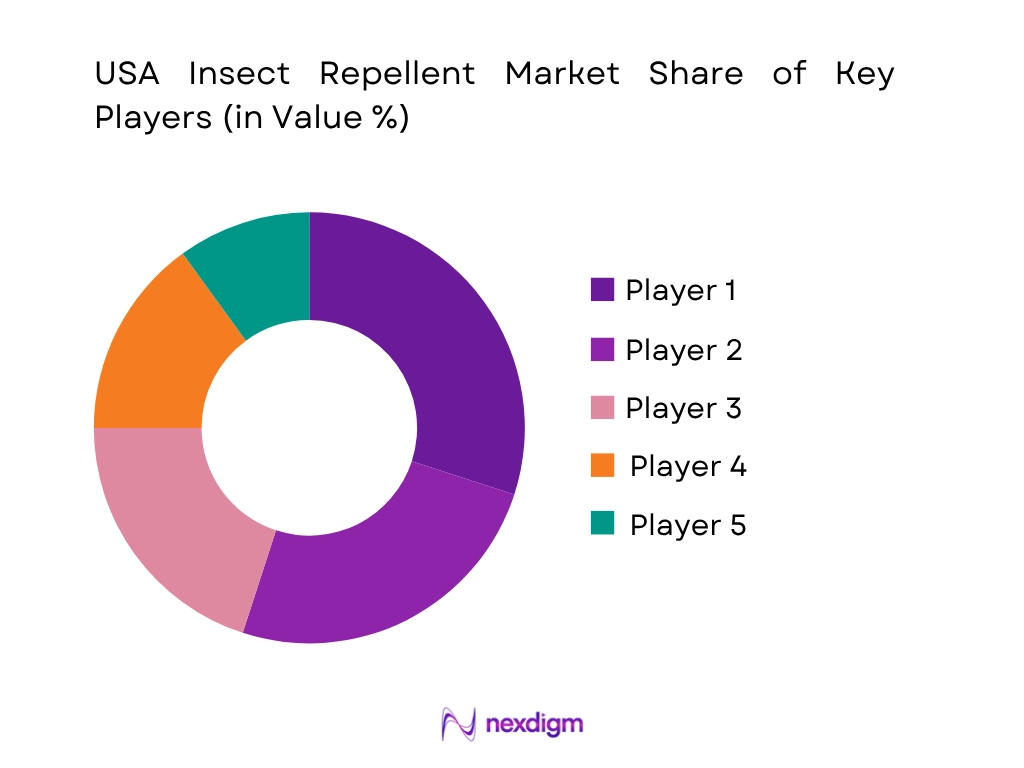
The USA insect repellent market reflects a mix of multinational CPG companies, specialised outdoor brands, and emerging natural product firms. Competitive intensity remains moderate, with established players leveraging extensive distribution channels and leading product awareness, while niche brands focus on formulation innovations and eco‑friendly positioning. The competitive ecosystem is anchored by consumer goods giants that leverage broad distribution and established insect‑protection technologies. Reckitt Benckiser and SC Johnson remain pivotal due to deep brand equity, varied active ingredient portfolios, and extensive supermarket and pharmacy coverage. Spectrum Brands combines global reach with diversified product offerings. Sawyer Products and Coghlan’s exploit outdoor‑specialty channels, positioning formula variations for camping and outdoor enthusiasts, enhancing relevance in niche consumption contexts. Overall, the landscape balances legacy corporate reach with agile niche innovation.
| Company | Establishment Year | Headquarters | Active Ingredient Focus | Distribution Channels | Product Range Breadth | Innovation Capability | Brand Recognition | Key Market Strength |
| Reckitt Benckiser Group PLC | 1819 | Slough, UK | ~ | ~ | ~ | ~ | ~ | ~ |
| SC Johnson & Son, Inc. | 1886 | Racine, WI, USA | ~ | ~ | ~ | ~ | ~ | ~ |
| Spectrum Brands Holdings, Inc. | 1906 | Middleton, WI, USA | ~ | ~ | ~ | ~ | ~ | ~ |
| Sawyer Products, Inc. | 1980 | Safety Harbor, FL, USA | ~ | ~ | ~ | ~ | ~ | ~ |
| Coghlan’s Ltd. | 1959 | Winnipeg, Canada | ~ | ~ | ~ | ~ | ~ | ~ |
USA Repellent Market Analysis
Growth Drivers
Vector‑Borne Disease Awareness
Vector‑borne diseases transmitted by mosquitoes, ticks, and other vectors remain a significant public health concern in the United States, driving consumer demand for effective insect repellents. In 2024, more than 7,500 locally acquired cases of mosquito‑borne diseases were reported across the U.S. and territories, including the highest number of locally acquired dengue infections ever recorded, with 6,228 cases in Puerto Rico and additional cases in states such as Florida and California. West Nile Virus has historically resulted in approximately 60,000 reported infections, 28,000 hospitalizations, and nearly 3,000 deaths since its introduction, illustrating the ongoing health burden of vector‑borne diseases. Simultaneously, nationally representative research suggests that over 31 million Americans experience a tick bite annually, reinforcing the widespread risk of tick‑borne illnesses such as Lyme disease and highlighting the need for personal protection measures. These documented disease risks from authoritative public health data directly influence consumer behavior toward adopting insect repellents as a primary preventative tool. Repellents are recommended by public health agencies as the most effective method for preventing bites that can lead to serious illness, underscoring how vector‑borne disease awareness acts as a core driver of repellent usage in both recreational and residential contexts.
Outdoor Lifestyle Adoption
The strong emphasis on outdoor activities and experiences in the U.S. creates a persistent context for insect repellent demand, as participation in outdoor recreation exposes people to environments where mosquitoes and ticks are prevalent. Federal economic statistics for 2024 show that the outdoor recreation economy generated $1.3 trillion in gross output, supported 5.2 million jobs, and accounted for 2.4 percent of U.S. GDP, reflecting broad and sustained participation in activities such as hiking, boating, camping, fishing, biking, and hunting. The Bureau of Economic Analysis reports that boating and fishing alone contributed $38.4 billion to GDP, demonstrating the financial scale and cultural penetration of outdoor engagement. In addition, millions of Americans prioritize outdoor lifestyles annually, engaging in conventional outdoor activities that inherently involve exposure to vector habitats. National statistics further indicate that conventional outdoor recreation—including bicycling, hiking, and hunting—remains a significant segment of the overall outdoor economy, with employment in these activities increasing in most states in 2024. With a population that frequently engages in outdoor leisure, fitness, and tourism, insect repellent products become essential safety items to mitigate vector exposure risk. The macroeconomic prevalence and institutionalization of outdoor recreation therefore translate into consistent consumer uptake of repellents for both routine and seasonal use.
Market Challenges
Skin Safety Concerns
Safety considerations associated with dermal application of insect repellents are a critical market challenge due to potential skin irritation, allergic reactions, and consumer caution over topical products. Although the Environmental Protection Agency (EPA) has approved multiple active repellent ingredients (including DEET, picaridin, IR3535, and oil of lemon eucalyptus) for registered skin‑applied products, each approval involves assessment of its potential risk profile when used as directed. Under current EPA guidelines, more than 500 products registered for DEET and approximately 45 products containing IR3535 are evaluated for human safety, yet consumer perceptions about skin sensitivity remain a barrier to adoption because repellents are applied directly to skin for extended periods. Additionally, products that fall under minimum risk pesticide exemptions are not evaluated for effectiveness, which can create consumer uncertainty about both safety and efficacy. Beyond formal EPA registration, the U.S. Food and Drug Administration (FDA) maintains a framework for cosmetic safety that does not require pre‑market approval of most ingredients, placing responsibility on manufacturers to ensure product safety under labeled usage conditions. This decentralized safety system has led to consumer doubt and increased scrutiny of topical products, particularly those intended for children or sensitive skin, which in turn constrains market penetration and encourages demand for gentler formulations backed by clear safety data.
Ingredient Regulatory Restrictions
Regulatory compliance surrounding active ingredients in insect repellents constitutes an ongoing challenge, driven by enforcement of pesticide registration standards and safety protocols under U.S. law. The Federal Insecticide, Fungicide, and Rodenticide Act (FIFRA) requires that most skin‑applied repellents be registered with the EPA before they are marketed, ensuring that the active ingredients meet specific safety and labeling criteria. Products that do not meet these criteria, including those making unverified disease prevention claims, must undergo full registration and compliance documentation. This framework limits the speed at which new ingredients and innovative formulations enter the market and increases the technical burden on manufacturers seeking to differentiate products. Additionally, although certain plant‑derived actives such as citronella and cedar oil may qualify for minimum risk pesticide exemptions, they cannot be marketed with disease control claims unless formally registered, restricting the ability to leverage botanical appeal while complying with regulatory requirements. This regulatory landscape increases R&D and compliance costs and necessitates careful coordination with federal authorities to avoid enforcement actions against products lacking proper registration, thus acting as a significant constraint on product development and market entry.
Opportunities
Biopesticide Launches
The regulatory environment for insect repellents presents an opportunity for biopesticide or bio‑based active ingredient launches, reflecting consumer preference for products perceived as safer and more natural while maintaining effectiveness. EPA registers several botanical‑derived and bioactive compounds, and plant‑derived actives such as oil of lemon eucalyptus, p‑menthane‑3,8‑diol (PMD), and catnip oil are already included among EPA‑approved ingredients. For example, oil of lemon eucalyptus is separately regulated and appears in six registered repellent products, while less conventional bio actives like catnip oil are recognized in additional registered formulations. Repellents incorporating botanical actives benefit from regulatory acceptance under EPA frameworks when properly registered, yielding opportunities for differentiation in segments of the market seeking “natural” protection options. Regulatory clarity and the expansion of listed bioactive compounds provide a foundation for companies to innovate within defined compliance parameters. With more consumers scrutinizing ingredient lists and preferring plant‑based solutions, the presence of EPA‑registered bio actives offers a pathway to product diversification. Developments in biopesticide science and formulation technology also support expansion of new classes of actives that meet both EPA safety evaluation and consumer expectations for reduced synthetic chemical exposure, creating a conduit for future product portfolio growth.
Smart Repellent Devices
Emerging smart technologies represent an opportunity for novel insect repellent delivery systems that integrate data connectivity and automated control—catering to high‑value end uses such as outdoor recreation, residential comfort, and professional pest management. While traditional skin‑applied products dominate, the broader trend of connected consumer devices creates scope for advanced solutions such as wearable repellents, automated diffusers, and app‑linked pest deterrent systems. The significant size of the outdoor recreation economy—$1.3 trillion in gross output and reliance on environmental exposure activities like boating, hiking, and camping—supports demand for innovative protection modalities that go beyond traditional sprays or lotions. Devices that provide timed release, environmental sensing, or localized vector deterrence align with the growing consumer interest in smart home and wearable technology ecosystems. Furthermore, integration of such devices with outdoor gear and travel accessories could enhance user experience for the millions of Americans engaged in outdoor lifestyles annually, supporting sustained adoption and premium pricing strategies. These technology‑enhanced repellent solutions could address both convenience and efficacy expectations that conventional formats do not currently meet.
Future Outlook
Over the next decade, the USA insect repellent market is expected to maintain steady expansion supported by sustained awareness of insect‑borne health risks and a broad outdoor lifestyle culture. Consumer preference shifts toward natural, safe, and sustainable repellents will encourage product diversification and innovation, particularly in botanically derived actives and novel wearable formats. Technological advancements in formulation, including long‑lasting and multi‑insect protection products, will support premium segment growth. E‑commerce and omnichannel distribution will further facilitate accessibility and personalised purchasing behaviours. Growth catalysts will also include public health campaigns and heightened attention to vector‑borne diseases, reinforcing the preventive usage of repellents across residential and commercial end uses.
Major Players
- Reckitt Benckiser Group PLC
- SC Johnson & Son, Inc.
- Spectrum Brands Holdings, Inc.
- Sawyer Products, Inc.
- Coghlan’s Ltd.
- 3M Company
- Ecolab Inc.
- Johnson & Johnson
- ExOfficio LLC
- Insect Shield LLC
- Murphy’s Naturals
- Wondercide LLC
- California Baby
- Bug Band, LLC
- Earthley Products
Key Target Audience
- Brand and Product Managers of FMCG and personal protection companies
- Portfolio Strategy Heads at consumer goods manufacturers
- Product Development and R&D Teams focusing on formulation innovation
- Investments and Venture Capitalist Firms targeting consumer health and protection
- Retail Category Managers for supermarkets, pharmacies, and outdoor specialty stores
- Supply Chain and Procurement Leaders in multinational CPG and retail enterprises
- Government and Regulatory Bodies (CDC, EPA) involved in vector control policy and product safety standards
- Corporate Strategy and Business Planning Executives in health‑oriented consumer goods firms
Research Methodology
Step 1: Market Scoping and Data Collection
The initial stage involved defining key variables influencing the insect repellent market, using secondary sources, industry reports, and credible databases. These data establish market definitions, segment frameworks, and historical revenue figures.
Step 2: Quantitative Analysis and Sizing
Historical revenue and volume data were compiled and analysed to quantify the current market size. Product types and active ingredient categories were evaluated to map structural dynamics and consumer preferences.
Step 3: Expert Validation and Qualitative Inputs
Hypotheses were developed around demand drivers and future trends, then validated through insights from industry experts, distribution partners, and supply chain stakeholders.
Step 4: Forecasting and Modeling
Using bottom‑up approaches and industry benchmarks, future projections were modelled with validated growth assumptions. This phase integrated macro trends, consumption behaviour, and adoption patterns to produce the outlook and CAGR estimates.

- Executive Summary
- Research Methodology (Market Definitions and Assumptions, Abbreviations & Terminology, Market Sizing Protocols (Revenue/Volume/Active Ingredient Penetration) Primary & Secondary Data Sources, Data Triangulation Methods Limitations & Confidence Intervals)

- Market Definition and Scope
- Historical Genesis & Industry Evolution
- Insect Vector Disease Impact on Market Demand
- Product Value Chain & Supply Chain Architecture
- Market Dynamics Framework

- Growth Drivers (Vector-borne disease awareness, Outdoor lifestyle adoption, Seasonal outbreak awareness, EPA compliance trust)
- Market Challenges (Skin safety concerns, Ingredient regulatory restrictions, Raw material volatility)
- Opportunities (Biopesticide launches, Smart repellent devices, Eco-friendly products) Trends (Premiumization, Multi-functional repellents, Botanical formulations)
- Regulatory Environment (EPA active ingredient approvals, Label claim requirements, State-level restrictions)
- Value Chain and Supply Chain Analysis (Raw material sourcing, Manufacturing hubs, Logistics nodes, Distribution efficiency, QA standards)
- Pricing Dynamics and Margin Stack (ASP by product form, Channel economics, Promotional cadence)
- Private Label vs Branded Landscape (Brand trust, Innovation frequency, Shelf visibility, Online presence)
- SWOT Analysis of Industry
- Stakeholder Ecosystem (Manufacturers, Retailers, Distributors, Online platforms, Regulatory bodies)
- Porter’s Five Forces Analysis
- Competitive Landscape Overview (Major players influence, Market consolidation, Distribution reach, Innovation pipeline)

- By Market Revenue (2020 – 2025)
- By Market Volume (2020 – 2025)
- By Market ASPs (2020 – 2025)
- By Historical Growth Rates and CAGR Benchmarks (2020 – 2025)

- By Product Type (In Value %)
Sprays
Cream and Lotion Formats
Wipes & Patches
Roll‑Ons
Coils / Mosquito Mats / Trap Systems - By Active Ingredient (In Value %)
DEET Based
Picaridin IR3535
Plant‑Based & Essential Oils
Other Emerging Bio actives - By End‑User (In Value %)
Residential Consumers
Commercial (Hospitality, Tourism)
Outdoor Recreation Segment
Institutional / Government - By Distribution Channel (In Value %)
E‑Commerce Platform Penetration
Modern Retail
Pharmacies & Drugstores
Specialty Outdoor & Sporting Goods Stores
Traditional & Independent Retail - By Geography (In Value %)
West US
South US
Midwest
Northeast
Non‑Contiguous States & Territories

- Competitive Landscape and Market Concentration (Top-player dominance, Market fragmentation, Portfolio breadth, Channel distribution)
- Market Share of Major Players by Value and Volume (Overall, Product form-wise, Channel-wise, Branded vs Private-label)
- Cross Comparison Parameters (Product portfolio depth, Distribution reach (retail + online), Online D2C penetration %, Innovation cadence, ASP by SKU, Sustainability credentials, Material traceability score, Seasonal SKU frequency)
- Category-Claim Benchmarking (Premium, Mid-Tier, Economy, Botanical, DEET, Picaridin, IR3535, Eco-friendly products)
- SKU Pricing and Pack Architecture Analysis (ASP by product, Bundle offerings, Promotional depth, SKU size normalization)
- SWOT Analysis of Major Players
- Manufacturing Footprint and Capacity Analysis (Owned vs contract manufacturing, Domestic vs imported, Batch flexibility, Private-label production)
- Certifications, Claims, and Innovation Benchmarking (EPA registration, Biopesticide claims, Sustainability certifications, New product cadence, Hero SKU launches)
- Key Company Profiles
Reckitt Benckiser Group PLC
SC Johnson & Son, Inc.
Spectrum Brands Holdings, Inc.
Sawyer Products, Inc.
Coleman Company, Inc.
3M Company
Ecolab Inc.
Johnson & Johnson
ExOfficio LLC
Insect Shield LLC
Bug Band, LLC
Murphy’s Naturals
California Baby
Wondercide LLC
Coghlan’s Ltd

- Buyer Cohort Profiling (Age, Gender, Income, Outdoor activity, Urban vs suburban, Travel frequency)
- Purchase Drivers and Barriers (Brand reputation, Price sensitivity, Safety perception, Availability)
- Shopper Journey and Decision Funnel (Awareness channels, Influencer / social media impact, Product trial, Reviews, Repurchase motivators)
- Channel Behavior Analysis (Online vs offline, Replenishment cycles, Basket composition, Cross-category bundling)
- E-Commerce, D2C, and Social Commerce Analysis (Traffic source, CAC, Conversion rate, Repeat purchase rate)
- Basket Composition and Repurchase Economics (Cross-sell & upsell, Attach rate, Seasonal preference)
- Retailer and Influencer / Specialist Influence (Shelf curation, Endorsements, Expert recommendations)

- By Market Revenue (2026 – 2035)
- By Market Volume (2026 – 2035)
- By Market ASPs (2026 – 2035)
- By Historical Growth Rates and CAGR Benchmarks (2026 – 2035)


 Request a Sample
 Ask for Customization
 Get a Quote
 Enquire Now