
 Download PDF
Market Overview
The UAE Insecticide Market is valued at approximately USD ~ million, forming a significant component of the country’s broader pesticide and crop protection industry. Demand is primarily driven by protected agriculture, greenhouse cultivation, date palm farming, landscaping projects, urban pest management, and public-health vector control programs. The UAE’s emphasis on food security, hydroponic farming, and controlled-environment agriculture has increased insecticide consumption across agricultural applications. Additionally, municipal mosquito-control initiatives, hospitality infrastructure, and urban landscaping programs continue to support insecticide demand across non-agricultural sectors.
Market Segmentation
By Product Category
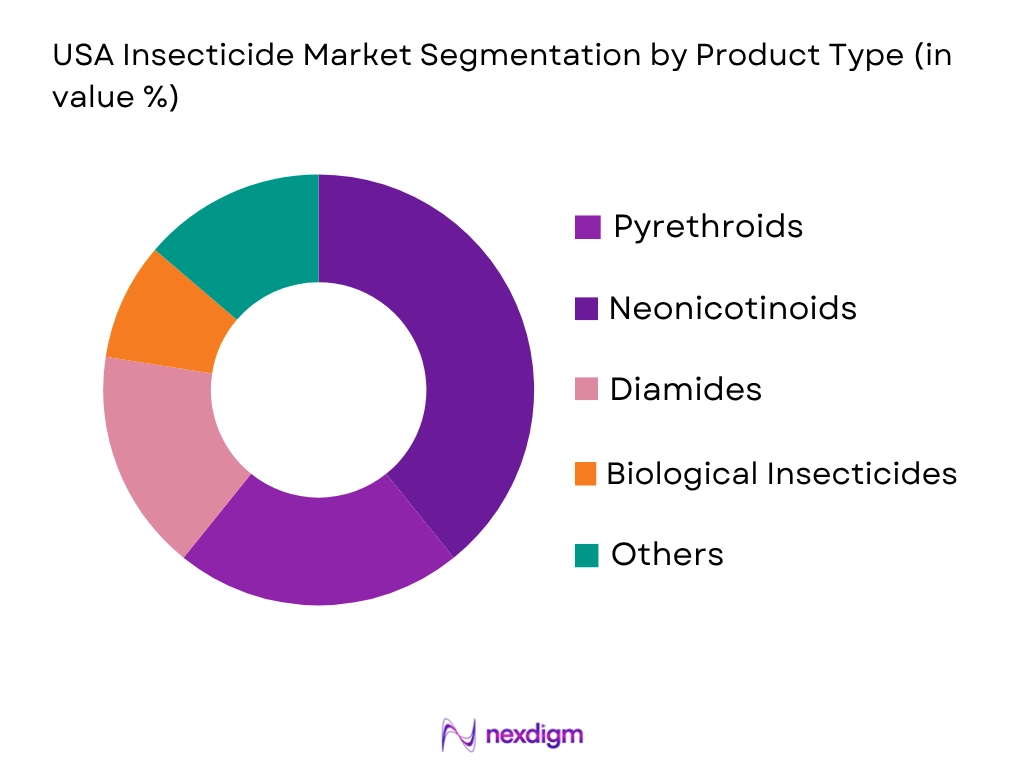
UAE Insecticide Market is segmented by product class into pyrethroids, neonicotinoids, biological insecticides, organophosphates, and others. Recently, pyrethroids have held the dominant market share in the UAE under product class due to their broad-spectrum efficacy against mosquitoes, flies, cockroaches, aphids, whiteflies, and other economically significant pests. Their extensive use in public-health programs, municipal mosquito-control initiatives, hospitality facilities, warehouses, residential communities, and greenhouse cultivation has strengthened their leadership position. Products containing deltamethrin, lambda-cyhalothrin, cyfluthrin, and cypermethrin are widely registered and utilized across agricultural and urban applications. The dominance of pyrethroids is further supported by rapid knockdown action, low application volumes, compatibility with integrated pest management strategies, and strong adoption among professional pest-control operators. Growing concerns regarding vector-borne diseases and increasing urban pest-management activities continue to reinforce demand for pyrethroid-based insecticides across the UAE market.
By Crop Type
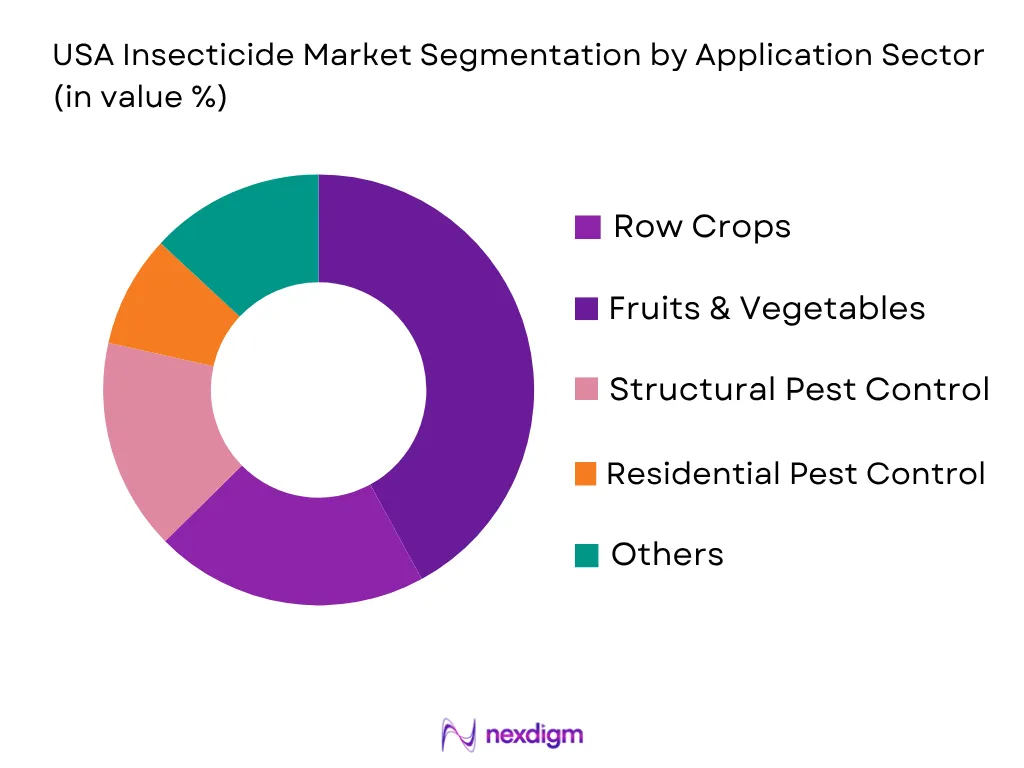
UAE Insecticide Market is segmented by crop type into fruits and vegetables, date palm, greenhouse crops, cereals and fodder crops, and others. Recently, fruits and vegetables have held the dominant market share because the UAE’s food-security strategy emphasizes domestic production of fresh produce through protected cultivation and controlled-environment agriculture. Tomatoes, cucumbers, peppers, leafy vegetables, strawberries, and specialty crops are highly susceptible to pests such as whiteflies, thrips, aphids, and caterpillars, requiring continuous insecticide application. Intensive cultivation cycles, high crop value, and stringent quality requirements encourage growers to invest in effective insect-control solutions. Additionally, greenhouse farming systems create environments where pest populations can proliferate rapidly, increasing insecticide demand. The segment also benefits from government investments in hydroponics, vertical farming, and greenhouse expansion, making fruits and vegetables the most significant consumer category for insecticides in the UAE agricultural sector.
Competitive Landscape
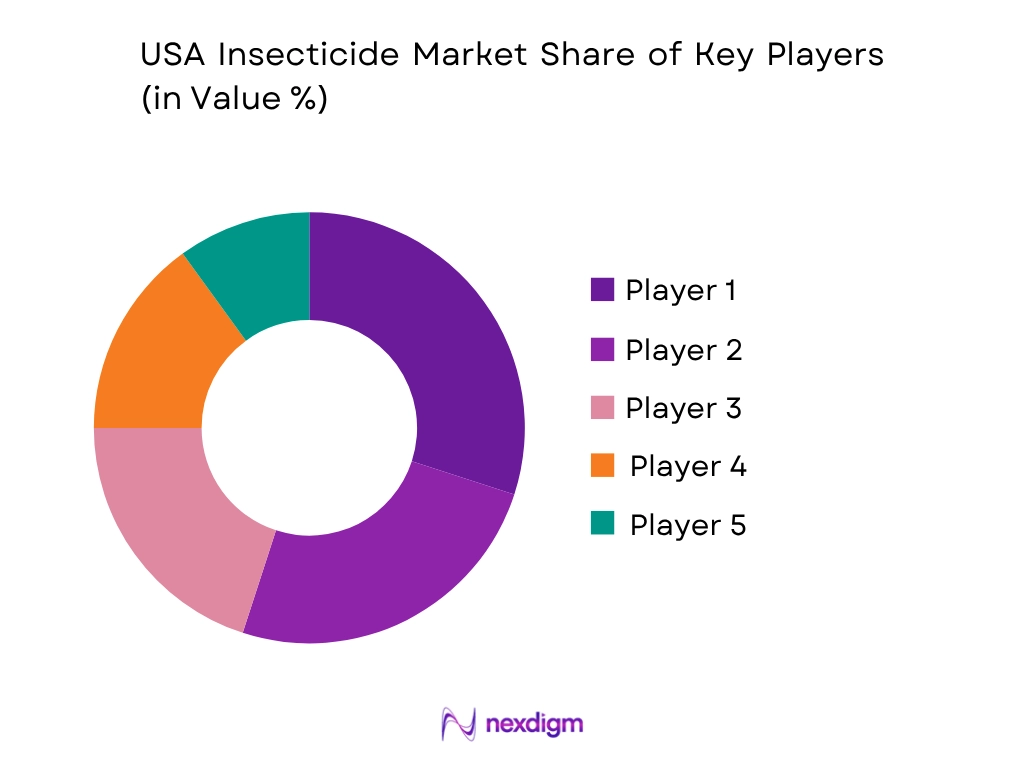
The UAE Insecticide Market is moderately consolidated with global crop-protection companies competing alongside regional distributors and agrochemical suppliers. Multinational manufacturers dominate premium insecticide formulations, while local distributors provide market access, registration support, and technical services. Competition is driven by product efficacy, regulatory approvals, biological portfolio strength, greenhouse-crop penetration, public-health insecticide registrations, and integrated pest-management capabilities. Sustainable and bio-based insecticide offerings are increasingly becoming important competitive differentiators.
| Company | Establishment Year | Headquarters | UAE Presence | Key Insecticide Portfolio | Biological Solutions | Greenhouse Focus | Public Health Portfolio | Distribution Strength |
| Bayer Crop Science | 1863 | ~ | ~ | ~ | ~ | ~ | ~ | ~ |
| Syngenta Group | 2000 | ~ | ~ | ~ | ~ | ~ | ~ | ~ |
| BASF Agricultural Solutions | 1865 | ~ | ~ | ~ | ~ | ~ | ~ | ~ |
| FMC Corporation | 1883 | ~ | ~ | ~ | ~ | ~ | ~ | ~ |
| UPL Limited | 1969 | ~ | ~ | ~ | ~ | ~ | ~ | ~ |
UAE Insecticide Market Analysis
Growth Drivers
Expansion of Protected Agriculture and Food Security Programs
The UAE Insecticide Market is strongly supported by the country’s food security strategy and increasing investment in controlled-environment agriculture. The UAE’s population reached 10.88 million in 2024 according to World Bank data, creating higher demand for domestic food production and crop protection solutions. The UAE economy generated USD 552.3 billion GDP in 2024, providing strong investment capacity for agricultural modernization. The government continues to promote greenhouse farming, hydroponics, vertical farming, and date palm cultivation to reduce food import dependency. Furthermore, the UAE-backed Agriculture Innovation Mission for Climate (AIM for Climate) accumulated USD 29.2 billion in commitments and launched nearly 130 agricultural projects involving over 800 partners, supporting advanced farming technologies that require effective pest management systems. These developments increase demand for insecticides used in fruits, vegetables, greenhouse crops, and date plantations. Protected agriculture environments often face high pest pressure from whiteflies, aphids, thrips, and caterpillars, reinforcing the need for modern insecticide solutions across the UAE agricultural sector.
Urban Expansion, Landscaping Activities and Public Health Pest Control
Rapid urban development across Dubai, Abu Dhabi, Sharjah, and other emirates is driving substantial demand for insecticides in municipal, residential, hospitality, and commercial applications. The UAE population increased from 10.48 million in 2023 to 10.99 million in 2024, while Abu Dhabi alone reached 4.14 million residents. Urban population concentration requires extensive mosquito control, cockroach management, fly control, termite treatment, and vector management programs. The World Bank reports that the UAE remains one of the most urbanized economies globally, with urban population accounting for the overwhelming majority of residents. Expansion of tourism infrastructure, residential communities, logistics facilities, and hospitality projects further increases pest management requirements. Additionally, the IMF reported strong economic activity across construction, tourism, and real estate sectors, supported by GDP growth and rising domestic investment. These factors collectively stimulate insecticide demand in public-health applications, landscaping projects, golf courses, parks, and municipal sanitation programs throughout the UAE.
Market Challenges
Limited Arable Land and Water Scarcity Constraints
One of the major challenges facing the UAE Insecticide Market is the country’s limited agricultural land base and severe water scarcity. According to the World Bank, annual freshwater withdrawals exceed 1,510% of internal renewable water resources, highlighting the structural limitations of agricultural expansion. The UAE’s desert climate restricts conventional farming activities, concentrating agricultural production in greenhouses and protected environments. While these systems increase productivity, they also limit the overall cultivated area available for insecticide consumption. The government continues investing in food security initiatives, yet agricultural development remains constrained by environmental conditions. Farmers often rely on high-cost irrigation, desalinated water, and advanced cultivation systems. As a result, insecticide demand growth remains dependent on productivity improvements rather than large-scale farmland expansion. These structural limitations create challenges for suppliers seeking to increase sales volumes through broader agricultural acreage growth, particularly compared with major agricultural economies.
Stringent Regulatory Requirements and Shift Toward Sustainable Pest Management
The UAE government has increasingly emphasized food safety, environmental sustainability, and responsible pesticide usage. This creates challenges for manufacturers and distributors seeking registration and commercialization of insecticide products. Regulatory authorities require extensive product evaluation, residue compliance, and environmental risk assessments before approval. Simultaneously, food security initiatives are promoting sustainable farming systems and biological crop-protection technologies. The UAE’s focus on climate-resilient agriculture is supported through national programs and international partnerships, including initiatives involving more than 800 agricultural stakeholders globally. This policy direction encourages gradual substitution of certain conventional insecticides with lower-toxicity alternatives. Manufacturers must continuously invest in reformulation, registration, stewardship programs, and compliance measures. For smaller distributors and regional suppliers, maintaining regulatory compliance while competing against multinational agrochemical companies presents a significant operational challenge. The increasing emphasis on sustainability is reshaping product portfolios and raising barriers to entry across the UAE insecticide industry.
Market Opportunities
Growth of Biological Insecticides and Precision Agriculture Technologies
The UAE’s transition toward sustainable agriculture creates substantial opportunities for biological insecticides, integrated pest management (IPM), and precision-application technologies. The government continues to invest heavily in modern farming systems, including vertical farms, hydroponics, and controlled-environment agriculture. A recent indoor farming initiative announced in Abu Dhabi involves investments of USD 680 million and aims to establish multiple advanced farming facilities capable of producing over 4.5 million pounds of strawberries annually. Such highly controlled cultivation environments favor targeted pest management approaches, including biological insecticides and precision application systems. Growers increasingly seek residue-compliant solutions that meet stringent food safety requirements while maintaining crop productivity. The combination of advanced cultivation methods, government support for agricultural innovation, and increasing consumer demand for safe food products positions biological crop-protection technologies as a major future opportunity within the UAE Insecticide Market.
Expansion of Domestic Food Production and Greenhouse Farming
The UAE continues to prioritize domestic food production through large-scale investments in greenhouse agriculture, horticulture, and climate-smart farming systems. The country’s GDP reached USD 552.3 billion in 2024, providing substantial fiscal resources for food security investments. Government strategies encourage increased local production of fruits, vegetables, herbs, and specialty crops through controlled-environment cultivation. Greenhouse systems create year-round growing conditions but also increase vulnerability to pests such as whiteflies, thrips, aphids, mites, and caterpillars. Consequently, demand for specialized insecticide products remains closely linked to greenhouse expansion. In addition, partnerships between government entities, private investors, and international agricultural technology providers continue accelerating adoption of advanced farming infrastructure. As local production targets increase and food supply chains become more localized, insecticide suppliers can benefit from expanding crop protection requirements across commercial greenhouse operations and high-value horticultural production systems throughout the UAE.
Future Outlook
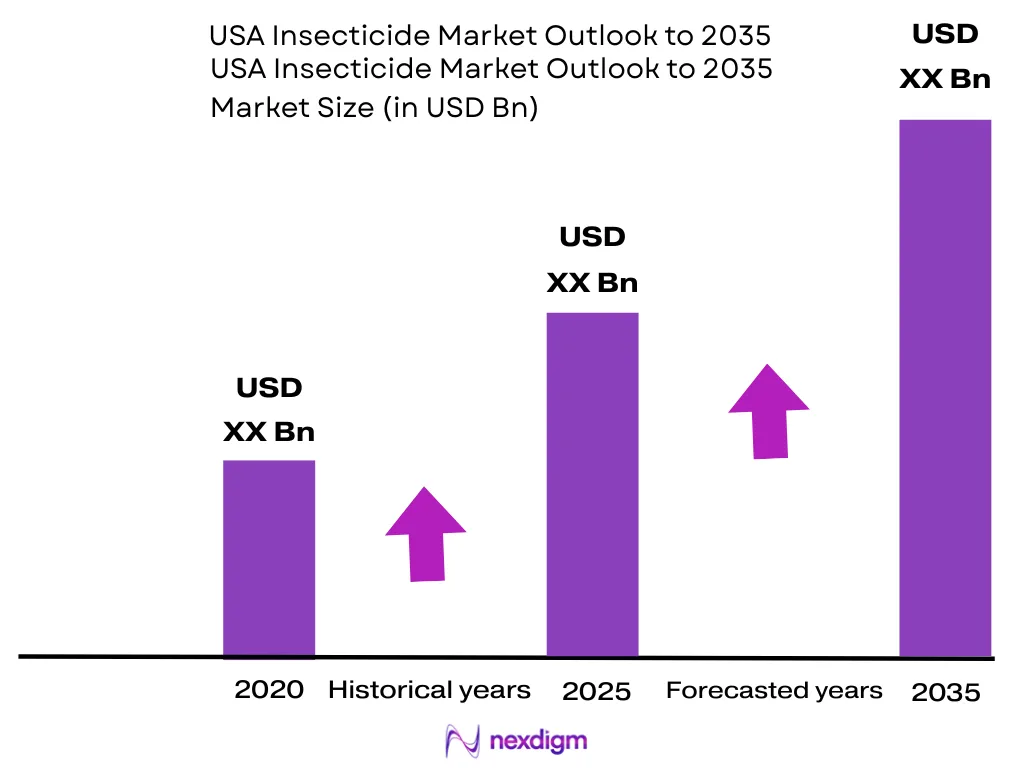
The UAE Insecticide Market is expected to witness steady expansion during the forecast period, supported by increasing food-security investments, greenhouse agriculture, hydroponic farming, and protected cultivation systems. Government initiatives aimed at reducing dependence on food imports are encouraging greater adoption of crop-protection products across commercial farms. Demand growth will be particularly strong in biological insecticides, precision-application technologies, greenhouse crop protection, and integrated pest-management programs. Date palm cultivation and high-value horticulture will remain important demand generators across Abu Dhabi and Al Ain. Urban pest management, hospitality infrastructure expansion, and municipal vector-control programs will continue supporting non-agricultural insecticide consumption. The growing emphasis on sustainability and environmental compliance is expected to accelerate the adoption of biological and reduced-risk insecticide formulations. The UAE Insecticide Market is forecast to expand at a CAGR of approximately 5.2% during 2026-2035.
Major Players
- Bayer Crop Science
- Syngenta UAE
- BASF UAE
- FMC Corporation
- UPL Limited
- Corteva Agriscience
- Nufarm Limited
- Sumitomo Chemical
- Adama Agricultural Solutions
- Certis Biologicals
- Koppert Biological Systems
- Emirates Rawabi Est.
- Anglo Gulf Limited
- AGRI Ventures FZE
- Russell IPM
Key Target Audience
- Agrochemical Manufacturers
- Insecticide Formulation Companies
- Agricultural Input Distributors
- Greenhouse and Protected Agriculture Operators
- Date Palm Growers and Horticulture Producers
- Professional Pest Control Service Providers
- Investments and Venture Capitalist Firms
- Government and Regulatory Bodies
Research Methodology
Step 1: Identification of Key Variables
The initial phase involves constructing an ecosystem map encompassing all major stakeholders within the UAE Insecticide Market. This includes manufacturers, distributors, greenhouse operators, horticulture producers, pest-control companies, government agencies, and agricultural cooperatives. The objective is to identify critical variables such as product class demand, crop-specific consumption, regulatory approvals, and distribution network structure.
Step 2: Market Analysis and Construction
In this phase, historical market information is compiled and analyzed. The study evaluates insecticide consumption patterns across agriculture, horticulture, public health, landscaping, and pest-management applications. Market sizing is developed using top-down and bottom-up approaches, supported by import statistics, crop acreage, greenhouse expansion, and product registration analysis.
Step 3: Hypothesis Validation and Expert Consultation
Market assumptions are validated through interviews with agrochemical distributors, greenhouse operators, pest-control service providers, crop-protection specialists, and regulatory stakeholders. These consultations provide insights into purchasing behavior, formulation preferences, biological product adoption, pest-pressure trends, and competitive positioning.
Step 4: Research Synthesis and Final Output
The final stage integrates secondary research findings, regulatory data, company intelligence, and primary interviews. Multiple validation layers are used to refine market estimates, segmentation analysis, competitive benchmarking, growth drivers, and future opportunities. The output delivers a comprehensive assessment of the UAE Insecticide Market.

- Executive Summary
- Research Methodology (Market definitions and assumptions, abbreviations, UAE insecticide taxonomy, public health pest control scope, agricultural crop protection classification, municipality pest management framework, market sizing approach, top-down and bottom-up triangulation, distributor validation, pest control operator interviews, agricultural farm surveys, hospitality sector consultations, agrochemical import analysis, active ingredient mapping, limitations and future conclusions)

- Definition and Scope
- Overview Genesis
- Timeline of Major Players
- Business Cycle
- Supply Chain and Value Chain Analysis

- Growth Drivers (Urbanization and population growth, hospitality and tourism expansion, food security initiatives, greenhouse farming growth, public health vector control programs, infrastructure development, increasing pest management awareness, integrated pest management adoption)
- Market Challenges (Dependence on imported active ingredients, stringent pesticide registration requirements, resistance development in pests, environmental concerns, extreme climatic conditions, counterfeit products, skilled labor shortages, regulatory compliance costs)
- Opportunities (Biological insecticide adoption, smart pest monitoring systems, precision agriculture expansion, greenhouse crop protection, sustainable pest management solutions, municipal vector control modernization, digital pest management platforms, integrated pest management services)
- Market Trends (Biological pest control solutions, IoT-enabled pest monitoring, drone-based pesticide application, low-residue insecticides, AI-based pest detection, smart city pest management integration, eco-friendly formulations, data-driven vector surveillance)
- Government Regulation (Ministry of Climate Change and Environment registration requirements, UAE pesticide residue standards, municipality pest control licensing, food safety compliance regulations, public health vector control guidelines, agrochemical import controls, environmental protection standards, integrated pest management initiatives)
- SWOT Analysis
- Stakeholder Ecosystem
- Porter’s Five Forces
- Competition Ecosystem

- By Market Value (2020-2025)
- By Volume Consumption (2020-2025)
- By Active Ingredient Consumption (2020-2025)

- By Product Category (In Value %)
Pyrethroids
Neonicotinoids
Biological Insecticides
Organophosphates
Others - By Application Sector (In Value %)
Public Health and Vector Control
Agricultural Crop Protection
Commercial Pest Control
Residential Pest Control
Industrial and Warehousing Pest Management - By Target Pest Type (In Value %)
Mosquitoes
Cockroaches
Termites
Flies and Flying Insects
Others - By Formulation Type (In Value %)
Liquid Concentrates
Wettable Powders
Granules
Aerosols and Ready-to-Use Sprays
Others - By Distribution Channel (In Value %)
Licensed Pest Control Service Providers
Agrochemical Distributors
Retail and DIY Stores
E-Commerce Platforms
Direct Institutional Sales - By Emirate (In Value %)
Dubai
Abu Dhabi
Sharjah
Northern Emirates
Al Ain Agricultural Belt

- Market Share of Major Players (Market value, active ingredient portfolio, public health pest control penetration, agricultural crop protection presence, municipality contracts, hospitality sector penetration, biological product portfolio, distribution footprint)
- Cross Comparison Parameters (Registered active ingredient portfolio, municipality and government contract presence, public health vector control expertise, agricultural crop protection penetration, biological insecticide portfolio strength, distributor and applicator network coverage, pest management technology integration capability, UAE regulatory compliance and registration strength)
- SWOT Analysis of Major Players
- Pricing Analysis Basis SKUs (Deltamethrin formulations, Cypermethrin products, Imidacloprid formulations, Termite control chemicals, Mosquito control products, Cockroach control products, Biological insecticides, Greenhouse pest control products, Residual spray formulations, Public health vector control solutions)
- Detailed Profiles of Major Companies
Bayer Crop Science Middle East
Syngenta UAE
BASF Agricultural Solutions UAE
Corteva Agriscience Middle East |
FMC Middle East
UPL Middle East
ADAMA Middle East
Sumitomo Chemical Middle East
Rentokil Initial UAE
Ecolab UAE
National Pest Control UAE
Al Madeena Pest Control Services
Emirates Pest Control & Cleaning Services
Blue Diamond Pest Control
Arabian Pest Control Services

- Commercial Agriculture Farm Analysis
- Greenhouse Operator Analysis
- Hospitality and Hotel Sector Analysis
- Residential Community Management Analysis
- Food Processing and Warehousing Analysis
- Municipality and Public Health Authority Analysis

- By Market Value (2026-2035)
- By Volume Consumption (2026-2035)
- By Active Ingredient Consumption (2026-2035)


 Request a Sample
 Ask for Customization
 Get a Quote
 Enquire Now