
 Download PDF
Market Overview
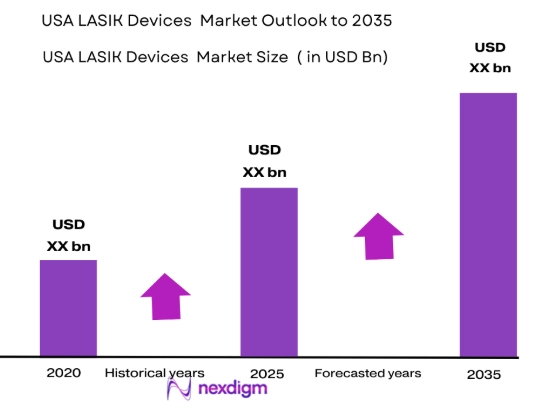
The USA LASIK devices market is a prominent segment within the global ophthalmic device industry, valued at USD ~ billion. The market’s growth is driven by factors such as increasing consumer demand for non-invasive vision correction solutions, advancements in LASIK technology (such as femtosecond lasers), and the rising prevalence of refractive errors. According to recent studies, the adoption of LASIK procedures has significantly increased in the U.S., particularly among patients seeking long-term solutions for myopia, hyperopia, and astigmatism. Additionally, as surgical outcomes continue to improve, the demand for LASIK devices remains robust, with growing emphasis on affordability and accessibility.
The dominant regions driving the LASIK devices market in the U.S. include metropolitan areas such as New York, Los Angeles, and Chicago. These cities are home to a large concentration of LASIK centers and hospitals offering advanced vision correction technologies. The dominance of these regions is primarily attributed to their high population density, increased healthcare access, and the presence of world-renowned ophthalmic specialists and advanced healthcare infrastructure. Furthermore, regulatory policies and consumer awareness in these cities contribute to the higher adoption rates of LASIK procedures.
Market Segmentation
By Device Type
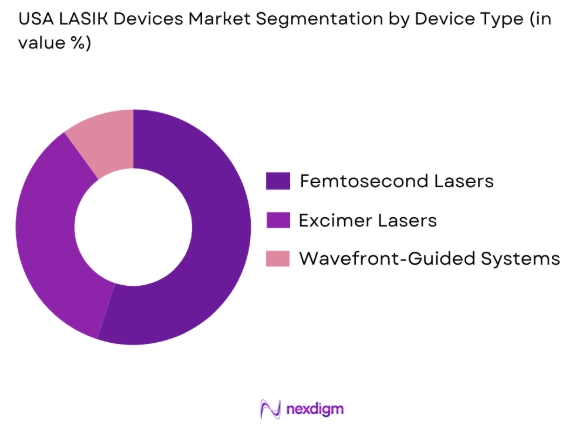
The LASIK devices market in the U.S. is segmented by device type into femtosecond lasers, excimer lasers, and wavefront-guided systems. Among these, femtosecond lasers have been the dominant technology in recent years. This dominance can be attributed to their precision in corneal flap creation, which enhances surgical outcomes and minimizes risks. The introduction of all-laser LASIK systems, which eliminate the need for a microkeratome blade, has made femtosecond lasers the preferred choice for ophthalmic surgeons. These lasers provide better customization and improved safety, factors that are critical for patient satisfaction and surgeon preference.
By Application
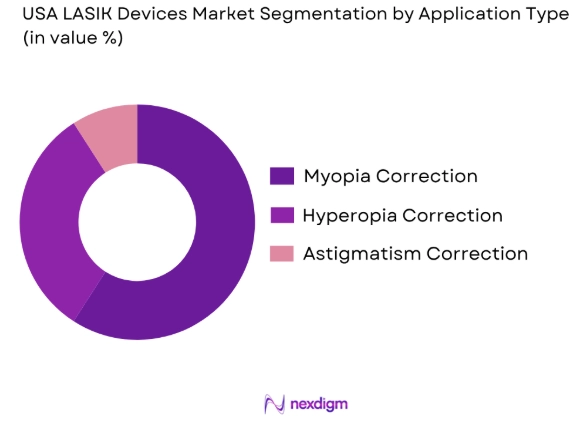
The market is also segmented by clinical applications into myopia correction, hyperopia correction, astigmatism correction, and others. Myopia correction dominates the market as it is the most common refractive error in the U.S., with millions of people seeking LASIK surgery to address nearsightedness. The demand for myopia correction devices is bolstered by the high prevalence of myopia, particularly among younger individuals who wish to avoid dependence on glasses or contact lenses. This application has maintained its dominant position due to its significant patient base and the growing number of individuals opting for LASIK to treat myopia at a younger age.
Competitive Landscape
The USA LASIK devices market is highly competitive, with both established players and emerging companies vying for market share. Leading players in the market include Johnson & Johnson Vision, Alcon, and Bausch + Lomb, who dominate the market due to their cutting-edge technology, extensive distribution networks, and strong brand recognition. These companies are continually innovating to enhance surgical outcomes, reduce recovery times, and provide more affordable LASIK solutions to consumers. The competition among these players has led to rapid advancements in laser technologies, with an emphasis on improving the safety and precision of LASIK procedures.
| Company Name | Establishment Year | Headquarters | Technology Focus | Market Reach | Key Products | Revenue (USD) | Key Technology |
| Alcon | 1945 | Geneva, Switzerland | ~ | ~ | ~ | ~ | ~ |
| Johnson & Johnson Vision | 1886 | New Jersey, USA | ~ | ~ | ~ | ~ | ~ |
| Ziemer Ophthalmic Systems | 2003 | Switzerland | ~ | ~ | ~ | ~ | ~ |
| Carl Zeiss Meditec | 1846 | Oberkochen, Germany | ~ | ~ | ~ | ~ | ~ |
| Bausch + Lomb | 1853 | New Jersey, USA | ~ | ~ | ~ | ~ | ~ |
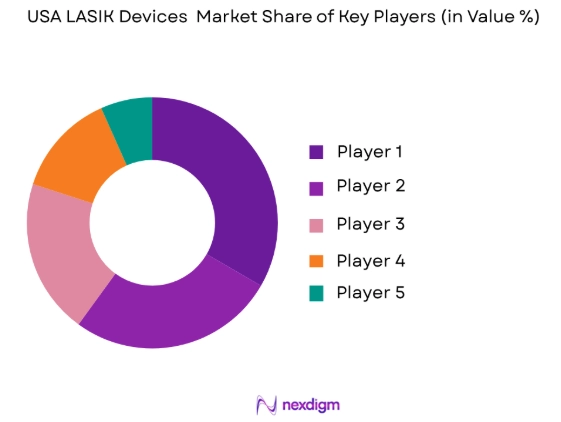
USA LASIK Devices Market Analysis
Growth Drivers
Rising Prevalence of Refractive Errors and Patient Demand
The increasing prevalence of refractive errors globally is driving the demand for LASIK procedures. According to the World Health Organization (WHO), approximately 2.7 billion people globally suffer from refractive errors, with a significant increase in cases attributed to digital eye strain and aging populations. In 2023, nearly 150 million people worldwide were reported to need corrective eyewear for myopia alone, a key factor driving LASIK procedure demand. As more individuals seek alternatives to glasses or contact lenses, patient demand for LASIK is rising. The prevalence of myopia is predicted to rise to 5 billion globally by 2050, indicating a continual growth trajectory in the demand for refractive surgeries.
Technological Evolution in Laser Precision & Procedural Outcomes
Technological advancements have significantly improved the precision of LASIK surgeries, contributing to better patient outcomes. In 2023, over 20 million LASIK procedures were performed globally, with an increasing shift towards advanced femtosecond lasers and wavefront-guided LASIK. These innovations allow for more accurate corneal reshaping, reducing post-surgical complications and enhancing vision quality. Furthermore, ongoing improvements in laser technology have significantly decreased the recovery time for patients, which boosts the attractiveness of LASIK compared to traditional corrective methods. This evolution in surgical technology supports a higher adoption rate, with hospitals and clinics adopting state-of-the-art equipment.
Challenges
High Capital Investment and Maintenance Costs
The high initial investment and ongoing maintenance costs of LASIK equipment present significant barriers for new entrants and smaller clinics. The purchase of advanced laser systems, such as femtosecond and excimer lasers, typically costs between USD 400,000 and USD 600,000, not including maintenance fees, which can add up to 10-15% of the equipment cost annually. In 2023, the World Bank reported that the average capital expenditure for medical equipment per hospital in high-income countries ranged from USD 1 million to USD 5 million. This heavy financial burden makes it challenging for some regions, particularly low-income countries, to adopt the latest LASIK technologies.
Skilled Surgeon and Technician Dependency
The dependency on highly skilled surgeons and technicians is a notable challenge in the LASIK market. The American Academy of Ophthalmology (AAO) highlighted that in 2022, over 80% of LASIK patients reported satisfaction, but the success rate was significantly influenced by the skill of the surgeon performing the procedure. In many emerging markets, a shortage of trained professionals, especially in rural and underserved areas, limits the availability of LASIK surgeries. The gap in medical education and training continues to be a major hurdle, with developing countries facing a lack of specialized programs in refractive surgery. Additionally, training surgeons in advanced LASIK technology remains expensive, further inhibiting market growth.
Opportunities
AI-Assisted Diagnostics and Surgical Planning
Artificial intelligence (AI) is playing a transformative role in the LASIK market by improving diagnostic accuracy and surgical precision. In 2022, AI-based diagnostic tools, including OCT (optical coherence tomography) and wavefront analysis systems, were increasingly integrated into LASIK procedures, aiding in better pre-operative planning. According to a report from the National Institutes of Health (NIH), the use of AI-assisted systems has shown a 30% reduction in procedural errors, enhancing patient safety and overall surgical outcomes. With an estimated 40% of clinics worldwide adopting AI technologies in LASIK surgery by 2025, this trend presents a significant opportunity for growth in the coming years.
Insurance Collaborations for Broader Procedure Access
The growing collaboration between LASIK service providers and insurance companies is expanding access to LASIK surgeries, particularly in developed markets. In 2023, several major insurance providers in the U.S., such as Aetna and Blue Cross Blue Shield, began offering partial coverage for LASIK procedures, making the surgery more affordable for a broader demographic. Additionally, partnerships with insurance providers are increasing in emerging markets, including India and Brazil, where the healthcare insurance market is growing at a rapid pace. The expansion of insurance coverage for LASIK procedures is projected to increase the affordability and accessibility of the procedure, driving further market adoption.
Future Outlook
The USA LASIK devices market is poised for continued growth in the coming decade, with advancements in technology, growing consumer awareness, and increasing demand for vision correction treatments. Over the next decade, the market will benefit from the introduction of more precise and cost-effective LASIK devices, which will make the procedure more accessible to a broader demographic. Enhanced safety protocols, minimal recovery times, and improved post-treatment care will further propel growth. Additionally, an aging population and the rising awareness of laser vision correction options are expected to fuel demand, making LASIK an increasingly popular choice for people with vision issues.
Major Players
- Alcon, Inc.
- Abbott Laboratories
- Johnson & Johnson Vision
- Ziemer Ophthalmic Systems
- LaserSight Technologies, Inc.
- Bausch + Lomb
- Carl Zeiss Meditec AG
- iVIS Technologies
- SCHWIND eye-tech-solutions
- Lumenis Ltd.
- Nidek Co., Ltd.
- Topcon Corporation
- Rayner Intraocular Lenses Limited
- Vision Group Holdings
Key Target Audience
- Ophthalmologists and LASIK surgeons
- Hospitals and eye clinics
- Medical device distributors and retailers
- Health insurance companies
- Research and development firms
- Investors and venture capitalists
- Government and regulatory bodies (e.g., U.S. Food and Drug Administration, National Eye Institute)
- Medical associations and ophthalmic societies
- Patients seeking corrective eye surgeries
Research Methodology
Step 1: Identification of Key Variables
This step involves mapping the ecosystem of the LASIK devices market by identifying key stakeholders, including device manufacturers, health care providers, and regulatory bodies. A combination of secondary research (through reports, journals, and medical databases) and proprietary data will be employed to identify the factors that influence market dynamics. Key variables such as safety standards, patient preferences, regulatory trends, and technological innovations will be examined.
Step 2: Market Analysis and Construction
The market analysis phase will involve collecting and analyzing historical data, such as the volume of LASIK surgeries, market penetration, pricing trends, and device adoption rates. Market dynamics such as the growth of refractive surgery centers, the prevalence of refractive errors, and regional differences in LASIK treatment adoption will also be evaluated.
Step 3: Hypothesis Validation and Expert Consultation
During this phase, hypotheses regarding market trends and the future of LASIK technology will be validated. This will involve conducting interviews with ophthalmic professionals, LASIK surgeons, device manufacturers, and medical researchers. Their input will provide insights into market predictions, technological advancements, and potential barriers to market expansion.
Step 4: Research Synthesis and Final Output
The final phase will involve gathering data directly from LASIK device manufacturers, healthcare institutions, and surgery centers. This data will be combined with industry insights to refine the market size, projections, and potential growth drivers. A thorough report will be synthesized to provide a comprehensive and accurate outlook on the market, including a breakdown of key trends, forecasts, and challenges.

- Executive Summary
- Research Methodology(Market Definitions and Assumptions , Abbreviations and Industry Terminology, Market Sizing Method, Primary Data Approach, Supply‑Side & Demand‑Side, Data Integration Model, Limitations and Future Research Enhancements)

- LASIK Devices Market Landscape and Operational Context
- USA Market Genesis and Evolution
- Refractive Surgery Device Adoption Cycle in the USA
- End‑User Facility Ecosystem
- Regulatory Environment

- Growth Driver
Rising prevalence of refractive errors and patient demand
Technological evolution in laser precision & procedural outcomes
Increased outpatient LASIK adoption - Market Challenges
High capital investment and maintenance costs
Skilled surgeon and technician dependency
Reimbursement complexity - Opportunities
AI‑assisted diagnostics and surgical planning
Insurance collaborations for broader procedure access
Telemedicine for pre‑/post‑operative workflows - Trends
Advanced Wavefront and Topography‑Guided LASIK Technology
Integration of Artificial Intelligence and Automation
Rising Demand for Customized and Patient‑Specific Procedures - Government Regulation of USA LASIK Devices Market Outlook 2035
FDA Premarket Approval
Post‑Market Surveillance and Adverse Event Reporting
Compliance with Medical Device Quality System Regulation - SWOT Analysis
- Stakeholder Ecosystem
- Porter’s Five Forces

- By Value (USD), 2020-2025
- By Total Market Revenue, 2020-2025
- By Device Segment Revenue, 2020-2025
- By Service/Support Revenue, 2020-2025

- By Device Type (In Value %)
Femtosecond Lasers
Excimer Lasers
Wavefront-Guided Systems - By Application Type (In Value %)
Myopia Correction
Hyperopia Correction
Astigmatism Correction - By Price Tier / Technology Tier Type (In Value %)
Premium High‑End Systems
Mid‑Range OEM Systems
Cost‑Effective Entry Models

- Market Share by Revenue & Installed Base
- Cross‑Comparison Parameters(Company Overview, Device Portfolio Breadth, FDA Approvals & Regulatory Footprint,
R&D Intensity and Innovation Pipeline, Revenue by Device Segment, Installed Base & Channel Reach, Pricing Tier Strategy, After‑Sales Service & Support,) - Profiles of Major Competitors
Alcon WaveLight
Johnson & Johnson Vision
Bausch + Lomb
ZEISS
Schwind eye-tech-solutions
Ziemer Ophthalmic Systems
NIDEK Co., Ltd.
OptoVue
Ellex Medical Lasers
Lumenis
Iridex Corporation
Ellex/Nidek combined platforms
Meyer-Schwickerath Gesellschaft technologies
LightMed Laser Solutions
VMR advanced LASIK platforms

- Rising refractive error prevalence
- CapEx and operating costs.
- FDA approval, reimbursement guidelines.
- Safety, precision, reliability, satisfaction.
- Clinical efficacy, total cost.

- By Value (USD), 2026-2035
- By Total Market Revenue, 2026-2035
- By Device Segment Revenue, 2026-2035
- By Service/Support Revenue, 2026-2035


 Request a Sample
 Ask for Customization
 Get a Quote
 Enquire Now