
 Download PDF
 Download PDF
Market Overview
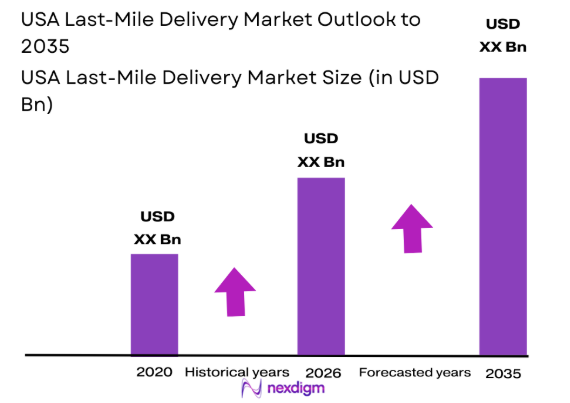
The USA Last-Mile Delivery market demonstrates strong expansion driven by the rapid growth of e-commerce fulfillment networks and increasing consumer expectations for fast delivery services. Based on a recent historical assessment, the market generated approximately USD ~ billion according to logistics industry datasets published by the United States Department of Transportation and reports from the Bureau of Transportation Statistics. Demand is primarily supported by expanding online retail transactions, large parcel volumes, and growing investments in advanced logistics infrastructure supporting fast and reliable delivery operations nationwide.
Major metropolitan regions dominate last-mile delivery activity due to high population density, large retail ecosystems, and extensive logistics infrastructure supporting urban distribution networks. Cities including New York, Los Angeles, Chicago, Dallas, and Atlanta function as central logistics hubs connecting fulfillment centers with dense residential demand clusters. These metropolitan areas host extensive warehouse networks, automated sorting facilities, and major courier company distribution hubs that enable efficient parcel routing and rapid delivery operations across regional consumer markets.
Market Segmentation
By Service Type
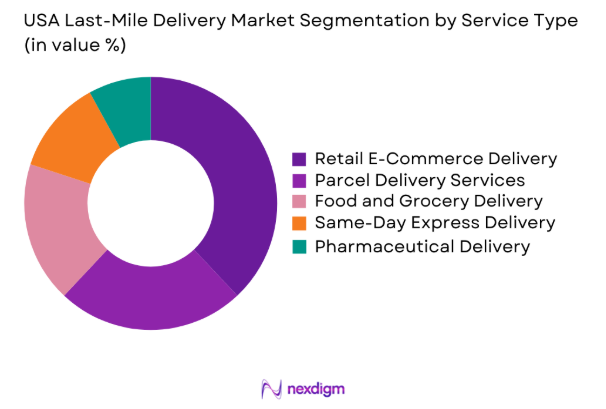
USA Last-Mile Delivery market is segmented by product type into parcel delivery services, food and grocery delivery, retail e-commerce delivery, pharmaceutical delivery, and same-day express delivery. Recently, retail e-commerce delivery has a dominant market share due to factors such as expanding online retail platforms, high parcel shipment volumes, and large distribution networks operated by logistics providers. Major retailers and e-commerce companies continuously expand fulfillment centers and regional distribution hubs to support rapid shipping operations. Consumers increasingly rely on online marketplaces for purchasing electronics, fashion products, and household items, generating high daily parcel volumes that require efficient last-mile delivery networks capable of handling large shipment volumes while maintaining delivery speed and reliability.
By Delivery Vehicle Type
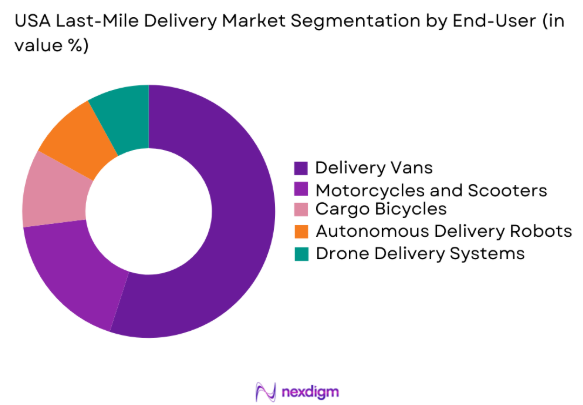
USA Last-Mile Delivery market is segmented by product type into delivery vans, motorcycles and scooters, cargo bicycles, autonomous delivery robots, and drone delivery systems. Recently, delivery vans have a dominant market share due to factors such as large shipment capacity, extensive road transportation infrastructure, and operational flexibility across urban and suburban delivery routes. Logistics providers widely utilize delivery vans to transport multiple parcels simultaneously while optimizing delivery routes through advanced fleet management software. The presence of nationwide road networks, established courier fleet operations, and expanding electric van adoption further strengthens the role of delivery vans as the primary vehicle category used for last-mile logistics operations across major metropolitan regions.
Competitive Landscape
The USA Last-Mile Delivery market remains highly competitive and moderately consolidated with several global logistics companies, large e-commerce firms, and specialized last-mile delivery providers competing across urban and suburban distribution networks. Major players invest heavily in logistics automation technologies, route optimization software, electric delivery fleets, and regional fulfillment centers designed to increase operational efficiency and delivery speed. Strategic partnerships between e-commerce retailers and third-party logistics providers also influence competitive positioning, allowing companies to expand geographic coverage and scale delivery capacity across national markets.
| Company Name | Establishment Year | Headquarters | Technology Focus | Market Reach | Key Products | Revenue | Fleet Capacity |
| United Parcel Service | 1907 | Atlanta, USA | ~ | ~ | ~ | ~ | ~ |
| FedEx Corporation | 1971 | Memphis, USA | ~ | ~ | ~ | ~ | ~ |
| Amazon Logistics | 2005 | Seattle, USA | ~ | ~ | ~ | ~ | ~ |
| DHL eCommerce | 1969 | Bonn, Germany | ~ | ~ | ~ | ~ | ~ |
| XPO Logistics | 1989 | Connecticut, USA | ~ | ~ | ~ | ~ | ~ |
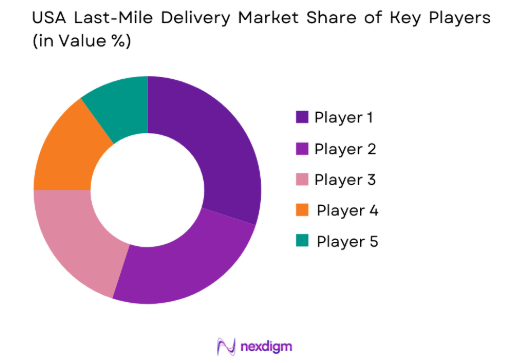
USA Last-Mile Delivery Market Analysis
Growth Drivers
Expansion of E-Commerce Retail Fulfillment Networks
Rapid expansion of digital retail platforms across the United States significantly increases demand for last-mile delivery services transporting goods from distribution centers to end consumers. Online marketplaces process high daily order volumes for electronics, fashion, groceries, and household goods, requiring efficient parcel delivery networks. Retail companies continue expanding fulfillment warehouses and regional distribution hubs to shorten shipping distances and accelerate delivery timelines. Consumers increasingly prefer home delivery supported by real-time shipment tracking and convenient mobile ordering platforms. Logistics companies therefore invest in automated parcel sorting systems, route optimization software, and fleet management technologies. E-commerce retailers also partner with logistics providers to develop integrated distribution networks connecting warehouses with urban consumer markets, strengthening nationwide delivery infrastructure.
Increasing Consumer Demand for Same-Day and Rapid Delivery Services
Modern consumers increasingly expect rapid product delivery services that provide convenience, reliability, and real-time shipment visibility throughout the delivery process. Same-day and next-day delivery options offered by e-commerce platforms strongly influence purchasing decisions among urban and suburban consumers. Retail companies therefore prioritize logistics partnerships capable of meeting strict delivery timelines while maintaining efficient operations. Courier providers expand urban distribution centers and micro-fulfillment facilities near residential areas to shorten delivery distances and improve shipping speed. Logistics companies deploy route optimization algorithms and predictive analytics systems to allocate delivery fleets efficiently across high-demand regions. Rapid growth of quick commerce platforms delivering groceries and convenience products further increases demand for ultra-fast delivery infrastructure.
Market Challenges
High Operational Costs and Urban Logistics Complexity
Last-mile delivery operations require substantial financial investment in vehicle fleets, fuel consumption, driver wages, technology systems, and warehouse infrastructure needed to manage large shipment volumes across metropolitan regions. Urban logistics operations frequently face congestion, traffic delays, and complex route planning challenges that increase delivery times and operating expenses. Logistics companies must continuously optimize delivery routes and vehicle utilization to control transportation costs while maintaining service standards expected by customers. Rapid expansion of e-commerce shipments places additional pressure on logistics networks during peak retail periods and promotional events. Maintaining adequate fleet capacity and warehouse storage requires ongoing capital investment. Rising fuel costs and vehicle maintenance expenses further increase operational costs for delivery providers.
Urban Regulations and Delivery Infrastructure Limitations
Municipal governments across the United States increasingly introduce regulations aimed at controlling traffic congestion, reducing emissions, and improving urban transportation management. These policies influence last-mile delivery operations by restricting vehicle access in certain urban zones, defining delivery time windows, and imposing environmental standards for commercial fleets. Logistics companies must therefore adjust delivery schedules and fleet strategies to meet city-specific regulatory requirements. Implementation of low-emission zones and vehicle electrification programs also encourages companies to adopt alternative fuel vehicles and charging infrastructure. Limited urban land availability raises logistics real estate costs near consumer demand centers. Restricted loading areas and parking limitations further slow delivery activities. Logistics providers therefore adopt solutions including micro-fulfillment centers, cargo bicycle networks, and parcel lockers.
Opportunities
Adoption of Autonomous Delivery Technologies and Robotics
Emerging autonomous delivery technologies including self-driving vehicles, delivery robots, and drone-based parcel transport systems create significant opportunities for logistics companies aiming to improve operational efficiency and reduce labor dependency. Technology developers and logistics providers increasingly conduct pilot programs testing autonomous delivery solutions capable of transporting packages across short urban distances. Ground robots designed for sidewalk deliveries handle small parcel shipments for e-commerce and food delivery services. Drone delivery platforms enable rapid transport of lightweight packages across suburban and rural areas. Integration of artificial intelligence, sensor systems, and automated navigation technologies allows these platforms to operate within controlled environments. Logistics companies continue investing in research and development initiatives to scale autonomous delivery systems for commercial deployment across high-demand urban logistics networks.
Expansion of Urban Micro-Fulfillment and Smart Logistics Infrastructure
Logistics companies increasingly invest in urban micro-fulfillment centers located close to residential demand clusters to reduce delivery distances and accelerate shipping times. These facilities use automated warehouse technology and advanced inventory management systems capable of processing high volumes of online retail orders efficiently. Retailers integrate micro-fulfillment centers within metropolitan regions to support same-day delivery and rapid order fulfillment. Automation tools including robotic picking systems, automated storage units, and digital inventory platforms improve warehouse productivity and operational accuracy. Smart logistics infrastructure also includes advanced parcel sorting facilities and digital coordination platforms connecting regional distribution networks. Real-time analytics systems help forecast shipment demand and optimize delivery routes. Integration of electric delivery fleets also supports sustainable urban logistics operations.
Future Outlook
The USA Last-Mile Delivery market is expected to continue expanding as e-commerce retail activity grows and consumer demand for rapid delivery services increases across urban and suburban markets. Logistics companies will likely expand automated fulfillment centers, deploy electric delivery fleets, and implement advanced route optimization technologies designed to improve operational efficiency. Increasing adoption of autonomous delivery technologies, micro-fulfillment facilities, and digital logistics management platforms will also transform distribution networks and strengthen delivery speed across competitive retail supply chains.
Major Players
- United Parcel Service
- FedEx Corporation
- Amazon Logistics
- United States Postal Service
- DHL eCommerce
- XPO Logistics
- Ryder Last Mile
- DoorDash
- Instacart
- Postmates
- OnTracLogistics
- LaserShip
- Veho
- Roadie
- Jitsu Logistics
Key Target Audience
- E-commerce retail companies
- Logistics and transportation companies
- Food and grocery delivery platforms
- Pharmaceutical and healthcare distributors
- Retail supply chain operators
- Warehouse andlogisticsinfrastructure developers
- Investments and venture capitalist firms
- Government and regulatory bodies
Research Methodology
Step 1: Identification of Key Variables
Key variables influencing the USA Last-Mile Delivery market including parcel volumes, logistics infrastructure capacity, fleet size, and e-commerce retail activity were identified. Market indicators related to supply chain infrastructure, consumer demand patterns, and logistics technology adoption were also analyzed.
Step 2: Market Analysis and Construction
Comprehensive analysis of logistics industry datasets, transportation statistics, and e-commerce transaction volumes was conducted to construct the market structure. Secondary research sources including government transportation databases and industry reports were evaluated to estimate market performance indicators.
Step 3: Hypothesis Validation and Expert Consultation
Industry experts including logistics executives, transportation analysts, and supply chain specialists were consulted to validate assumptions related to delivery network capacity, technology adoption, and consumer demand trends influencing the market.
Step 4: Research Synthesis and Final Output
All quantitative and qualitative insights were synthesized into a structured analytical framework describing the competitive landscape, operational trends, and growth dynamics influencing the USA Last-Mile Delivery market.

- Executive Summary
- Research Methodology (Definitions, Scope, Industry Assumptions, Market Sizing Approach, Primary & Secondary Research Framework, Data Collection & Verification Protocol, Analytic Models & Forecast Methodology, Limitations & Research Validity Checks)

- Market Definition and Scope
- Value Chain & Stakeholder Ecosystem
- Regulatory / Certification Landscape
- Sector Dynamics Affecting Demand
- Strategic Initiatives & Infrastructure Growth

- Growth Drivers
Expansion of E-Commerce Retail Fulfillment Networks
Increasing Consumer Demand for Same-Day Delivery
Technological Advancements in Route Optimization and Logistics Automation - Market Challenges
High Operational Costs and Urban Delivery Congestion
Labor Shortages and Gig Workforce Management
Complex Urban Regulations and Delivery Restrictions - Market Opportunities
Adoption of Autonomous Delivery Vehicles and Robotics
Expansion of Micro-Fulfillment Centers in Urban Areas
Growth of Sustainable Electric Delivery Fleets - Trends
Integration of AI-Based Delivery Route Optimization
Rapid Expansion of Quick Commerce Platforms
Deployment of Smart Lockers and Pickup Points - Government Regulations
- SWOT Analysis of Key Competitors
- Porter’s Five Forces

- By Market Value, 2020-2025
- By Installed Units, 2020-2025
- By Average System Price, 2020-2025
- By System Complexity Tier, 2020-2025

- By System Type (In Value%)
Parcel Delivery Services
Food and Grocery Delivery Services
Retail E-Commerce Delivery
Crowdsourced Delivery Networks
Same-Day Express Delivery - By Platform Type (In Value%)
Road-Based Delivery Fleets
Electric Delivery Vehicles
Drone Delivery Platforms
Autonomous Delivery Robots
Integrated Smart Logistics Platforms - By Fitment Type (In Value%)
In-House Retail Delivery Networks
Third-Party Logistics Integration
Crowdsourced Driver Networks
Hybrid Delivery Models
Micro-Fulfillment Based Delivery - By End User Segment (In Value%)
E-Commerce Retailers
Food and Grocery Platforms
Healthcare and Pharmaceutical Providers
Consumer Electronics Retailers
Restaurant and Quick Service Chains - By Procurement Channel (In Value%)
Direct Logistics Contracts
E-Commerce Platform Integration
On-Demand Delivery Applications
Retailer Logistics Partnerships
Third-Party Logistics Procurement

- Market Share Analysis
- Cross Comparison Parameters (Delivery Speed, Fleet Size, Technology Integration, Geographic Coverage, Cost Efficiency, Delivery Network Density, Automation Capability, Sustainability Initiatives, Same-Day Delivery Capability, Logistics Infrastructure Integration)
- SWOT Analysis of Key Competitors
- Pricing & Procurement Analysis
- Key Players
United Parcel Service
FedEx Corporation
Amazon Logistics
United States Postal Service
OnTrac Logistics
LaserShip
DHL eCommerce
XPO Logistics Last Mile
Ryder Last Mile
DoorDash Drive
Instacart
Postmates
Roadie
Veho
Jitsu Logistics

- Rising Demand from E-Commerce Retailers for Rapid Parcel Fulfillment
- Food Delivery Platforms Driving High-Frequency Urban Deliveries
- Healthcare and Pharmacy Chains Requiring Temperature-Controlled Delivery
- Retail Chains Expanding Omnichannel Home Delivery Services

- Forecast Market Value, 2026-2035
- Forecast Installed Units, 2026-2035
- Price Forecast by System Tier, 2026-2035
- Future Demand by Platform, 2026-2035


 Request a Sample
 Ask for Customization
 Get a Quote
 Enquire Now