

 Download PDF
 Download PDF
Market Overview
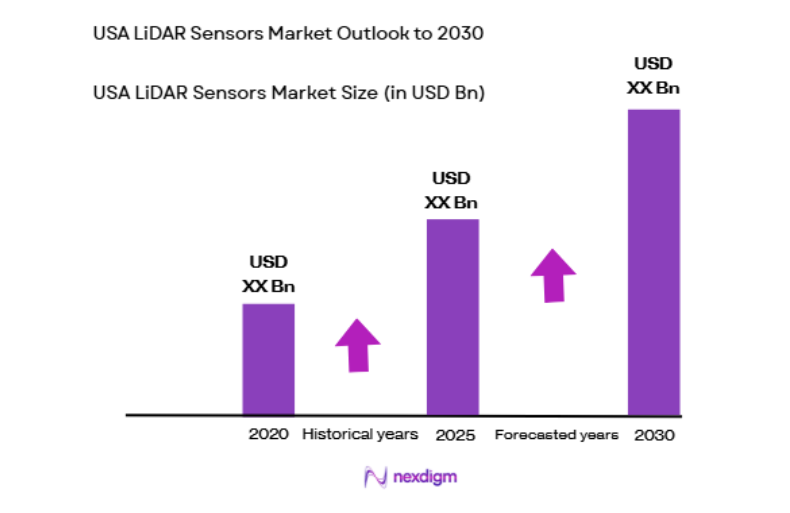
The USA LiDAR Sensors market was valued at approximately USD ~million based on a recent historical assessment of the U.S. LiDAR industry, reflecting significant commercial and industrial deployment of this sensor technology in mapping, surveying, autonomous systems, and industrial automation. Growth has been supported by broader adoption of high‑precision 3D sensing technologies, reductions in manufacturing costs, and expanding use cases across multiple sectors that require accurate distance, topography, and object recognition data.
Based on a recent historical assessment, the United States remains a leading market for LiDAR sensors due to its advanced automotive industry, strong presence of technology developers, and extensive infrastructure projects requiring detailed spatial data. Key regions in the U.S., such as California’s technology ecosystem, Michigan’s automotive manufacturing hubs, and Texas’s industrial base, have driven demand for LiDAR—especially where autonomous vehicles, smart infrastructure, and precision mapping solutions are priorities for both private firms and public sector initiatives.
Market Segmentation
By Product Type
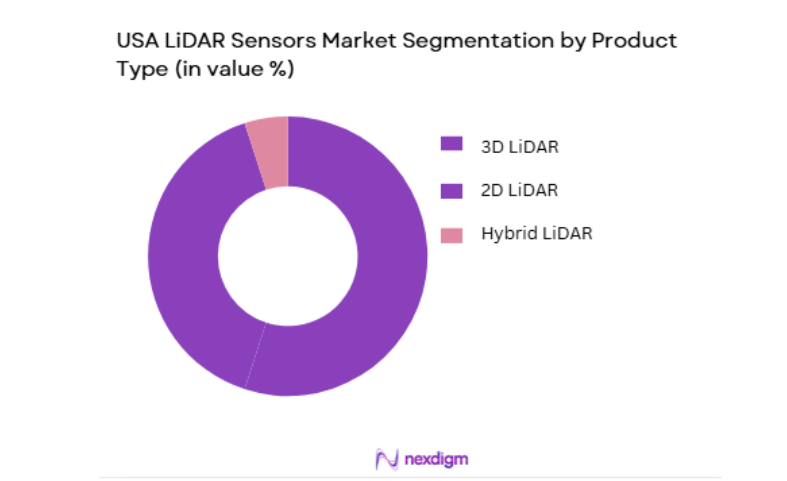
USA LiDAR sensors market is segmented by product type into 2D LiDAR, 3D LiDAR, and hybrid LiDAR systems. Recently, 3D LiDAR has dominated the market due to its superior accuracy and depth perception, which makes it the preferred choice in applications such as autonomous vehicles, land surveying, and environmental monitoring. The rising demand for high-resolution 3D imaging solutions and their integration into mapping systems has further strengthened its market position. This sub-segment is bolstered by continuous innovation in 3D LiDAR technologies, including increased range, precision, and reliability, catering to growing industry needs.
By Platform Type
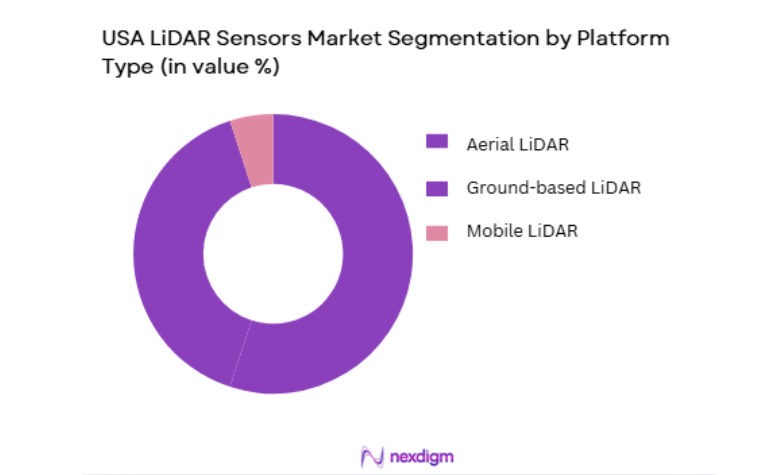
USA LiDAR sensors market is segmented by platform type into ground-based LiDAR, aerial LiDAR, and mobile LiDAR systems. Aerial LiDAR systems have seen a dominant market share due to their widespread use in topographic surveys, forestry applications, and environmental monitoring. The ability to cover large areas quickly and with high accuracy makes aerial LiDAR a preferred choice for industries such as agriculture, construction, and government mapping initiatives. These systems offer unparalleled precision in capturing spatial data, further contributing to the dominance of the aerial platform.
Competitive Landscape
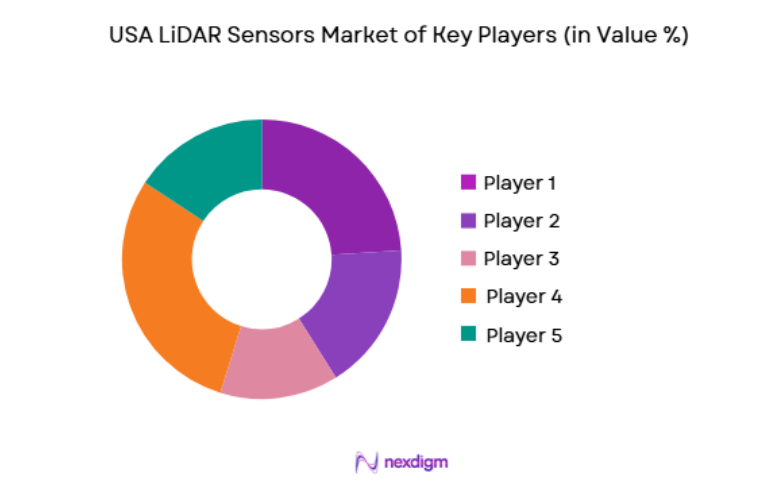
The competitive landscape of the USA LiDAR sensors market is shaped by a mix of established global players and innovative startups. Large corporations, such as Velodyne LiDAR, have played a pivotal role in market consolidation by offering scalable and reliable LiDAR solutions. These players have capitalized on significant investments in R&D, enabling them to maintain their dominant positions. The increasing influence of these major players has resulted in strategic collaborations and mergers, which are expected to intensify competition further.
| Company Name | Establishment Year | Headquarters | Technology Focus | Market Reach | Key Products | Revenue (USD) |
| Velodyne LiDAR | 1983 | California, USA | ~ | ~ | ~ | ~ |
| Leica Geosystems | 1819 | Switzerland | ~ | ~ | ~ | ~ |
| Ouster | 2015 | California, USA | ~ | ~ | ~ | ~ |
| Luminar Technologies | 2012 | Florida, USA | ~ | ~ | ~ | ~ |
| Quanergy Systems | 2012 | California, USA | ~ | ~ | ~ | ~ |
USA LiDAR Sensors Market Analysis
Growth Drivers
Technological Advancements in LiDAR Systems
The continuous evolution of LiDAR technology has been a primary growth driver for the USA LiDAR sensors market. Recent innovations in sensor performance, such as improvements in range, resolution, and scanning capabilities, have opened up new application areas. This technological progress enables more precise mapping and autonomous vehicle navigation. Additionally, advancements in solid-state LiDAR technology have reduced costs while improving reliability and durability, making LiDAR systems more accessible to a wider range of industries. As industries like autonomous driving, aerospace, and agriculture increasingly adopt these advanced LiDAR systems, the market continues to experience substantial growth.
Government Support for Autonomous Vehicle Development
The United States government has heavily invested in the development of autonomous vehicle (AV) technologies, which has directly contributed to the growth of the LiDAR sensors market. Initiatives like the Smart Cities Program and funding from the Department of Transportation (DOT) have paved the way for wider adoption of LiDAR sensors in AVs. As autonomous vehicle manufacturers seek to improve their technologies, the demand for high-performance sensors such as LiDAR systems has surged. Government policies encouraging innovation in the automotive sector are expected to drive the continued demand for LiDAR technology in the coming years.
Market Challenges
High Initial Investment Costs
One of the major challenges facing the USA LiDAR sensors market is the high initial investment costs associated with LiDAR systems. Despite the advantages in terms of precision and efficiency, the prices of advanced LiDAR sensors remain a significant barrier to widespread adoption, particularly for smaller companies and startups. This challenge is exacerbated by the need for specialized hardware and software integration, making it difficult for new entrants to compete with established players. While the cost of LiDAR systems has decreased over the years, it remains a significant obstacle for industries looking to scale LiDAR-based applications in the long term.
Data Processing and Storage Requirements
Another challenge impacting the growth of the LiDAR sensors market is the large volume of data generated by LiDAR systems. High-resolution LiDAR sensors produce vast amounts of point cloud data, which requires significant processing power and storage capacity. The infrastructure needed to handle and analyze this data is often complex and costly, creating difficulties for companies seeking to integrate LiDAR solutions into their operations. As the demand for more detailed and accurate mapping data increases, addressing the data processing and storage requirements remains a critical challenge for the industry.
Opportunities
Integration of AI with LiDAR Technology
The integration of artificial intelligence (AI) and machine learning (ML) with LiDAR technology presents a significant opportunity for the market. AI-driven data processing algorithms can enhance the efficiency and accuracy of LiDAR systems, enabling better decision-making in real-time. The use of AI can automate the interpretation of complex LiDAR data, speeding up tasks such as terrain mapping, object detection, and environmental monitoring. As industries increasingly seek intelligent, data-driven solutions, the synergy between AI and LiDAR is expected to drive innovation and adoption across multiple sectors, including automotive, aerospace, and construction.
Expansion in Drone-based LiDAR Systems
The rise of unmanned aerial vehicles (UAVs), or drones, is creating new opportunities for LiDAR technology. Drone-based LiDAR systems offer several advantages, including the ability to collect high-resolution data from difficult-to-reach areas, reducing the need for expensive ground-based surveys. As drones become more advanced and affordable, their integration with LiDAR sensors will become more widespread in industries such as agriculture, forestry, and infrastructure. The growing demand for aerial surveys, particularly in remote or hazardous environments, positions drone-based LiDAR as a key opportunity for market expansion in the next several years.
Future Outlook
The USA LiDAR sensors market is expected to experience steady growth over the next five years, fueled by technological advancements, government support for autonomous vehicle initiatives, and the increasing demand for high-precision mapping solutions. As new applications in drone surveying, agriculture, and defense emerge, the market is likely to see more diversified use cases. Regulatory support for autonomous vehicle development, coupled with innovations in LiDAR technology, will continue to create a favorable environment for market growth.
Major Players
- Velodyne LiDAR
- Leica Geosystems
- Ouster
- Luminar Technologies
- Quanergy Systems
- Topcon Corporation
- RIEGL Laser Measurement Systems
- Faro Technologies
- Teledyne Optech
- LeddarTech
- Trimble Inc.
- SICK AG
- Innoviz Technologies
- Hesai Technology
- Livox Technology
Key Target Audience
- Automotive Manufacturers
- Aerospace and Defense Companies
- Environmental Monitoring Agencies
- Construction and Engineering Firms
- Mapping and Surveying Companies
- Government Agencies
- Technology Startups
- Investments and Venture Capitalist Firms
Research Methodology
Step 1: Identification of Key Variables
This step involves identifying the primary drivers, restraints, and opportunities within the LiDAR sensors market, including technological advancements, regulatory support, and competitive dynamics.
Step 2: Market Analysis and Construction
The collected data is analyzed to construct a comprehensive market model that reflects current market trends, historical data, and future forecasts.
Step 3: Hypothesis Validation and Expert Consultation
Industry experts and key players are consulted to validate hypotheses and refine market assumptions, ensuring the accuracy of predictions and insights.
Step 4: Research Synthesis and Final Output
The final report is synthesized from the findings, providing actionable insights and detailed analysis to stakeholders in the LiDAR sensors market.

- Executive Summary
- Research Methodology (Definitions, Scope, Industry Assumptions, Market Sizing Approach, Primary & Secondary Research Framework, Data Collection & Verification Protocol, Analytic Models & Forecast Methodology, Limitations & Research Validity Checks)

- Market Definition and Scope
- Value Chain & Stakeholder Ecosystem
- Regulatory / Certification Landscape
- Sector Dynamics Affecting Demand
- Strategic Initiatives & Infrastructure Growth

- Growth Drivers
Increasing Demand for Autonomous Vehicles
Technological Advancements in LiDAR Sensor Technology
Growing Applications in Surveying & Mapping - Market Challenges
High Initial Investment Costs
Limited Range in Harsh Environments
Data Processing and Storage Requirements - Market Opportunities
Emerging Applications in Drone-based LiDAR
Integration of LiDAR with AI and Machine Learning
Expansion of LiDAR Use in Robotics - Trends
Miniaturization of LiDAR Sensors
Use of LiDAR in Smart City Projects
Advancements in 3D Imaging Capabilities - Government regulations
- SWOT analysis
- Porters 5 forces

- By Market Value, 2019-2025
- By Installed Units, 2019-2025
- By Average System Price, 2019-2025
- By System Complexity Tier, 2019-2025

- By System Type (In Value%)
3D LiDAR Sensors
2D LiDAR Sensors
Long-Range LiDAR Sensors
Multispectral LiDAR Sensors
Phased Array LiDAR Sensors - By Platform Type (In Value%)
Ground-Based LiDAR
Aerial LiDAR
Marine LiDAR
Mobile LiDAR
Handheld LiDAR - By Fitment Type (In Value%)
Standalone LiDAR Systems
Integrated LiDAR Systems
Portable LiDAR Systems
Mounted LiDAR Systems
Autonomous Vehicle LiDAR Systems - By EndUser Segment (In Value%)
Automotive Industry
Construction & Architecture
Forestry & Agriculture
Geospatial & Mapping Services
Environmental Monitoring - By Procurement Channel (In Value%)
Direct Procurement
Third-party Distributors
Government Tenders

- Market Share Analysis
- Cross Comparison Parameters (System Type, Platform Type, Procurement Channel, EndUser Segment, Fitment Type, Market Share, Technological Advancements, Price Range, Geographical Reach, Customer Base)
- SWOT Analysis of Key Competitors
- Pricing & Procurement Analysis
- Key Players
Velodyne LiDAR
Leica Geosystems
RIEGL Laser Measurement Systems
Quanergy Systems
Waymo
Luminar Technologies
SICK AG
LeddarTech
Teledyne Optech
Topcon Corporation
Mitutoyo Corporation
Ouster
Quanergy Systems
Faro Technologies
Innoviz Technologies
Hesai Technology

- Automotive Manufacturers Increasing LiDAR Integration
- Growth in Demand from Infrastructure Development
- Surge in Adoption by Environmental Monitoring Agencies
- Rising Use in Construction and Surveying Applications

- Forecast Market Value, 2026-2030
- Forecast Installed Units, 2026-2030
- Price Forecast by System Tier, 2026-2030
- Future Demand by Platform, 2026-2030


 Request a Sample
 Ask for Customization
 Get a Quote
 Enquire Now