
 Download PDF
Market Overview
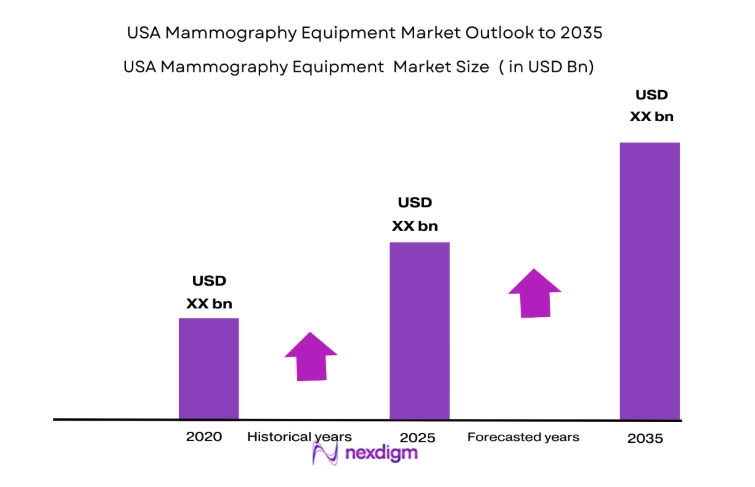
The USA Mammography Equipment market is poised to reach a valuation of approximately USD ~ billion based on a recent historical assessment. The market is being primarily driven by the rising prevalence of breast cancer and the increasing demand for early screening and diagnostic solutions. Mammography equipment plays a crucial role in the early detection of breast cancer, which is one of the leading causes of death among women. The growth of the market is further supported by advancements in technology, including digital mammography and 3D imaging, which enhance the accuracy and efficiency of breast cancer screening procedures.
The dominant markets for mammography equipment in the USA are concentrated in major metropolitan areas such as New York, Los Angeles, Chicago, and Houston. These cities represent high healthcare demand due to their large populations, access to advanced medical technologies, and a high concentration of healthcare facilities and hospitals. Additionally, these regions benefit from a significant number of diagnostic centers, where mammography services are in high demand. State-driven healthcare policies and government-backed initiatives for preventive care further enhance the adoption of mammography equipment in these regions.
Market Segmentation
By Product Type:
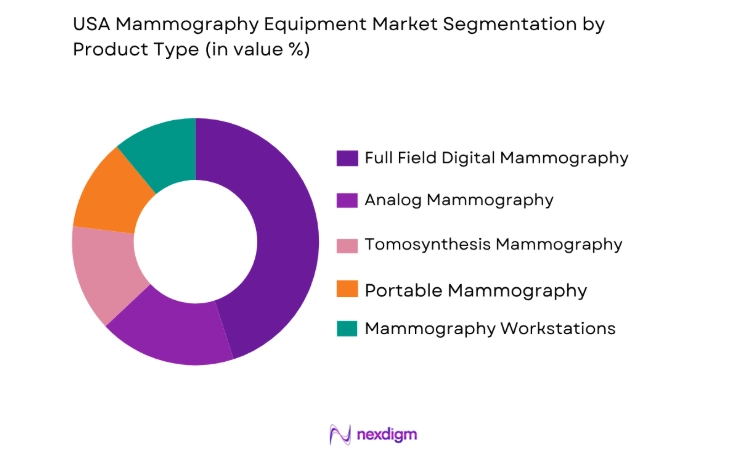
The USA Mammography Equipment market is segmented by product type into Full Field Digital Mammography Systems, Analog Mammography Systems, Tomosynthesis Mammography Systems, Portable Mammography Systems, and Mammography Workstations. Recently, Full Field Digital Mammography Systems have garnered a dominant market share due to factors such as superior image quality, faster results, and less radiation exposure, which have enhanced the appeal of these systems to healthcare providers and patients alike. The increased adoption of digital systems, coupled with declining costs and significant advancements in technology, has further strengthened the position of this sub-segment in the market. The ease of integration with other diagnostic systems and the growing trend towards digitization of healthcare records are also contributing to the dominance of digital systems.
By End User Segment:
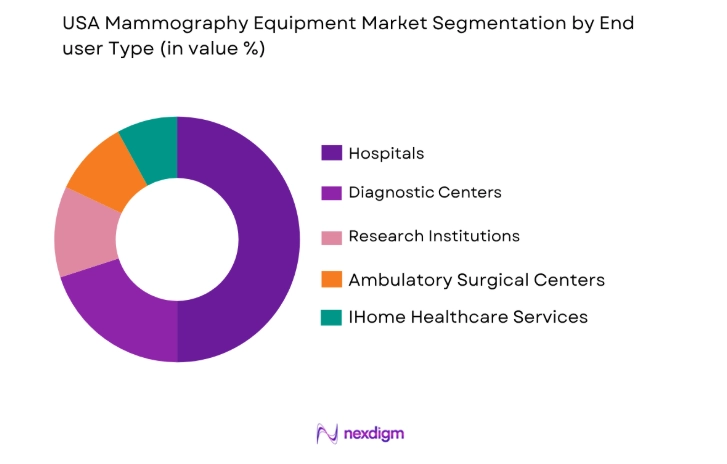
The USA Mammography Equipment market is segmented by end-user segment into Hospitals, Diagnostic Centers, Research Institutions, Ambulatory Surgical Centers, and Home Healthcare Services. Hospitals hold a dominant market share due to their large patient base and the critical role that mammography plays in their cancer diagnostic departments. Hospitals invest in advanced technologies to provide comprehensive services, with a focus on providing high-quality care to patients. Furthermore, the widespread adoption of screening programs, especially in urban hospitals, has made them the largest contributors to the market. The demand for sophisticated, high-resolution imaging systems, coupled with a growing focus on early detection and preventive care, continues to drive the market dominance of hospitals as the leading end-user segment.
Competitive Landscape
The competitive landscape of the USA Mammography Equipment market is highly consolidated, with major players leading the market share due to their advanced technological offerings and wide geographic reach. Companies such as Hologic, Siemens Healthineers, and GE Healthcare dominate the market, heavily influencing product innovations, pricing strategies, and the overall direction of the industry. With substantial investments in research and development, these companies continually push the boundaries of imaging technologies. Mergers and acquisitions are also prevalent, as large corporations look to strengthen their position by acquiring smaller players with innovative technologies. This market consolidation is expected to continue as the demand for advanced diagnostic tools remains high.
| Company Name | Establishment Year | Headquarters | Technology Focus | Market Reach | Key Products | Revenue (USD) | Additional Market Parameter |
| Hologic | 1985 | Bedford, MA, USA | ~ | ~ | ~ | ~ | ~ |
| Siemens Healthineers | 1847 | Erlangen, Germany | ~ | ~ | ~ | ~ | ~ |
| GE Healthcare | 1892 | Chicago, IL, USA | ~ | ~ | ~ | ~ | ~ |
| Philips Healthcare | 1891 | Amsterdam, Netherlands | ~ | ~ | ~ | ~ | ~ |
| Canon Medical Systems | 1933 | Tokyo, Japan | ~ | ~ | ~ | ~ | ~ |
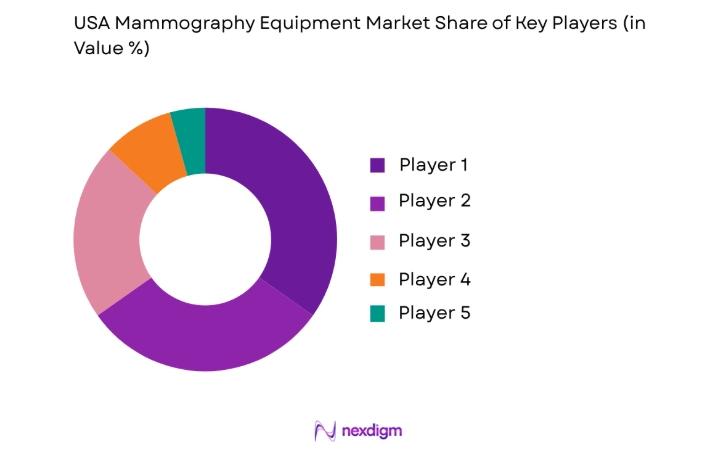
USA Mammography Equipment Market Analysis
Growth Drivers
Technological Advancements:
The continuous advancements in mammography technology, particularly the shift from analog to digital systems and the integration of 3D imaging, have been significant growth drivers. The adoption of full-field digital mammography systems has enhanced the accuracy, speed, and resolution of imaging, making them the preferred choice in clinical settings. Furthermore, innovations such as the incorporation of artificial intelligence (AI) to aid in image analysis have drastically reduced the time required for diagnosis and increased the overall efficiency of mammography units. These technological strides have improved diagnostic accuracy, helping healthcare providers in detecting breast cancer at an earlier stage, thus expanding the overall demand for mammography equipment across hospitals and diagnostic centers. The continued progress in machine learning algorithms is expected to further enhance the capabilities of mammography systems, driving the market’s growth. Additionally, the improvement of system design, with reduced radiation exposure and increased patient comfort, continues to contribute to the market’s expansion. As healthcare systems strive to offer more precise and accessible solutions, technological advancements in mammography will remain a key driver of market growth in the coming years.
Increasing Demand for Early Detection:
The rising awareness around the importance of early detection of breast cancer is a significant driver of the USA Mammography Equipment market. As the rates of breast cancer continue to rise, more women are seeking routine screenings to detect potential health issues early. Screening programs funded by both government and private sectors are expanding, and the availability of mammography services is increasing. In addition, patient advocacy groups are actively working to promote breast cancer awareness and encourage women to undergo regular screenings, which further fuels the demand for mammography equipment. The expanding preventive healthcare culture, particularly among older women and high-risk groups, is contributing to the growth in mammography demand. This increased demand is being further supported by technological innovations that allow for more efficient and effective screenings. As such, the growing focus on preventive care is expected to continue driving the demand for mammography equipment in the coming years.
Market Challenges
High Costs of Mammography Equipment:
The high initial investment required for advanced mammography equipment is one of the major challenges facing the USA Mammography Equipment market. High-end digital and 3D mammography systems, although offering enhanced diagnostic capabilities, come with substantial costs, which may be a barrier for smaller hospitals and diagnostic centers, particularly those in rural areas or with limited budgets. The costs of installing and maintaining such equipment, along with the need for skilled technicians and radiologists to operate it effectively, further add to the financial strain. Despite government funding and insurance coverage for breast cancer screening programs, many healthcare providers still face significant financial constraints, which hinder their ability to procure the latest mammography technologies. This financial challenge limits the reach of advanced screening services and impacts the overall market penetration of high-end mammography systems.
Regulatory Hurdles:
Another challenge for the USA Mammography Equipment market is the stringent regulatory environment that manufacturers must navigate. The U.S. Food and Drug Administration (FDA) has specific approval processes for medical devices, including mammography equipment, which can significantly delay product launches and increase costs for manufacturers. Additionally, the complex regulatory frameworks that vary from state to state can pose challenges for companies looking to expand their presence across the country. Compliance with federal and state laws regarding safety standards, device calibration, and operator qualifications can be both time-consuming and costly. Furthermore, any changes in regulatory policies regarding breast cancer screening guidelines or reimbursement models can impact the demand for specific types of equipment, affecting overall market dynamics. These regulatory hurdles create uncertainty for both manufacturers and healthcare providers, potentially limiting the growth of the market.
Opportunities
Government Support and Funding:
One of the most promising opportunities for the USA Mammography Equipment market is the increased support and funding provided by the government for breast cancer screening programs. The U.S. government has been actively working to improve breast cancer detection rates through programs like the National Breast and Cervical Cancer Early Detection Program (NBCCEDP), which provides free or low-cost mammograms to underserved populations. These initiatives help increase the adoption of mammography services, particularly in rural areas and among lower-income individuals, and create a steady demand for mammography equipment. Furthermore, as part of the ongoing push for preventive healthcare, new policies and funding for mammography services are expected to continue. This government support is likely to increase over the coming years, offering a lucrative opportunity for manufacturers and healthcare providers to expand their services and product offerings.
Rise of Mobile and Portable Mammography Units:
Another significant opportunity in the USA Mammography Equipment market is the growing demand for mobile and portable mammography units. These units allow healthcare providers to offer mammography services in remote, underserved, or low-income areas, where access to traditional screening facilities may be limited. Mobile mammography units are especially important for reaching women who may not otherwise have access to regular screenings. The increasing number of mobile clinics and their flexibility in delivering healthcare services provide significant opportunities for companies to expand their market reach and provide essential services to populations that are geographically or economically disadvantaged. As a result, manufacturers are focusing on developing more affordable, compact, and efficient portable mammography systems that meet the needs of healthcare providers operating in these areas.
Future Outlook
The future outlook of the USA Mammography Equipment market is positive, with continued growth expected due to advancements in technology, increasing awareness of breast cancer, and ongoing government support. Technological innovations, such as AI integration and 3D mammography, will continue to drive improvements in diagnostic accuracy and patient care. Furthermore, as preventive healthcare becomes more ingrained in society, demand for screening services will likely rise, particularly in underserved regions where mobile and portable units are expected to play a pivotal role. Regulatory support will also foster greater accessibility to mammography services, contributing to sustained market expansion. With these drivers in place, the market is expected to grow steadily, offering promising opportunities for manufacturers, healthcare providers, and other stakeholders in the industry.
Major Players
- Hologic
- Siemens Healthineers
- GE Healthcare
- Philips Healthcare
- Canon Medical Systems
- Fujifilm Holdings Corporation
- Carestream Health
- Analogic Corporation
- Medtronic
- Agfa-Gevaert Group
- Konica Minolta Healthcare
- Planmed Oy
- Lodox Systems
- Mindray
- Varian Medical Systems
Key Target Audience
- Investments and venture capitalist firms
- Government and regulatory bodies
- Hospitals and healthcare providers
- Diagnostic centers and medical imaging specialists
- Medical equipment suppliers and distributors
- Public health organizations
- Insurance companies
- Medical device manufacturers
Research Methodology
Step 1: Identification of Key Variables
This step involves identifying the most critical variables affecting the market, including technological trends, regulatory requirements, and consumer behavior patterns.
Step 2: Market Analysis and Construction
In this step, an in-depth market analysis is conducted to understand the market’s current state, segmentation, and key players, followed by constructing a detailed market model.
Step 3: Hypothesis Validation and Expert Consultation
Experts from the healthcare and medical imaging industries are consulted to validate the hypotheses and assumptions developed during the research.
Step 4: Research Synthesis and Final Output
The final step synthesizes all gathered data and insights, delivering a comprehensive market report supported by actionable findings and forecasts.

- Executive Summary
- Research Methodology (Definitions, Scope, Industry Assumptions, Market Sizing Approach, Primary & Secondary Research Framework, Data Collection & Verification Protocol, Analytic Models & Forecast Methodology, Limitations & Research Validity Checks)

- Market Definition and Scope
- Value Chain & Stakeholder Ecosystem
- Regulatory / Certification Landscape
- Sector Dynamics Affecting Demand

- Growth Drivers
Rising Demand for Early Breast Cancer Detection
Technological Advancements in Mammography Systems
Increased Healthcare Infrastructure Investments - Market Challenges
High Initial Cost of Mammography Systems
Lack of Skilled Radiologists
Regulatory Barriers and Compliance Issues - Market Opportunities
Growing Demand in Emerging Economies
Government Support for Breast Cancer Screening Programs
Increase in Preventive Healthcare Awareness - Trends
Shift Towards Minimally Invasive Procedures
Integration of Artificial Intelligence in Mammography
Expansion of Mobile Mammography Units - Government Regulations

- By Market Value, 2020-2025
- By Installed Units, 2020-2025
- By Average System Price, 2020-2025
- By System Complexity Tier, 2020-2025

- By System Type (In Value%)
Full Field Digital Mammography Systems
Analog Mammography Systems
Tomosynthesis Mammography Systems
Portable Mammography Systems
Mammography Workstations - By Platform Type (In Value%)
Digital Platforms
Analog Platforms
Hybrid Platforms
Mobile Platforms
Cloud-based Platforms - By Fitment Type (In Value%)
Fixed Fitment
Mobile Fitment
Portable Fitment
Modular Fitment
Workstation Fitment - By EndUser Segment (In Value%)
Hospitals
Diagnostic Centers
Research Institutions
Ambulatory Surgical Centers
Home Healthcare Services

- Market Share Analysis
- CrossComparison Parameters (Price, System Complexity, Platform Type, End-User Demand, Technological Innovation)
- SWOT Analysis of Key Competitors
- Pricing & Procurement Analysis
- Porter’s Five Forces
- Key Players
Hologic
Siemens Healthineers
GE Healthcare
Philips Healthcare
Canon Medical Systems
Fujifilm Holdings Corporation
Carestream Health
Analogic Corporation
Medtronic
Agfa-Gevaert Group
Konica Minolta Healthcare
Planmed Oy
Lodox Systems
Mindray
Varian Medical Systems

- Hospitals and Diagnostic Centers Leading Demand
- Growing Adoption in Remote and Rural Areas
- Increase in Preventive Care through Public Health Initiatives
- Rise of Private Healthcare Providers Offering Specialized Services

- Forecast Market Value, 2026-2035
- Forecast Installed Units, 2026-2035
- Price Forecast by System Tier, 2026-2035
- Future Demand by Platform, 2026-2035


 Request a Sample
 Ask for Customization
 Get a Quote
 Enquire Now