
 Download PDF
Market Overview
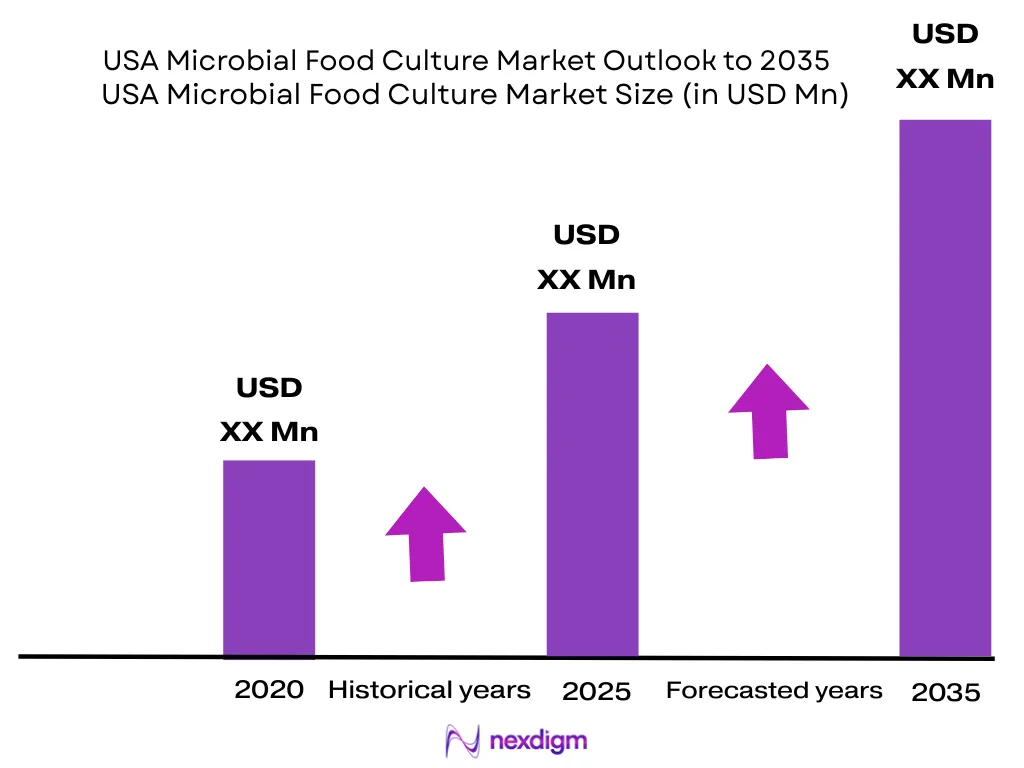
The USA Microbial Food Culture Market is valued at USD ~ million, based on a five-year historical analysis, and is forecast to grow at % CAGR during the forecast period. Demand is driven by cheese, yogurt, fermented milk, kefir, sour cream, cultured butter, fermented meat, sourdough, kombucha, fermented vegetables and plant-based dairy alternatives. USDA recorded total cheese production of 14.25 billion pounds, compared with 14.21 billion pounds previously. The USA Microbial Food Culture Market is dominated by Wisconsin, California, Idaho, New York, Pennsylvania, Texas, Minnesota and Vermont due to cheese plants, yogurt manufacturing, milk processing, fermented dairy innovation, cold chain networks and artisan cheese ecosystems. USDA reported Italian cheese production of 6.03 billion pounds, compared with 5.85 billion pounds previously, while American-type cheese production remained above 5.5 billion pounds, supporting starter, adjunct, ripening and protective culture demand.
Market Segmentation
By Culture Type
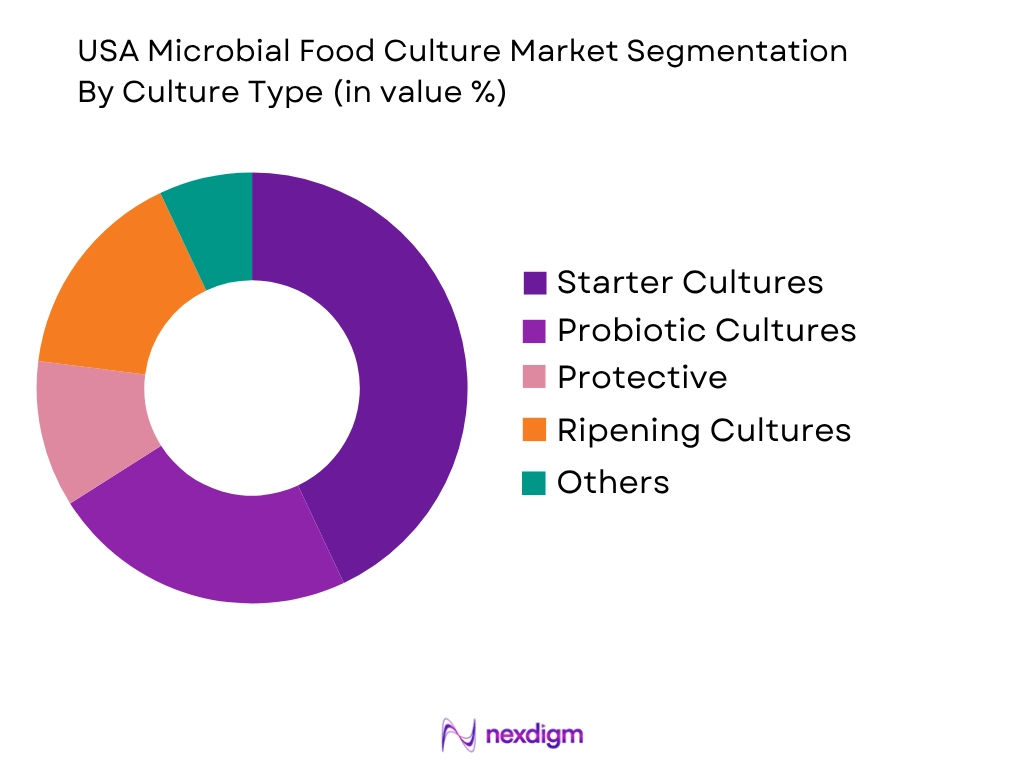
USA Microbial Food Culture Market is segmented by culture type into starter cultures, probiotic cultures, protective cultures, biopreservation cultures, adjunct cultures, ripening cultures, aroma cultures, flavor-developing cultures, direct vat set cultures, bulk starter cultures, surface-ripening cultures and encapsulated specialty culture systems. Recently, starter cultures have a dominant market share in USA under the segmentation culture type, it is due to their essential use in high-volume dairy fermentation, particularly cheese, yogurt, fermented milk, sour cream, cream cheese, cottage cheese and cultured butter. Starter cultures drive acidification, pH reduction, texture development, flavor formation and process reliability. Their dominance is reinforced by the scale of U.S. cheese production, strong yogurt manufacturing, large milk processing capacity and industrial adoption of direct vat set cultures. Dairy processors require consistent acidification speed, phage robustness, low batch failure risk, predictable sensory outcomes and compatibility with high-protein or reduced-sugar formulations, making starter cultures the core culture category.
By Application
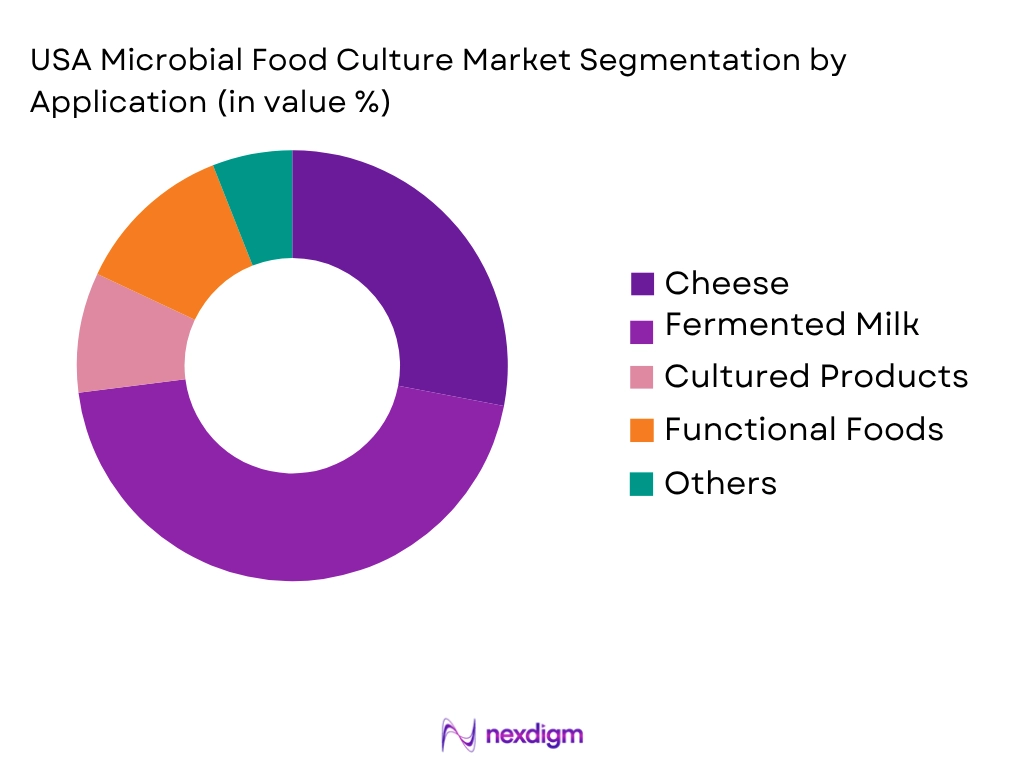
USA Microbial Food Culture Market is segmented by application into cheese, yogurt, fermented milk, kefir, cultured butter, sour cream, cream cheese, cottage cheese, fermented meat, dry sausages, sourdough bakery, fermented vegetables, pickles, sauerkraut, kimchi, kombucha, fermented beverages, plant-based yogurt alternatives, plant-based cheese alternatives and functional foods. Recently, cheese has a dominant market share in USA under application segmentation because cheese production requires starter, adjunct, ripening, gas-forming, mold, yeast and surface cultures across cheddar, mozzarella, parmesan, Swiss, blue cheese, brie, camembert and specialty cheese varieties. The segment uses lactic acid bacteria, propionibacteria, Penicillium cultures, Brevibacterium, Geotrichum and Debaryomyces systems for acidification, flavor, rind formation, texture, eye formation and ripening control. Cheese manufacturers also rely on phage-robust culture rotation, direct vat set formats and technical support to maintain batch consistency across large plants and specialty production.
Competitive Landscape
The USA Microbial Food Culture Market is concentrated among global culture houses, probiotic strain suppliers, dairy ingredient companies, specialty fermentation firms and regional distributors. The market is technically intensive because customers require strain documentation, GRAS support, phage management, culture viability, cold chain reliability, dairy application labs, cheese troubleshooting, probiotic claim support and plant-based fermentation capability. Large players dominate industrial dairy and cheese accounts, while specialty probiotic and artisan culture companies serve functional foods, supplements, fermented beverages, artisan cheese and small-batch fermented foods.
| Company | Establishment Year | Headquarters | Core Culture Focus | USA Market Role | Key Applications | Regulatory Capability | Innovation Capability | Market-Specific Capability |
| Novonesis North America | 2024 | Bagsværd, Denmark | ~ | ~ | ~ | ~ | ~ | ~ |
| International Flavors & Fragrances | 1958 | New York, USA | ~ | ~ | ~ | ~ | ~ | ~ |
| dsm-firmenich North America | 2023 | Kaiseraugst, Switzerland | ~ | ~ | ~ | ~ | ~ | ~ |
| Lallemand Specialty Cultures | 1915 | Montreal, Canada | ~ | ~ | ~ | ~ | ~ | ~ |
| Kerry Bio-Science | 1972 | Tralee, Ireland | ~ | ~ | ~ | ~ | ~ | ~ |
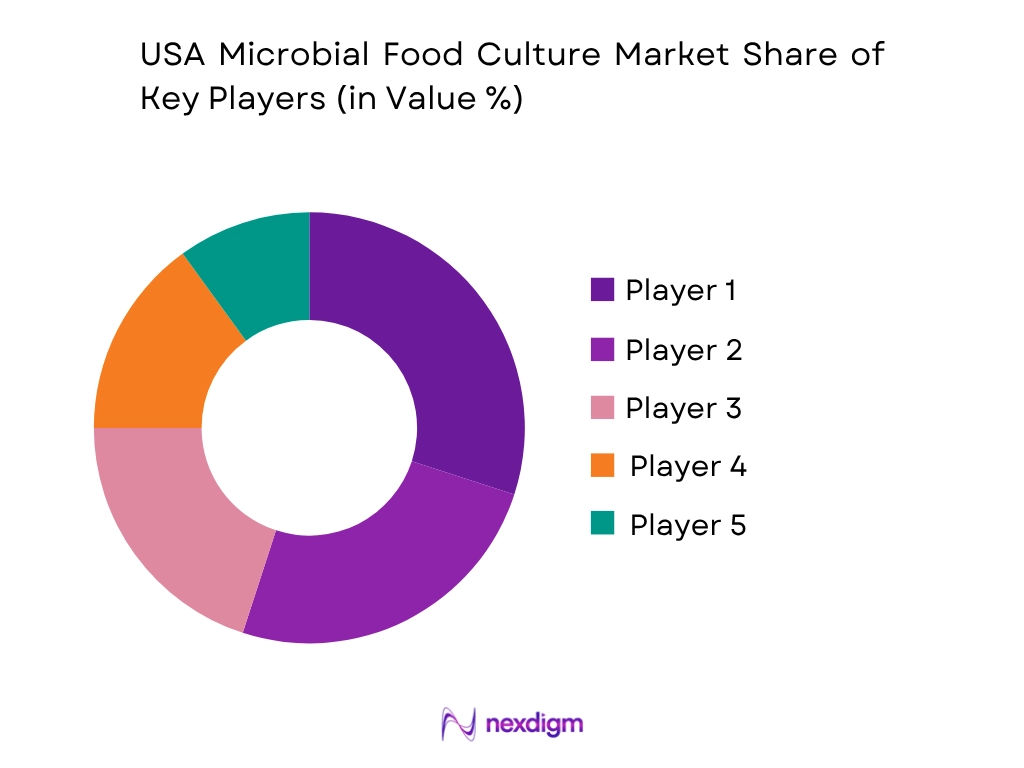
USA Microbial Food Culture Market
Growth Drivers
Cheese, yogurt and cultured dairy manufacturing scale
USA Microbial Food Culture Market is driven by the scale of cheese and fermented dairy manufacturing, where starter cultures, adjunct cultures, ripening cultures, protective cultures and probiotic strains are required for acidification, pH reduction, texture control, flavor development, shelf-life extension and batch consistency. USDA NASS reported total cheese production of 14.25 billion pounds, compared with 14.21 billion pounds previously, while Italian cheese production reached 6.03 billion pounds and American-type cheese production reached 5.58 billion pounds. USDA NASS also reported U.S. milk production of 226 billion pounds, compared with the previous annual level, creating a large raw material base for cheese, yogurt, kefir, sour cream, cultured butter and cream cheese. These numbers support demand for direct vat set cultures, phage-robust rotation programs, thermophilic and mesophilic starters, Penicillium cultures, propionibacteria and probiotic blends. Culture suppliers benefit because large dairy plants need predictable acidification speed, low contamination risk, cold-chain reliability, strain documentation and troubleshooting support across high-volume fermentation lines.
Food expenditure, fermented food consumption and clean-label preservation demand
USA Microbial Food Culture Market is supported by the broader food expenditure base and demand for fermented, functional and clean-label foods. USDA ERS reported total U.S. food spending of USD 2.51 trillion, with food-away-from-home spending of USD 1.41 trillion, showing a large commercial base for dairy, bakery, fermented vegetables, kombucha, cultured ingredients, foodservice sauces, refrigerated products and functional foods. USDA NASS reported cheese output of 14.25 billion pounds, showing the industrial importance of culture-driven dairy processing. Microbial cultures are market-specific because they deliver acidification, texture formation, flavor development, probiotic viability, spoilage inhibition and biopreservation in cheese, yogurt, kefir, sourdough, fermented meat, pickles, sauerkraut, kimchi and plant-based alternatives. Clean-label processors use protective cultures to reduce mold, yeast and spoilage pressure while limiting artificial preservatives. Suppliers with culture blends that support shelf-life extension, rapid fermentation, low-sugar dairy, high-protein yogurt and chilled foodservice formats can capture demand from both retail and food-away-from-home applications.
Market Challenges
GRAS documentation, FSMA controls and strain-safety validation burden
USA Microbial Food Culture Market faces a regulatory and technical documentation challenge because microbial cultures, probiotic strains and microbial-derived ingredients require safety substantiation, strain identity records, intended-use files, manufacturing controls, allergen controls and customer-specific regulatory packages. FDA states that food ingredients may be approved food additives or GRAS substances, and GRAS status must be based on qualified expert recognition supported by history of safe use or scientific procedures. FDA also maintains a partial list of microorganisms and microbial-derived ingredients used in food, while FDA guidance covers food additive petitions and GRAS notification programs. This burden is commercially significant because U.S. cheese output reached 14.25 billion pounds and milk production reached 226 billion pounds, placing cultures in high-volume, safety-sensitive dairy plants. A supplier may need genomic identification, absence-of-toxin data, antibiotic-resistance review, viability counts, contaminant controls and application evidence. Weak documentation slows approvals for cheese, yogurt, probiotic foods, fermented beverages, fermented meat and plant-based dairy alternatives.
Culture viability, cold-chain exposure, bacteriophage risk and processing variability
USA Microbial Food Culture Market is constrained by culture viability and process reliability risks across large dairy, meat, bakery and fermented food operations. USDA NASS reported U.S. milk production of 226 billion pounds and total cheese output of 14.25 billion pounds, which means even small culture-performance failures can disrupt large fermentation batches. Technical risk is market-specific because starter cultures can slow acidification, probiotic strains can lose viability during storage, freeze-dried cultures can be affected by moisture, and bacteriophages can damage lactic acid bacteria performance in cheese and yogurt plants. Raw milk composition, heat treatment, salt level, fat level, protein concentration, plant sanitation, fermentation temperature and post-acidification all affect culture outcomes. Cheese plants need phage-rotation systems, yogurt manufacturers need viscosity and mild flavor control, fermented meat processors need pH drop reliability, and plant-based dairy makers need cultures that work in oat, soy, almond, coconut or pea matrices. Suppliers therefore need cold-chain discipline, technical troubleshooting, lot consistency and application validation.
Market Opportunities
Protective cultures and clean-label biopreservation systems
USA Microbial Food Culture Market has a strong opportunity in protective cultures because dairy, bakery, meat and refrigerated food manufacturers are seeking clean-label methods to manage spoilage, mold, yeast and shelf-life instability. USDA ERS reported total food spending of USD 2.51 trillion and food-away-from-home spending of USD 1.41 trillion, supporting large distribution of refrigerated, prepared and fermented foods. USDA NASS reported cheese output of 14.25 billion pounds, creating a substantial application base for protective cultures in cheese, yogurt, sour cream, cream cheese and sliced dairy products. Suppliers can target cultures that inhibit spoilage organisms, reduce mold pressure, control yeast growth, support Listeria-control programs where applicable, and improve refrigerated shelf life without relying solely on artificial preservatives. This opportunity reflects current manufacturer needs because retail dairy, foodservice packs, sourdough, fermented vegetables, dips, chilled sauces and prepared foods require reliable shelf-life performance. Culture houses with biopreservation libraries, GRAS-ready documentation, dairy application labs and cold-chain distribution can convert clean-label preservation demand into higher-value customer programs.
Next-generation probiotics, plant-based fermentation and precision culture development
USA Microbial Food Culture Market has a growth opportunity in probiotic, plant-based and precision-developed culture systems because food manufacturers are expanding gut-health, functional nutrition and alternative dairy formats. USDA ERS reported total food spending of USD 2.51 trillion, while USDA NASS reported milk production of 226 billion pounds and total cheese production of 14.25 billion pounds, showing both mainstream dairy scale and a large food innovation base. Suppliers can target yogurt, kefir, drinkable dairy, high-protein fermented dairy, probiotic snacks, nutrition products, plant-based yogurt, plant-based cheese, fermented beverages and synbiotic foods with strain-specific probiotics, encapsulated cultures, acid-tolerant cultures, spore-forming cultures, postbiotic-compatible systems and plant-matrix fermentation cultures. This opportunity is current because plant-based oat, soy, almond, pea and coconut matrices require cultures that acidify predictably while improving texture, creaminess and flavor. FDA’s GRAS framework increases the value of suppliers that can provide strain identity, safety files and intended-use documentation. Companies with genomics, high-throughput screening, phage-resistance tools and application support can capture differentiated innovation briefs.
Future Outlook
Over the forecast period, the USA Microbial Food Culture Market is expected to grow through cheese production, yogurt innovation, probiotic foods, cultured dairy, fermented meats, sourdough bakery, fermented beverages, plant-based dairy alternatives and clean-label preservation. Starter cultures will remain central because cheese and yogurt manufacturers depend on controlled acidification, pH reduction, texture formation, flavor development and batch consistency.
Major Players
- Novonesis North America
- International Flavors & Fragrances
- dsm-firmenich North America
- Lallemand Specialty Cultures
- Kerry Bio-Science
- Sacco System USA
- CSK Food Enrichment USA
- Bioprox North America
- Dalton Biotecnologie
- ADM Biotics
- Probi USA
- UAS Labs
- BioGaia USA
- Custom Probiotics
- Angel Yeast North America
Key Target Audience
- Microbial food culture manufacturers
- Dairy processors and cheese manufacturers
- Yogurt, kefir and fermented milk manufacturers
- Probiotic and functional food manufacturers
- Fermented meat, bakery, sourdough and fermented vegetable manufacturers
- Plant-based dairy alternative and fermented beverage manufacturers
- Investments and venture capitalist firms
- Government and regulatory bodies
Research Methodology
Step 1: Identification of Key Variables
The initial phase involves constructing an ecosystem map covering culture houses, strain banks, fermentation media suppliers, starter culture manufacturers, probiotic strain suppliers, protective culture developers, dairy processors, cheese manufacturers, yogurt manufacturers, fermented meat processors and plant-based fermentation companies. This step is supported by desk research, regulatory review, dairy production analysis and company mapping. The objective is to define variables such as culture type, microorganism type, form, functionality, application and end-user channel.
Step 2: Market Analysis and Construction
In this phase, historical data is compiled across cheese production, yogurt and fermented milk, cultured dairy, fermented meat, sourdough bakery, fermented vegetables, kombucha, probiotic foods and plant-based dairy alternatives. The top-down approach evaluates dairy, food manufacturing and consumption indicators, while the bottom-up approach assesses culture usage across cheese vats, yogurt lines, fermented meat plants and specialty fermentation applications. This supports value, volume and segment-level modelling.
Step 3: Hypothesis Validation and Expert Consultation
Market hypotheses are validated through computer-assisted telephone interviews with culture suppliers, dairy technologists, cheese plant managers, yogurt formulators, probiotic product developers, fermented meat processors, bakery fermentation specialists, plant-based dairy developers and regulatory documentation experts. These consultations verify starter culture demand, protective culture adoption, probiotic viability requirements, phage-rotation needs and application-level purchasing criteria. Expert inputs refine segmentation, competitive positioning and future outlook.
Step 4: Research Synthesis and Final Output
The final phase integrates secondary research, FDA GRAS review, USDA dairy data, company benchmarking, application mapping, cold-chain assessment and expert consultations into a consolidated market model. Data triangulation is applied across manufacturer demand, culture supplier capacity, application usage and technical performance criteria. The final output includes market size, segmentation, competitive landscape, future outlook and strategic recommendations for USA Microbial Food Culture Market participants.

- Executive Summary
- Research Methodology (Market Definitions and Assumptions, Abbreviations, Microbial Food Culture Classification Framework, Starter Culture Mapping, Protective Culture Mapping, Probiotic Culture Mapping, Adjunct and Ripening Culture Mapping, Direct Vat Set Culture Mapping, Freeze-Dried and Frozen Culture Mapping, FDA GRAS Review, FDA Food Additive and Microbial-Derived Ingredient Review, FSMA Preventive Controls Review, USDA-FSIS Meat and Poultry Fermentation Requirements Review, Organic and Non-GMO Claim Mapping, Dairy Plant and Fermented Food Manufacturer Procurement Checks, Market Sizing Approach, Top-Down Analysis, Bottom-Up Analysis, Demand-Side Assessment, Supply-Side Assessment, Primary Industry Interviews, Data Triangulation, Forecasting Framework, Limitations and Future Conclusions)

- Definition and Scope
- Market Evolution and Industry Genesis
- Timeline of Major Industry Developments
- Role of Microbial Cultures in U.S. Fermented Food Manufacturing
- Starter Culture, Protective Culture and Probiotic Culture Ecosystem

- Growth Drivers (Large Dairy and Cheese Manufacturing Base, Yogurt and Fermented Milk Consumption, Probiotic and Gut Health Product Demand, Clean-Label Biopreservation Adoption, Shelf-Life Extension Requirements, Fermented Meat and Sourdough Product Expansion, Plant-Based Fermentation Innovation, Functional Food Launches, Industrial Fermentation Standardization, Direct Vat Set Culture Adoption)
- Market Challenges (Strain Validation and GRAS Documentation Burden, FDA and FSMA Compliance Complexity, Cold Chain and Culture Viability Requirements, Bacteriophage Contamination Risk, Culture Performance Variability, Raw Milk Composition Variability, High Cost of Strain Development, Shelf-Life Claim Validation, Probiotic Survivability in Processing and Storage, Allergen and Cross-Contamination Controls)
- Market Opportunities (Precision Fermentation-Enabled Culture Development, Next-Generation Probiotic Strains, Protective Cultures for Clean-Label Preservation, Plant-Based Dairy Culture Platforms, Postbiotic and Paraprobiotic Ingredient Development, Artisan Cheese Culture Customization, Fermented Beverage Culture Systems, Synbiotic Food Formulations, Personalized Nutrition and Gut Health Foods, Non-GMO and Organic-Compatible Culture Systems)
- Market Trends (Multi-Strain Culture Blends, Fast-Acidifying Starter Cultures, Phage-Robust Culture Rotation, Protective Biopreservation Cultures, Clean-Label Shelf-Life Extension, High-Protein Yogurt Cultures, Low-Sugar Fermented Dairy Cultures, Plant-Based Cheese Ripening Cultures, Kombucha and Fermented Beverage Culture Standardization, Probiotic Stability Enhancement, Encapsulated Culture Delivery)
- SWOT Analysis
- Porter’s Five Forces Analysis
- PESTLE Analysis

- By Market Value (2020-2025)
- By Consumption Volume (2020-2025)
- By Starter Culture Demand (2020-2025)

- By Culture Type (In Value %)
Starter Cultures
Protective Cultures
Probiotic Cultures
Adjunct Cultures
Ripening Cultures - By Application (In Value %)
Cheese
Fermented Milk
Cultured Products
Functional Food - By Distribution Channel (In Value %)
Direct Sales to Dairy and Food Manufacturers
Culture House Key Account Sales
Specialty Ingredient Distributors
Dairy Ingredient Distributors
Fermentation Technology Suppliers - By Region (In Value %)
West USA
Midwest USA
Northeast USA
South USA

- Market Share of Major Players (By Value, Volume, Culture Type, Microorganism Type, Application, End User, Region, Distribution Channel, Starter vs Protective vs Probiotic Portfolio)
- Cross Comparison Parameters (Starter Culture Portfolio Breadth, Protective Culture and Biopreservation Capability, Probiotic Strain Library Strength, FDA GRAS and Safety Documentation Strength, Phage-Robust Culture Rotation Capability, Dairy and Cheese Application Lab Capability, Plant-Based Fermentation Expertise, U.S. Cold Chain and Technical Service Footprint)
- SWOT Analysis of Major Players
- Detailed Profiles of Major Companies
Novonesis North America
International Flavors & Fragrances
dsm-firmenich North America
Lallemand Specialty Cultures
Kerry Bio-Science
Sacco System USA
CSK Food Enrichment USA
Bioprox North America
Dalton Biotecnologie
ADM Biotics
Probi USA
UAS Labs
BioGaia USA
Custom Probiotics
Angel Yeast North America

- Cheese Manufacturer Analysis
- Yogurt and Fermented Milk Manufacturer Analysis
- Fermented Meat Processor Analysis
- Bakery and Sourdough Manufacturer Analysis
- Fermented Vegetable Manufacturer Analysis
- Kombucha and Fermented Beverage Manufacturer Analysis

- By Market Value (2026-2035)
- By Consumption Volume (2026-2035)
- By Starter Culture Demand (2026-2035)


 Request a Sample
 Ask for Customization
 Get a Quote
 Enquire Now