

 Download PDF
Market Overview
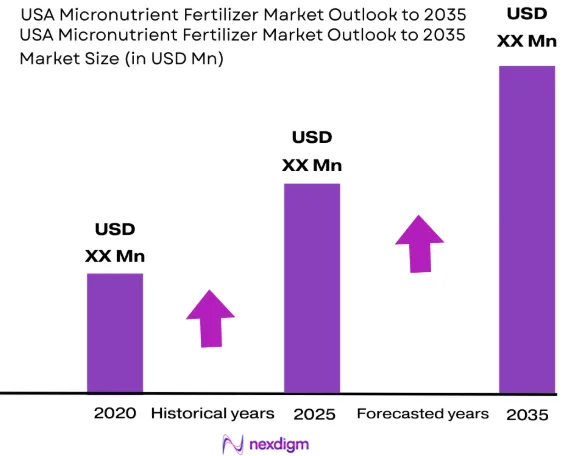
The USA Micronutrient Fertilizer Market is valued at approximately USD ~ million, reflecting growing demand for crop-specific nutrient management and soil health improvement programs. Historical industry assessments indicate the market stood near USD ~ million in the preceding period and expanded due to increasing incidences of zinc, boron, iron, and manganese deficiencies in major field crops. Adoption of precision agriculture technologies, variable-rate fertilizer application systems, and rising cultivation of high-value fruits, vegetables, corn, and soybean crops continue to drive market expansion.
Market Segmentation
By Nutrient Type
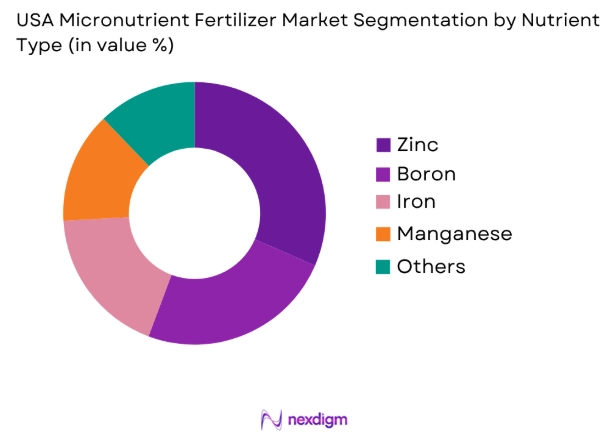
USA Micronutrient Fertilizer Market is segmented into zinc, boron, iron, manganese, and others. Recently, zinc has maintained a dominant market share under this segmentation due to widespread zinc deficiencies observed across corn, soybean, wheat, and rice-growing regions. Zinc plays a critical role in enzyme activation, chlorophyll synthesis, and plant growth regulation, making it one of the most frequently recommended micronutrients following soil testing. The growing use of zinc-enriched starter fertilizers and seed treatment formulations has strengthened its position. Major manufacturers continue to introduce advanced zinc chelates and liquid zinc products that improve nutrient uptake efficiency. Additionally, increasing farmer awareness regarding yield losses caused by micronutrient deficiencies has encouraged routine zinc applications across large-scale commercial farms, supporting its leadership within the nutrient type segment.
By Application Method
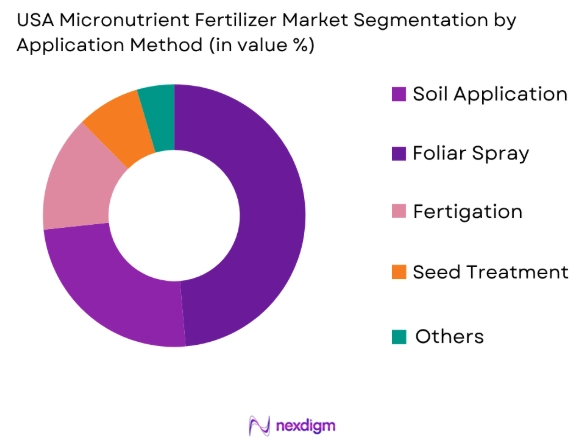
USA Micronutrient Fertilizer Market is segmented into soil application, foliar spray, fertigation, seed treatment, and others. Recently, soil application has emerged as the dominant segment because it provides broad nutrient availability throughout crop development stages and integrates easily with existing fertilization programs. Farmers prefer soil-applied micronutrients for large-acreage crops such as corn, soybean, cotton, and wheat due to operational efficiency and compatibility with conventional fertilizer systems. Furthermore, soil application supports long-term nutrient correction in deficient fields and allows growers to address multiple micronutrient deficiencies simultaneously. Technological advancements in granular blends, controlled-release formulations, and chelated nutrient products have further improved effectiveness. The segment also benefits from increasing adoption of precision nutrient management strategies that utilize soil testing data to determine application requirements accurately, enhancing crop productivity and nutrient-use efficiency.
Competitive Landscape
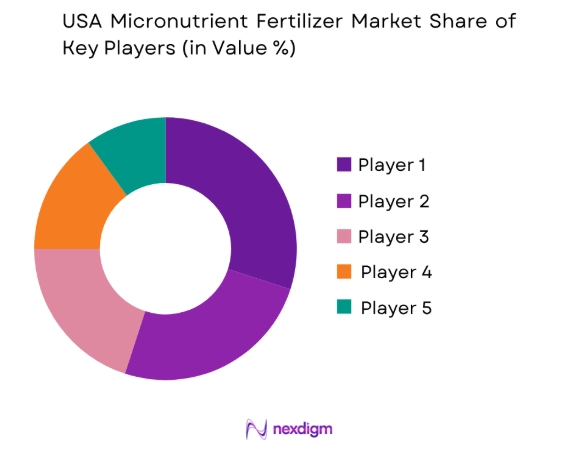
The USA Micronutrient Fertilizer Market exhibits moderate consolidation with a combination of multinational crop nutrition companies and regional agricultural input providers. Major participants focus on product innovation, precision agriculture integration, specialty nutrient formulations, and strategic distributor partnerships. Companies continue expanding portfolios of chelated micronutrients, liquid formulations, and sustainable nutrient solutions to strengthen their competitive positions.
| Company | Establishment Year | Headquarters | Key Micronutrients | Product Form | Distribution Network | Precision Agriculture Integration | R&D Focus | Crop Coverage |
| The Mosaic Company | 2004 | ~ | ~ | ~ | ~ | ~ | ~ | ~ |
| Nutrien Ltd. | 2018 | ~ | ~ | ~ | ~ | ~ | ~ | ~ |
| Yara International | 1905 | ~ | ~ | ~ | ~ | ~ | ~ | ~ |
| Wilbur-Ellis | 1921 | ~ | ~ | ~ | ~ | ~ | ~ | ~ |
| Koch Agronomic Services | 1940 | ~ | ~ | ~ | ~ | ~ | ~ | ~ |
USA Micronutrient Fertilizer Market Analysis
Growth Drivers
Rising Micronutrient Deficiencies Across Major Crop-Producing Regions
The increasing prevalence of micronutrient deficiencies in U.S. agricultural soils is a major driver for the micronutrient fertilizer market. According to the USDA, the United States planted 91.5 million acres of corn and 86.1 million acres of soybeans during the latest crop cycle, creating substantial nutrient demand across large farming areas. Zinc, boron, iron, and manganese deficiencies are increasingly reported in intensive row-crop systems where continuous cultivation accelerates nutrient depletion. The USDA Economic Research Service also notes that fertilizer remains one of the most important crop production inputs, accounting for 33 to 44 units of every 100 units of corn operating costs and 34 to 45 units of every 100 units of wheat operating costs, highlighting the importance of nutrient management in maintaining productivity. Furthermore, USDA fertilizer datasets continue to track micronutrient consumption alongside primary nutrients due to growing agronomic relevance. Large-scale cultivation of corn, soybean, cotton, wheat, fruits, vegetables, and nuts requires balanced nutrient programs to sustain yields and crop quality. As nutrient removal from harvested crops continues to increase across millions of acres, growers are increasingly adopting zinc sulfate, boron formulations, chelated iron, and manganese products, creating strong demand for micronutrient fertilizers across U.S. agriculture.
Expansion of Precision Agriculture and High-Value Crop Production
The rapid adoption of precision agriculture technologies across the United States is significantly supporting micronutrient fertilizer usage. The United States remains one of the largest commercial farming economies globally, with agricultural production spread across more than 900 million acres of farmland. Precision agriculture tools including soil mapping, GPS-guided nutrient application, drone-based monitoring, and variable-rate technologies are enabling farmers to identify field-specific micronutrient deficiencies and optimize fertilizer use. According to USDA crop reports, U.S. corn production exceeded 15 billion bushels, while soybean production surpassed 4.4 billion bushels, demonstrating the scale of nutrient demand within the agricultural sector. High-value specialty crops including almonds, citrus, grapes, berries, vegetables, and tree nuts require consistent micronutrient supplementation to maintain quality standards and export competitiveness. Furthermore, the IMF estimates U.S. GDP above USD 29 trillion, supporting continued investment in advanced agricultural technologies and input optimization. The combination of precision nutrient management, increasing productivity requirements, and strong commercial farming infrastructure continues to accelerate micronutrient fertilizer adoption across major agricultural regions.
Market Challenges
Volatility in Agricultural Input Costs and Farmer Profitability
One of the primary challenges affecting the U.S. micronutrient fertilizer market is volatility in overall agricultural input costs. USDA data indicates fertilizer remains among the largest operating expenses for crop producers. Recent USDA and Reuters reports highlight that farmers continue facing rising costs for fertilizers, seeds, fuel, and crop protection products while managing fluctuating commodity prices. U.S. farmers planned approximately 95.3 million acres of corn and 84.7 million acres of soybeans in the latest planting intentions report, with planting decisions increasingly influenced by input economics. When commodity margins tighten, growers often prioritize macronutrient applications and may delay adoption of specialty micronutrient products. In addition, large grain supplies and lower crop prices have reduced profitability across several farming regions. The challenge becomes particularly evident for smaller farming operations that must balance nutrient requirements against operating budgets. Although micronutrients improve nutrient-use efficiency and crop performance, economic uncertainty can slow purchasing decisions and limit penetration into price-sensitive segments of the market.
Complex Soil Variability and Micronutrient Management Requirements
The United States possesses highly diverse soil conditions spanning the Corn Belt, Great Plains, Southeast, Pacific Coast, and specialty crop regions. This variability creates challenges in accurately identifying and correcting micronutrient deficiencies. Different soil pH levels, organic matter content, moisture conditions, and crop rotations influence micronutrient availability. For example, zinc deficiencies are commonly observed in high-pH soils, while boron deficiencies frequently occur in sandy soils with lower organic matter. USDA datasets covering national fertilizer consumption and nutrient applications indicate increasing complexity in nutrient management practices. Farmers must rely on soil testing, tissue analysis, and precision agriculture technologies to determine proper micronutrient application rates. Misapplication can reduce nutrient efficiency or fail to correct deficiencies adequately. Furthermore, the increasing adoption of high-yield crop genetics places greater demand on soil nutrient reserves. The technical expertise required to implement crop-specific micronutrient programs remains a challenge, particularly among growers transitioning from conventional fertilizer programs toward advanced nutrient management systems.
Market Opportunities
Expansion of Biological and Chelated Micronutrient Solutions
A significant opportunity exists in the increasing adoption of biological and advanced chelated micronutrient products. U.S. agriculture continues to move toward sustainable nutrient management and improved nutrient-use efficiency. The United States maintains one of the world’s most technologically advanced agricultural systems, producing more than 15 billion bushels of corn and over 4 billion bushels of soybeans, requiring efficient nutrient delivery mechanisms. Chelated micronutrients offer enhanced availability under varying soil conditions, while biological nutrient solutions improve nutrient uptake and root development. Additionally, USDA conservation initiatives and regenerative agriculture programs are encouraging practices that improve soil health and nutrient efficiency. High-value specialty crop sectors including fruits, vegetables, nuts, and horticultural crops increasingly demand premium nutrient formulations that minimize environmental losses while maximizing productivity. As growers seek greater return from every acre, advanced micronutrient technologies represent a substantial growth opportunity for manufacturers and distributors operating within the U.S. market.
Increasing Adoption of Precision Nutrient Management Systems
Precision agriculture adoption across the United States continues to create opportunities for micronutrient fertilizer suppliers. The country remains a global leader in precision farming technologies, supported by strong digital infrastructure, large-scale commercial farms, and advanced equipment utilization. USDA acreage data indicates cultivation across tens of millions of acres for corn, soybean, wheat, cotton, and specialty crops, creating substantial demand for field-specific nutrient recommendations. Precision tools including satellite imagery, soil sensors, GPS-guided machinery, drone monitoring, and variable-rate application systems allow farmers to identify micronutrient deficiencies with greater accuracy. This supports targeted use of zinc, boron, iron, manganese, copper, and molybdenum fertilizers. Additionally, continued investment in agricultural technology is supported by the broader U.S. economy, with GDP exceeding USD 29 trillion according to IMF estimates. As growers increasingly focus on productivity optimization, sustainability, and nutrient-use efficiency, precision nutrient management will remain a major opportunity driving adoption of specialized micronutrient fertilizer products across U.S. agriculture.
Future Outlook
The USA Micronutrient Fertilizer Market is expected to experience sustained growth during the forecast period, supported by increasing adoption of precision farming systems, rising awareness of soil nutrient depletion, and growing demand for higher agricultural productivity. Farmers are increasingly integrating micronutrients into comprehensive crop nutrition programs to maximize yield potential and improve crop quality. Advancements in chelated formulations, biological nutrient solutions, and data-driven nutrient management platforms are expected to enhance market penetration. Furthermore, sustainability initiatives and nutrient-use efficiency programs will continue supporting long-term demand growth.
Major Players
- The Mosaic Company
- Nutrien Ltd.
- Yara International ASA
- Wilbur-Ellis Company LLC
- Koch Agronomic Services
- Helena Agri-Enterprises
- Corteva Agriscience
- BASF SE
- Bayer Crop Science
- UPL Limited
- ICL Group
- K+S Aktiengesellschaft
- Compass Minerals
- AgroLiquid
- SQM (Sociedad Química y Minera de Chile)
Key Target Audience
- Micronutrient Fertilizer Manufacturers
- Agricultural Input Distributors
- Crop Nutrition Solution Providers
- Precision Agriculture Technology Companies
- Commercial Farming Enterprises
- Food Processing and Agribusiness Companies
- Investments and Venture Capitalist Firms
- Government and Regulatory Bodies
Research Methodology
Step 1: Identification of Key Variables
The research process begins with mapping the complete micronutrient fertilizer ecosystem, including manufacturers, distributors, retailers, agricultural cooperatives, technology providers, and end-user farmers. Extensive secondary research is conducted to identify variables affecting market demand, including nutrient deficiencies, crop acreage, soil health trends, and adoption of precision agriculture practices.
Step 2: Market Analysis and Construction
Historical market information is collected and analyzed to estimate market revenues, product penetration rates, application patterns, and nutrient-specific demand. Crop-wise nutrient consumption trends, distribution structures, and regional agricultural activity are assessed to build a comprehensive market model and validate revenue estimations.
Step 3: Hypothesis Validation and Expert Consultation
Market assumptions are validated through structured interviews with fertilizer manufacturers, distributors, agronomists, crop consultants, and agricultural cooperatives. These consultations provide operational insights into product demand, farmer purchasing behavior, emerging nutrient technologies, and competitive positioning across the value chain.
Step 4: Research Synthesis and Final Output
The final stage integrates primary and secondary research findings using bottom-up and top-down analytical approaches. Market estimates are triangulated through expert validation, company analysis, nutrient demand assessment, and crop production trends to ensure accurate and reliable market intelligence.

- Executive Summary
- Research Methodology (Market Definitions and Assumptions, Abbreviations, Market Sizing Approach, Consolidated Research Framework, Primary and Secondary Research Methodology, Demand-Supply Assessment Model, Expert Validation Process, Limitations and Future Conclusions)

- Definition and Scope
- Market Evolution and Industry Genesis
- Timeline of Major Industry Developments
- Industry Life Cycle Analysis
- Supply Chain Analysis

- Growth Drivers (Increasing Soil Micronutrient Deficiencies, Expansion of High-Value Specialty Crops, Precision Agriculture Adoption, Rising Crop Yield Optimization Needs, Growth in Sustainable Farming Practices)
- Market Challenges (Volatility in Raw Material Availability, Farmer Awareness Gaps, Regulatory Compliance Complexity, Uneven Soil Testing Adoption, Competition from Conventional NPK Fertilizers)
- Opportunities (Advanced Chelated Micronutrients, Biological Nutrient Enhancement Products, Digital Nutrient Management Platforms, Variable Rate Fertilization Technologies, Regenerative Agriculture Expansion)
- Market Trends (Customized Nutrient Blends, Data-Driven Fertility Programs, Carbon-Smart Agriculture Integration, Increased Demand for Liquid Micronutrients, Growth in Fertigation Applications)
- Government Regulation (USDA Nutrient Stewardship Programs, EPA Fertilizer Regulations, State Fertilizer Registration Requirements, Environmental Compliance Standards, Organic Input Certification Frameworks)
- SWOT Analysis
- Stakeholder Ecosystem
- Porter’s Five Forces
- Competition Ecosystem
- PESTLE Analysis

- By Market Value (2020-2025)
- By Volume Consumption (2020-2025)
- By Average Selling Price (2020-2025)

- By Nutrient Type (In Value %)
Zinc
Boron
Iron
Manganese
Copper
Molybdenum
Chlorine
Nickel
Others - By Crop Type (In Value %)
Corn
Soybean
Wheat
Cotton
Fruits & Vegetables
Tree Nuts
Alfalfa & Forage Crops
Others - By Form Type (In Value %)
Chelated Micronutrients
Non-Chelated Micronutrients
Liquid Micronutrients
Granular Micronutrients
Powder Micronutrients - By Application Method (In Value %)
Soil Application
Foliar Application
Fertigation
Seed Treatment
Precision Nutrient Delivery Systems - By End User (In Value %)
Commercial Farms
Contract Growers
Agricultural Cooperatives
Greenhouse Growers
Specialty Crop Producers

- Market Share of Major Players (Market Share by Value, Volume, Micronutrient Portfolio, Crop Coverage, Distribution Reach, Production Capacity, Dealer Network, Regional Penetration)
- Cross Comparison Parameters (Product Portfolio Strength, Chelated Micronutrient Portfolio, Manufacturing Capacity, Raw Material Integration, Distribution Network Reach, Precision Agriculture Compatibility, Specialty Crop Focus, Regulatory Compliance & Product Registrations)
- SWOT Analysis of Major Players
- Pricing Analysis Basis SKUs (Zinc Sulfate, Zinc EDTA, Boron Ethanolamine, Borax, Iron EDTA, Iron EDDHA, Manganese Sulfate, Copper Sulfate, Sodium Molybdate, Multi-Micronutrient Blends)
- Detailed Profiles of Major Companies
Nutrien Ltd.
The Mosaic Company
Yara North America
ICL Group
Koch Agronomic Services
Helena Agri-Enterprises
Verdesian Life Sciences
Compass Minerals Plant Nutrition
Wilbur-Ellis Agribusiness
AgroLiquid
Brandt Inc.
Corteva Agriscience
K+S Minerals and Agriculture
SQM North America
Tiger-Sul Products

- Nutrient Deficiency Assessment Practices
- Soil Testing and Crop Monitoring Adoption
- Fertilizer Budget Allocation Trends
- Micronutrient Application Frequency Analysis
- Yield Improvement Expectations
- Farm-Level Decision-Making Framework
- Precision Agriculture Adoption Levels
- Brand Awareness and Product Preference Assessment
- Pain Point Analysis
- Purchasing Behavior and Loyalty Metrics

- By Market Value (2026-2035)
- By Volume Consumption (2026-2035)
- By Average Selling Price (2026-2035)


 Request a Sample
 Ask for Customization
 Get a Quote
 Enquire Now