
 Download PDF
Market Overview
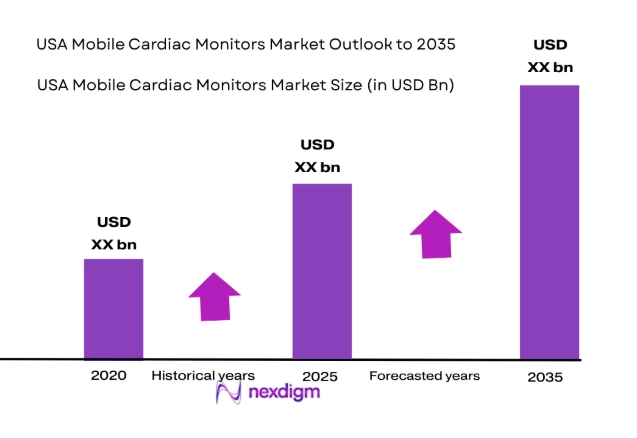
The USA Mobile Cardiac Monitors market is valued at USD ~ billion, driven by increasing demand for advanced monitoring devices due to rising cardiovascular diseases. Technological innovations in mobile health and the growing adoption of telemedicine contribute to this growth, supported by healthcare infrastructure improvements. The market’s growth is also propelled by the increasing focus on remote patient monitoring, which enhances healthcare delivery while reducing costs. The expanding geriatric population further amplifies the demand for mobile cardiac monitoring devices in the country.
In terms of dominant cities, major metropolitan areas such as New York, Los Angeles, and Chicago are leading the market due to the concentration of hospitals, research institutions, and healthcare providers. These cities are equipped with state-of-the-art healthcare infrastructure, making them ideal hubs for mobile cardiac monitoring adoption. Additionally, the presence of key industry players and increasing healthcare investments in these regions fuel the market’s expansion. With widespread healthcare reform and access to high-quality medical technology, these cities and surrounding areas continue to influence the growth trajectory of the market.
Market Segmentation
By Product Type
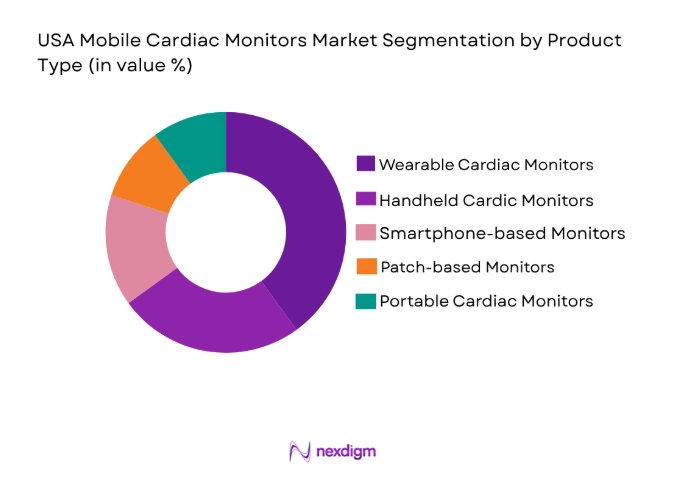
USA Mobile Cardiac Monitors market is segmented by product type into wearable cardiac monitors, handheld cardiac monitors, smartphone-based monitors, patch-based monitors, and portable cardiac monitors. Recently, wearable cardiac monitors have a dominant market share due to factors such as increasing consumer preference for personal health tracking, the ease of use of these devices, and their ability to monitor heart health in real-time. Wearables are gaining traction due to their convenience, effectiveness, and integration with mobile applications that provide continuous monitoring for patients, especially the elderly.
By Platform Type
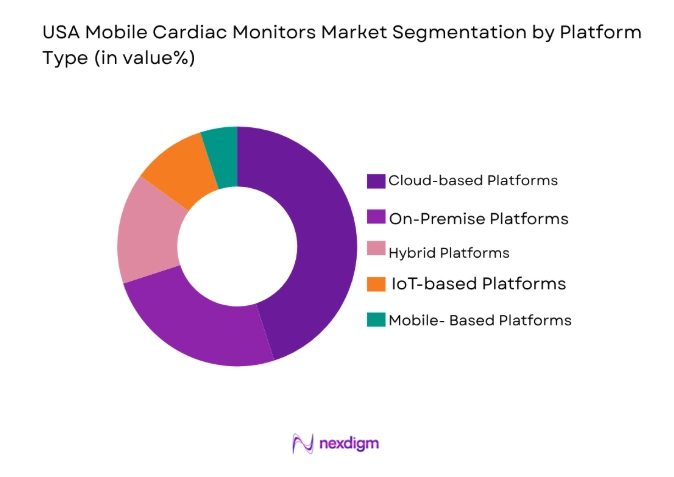
USA Mobile Cardiac Monitors market is segmented by platform type into cloud-based platforms, on-premise platforms, hybrid platforms, IoT-based platforms, and mobile-based platforms. Recently, cloud-based platforms have dominated the market share due to the increasing demand for easy access to patient data from anywhere and the enhanced scalability of cloud solutions. These platforms are particularly attractive for healthcare providers and patients due to their cost-effectiveness, flexibility, and the ability to offer seamless integration with mobile devices, enabling remote monitoring of patients’ cardiac health.
Competitive Landscape
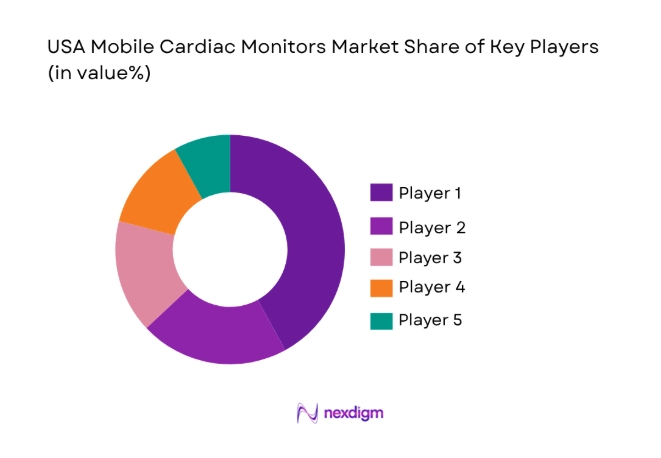
The competitive landscape in the USA Mobile Cardiac Monitors market is highly concentrated with key players leading the industry. These players are actively involved in product innovation, mergers, and acquisitions to maintain market dominance. Major players are increasingly focusing on developing mobile solutions with enhanced data analytics, AI integration, and better customer support services to cater to the growing demand for mobile cardiac monitoring devices. The market’s landscape is also shaped by increasing collaborations between healthcare providers, technology firms, and research organizations.
| Company Name | Establishment Year | Headquarters | Technology Focus | Market Reach | Key Products | Revenue (USD) | Additional Market Parameter |
| Medtronic | 1949 | Minneapolis, MN | ~ | ~ | ~ | ~ | ~ |
| Abbott Laboratories | 1888 | Abbott Park, IL | ~ | ~ | ~ | ~ | ~ |
| Boston Scientific | 1979 | Marlborough, MA | ~ | ~ | ~ | ~ | ~ |
| AliveCor | 2011 | Mountain View, CA | ~ | ~ | ~ | ~ | ~ |
| Philips Healthcare | 1891 | Amsterdam, Netherlands | ~ | ~ | ~ | ~ | ~ |
USA Mobile Cardiac Monitors Market Analysis
Growth Drivers
Rising Prevalence of Cardiovascular Diseases
Cardiovascular diseases (CVDs) continue to be one of the leading causes of mortality in the United States, a trend that is fueling the increasing demand for mobile cardiac monitoring solutions. As the population ages, the incidence of heart-related health issues escalates, making heart health management more critical than ever. Mobile cardiac monitors provide an efficient and accessible solution for continuous heart health tracking, particularly for individuals with chronic conditions. These devices enable real-time data transmission to healthcare providers, allowing for immediate medical intervention when necessary. Moreover, the growing focus on preventive healthcare, especially for high-risk populations, is accelerating the adoption of mobile cardiac monitoring technology. These devices not only help in managing existing conditions but also act as early warning systems, providing patients and physicians with valuable insights to prevent more severe health complications. This increased emphasis on preventive care is contributing significantly to the market’s expansion, as patients seek more proactive ways to manage their cardiovascular health outside traditional healthcare settings. The continual rise in heart disease prevalence is, therefore, one of the key drivers behind the growing reliance on mobile cardiac monitoring devices, shaping the future trajectory of the market.
Technological Advancements in Mobile Health
The rapid pace of innovation in mobile health technology has played a critical role in the growth of the mobile cardiac monitors market. Over the past few years, significant advancements have been made in the integration of wearable technology with mobile applications, enabling patients to monitor their heart health more effectively than ever before. These devices, such as wearable cardiac monitors, sync with smartphones, cloud platforms, and IoT devices, offering an unprecedented level of convenience and accessibility. Patients can track their heart rate, rhythm, and other critical metrics in real time, providing healthcare professionals with continuous data to assess their condition. Additionally, the advent of cloud-based analytics allows for the processing and interpretation of large volumes of health data, making it easier for doctors to monitor patients remotely and intervene when necessary. These technological improvements have not only made cardiac monitoring more user-friendly but have also reduced the costs associated with traditional hospital visits and monitoring systems. As mobile health solutions continue to evolve, particularly with the integration of artificial intelligence (AI) and machine learning, healthcare providers can further optimize their diagnostic capabilities, leading to improved patient outcomes. This ongoing wave of technological advancements is likely to continue driving the growth and adoption of mobile cardiac monitors in the coming years.
Market Challenges
Regulatory Hurdles and Device Certification
One of the significant challenges faced by the USA Mobile Cardiac Monitors market is the regulatory framework for medical devices. The U.S. Food and Drug Administration (FDA) has stringent regulations in place for medical devices, including mobile cardiac monitors, to ensure their safety, reliability, and efficacy. These devices undergo a rigorous approval process that includes clinical trials, documentation, and testing to meet required standards. This regulatory process can be time-consuming, often taking several years before a new product can reach the market. Additionally, the costs associated with obtaining FDA approval can be prohibitively high, creating a barrier for smaller companies or startups. This regulatory burden can slow down the innovation cycle, preventing the swift introduction of new technologies and features. Moreover, frequent changes in regulatory requirements may create additional challenges for manufacturers, leading to delays or modifications in product development. The lengthy approval process is especially challenging in a fast-paced, technology-driven market, where delays can result in lost market opportunities and increased competition. Therefore, regulatory hurdles remain a key challenge in the growth and development of the USA Mobile Cardiac Monitors market, affecting both established and emerging players.
Data Privacy and Security Concerns
The growing reliance on mobile cardiac monitoring systems for real-time health data transmission introduces significant challenges related to data privacy and security. These devices, especially those that use cloud-based platforms for storing and analyzing patient information, create potential vulnerabilities for sensitive health data. Data breaches or unauthorized access to patient information can lead to severe consequences, including identity theft, loss of patient trust, and legal ramifications. As healthcare providers and patients increasingly adopt mobile health solutions, ensuring robust cybersecurity measures becomes paramount. However, the complexity of maintaining secure networks and platforms for health data is high, with the constantly evolving nature of cyber threats. Healthcare providers must invest heavily in safeguarding patient data and complying with stringent data protection regulations, such as the Health Insurance Portability and Accountability Act (HIPAA). Additionally, patients may be hesitant to use mobile cardiac monitors due to concerns about data privacy, which can hinder widespread adoption. As the mobile cardiac monitors market expands, addressing these security concerns and building trust with consumers will be critical to ensuring long-term success.
Opportunities
Integration of Artificial Intelligence (AI) in Cardiac Monitoring
The integration of artificial intelligence (AI) in mobile cardiac monitors offers a transformative opportunity for the market. AI-powered cardiac monitoring systems can analyze vast amounts of real-time data collected from wearable devices, providing healthcare providers with valuable insights that would otherwise require significant manual effort. By leveraging machine learning algorithms, these systems can detect early signs of cardiac abnormalities, allowing for more accurate and timely diagnosis. AI can also improve predictive analytics, enabling healthcare providers to take preventive measures before a cardiac event occurs. This could significantly reduce healthcare costs and improve patient outcomes by detecting issues before they become critical. As AI continues to evolve, mobile cardiac monitors will likely become even more efficient at identifying complex cardiac conditions, leading to better patient management. The ongoing integration of AI into mobile cardiac monitoring systems offers immense potential for innovation, making it a key growth opportunity for the industry. As more healthcare providers adopt AI-powered solutions, the demand for mobile cardiac monitors equipped with this technology will continue to rise.
Expanding Market Access in Emerging Economies
The global demand for mobile cardiac monitors is steadily increasing, especially in emerging economies where access to advanced healthcare solutions has traditionally been limited. As cardiovascular diseases become more prevalent worldwide, particularly in developing countries, mobile cardiac monitoring devices offer an affordable and accessible alternative to traditional hospital-based monitoring systems. These devices can be used in remote areas or by patients who have limited access to healthcare infrastructure, making them an attractive solution for addressing the growing healthcare challenges in these regions. Moreover, the increasing availability of mobile internet and the expansion of telemedicine services in these countries further enhance the accessibility of mobile cardiac monitors. With lower operational costs compared to conventional monitoring systems, mobile cardiac monitors are gaining traction in low- and middle-income countries, presenting significant opportunities for market expansion. As healthcare infrastructure improves and telemedicine adoption accelerates in emerging markets, the mobile cardiac monitors market will likely experience strong growth in these regions. This offers manufacturers a chance to capture new revenue streams and establish a strong presence in untapped markets.
Future Outlook
The future outlook for the USA Mobile Cardiac Monitors market over the next five years is promising, with expected growth driven by advancements in technology and increased demand for remote healthcare solutions. Innovations in AI and cloud-based platforms will continue to enhance the functionality and accessibility of mobile cardiac monitoring devices. Additionally, supportive regulatory frameworks and an increasing focus on preventative healthcare will fuel demand. The expansion of telemedicine and wearable healthcare devices will further drive market adoption across the United States.
Major Players
- Medtronic
- Abbott Laboratories
- Boston Scientific
- AliveCor
- Philips Healthcare
- Honeywell Life Care Solutions
- Biotronik
- Cardiac Insight
- iRhythm Technologies
- Biotel Inc.
- MedApps
- VivaLNK
- Biosense Webster (Johnson & Johnson)
- Aetrex Worldwide
- NeuroVive Pharmaceutical
Key Target Audience
- Investments and venture capitalist firms
- Government and regulatory bodies
- Healthcare providers
- Telemedicine and remote monitoring service providers
- Mobile health technology developers
- Medical device distributors
- Insurance companies
Research Methodology
Step 1: Identification of Key Variables
Key variables affecting the market are identified through extensive secondary research, including industry reports, market data, and expert interviews.
Step 2: Market Analysis and Construction
The market is analyzed by evaluating historical trends, current market conditions, and forecasting future growth.
Step 3: Hypothesis Validation and Expert Consultation
The hypotheses are validated by consulting with industry experts, stakeholders, and key market players to ensure accuracy.
Step 4: Research Synthesis and Final Output
The findings are synthesized into a final report, which includes comprehensive analysis, market segmentation, and growth forecasts.

- Executive Summary
- Research Methodology (Definitions, Scope, Industry Assumptions, Market Sizing Approach, Primary & Secondary Research Framework, Data Collection & Verification Protocol, Analytic Models & Forecast Methodology, Limitations & Research Validity Checks)

- Market Definition and Scope
- Value Chain & Stakeholder Ecosystem
- Regulatory / Certification Landscape
- Sector Dynamics Affecting Demand
- Strategic Initiatives & Infrastructure Growth

- Growth Drivers
Increasing prevalence of cardiovascular diseases
Technological advancements in mobile cardiac monitoring
Rising adoption of remote patient monitoring - Market Challenges
Data security and privacy concerns
High cost of advanced mobile cardiac monitors
Regulatory hurdles and device certification issues - Market Opportunities
Expanding healthcare infrastructure in emerging markets
Increasing demand for telemedicine and remote healthcare
Development of AI-based cardiac monitoring systems - Trends
Integration of mobile cardiac monitors with smartphones
Growth in wearable healthcare technology - Government Regulations
- SWOT Analysis
- Porter’s Five Forces

- By Market Value, 2020-2025
- By Installed Units, 2020-2025
- By Average System Price, 2020-2025
- By System Complexity Tier, 2020-2025

- By System Type (In Value%)
Wearable Cardiac Monitors
Handheld Cardiac Monitors
Smartphone-based Monitors
Patch-based Monitors
Portable Cardiac Monitors - By Platform Type (In Value%)
Cloud-based Platforms
On-premise Platforms
Hybrid Platforms
IoT-based Platforms
Mobile-based Platforms - By Fitment Type (In Value%)
External Fitment
Implantable Fitment
Smartwatch Integration
Patch Integration - By End User Segment (In Value%)
Hospitals
Clinics
Homecare Settings

- Market Share Analysis
- Cross Comparison Parameters (System Type, Platform Type, Fitment Type, End User Segment, Regional Insights, Technological Innovations, Regulatory Factors)
- SWOT Analysis of Key Competitors
- Pricing & Procurement Analysis
- Key Players
Medtronic
Abbott Laboratories
Boston Scientific
Philips Healthcare
Honeywell Life Care Solutions
AliveCor
Biotronik
Cardiac Insight
iRhythm Technologies
Biotel Inc.
MedApps
VivaLNK
Biosense Webster (Johnson & Johnson)
Aetrex Worldwide
NeuroVive Pharmaceutical

- Hospitals’ growing reliance on mobile cardiac monitors
- Clinics adopting mobile cardiac monitoring solutions
- Homecare settings using mobile cardiac monitors for continuous monitoring
- Impact of telemedicine on the end-user landscape

- Forecast Market Value, 2026-2035
- Forecast Installed Units, 2026-2035
- Price Forecast by System Tier, 2026-2035
- Future Demand by Platform, 2026-2035


 Request a Sample
 Ask for Customization
 Get a Quote
 Enquire Now