
 Download PDF
Market Overview
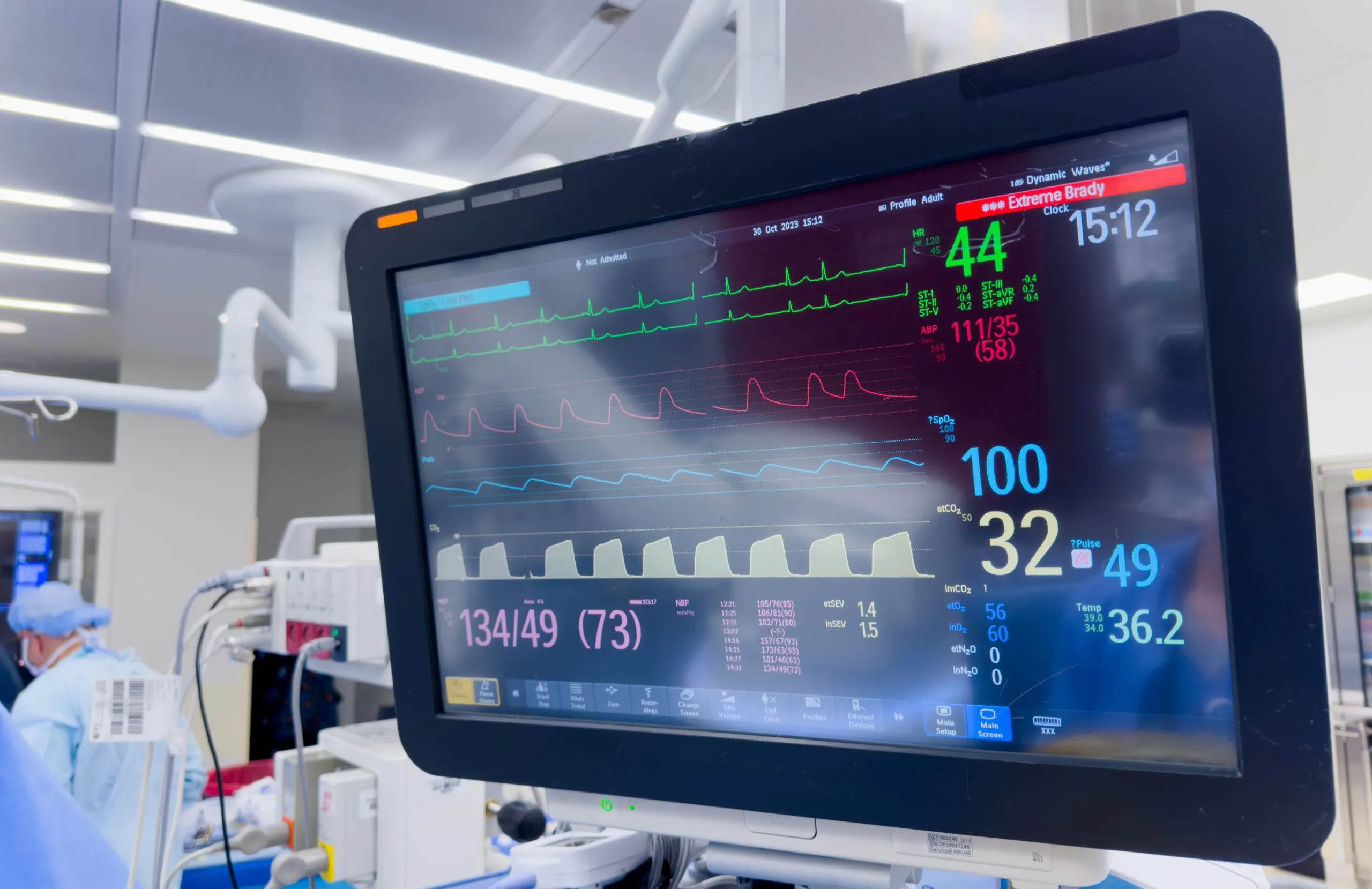
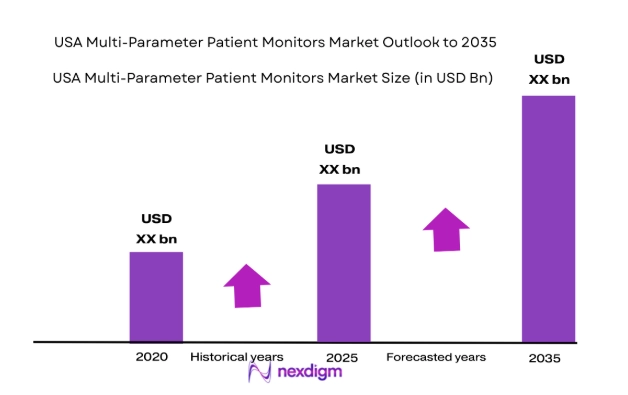
The USA multi-parameter patient monitors market is valued at approximately USD ~ billion based on a recent historical assessment. This growth is driven by the increasing prevalence of chronic diseases such as diabetes and heart conditions, along with the rise in the aging population. Technological advancements in patient monitoring systems, including wireless and portable solutions, are further contributing to the market’s growth. Additionally, government initiatives aimed at improving healthcare infrastructure are playing a key role in driving demand.
The USA market is dominated by major cities like New York, Los Angeles, and Chicago, due to their well-established healthcare infrastructure, availability of skilled medical professionals, and high adoption rates of advanced medical technologies. These cities benefit from a large number of hospitals, healthcare facilities, and research centers, which significantly influence the demand for multi-parameter patient monitoring systems. Furthermore, states with large healthcare expenditures, such as California and Texas, see increased investments in advanced healthcare equipment, including patient monitors, supporting the overall market growth.
Market Segmentation
By System Type
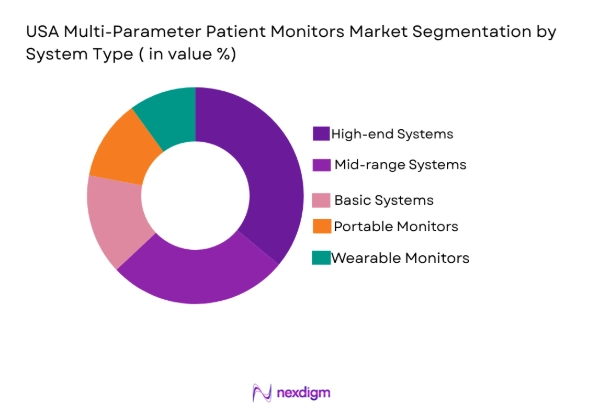
The USA Multi-Parameter Patient Monitors market is segmented by system type into high-end systems, mid-range systems, basic systems, portable monitors, and wearable monitors. Recently, high-end systems have a dominant market share due to their extensive use in intensive care units and emergency departments where continuous, multi-parameter monitoring is critical. These systems offer advanced functionalities such as real-time data analytics, integration with hospital IT systems, and higher accuracy levels. Strong adoption across large hospitals, higher capital expenditure capabilities, and the need for critical patient management continue to drive the dominance of high-end systems in the market.
By Platform Type
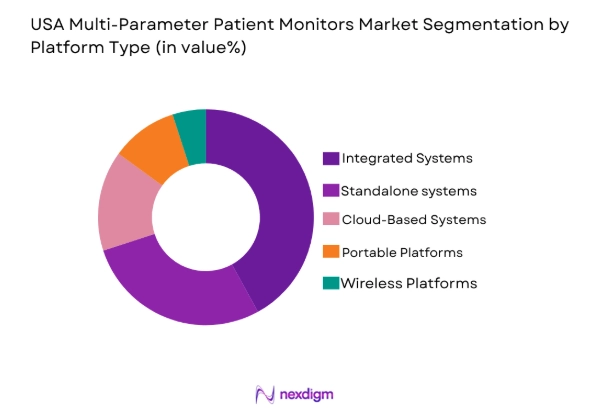
The market for multi-parameter patient monitors in the USA is segmented by platform type into standalone systems, integrated systems, cloud-based systems, portable platforms, and wireless platforms. Integrated systems have recently shown dominance due to their ability to seamlessly integrate with hospital management software and other medical devices. Healthcare providers are increasingly opting for integrated systems that offer better interoperability and enhance data management efficiency. As hospitals and clinics focus on improving patient care through more connected systems, the demand for integrated platforms has risen, especially in large medical facilities with complex workflows.
Competitive Landscape
The competitive landscape of the USA multi-parameter patient monitors market is characterized by a mix of well-established global players and emerging technology innovators. Major players continue to expand their product portfolios through acquisitions and strategic partnerships to meet the growing demand for advanced patient monitoring solutions. Market consolidation is occurring as companies aim to enhance their technological capabilities and increase market penetration. The influence of these major players continues to shape the market, setting trends in innovation and pricing strategies.
| Company Name | Establishment Year | Headquarters | Technology Focus | Market Reach | Key Products | Revenue (USD) | Additional Parameter |
| Medtronic | 1949 | Dublin, Ireland | ~ | ~ | ~ | ~ | ~ |
| Philips Healthcare | 1891 | Amsterdam, NL | ~ | ~ | ~ | ~ | ~ |
| GE Healthcare | 1892 | Chicago, IL, USA | ~ | ~ | ~ | ~ | ~ |
| Siemens Healthineers | 1847 | Erlangen, Germany | ~ | ~ | ~ | ~ | ~ |
| Nihon Kohden | 1951 | Tokyo, Japan | ~ | ~ | ~ | ~ | ~ |
USA Multi-Parameter Patient Monitors Market Analysis
Growth Drivers
Increasing Prevalence of Chronic Diseases:
The USA is witnessing a rapid rise in chronic diseases, particularly diabetes, heart disease, and respiratory illnesses, which is directly contributing to the demand for multi-parameter patient monitoring systems. These diseases require continuous monitoring, especially in hospitals and intensive care units, where real-time data is crucial for treatment decisions. As the number of patients requiring ongoing care increases, healthcare providers are increasingly adopting advanced monitoring technologies to improve patient outcomes and streamline care processes. The aging population further exacerbates the need for effective chronic disease management, which in turn drives the demand for multi-parameter monitors. With the growing burden of chronic conditions, the market for patient monitoring systems is expected to continue expanding, offering lucrative growth opportunities for manufacturers and suppliers in this sector. This trend is reinforced by healthcare reforms focusing on improving healthcare infrastructure and making advanced technologies more accessible to a broader range of healthcare providers.
Technological Advancements in Monitoring Systems
The multi-parameter patient monitors market in the USA is also experiencing growth due to rapid advancements in technology, particularly in the development of wearable and portable patient monitoring systems. These technologies allow for more convenient and continuous monitoring outside the clinical environment, enabling healthcare professionals to track patients remotely. This is especially beneficial for patients who require long-term care or those in remote areas where hospital access is limited. Technological advancements in wireless connectivity, cloud computing, and integration with electronic health records (EHR) systems are further driving the adoption of these monitoring devices. Moreover, the integration of artificial intelligence (AI) and machine learning (ML) technologies into patient monitoring systems is improving their diagnostic accuracy and predictive capabilities. These technological innovations are reshaping the healthcare landscape and driving the demand for modern, more efficient monitoring systems across a variety of healthcare settings.
Market Challenges
High Initial Costs of Advanced Systems
One of the major challenges faced by the USA multi-parameter patient monitors market is the high initial cost associated with advanced monitoring systems. These systems, especially high-end and integrated solutions, require substantial investment from healthcare providers, which can be a significant barrier to adoption, especially for smaller hospitals or outpatient clinics. The complexity of these systems also results in additional costs for installation, training, and maintenance, further discouraging potential buyers. As healthcare budgets are often limited, this high upfront cost can limit access to these advanced systems, particularly in rural or underserved areas. While the long-term benefits, such as improved patient outcomes and operational efficiency, may justify the expense, many healthcare providers are hesitant to invest in these high-cost systems without clear evidence of a return on investment. To address this challenge, manufacturers are focusing on offering financing options, maintenance packages, and cost-effective solutions to make their systems more accessible to a wider range of healthcare institutions.
Regulatory Compliance and Certification Issues
Another significant challenge faced by the USA multi-parameter patient monitors market is the complex and stringent regulatory landscape. The medical devices industry is highly regulated, with manufacturers required to comply with a variety of federal and state regulations. This includes obtaining approvals from the U.S. Food and Drug Administration (FDA) for new devices and ensuring that they meet the standards for safety and effectiveness. The process of obtaining FDA approval can be lengthy and expensive, particularly for new or innovative technologies. Additionally, there are challenges related to certification for interoperability with existing healthcare systems, which is essential for integrated systems. Manufacturers must navigate these regulatory hurdles while ensuring that their products meet the specific needs of healthcare providers. Any delays or complications in the certification process can hinder the timely launch of new products and restrict market growth.
Opportunities
Integration of Artificial Intelligence (AI) in Monitoring Systems
The integration of artificial intelligence (AI) into multi-parameter patient monitors presents a significant growth opportunity in the USA market. AI-powered systems have the potential to enhance monitoring accuracy, automate data analysis, and offer predictive insights into patient conditions. By analyzing real-time patient data, AI algorithms can help healthcare providers make more informed decisions and intervene proactively before complications arise. This technology can also assist in identifying trends in patient conditions, allowing for early detection of deteriorating health or abnormal patterns that may require immediate attention. As healthcare providers increasingly recognize the potential of AI to improve patient care and operational efficiency, the demand for AI-integrated monitoring systems is expected to rise. Moreover, AI technologies can reduce the workload of medical staff by automating routine monitoring tasks, allowing them to focus on higher-priority aspects of patient care.
Expansion of Home Healthcare Monitoring Solutions
The growing demand for home healthcare services is creating new opportunities for multi-parameter patient monitoring systems. As more patients seek to receive care at home, there is a need for portable, user-friendly monitoring devices that can track multiple vital signs in real time. Home healthcare monitoring systems enable patients to stay connected with their healthcare providers, receive timely interventions, and manage chronic conditions more effectively outside of clinical settings. This shift toward home-based care is driven by factors such as the aging population, rising healthcare costs, and patient preference for more personalized care. The development of more affordable and accessible monitoring systems for home use is expected to fuel market growth. These systems are increasingly being integrated with telemedicine platforms, enabling healthcare professionals to remotely monitor patients and provide care, which further enhances the appeal of home healthcare solutions.
Future Outlook
The future outlook for the USA multi-parameter patient monitors market over the next five years indicates substantial growth driven by technological advancements, increasing healthcare demand, and regulatory support. Innovations in AI, wireless connectivity, and integration with healthcare IT systems are expected to play a significant role in shaping market dynamics. Additionally, government initiatives aimed at enhancing healthcare access and infrastructure are likely to drive further demand. As healthcare providers embrace digital health solutions and remote monitoring, the market for multi-parameter monitors will continue to expand, with increased focus on affordability and ease of use for both healthcare providers and patients.
Major Players
- Medtronic
- Philips Healthcare
- GE Healthcare
- Siemens Healthineers
- Nihon Kohden
- Mindray Medical
- Dräger Medical
- Zoll Medical
- Schiller AG
- Welch Allyn
- Invivo Corporation
- Biolight
- SunTech Medical
- Maxtec
- Mindray Medical
Key Target Audience
- Investments and venture capitalist firms
- Government and regulatory bodies
- Healthcare providers (hospitals and clinics)
- Medical device manufacturers
- Distributors of medical equipment
- Insurance companies
- Remote healthcare service providers
Research Methodology
Step 1: Identification of Key Variables
In this step, we define the critical market variables, focusing on factors such as system types, market value, platform type, and end-user segmentation. Additional variables such as pricing trends, technological adoption rates, and regulatory impact are also identified to ensure a comprehensive framework. This step establishes the foundation for accurate market modeling and segmentation.
Step 2: Market Analysis and Construction
Market data is analyzed, combining historical trends with forecasts to construct a comprehensive understanding of market dynamics and segmentation. Quantitative and qualitative inputs are integrated to map demand-supply scenarios across regions and segments. Advanced analytical tools are used to ensure consistency, reliability, and alignment with industry benchmarks.
Step 3: Hypothesis Validation and Expert Consultation
Expert consultations with industry professionals validate our hypotheses, ensuring that our market insights align with current industry practices. Feedback from healthcare providers, manufacturers, and regulatory experts is incorporated to refine assumptions. This step enhances the credibility and accuracy of the research findings.
Step 4: Research Synthesis and Final Output
The collected data and insights are synthesized into a coherent report, ensuring that the findings are presented clearly and are actionable for stakeholders. Data triangulation techniques are applied to eliminate discrepancies and strengthen conclusions. Final outputs are structured to support strategic decision-making and investment planning.

- Executive Summary
- Research Methodology (Definitions, Scope, Industry Assumptions, Market Sizing Approach, Primary & Secondary Research Framework, Data Collection & Verification Protocol, Analytic Models & Forecast Methodology, Limitations & Research Validity Checks)

- Market Definition and Scope
- Value Chain & Stakeholder Ecosystem
- Regulatory / Certification Landscape
- Sector Dynamics Affecting Demand
- Strategic Initiatives & Infrastructure Growth

- Growth Drivers
Increasing Prevalence of Chronic Diseases
Technological Advancements in Monitoring Systems
Aging Population and Demand for Continuous Care - Market Challenges
High Initial Costs of Advanced Systems
Regulatory Compliance and Certification Issues
Data Security and Privacy Concerns in Cloud-based Platforms - Market Opportunities
Integration of Artificial Intelligence (AI) in Monitoring Systems
Expansion of Home Healthcare Monitoring Solutions
Government Investments in Healthcare Infrastructure - Trends
Wearable Patient Monitoring Systems
Integration of Remote Monitoring Capabilities - Government Regulations
- SWOT Analysis
- Porter’s Five Forces

- By Market Value, 2020-2025
- By Installed Units, 2020-2025
- By Average System Price, 2020-2025
- By System Complexity Tier, 2020-2025

- By System Type (In Value%)
High-end Systems
Mid-range Systems
Basic Systems
Portable Monitors
Wearable Monitors - By Platform Type (In Value%)
Standalone Systems
Integrated Systems
Cloud-Based Systems
Portable Platforms
Wireless Platforms - By Fitment Type (In Value%)
Portable Fitment
Wall-mounted Fitment
Bedside Fitment
Handheld Fitment - By End User Segment (In Value%)
Hospitals
Ambulatory Surgical Centers
Home Healthcare

- Market Share Analysis
- Cross Comparison Parameters (System Complexity, Price Point, Platform Type, Fitment Type, End User Segments, Growth Rate, Geographic Expansion, Connectivity Features, Data Integration Capability, Portability Level, Monitoring Accuracy, Battery Life, Regulatory Compliance, After-Sales Support, Installation Requirements)
- SWOT Analysis of Key Competitors
- Pricing & Procurement Analysis
- Key Players
Medtronic
Philips Healthcare
GE Healthcare
Siemens Healthineers
Johnson & Johnson Medical Devices
Nihon Kohden
Schiller AG
Mindray Medical
Welch Allyn
Dräger Medical
Invivo Corporation
Zoll Medical
Biolight
Maxtec
SunTech Medical

- Hospitals: Dominating the Market Share
- Ambulatory Surgical Centers: Increasing Demand for Portable Solutions
- Home Healthcare: Growth in Remote Patient Monitoring
- Healthcare IT Integration: Role in Improving System Efficiency

- Forecast Market Value, 2026-2035
- Forecast Installed Units, 2026-2035
- Price Forecast by System Tier, 2026-2035
- Future Demand by Platform, 2026-2035


 Request a Sample
 Ask for Customization
 Get a Quote
 Enquire Now