
 Download PDF
 Download PDF
Market Overview
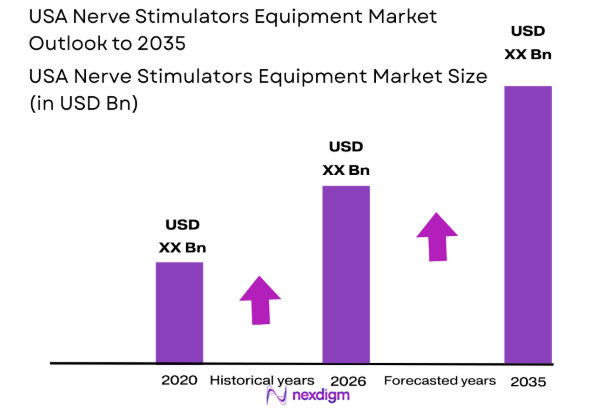
The USA nerve stimulators equipment market size is estimated to reach USD ~ billion, driven by the growing prevalence of neurological disorders and the increasing demand for non-invasive treatment options. The market value is projected to experience steady growth, primarily fueled by advancements in technology and expanding healthcare access across the country. This growth is supported by a rising number of patients opting for nerve stimulators in place of traditional medication, particularly for pain management and neurological disorders such as epilepsy and chronic pain.
The dominance of the USA in this market can be attributed to its advanced healthcare infrastructure, high adoption of medical technologies, and significant investment in research and development. Leading cities such as New York, Los Angeles, and Chicago serve as major hubs for healthcare facilities utilizing nerve stimulators. Additionally, the USA benefits from a strong regulatory framework that supports the growth of this market. High healthcare spending, government initiatives to improve healthcare accessibility, and a growing number of treatment centers contribute to the USA’s prominent role in the global nerve stimulators equipment market.
Market Segmentation
By Product Type
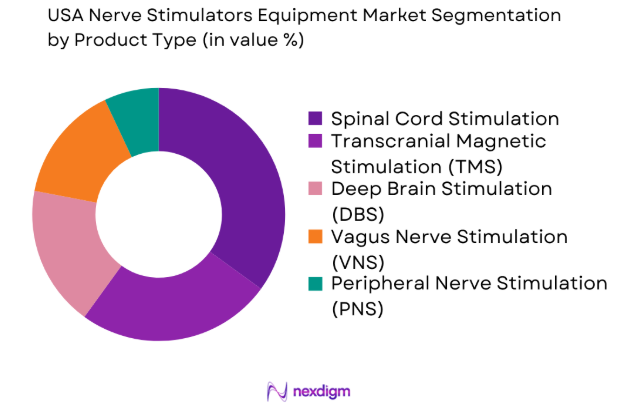
The USA nerve stimulators market is segmented by product type into various sub-segments. Recently, spinal cord stimulation (SCS) has dominated the market share due to the increasing demand for effective chronic pain management solutions. SCS devices are widely preferred in the treatment of conditions like failed back surgery syndrome and complex regional pain syndrome, due to their proven efficacy and relatively low risk. The growing preference for minimally invasive treatments and the adoption of SCS technologies in pain management centers have contributed to its strong market position.
By Platform Type
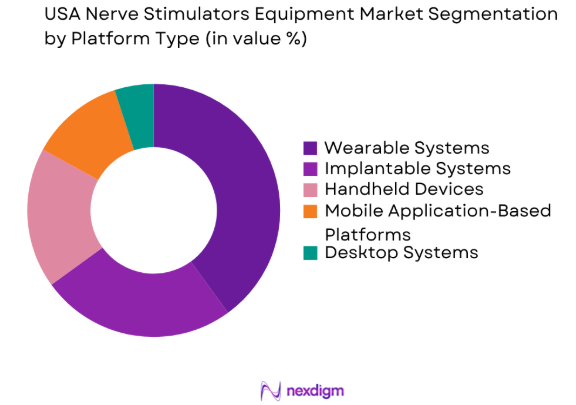
The USA nerve stimulators market is segmented by platform type into several categories. Recently, wearable systems have gained significant traction, dominating the market due to their ease of use, portability, and growing adoption in home healthcare settings. The flexibility of wearable nerve stimulators to offer on-demand treatment and real-time monitoring has driven their popularity among patients, especially for chronic pain management. Their ability to provide continuous, non-invasive therapy has contributed to their increased market share, especially in home settings and outpatient care.
Competitive Landscape
The competitive landscape of the USA nerve stimulators equipment market is characterized by the presence of well-established players who have a strong market presence and technological expertise. These players dominate through innovation, large-scale manufacturing capabilities, and extensive distribution networks. The market is also witnessing increasing consolidation, as companies seek to enhance their product portfolios and market reach. Major players have been focusing on expanding their product offerings, particularly through the development of wearable and implantable systems. The competition is fierce, with companies striving to differentiate themselves through advanced technologies and unique value propositions.
| Company Name | Establishment Year | Headquarters | Technology Focus | Market Reach | Key Products | Revenue (USD) | Additional Parameter |
| Medtronic | 1949 | Minneapolis, USA | ~ | ~ | ~ | ~ | ~ |
| Boston Scientific | 1979 | Marlborough, USA | ~ | ~ | ~ | ~ | ~ |
| Nevro Corporation | 2006 | Redwood City, USA | ~ | ~ | ~ | ~ | ~ |
| Abbott Laboratories | 1888 | Abbott Park, USA | ~ | ~ | ~ | ~ | ~ |
| Nuvectra Corporation | 2005 | Aliso Viejo, USA | ~ | ~ | ~ | ~ | ~ |
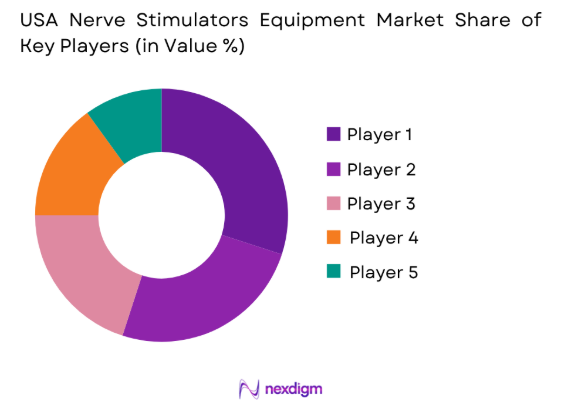
USA Nerve Stimulators Equipment Market Analysis
Growth Drivers
Technological Advancements
The USA nerve stimulators market is driven by rapid advancements in neuromodulation technologies. Innovations like high-frequency stimulation and targeted therapy systems have enhanced the effectiveness of nerve stimulators, boosting their adoption. The development of smaller, non-invasive devices has further fueled their popularity. Additionally, the integration of wearable and portable devices with mobile applications enables continuous monitoring, personalized treatments, and greater patient convenience. These user-friendly devices are gaining traction in both clinical and home healthcare settings. As the devices become more accessible and efficient, their adoption is expected to grow rapidly, meeting the increasing demand for non-invasive, personalized therapeutic solutions for various neurological conditions.
Regulatory Support and Healthcare Investment
Another significant driver of market growth is the strong regulatory framework and government support for healthcare technologies in the USA. The FDA’s approval of new nerve stimulation devices, along with established reimbursement policies for neurostimulation therapies, has played a crucial role in expanding the market. Moreover, government initiatives aimed at improving patient access to advanced medical technologies have created a favorable environment for nerve stimulator adoption. Increased investments in healthcare infrastructure, coupled with rising funding for neurological disease research, further contribute to the market’s growth. These factors collectively help make nerve stimulators more accessible, affordable, and integrated into treatment plans, driving demand across healthcare settings and improving patient outcomes for neurological conditions.
Market Challenges
High Treatment Costs
One of the significant challenges facing the USA nerve stimulators market is the high cost associated with the devices and treatments. The initial cost of the equipment, coupled with additional expenses for installation, maintenance, and therapy sessions, makes nerve stimulation treatments financially inaccessible to many potential patients. The high upfront investment required for both healthcare providers and patients can hinder the widespread adoption of these devices, especially in economically disadvantaged regions or countries with limited healthcare budgets. Even though nerve stimulators offer long-term benefits, the cost remains a barrier for many individuals seeking alternative treatments for chronic pain or neurological conditions.
Limited Awareness and Acceptance
Despite the proven effectiveness of nerve stimulation technologies in treating various neurological conditions, awareness and acceptance remain limited among patients and healthcare professionals. Many patients and doctors still favor traditional pharmacological treatments, despite growing evidence supporting nerve stimulators’ efficacy. Additionally, the lack of awareness about non-invasive treatment options hinders adoption. Many individuals are unaware of the benefits that nerve stimulation devices offer, reducing their willingness to consider these alternatives. Educating both healthcare providers and patients about the advantages of nerve stimulators and addressing misconceptions about their effectiveness will be crucial in increasing acceptance and driving market growth. Increased education and awareness are key to overcoming this challenge.
Opportunities
Home Healthcare Expansion
A major opportunity in the USA nerve stimulators market lies in the growing demand for home healthcare solutions. As outpatient care and home treatment options become more prevalent, wearable and portable nerve stimulators are gaining popularity. Patients with chronic conditions such as pain, depression, or epilepsy can manage their treatment at home, reducing the need for frequent hospital visits. The convenience and cost-effectiveness of home healthcare, combined with increasing awareness of non-invasive treatments, are expected to drive the adoption of nerve stimulators for home use. This trend aligns with the broader shift toward home-based healthcare, presenting a significant opportunity for market growth in the coming years.
Emerging Market Penetration
A significant opportunity exists for nerve stimulator manufacturers to expand into emerging markets where healthcare access is improving, and the demand for advanced medical treatments is rising. Countries in regions like Latin America, Asia Pacific, and the Middle East are heavily investing in their healthcare infrastructure, leading to increased demand for innovative medical technologies, including nerve stimulators. By establishing a presence in these markets, manufacturers can tap into large, underserved patient populations and meet the growing need for effective non-invasive treatments. This expansion not only supports global market growth but also provides manufacturers with the opportunity to build strong market positions in these rapidly developing regions over the coming years.
Future Outlook
Over the next five years, the USA nerve stimulators equipment market is expected to experience continued growth driven by technological advancements, increased healthcare access, and expanding applications for neurological and pain management treatments. The integration of digital health solutions, such as mobile app connectivity and remote monitoring, will likely accelerate adoption rates among patients seeking convenient, non-invasive therapies. Additionally, regulatory support and reimbursement policies will play a critical role in market development, ensuring that nerve stimulators become a more accessible and mainstream treatment option in the USA.
Major Players
- Medtronic
- Boston Scientific
- Nevro Corporation
- Abbott Laboratories
- Nuvectra Corporation
- Stimwave
- Cerebrum Health Centers
- Neurosigma
- Zynex Inc.
- ENeura
- MagVenture
- Soterix Medical
- Transcranial Magnetic Stimulation (TMS) Inc.
- Cyberonics
- LivaNova
Key Target Audience
- Investments and venture capitalist firms
- Government and regulatory bodies
- Hospitals and healthcare providers
- Neurology clinics
- Pain management centers
- Rehabilitation centers
- Home healthcare providers
- Medical device distributors
Research Methodology
Step 1: Identification of Key Variables
The first step involves identifying key market variables such as product types, platform types, and regulatory factors that influence the nerve stimulators equipment market.
Step 2: Market Analysis and Construction
This step includes data collection and market analysis to construct a comprehensive overview of the market size, segmentation, and key players.
Step 3: Hypothesis Validation and Expert Consultation
Market hypotheses are validated through expert consultations and interviews with industry professionals, clinicians, and device manufacturers.
Step 4: Research Synthesis and Final Output
The final output involves synthesizing the collected data and providing actionable insights and forecasts for market participants.

- Executive Summary
- Research Methodology (Definitions, Scope, Industry Assumptions, Market Sizing Approach, Primary & Secondary Research Framework, Data Collection & Verification Protocol, Analytic Models & Forecast Methodology, Limitations & Research Validity Checks)

- Market Definition and Scope
- Value Chain & Stakeholder Ecosystem
- Regulatory / Certification Landscape
- Sector Dynamics Affecting Demand
- Strategic Initiatives & Infrastructure Growth

- Growth Drivers
Increasing Prevalence of Neurological Disorders
Advancements in Non-Invasive Treatment Technologies
Expanding Healthcare Access - Market Challenges
High Treatment Costs
Regulatory Hurdles
Limited Awareness and Acceptance - Market Opportunities
Increasing Adoption in Pain Management
Potential for Home Use Devices
Expansion into Emerging Markets - Trends
Integration with Digital Health Platforms
Personalized Medicine Approach
Increasing Focus on Mental Health Applications - Government Regulations
- SWOT Analysis of Key Competitors
- Porter’s Five Forces

- By Market Value, 2020-2025
- By Installed Units, 2020-2025
- By Average System Price, 2020-2025
- By System Complexity Tier, 2020-2025

- By System Type (In Value%)
Transcranial Magnetic Stimulation (TMS)
Spinal Cord Stimulation (SCS)
Peripheral Nerve Stimulation (PNS)
Deep Brain Stimulation (DBS)
Vagus Nerve Stimulation (VNS) - By Platform Type (In Value%)
Handheld Devices
Desktop Systems
Wearable Systems
Implantable Systems
Mobile Application-Based Platforms - By Fitment Type (In Value%)
External Fitment
Implantable Fitment
Patch-Type Fitment
Electrode-Type Fitment
Strap-On Fitment - By End User Segment (In Value%)
Hospitals
Neurology Clinics
Home Healthcare Settings
Rehabilitation Centers
Pain Management Centers - By Procurement Channel (In Value%)
Direct Sales
Online Sales
Third-Party Distributors
Government Tenders
Healthcare Equipment Suppliers

- Market Share Analysis
- Cross Comparison Parameters (Technology Integration, Cost Efficiency, Market Reach, Brand Recognition, Regulatory Compliance)
- SWOT Analysis of Key Competitors
- Pricing & Procurement Analysis
- Key Players
Medtronic
Boston Scientific
Nevro Corporation
Nuvectra Corporation
Stimwave
Cerebrum Health Centers
Neurosigma
Zynex Inc.
ENeura
MagVenture
Soterix Medical
Transcranial Magnetic Stimulation (TMS) Inc.
Abbott Laboratories
Cyberonics
LivaNova

- Hospitals adopting nerve stimulation devices for surgical and non-surgical treatments.
- Neurology clinics focusing on treatments for neurological conditions like epilepsy and chronic pain.
- Home healthcare providers offering remote monitoring and care options for patients using nerve stimulation devices.
- Pain management centers using nerve stimulators as part of their non-invasive treatment options.

- Forecast Market Value, 2026-2035
- Forecast Installed Units, 2026-2035
- Price Forecast by System Tier, 2026-2035
- Future Demand by Platform, 2026-2035


 Request a Sample
 Ask for Customization
 Get a Quote
 Enquire Now