

 Download PDF
Market Overview
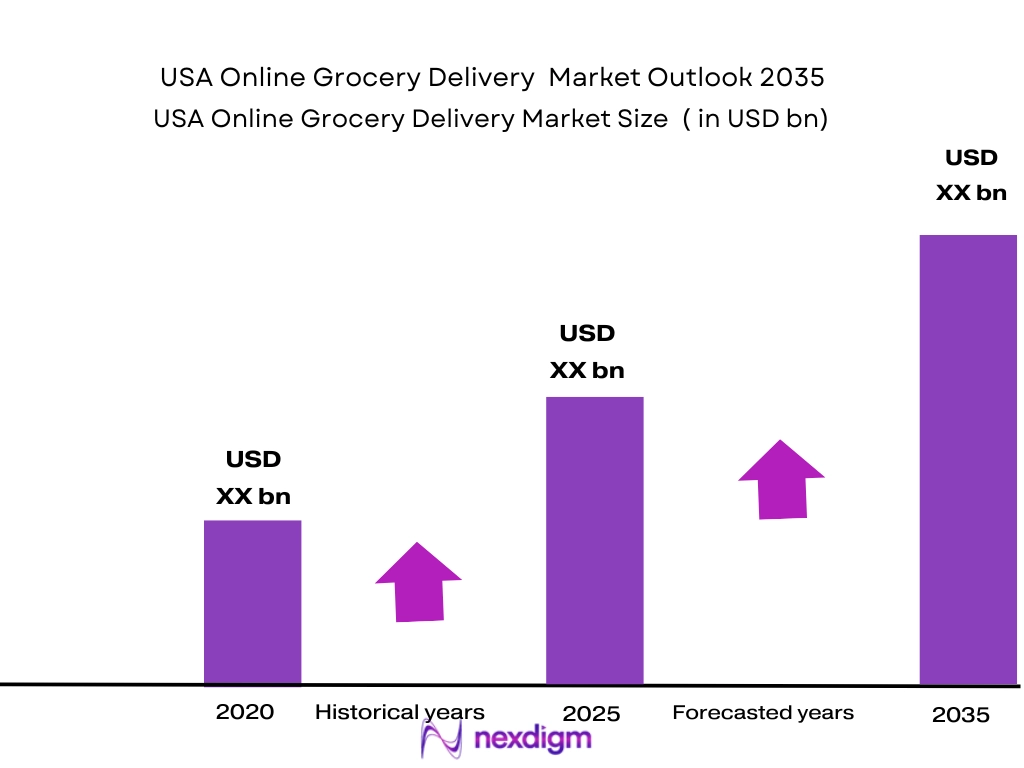
The USA Online Grocery Delivery market is valued at approximately USD ~ billion, driven by the increasing preference for convenience in grocery shopping, digital transformation, and the rise of e-commerce platforms. The growth is supported by advancements in logistics and the expansion of delivery networks, enabling same-day or scheduled deliveries. Moreover, factors such as the increasing popularity of subscription services and heightened awareness of health and organic food options further contribute to market expansion.
The USA dominates the online grocery delivery market due to its highly developed infrastructure, wide adoption of e-commerce, and large consumer base. Cities like New York, Los Angeles, and Chicago are key drivers, with high disposable incomes and a preference for convenience. Additionally, regions like California and Texas have shown rapid growth due to significant technological advancements and the rise of digital platforms. These areas lead the market in both demand and technological innovation, with consumer preferences shifting towards faster and more efficient delivery systems.
Market Segmentation
By Product Type
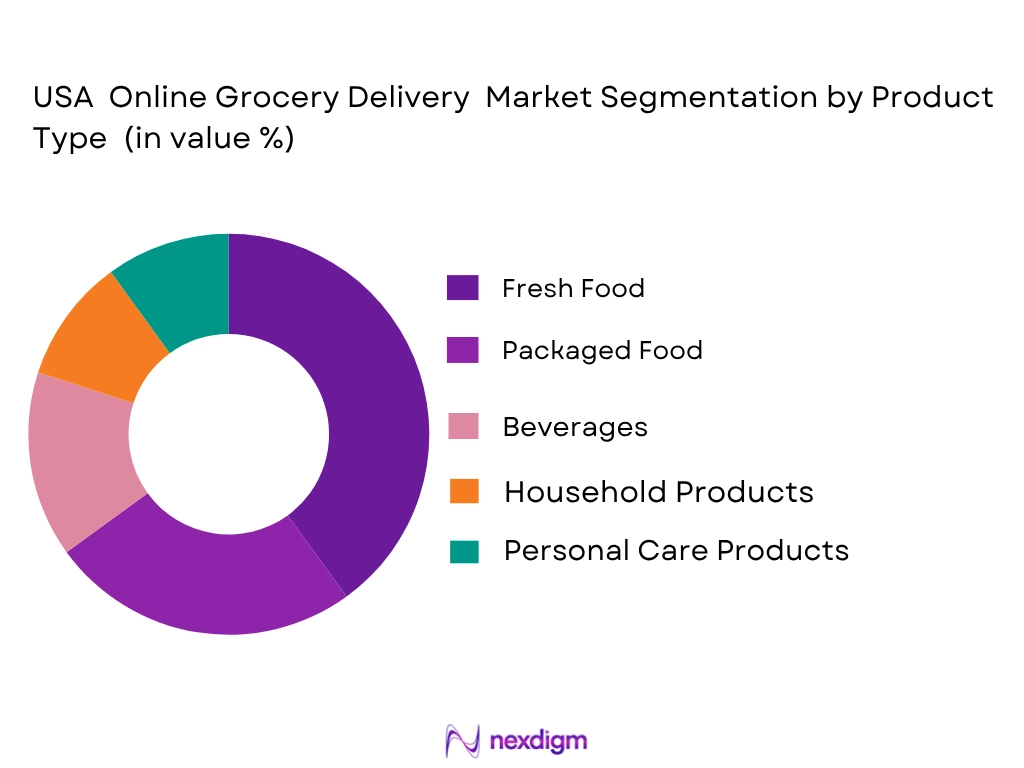
The USA Online Grocery Delivery market is segmented by product type into fresh food, packaged food, beverages, household products, and personal care products. Fresh food dominates the market share, driven by increasing consumer demand for organic produce, fresh meat, and local farm-to-table products. The convenience of having fresh groceries delivered directly to consumers’ homes has made this sub-segment particularly popular. The demand for fresh food is expected to grow as consumer preferences shift toward healthier and more sustainable options, with retailers like Walmart and Amazon Fresh capitalizing on this trend.
By Platform Type
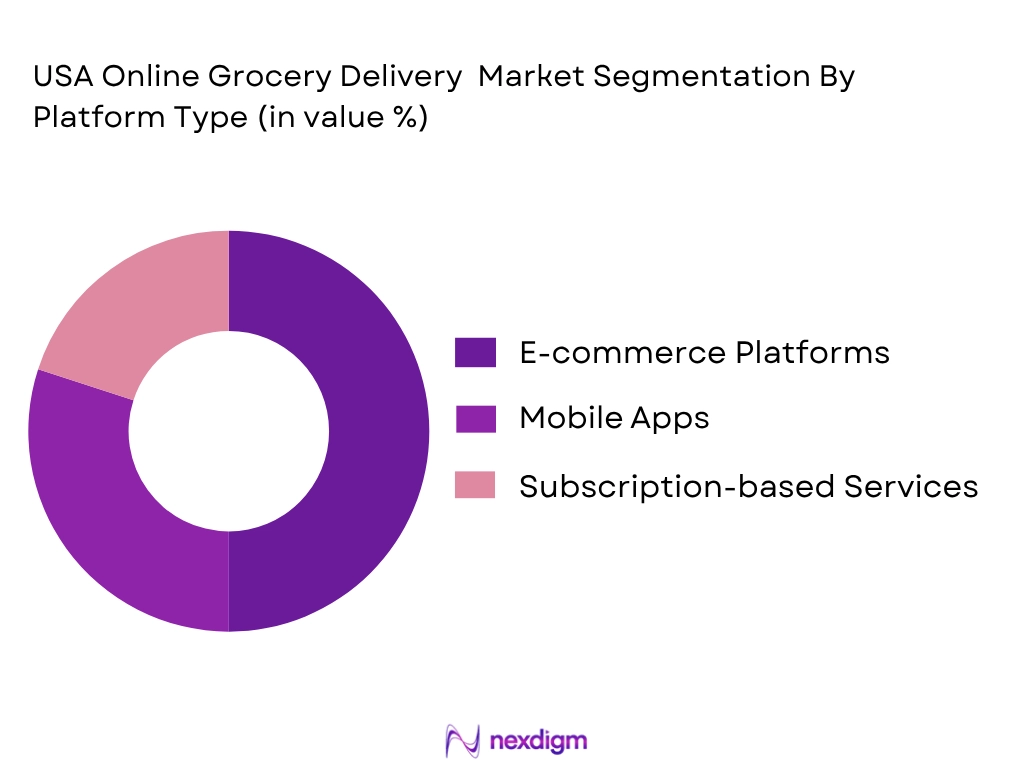
The market is also segmented by platform type into e-commerce platforms, mobile apps, and subscription-based services. E-commerce platforms currently hold the largest market share due to their established user base and comprehensive product offerings. These platforms, such as Amazon and Walmart, provide a seamless online shopping experience with a vast selection of grocery items, bolstered by integrated delivery services. The ease of use and large product catalogs make e-commerce platforms the dominant segment, and their share is expected to remain strong as technology improves and consumer demand continues to rise.
Competitive Landscape
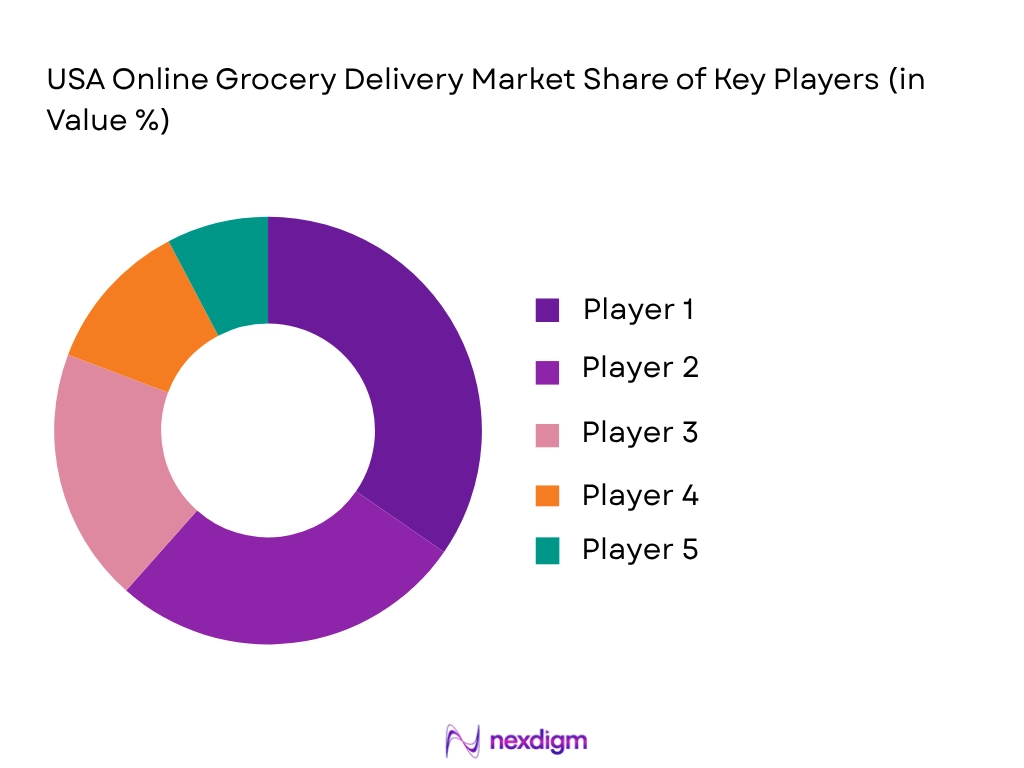
The USA Online Grocery Delivery market is dominated by a few major players, including global giants like Amazon Fresh, Walmart, and Instacart. The consolidation of the market by these key players reflects their strong influence and the increasing reliance on their digital platforms. Amazon Fresh, in particular, has gained traction due to its integration with Amazon’s larger ecosystem, making it a key competitor in this space. Local players, like Kroger and Shipt, also maintain strong positions, with strategic partnerships and targeted service areas.
| Company Name | Establishment Year | Headquarters | Product Type Offered | Service Area | Revenue (2023) | Delivery Time | Technology Used | Customer Loyalty Programs |
| Amazon Fresh | 2007 | Seattle, WA | ~ | ~ | ~ | ~ | ~ | ~ |
| Walmart | 1962 | Bentonville, AR | ~ | ~ | ~ | ~ | ~ | ~ |
| Instacart | 2012 | San Francisco, CA | ~ | ~ | ~ | ~ | ~ | ~ |
| Kroger | 1883 | Cincinnati, OH | ~ | ~ | ~ | ~ | ~ | ~ |
| Shipt | 2014 | Birmingham, AL | ~ | ~ | ~ | ~ | ~ | ~ |
USA Online Grocery Delivery Market Analysis
Growth Drivers
Increasing Consumer Preference for Convenience
The growing consumer preference for convenience is a significant driver in the USA Online Grocery Delivery market. As consumers seek to save time and avoid the hassle of physically going to stores, the demand for home delivery services has risen sharply. This trend is particularly pronounced among busy professionals, working parents, and tech-savvy younger generations who value the ease of ordering groceries from home. Additionally, the convenience of having fresh food delivered quickly, without the need to leave the house, aligns with modern lifestyles that prioritize convenience. The rise in mobile app usage and e-commerce platforms further supports this shift, making grocery shopping a seamless and efficient task for consumers.
Growth in E-commerce and Digital Platforms
The rapid expansion of e-commerce and digital platforms has significantly contributed to the growth of the USA Online Grocery Delivery market. The increasing penetration of the internet, smartphone adoption, and digital transformation has enabled consumers to easily shop for groceries online. E-commerce platforms like Amazon Fresh and Walmart have leveraged robust digital infrastructure, allowing users to browse, order, and schedule deliveries with ease. This growth is also fueled by the convenience of contactless payment options, real-time order tracking, and personalized shopping experiences. Moreover, the integration of machine learning and AI in recommendation systems enhances user satisfaction, making online grocery shopping more efficient and engaging, further driving the market’s expansion.
Market Challenges
Logistic and Supply Chain Complexities
One of the major challenges faced by the USA Online Grocery Delivery market is the complexity of logistics and supply chains. Efficiently managing inventory, maintaining product freshness, and ensuring timely deliveries in a highly competitive environment require sophisticated logistics systems. The perishable nature of certain grocery items, such as fresh produce and meats, adds another layer of complexity. Companies need to invest in cold-chain infrastructure and employ advanced tracking systems to prevent spoilage and ensure quality. Additionally, meeting consumer demand for same-day or next-day deliveries across a broad geographical area necessitates an extensive and well-coordinated distribution network, which is often challenging to maintain at scale.
High Competition and Price Sensitivity
The online grocery delivery market in the USA is highly competitive, with multiple players vying for market share, including both global giants like Amazon and local retailers like Kroger and Instacart. The increasing number of entrants has led to price sensitivity among consumers, who seek the best deals and delivery options. The competition is particularly intense in densely populated urban areas, where numerous service providers offer similar products and delivery speeds. Companies are forced to engage in price wars, provide discounts, and offer promotional deals to attract and retain customers. This, in turn, puts pressure on profit margins and forces companies to balance customer acquisition with cost-effective operations.
Opportunities
Expansion of Local and Regional Delivery Networks
One of the key opportunities in the USA Online Grocery Delivery market is the expansion of local and regional delivery networks. While large urban centers have seen the greatest adoption of online grocery services, rural and suburban areas still remain under-served. Expanding delivery networks to these areas presents a significant growth opportunity for companies looking to tap into a broader customer base. By setting up regional fulfillment centers and collaborating with local delivery partners, online grocery platforms can ensure faster delivery times and a more personalized service. This expansion also allows companies to build strong brand loyalty in underserved markets, paving the way for future growth.
Technological Advancements in Delivery Logistics
Technological advancements in delivery logistics present a vast opportunity for growth in the USA Online Grocery Delivery market. With innovations like artificial intelligence (AI), robotics, and autonomous delivery vehicles, companies can streamline their operations and reduce delivery times. AI-powered route optimization tools can ensure faster and more cost-efficient delivery processes, while autonomous vehicles and drones can minimize human labor and improve delivery accuracy. Additionally, innovations in real-time tracking and predictive analytics allow companies to anticipate consumer demands and adjust their inventory and delivery schedules accordingly. These technological improvements are set to enhance efficiency and improve customer experience, driving further market growth.
Future Outlook
Over the next five years, the USA Online Grocery Delivery market is expected to experience robust growth, driven by continuous technological advancements, increased consumer demand for convenience, and a shift towards more sustainable grocery options. Innovations in delivery logistics, such as AI and automated delivery systems, will play a critical role in enhancing efficiency and reducing costs. Additionally, the expansion of same-day and subscription-based delivery services will contribute to market expansion. The future will likely see greater competition, with companies striving to improve customer experience, lower delivery fees, and offer a broader range of products.
Major Players
- Amazon Fresh
- Walmart
- Instacart
- Kroger
- Shipt
- Whole Foods Market (Amazon)
- Target
- FreshDirect
- Peapod
- Boxed
- Thrive Market
- Safeway
- Costco
- HEB
- Ahold Delhaize
Key Target Audience
- Retailers and E-commerce Platforms
- Logistics and Delivery Service Providers
- Investments and Venture Capitalist Firms
- Government and Regulatory Bodies
- Food Producers and Suppliers
- Technology and Software Providers (AI, Robotics, Apps)
- Subscription Service Providers
- Packaging and Sustainability Companies
Research Methodology
Step 1: Identification of Key Variables
The initial phase involves mapping the key drivers and barriers within the USA Online Grocery Delivery market. This is done through secondary research and consultations with market experts. The focus is on identifying variables that influence market demand, such as consumer preferences, logistics challenges, and technological advancements. These variables are crucial for constructing a comprehensive understanding of market dynamics.
Step 2: Market Analysis and Construction
This phase involves compiling historical data related to the online grocery delivery market in the USA, including data on market penetration, growth rates, and consumer buying behavior. The aim is to construct a reliable market model that reflects the current trends and provides insights into potential growth. This step includes the evaluation of service quality and revenue generation metrics.
Step 3: Hypothesis Validation and Expert Consultation
Market hypotheses will be validated through consultations with industry experts from major players in the market. These experts will provide operational insights, confirming the accuracy of market data and hypotheses related to growth patterns, technological impacts, and consumer trends. The validation process is critical for ensuring that the research is grounded in real-world market conditions.
Step 4: Research Synthesis and Final Output
The final phase involves synthesizing all collected data into actionable insights. This includes direct engagement with key market players to refine product segments, sales strategies, and consumer preferences. The research findings will then be analyzed and compiled into a comprehensive report, ensuring that all market dynamics are accurately represented and validated.

- Executive Summary
- Research Methodology (Market Definitions and Assumptions, Abbreviations, Market Sizing Approach, Consolidated Research Approach, Understanding Market Potential Through In-Depth Industry Interviews, Primary Research Approach, Limitations and Future Conclusions)

- Definition and Scope
- Market Dynamics Overview
- Market Genesis
- Major Players and Market Timeline
- Business Cycle and Trends
- Supply Chain and Value Chain Analysis

- Growth Drivers
Increasing Consumer Preference for Convenience
Growth in E-commerce and Digital Platforms
Rising Health Consciousness and Demand for Organic Products
Expansion of Online Grocery Delivery Networks
- Market Challenges
Logistic and Supply Chain Complexities
High Competition and Price Sensitivity
Regulatory Compliance and Operational Costs
Limited Availability in Rural Areas
- Opportunities
Expansion of Local and Regional Delivery Networks
Technological Advancements in Delivery Logistics
Rising Adoption of AI and Automation in Delivery
Strategic Partnerships Between Retailers and Delivery Platforms - Key Trends
Increased Use of Artificial Intelligence in Inventory and Delivery Management
Growth in Subscription-Based Grocery Services
Rising Popularity of Contactless Delivery Options
Demand for Eco-Friendly Packaging and Sustainable Practices
Integration of Personalized Shopping Experiences - Government Regulations
- SWOT Analysis
- Porter’s Five Forces

- By Value, 2020–2025
- By Volume, 2020–2025
- By Average Price, 2020–2025

- By Product Type (In Value %)
Fresh Food
Packaged Food
Beverages
Household Products
Personal Care Products - By Platform Type (In Value %)
E-commerce Platforms
Mobile Apps
Subscription-based Services - By Service Type (In Value %)
Same-day Delivery
Scheduled Delivery
Subscription-based Delivery - By Region (In Value %)
Northeast
Midwest
South
West
Rest of USA

- Market Share of Major Players by Value/Volume
- Market Share of Major Players by Product Type
- Cross Comparison Parameters(Company Overview, Business Strategies, Recent Developments, Strength, Weakness, Organizational Structure, Revenues, Revenues by Product Type, Number of Touchpoints, Distribution Channels, Number of Dealers and Distributors, Margins, Production Plant, Capacity, Unique Value Offering and Others)
- SWOT Analysis of Major Players
- Pricing Analysis Based on Product Categories for Major Players
- Detailed Profiles of Major Companies
Walmart Inc.
Amazon Fresh
Instacart Inc.
FreshDirect
Target Corporation
Shipt Inc.
Kroger Co.
Peapod LLC
Boxed Inc.
Safeway Inc.
Whole Foods Market (Amazon)
Thrive Market
Fresh and Easy
Postmates (Uber Eats)

- Market Demand and Utilization
- Purchasing Power and Budget Allocations
- Regulatory and Compliance Requirements
- Needs, Desires, and Pain Point Analysis
- Decision-Making Process

- By Value, 2026–2035
- By Volume, 2026–2035
- By Average Price, 2026–2035


 Request a Sample
 Ask for Customization
 Get a Quote
 Enquire Now