

 Download PDF
 Download PDF
Market Overview
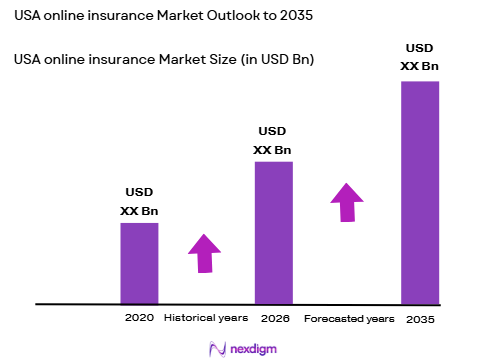
Based on a recent historical assessment, the USA Online Insurance Market forms part of the broader U.S. insurance industry that generated approximately USD ~ trillion in direct written premiums, as reported by the National Association of Insurance Commissioners. A substantial and growing share of these premiums is distributed through digital channels, driven by high internet penetration, smartphone adoption, embedded insurance partnerships, and consumer preference for direct-to-consumer policy comparison, purchase, and claims management platforms.
New York remains a financial nucleus due to its concentration of insurers, reinsurers, and regulatory bodies, while California and Texas lead in digital adoption and insurtech innovation ecosystems. Chicago and Hartford continue to host legacy carriers transitioning to online distribution models. Strong venture capital presence in Silicon Valley and regulatory oversight across state insurance departments further support digital policy underwriting, distribution infrastructure, and online claims processing expansion nationwide.
Market Segmentation
By Product Type
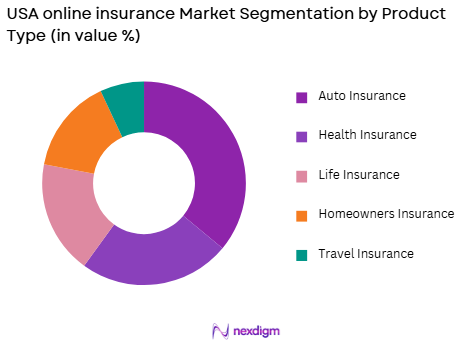
By Product Type: USA Online Insurance Market market is segmented by product type into Auto Insurance, Health Insurance, Life Insurance, Homeowners Insurance, and Travel Insurance. Recently, Auto Insurance has a dominant market share due to factors such as mandatory coverage requirements across states, high vehicle ownership rates, widespread digital price comparison tools, aggressive direct-to-consumer advertising, and streamlined online underwriting systems that enable instant quotes and rapid policy issuance supported by telematics and data-driven risk assessment infrastructure.
By Distribution Channel
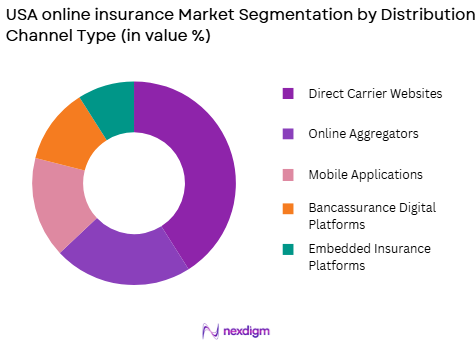
By Product Type: USA Online Insurance Market market is segmented by product type into Direct Carrier Websites, Online Aggregators, Mobile Applications, Bancassurance Digital Platforms, and Embedded Insurance Platforms. Recently, Direct Carrier Websites have a dominant market share due to factors such as brand trust, integrated underwriting engines, cross-selling capabilities, customer data ownership, real-time claims tracking systems, and large marketing budgets that drive web traffic and conversion rates supported by advanced analytics and digital customer engagement infrastructure.
Competitive Landscape
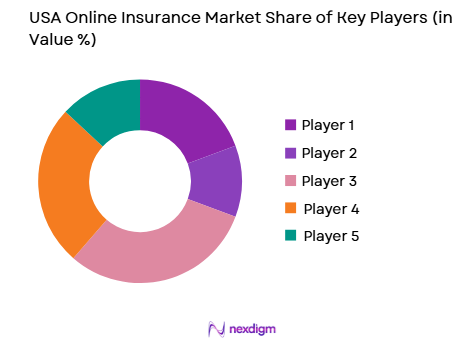
The USA Online Insurance Market is characterized by strong competition between established insurers expanding digital channels and insurtech firms operating exclusively online. Market consolidation is evident through acquisitions of technology-driven startups by legacy carriers. Major players leverage large underwriting capacity, brand recognition, and advanced analytics to dominate online premium generation, while insurtech platforms compete through user-friendly interfaces, telematics integration, and personalized policy pricing models.
| Company Name | Establishment Year | Headquarters | Technology Focus | Market Reach | Key Products | Revenue (USD) | Digital Premium Share |
| State Farm | 1922 | Illinois, USA | ~ | ~ | ~ | ~ | ~ |
| Progressive | 1937 | Ohio, USA | ~ | ~ | ~ | ~ | ~ |
| GEICO | 1936 | Maryland, USA | ~ | ~ | ~ | ~ | ~ |
| UnitedHealth Group | 1977 | Minnesota, USA | ~ | ~ | ~ | ~ | ~ |
| Lemonade | 2015 | New York, USA | ~ | ~ | ~ | ~ | ~ |
USA Online Insurance Market Analysis
Growth Drivers
Rising Digital Adoption and Consumer Preference for Direct-to-Consumer Insurance Platforms
The rapid expansion of broadband penetration, smartphone usage, and digital financial literacy across the United States has fundamentally transformed how insurance policies are researched, compared, and purchased. Consumers increasingly prefer online channels that provide instant quotes, transparent pricing comparisons, and simplified documentation without intermediary involvement. Digital-native generations demonstrate strong comfort with app-based policy management and automated claims tracking tools. Insurers have responded by investing heavily in user interface design, AI-driven chatbots, and automated underwriting systems that reduce processing time. Telematics integration in auto insurance enhances personalized pricing models and incentivizes safe driving behavior. Real-time data analytics allow insurers to adjust premiums dynamically based on risk indicators. Direct digital channels reduce distribution costs relative to traditional agency networks. Enhanced cybersecurity frameworks increase consumer trust in online transactions. Embedded payment systems facilitate seamless premium collection and renewal automation. This structural shift toward digital-first engagement continues to expand the addressable online insurance customer base nationwide.
Integration of Advanced Analytics, Artificial Intelligence, and Telematics in Underwriting
The adoption of predictive analytics and artificial intelligence has strengthened underwriting precision and operational efficiency within the online insurance ecosystem. Insurers utilize machine learning models to assess behavioral, demographic, and transactional data points for improved risk segmentation. Automated claims processing platforms reduce fraud exposure and settlement timelines. Telematics devices and mobile tracking applications collect real-time driving data, enabling usage-based insurance models that align pricing with actual risk exposure. Health insurers leverage wearable data and digital health records for dynamic premium structuring. Fraud detection systems employ anomaly detection algorithms to identify suspicious claim patterns. Cloud computing infrastructure enhances scalability and system reliability. Data-driven personalization increases cross-selling opportunities and customer retention rates. Digital dashboards improve transparency in policy terms and claim status. Strategic partnerships between insurers and technology firms accelerate innovation cycles. These technological capabilities collectively drive efficiency gains and expand digital premium volumes in the market.
Market Challenges
Cybersecurity Threats and Data Privacy Compliance Complexity
The USA Online Insurance Market faces heightened exposure to cyberattacks due to the large volume of sensitive personal and financial data processed through digital platforms. Insurers must invest significantly in encryption protocols, intrusion detection systems, and multi-factor authentication mechanisms to safeguard policyholder information. Compliance with federal and state-level data privacy regulations increases operational complexity and administrative costs. Breach incidents can result in reputational damage and regulatory penalties. Rapid technological upgrades may introduce system vulnerabilities if not properly tested. Cloud infrastructure reliance requires robust vendor risk management oversight. Consumer trust is directly linked to perceived data security standards. Cyber insurance claims themselves may rise as digital exposure expands. Fraudulent online claims require continuous monitoring and machine learning refinement. These interconnected risks create ongoing cybersecurity investment requirements for market participants.
Regulatory Fragmentation Across State Insurance Frameworks
Insurance regulation in the United States operates at the state level, resulting in varying licensing requirements, product approvals, and compliance standards across jurisdictions. Online insurers must adapt policy documentation and pricing structures to align with multiple regulatory frameworks. Cross-state digital distribution requires careful navigation of differing consumer protection mandates. Product innovation timelines may slow due to approval processes in certain states. Rate filing obligations limit pricing flexibility in highly regulated markets. Compliance monitoring requires specialized legal and actuarial expertise. Regulatory examinations increase reporting obligations and documentation standards. Expansion strategies may be constrained by inconsistent supervisory approaches. Emerging digital insurance models may face interpretative uncertainty under legacy regulatory definitions. This fragmented environment increases operational complexity for nationwide online insurers.
Opportunities
Expansion of Embedded Insurance within E-Commerce and Digital Ecosystems
The integration of insurance products directly into digital purchasing journeys presents significant growth potential for online insurers. E-commerce platforms can offer micro-duration coverage at the point of sale for travel, electronics, or mobility services. Strategic partnerships with ride-sharing and rental platforms create distribution channels embedded within user experiences. Automated API connectivity enables instant underwriting decisions during checkout processes. Embedded models reduce customer acquisition costs by leveraging existing digital traffic. Personalized coverage recommendations enhance relevance and conversion rates. Subscription-based insurance bundles can align with recurring digital services. Data-sharing agreements enable contextual risk pricing models. Seamless claims processing integrated within partner apps improves customer satisfaction. Expansion of embedded insurance across fintech and retail ecosystems represents a scalable digital growth frontier.
Development of Usage-Based and On-Demand Insurance Products
Consumer demand for flexible and customized coverage is driving innovation in short-term and usage-based insurance solutions. Pay-per-mile auto insurance leverages telematics to align premiums with actual driving behavior. On-demand travel and rental coverage can be activated through mobile apps for specific time periods. Micro-insurance products target gig economy workers seeking flexible protection. Real-time policy activation enhances consumer control and transparency. Data analytics enable dynamic premium adjustments based on risk fluctuations. Digital wallet integration simplifies payment processing for short-duration coverage. Younger demographics show strong preference for subscription-style and modular insurance offerings. Product innovation aligned with lifestyle changes increases policy penetration among underserved segments. This evolution toward flexible insurance structures supports sustainable digital market expansion.
Future Outlook
Over the next five years, the USA Online Insurance Market is expected to expand through accelerated digital adoption, embedded insurance integration, and advanced AI-driven underwriting systems. Regulatory modernization and enhanced cybersecurity investments will strengthen digital infrastructure resilience. Usage-based insurance and personalized policy pricing models are likely to gain further traction. Continued venture capital inflows into insurtech platforms will support innovation and competitive intensity across online distribution channels.
Major Players
- State Farm
- Progressive
- GEICO
- UnitedHealth Group
- Allstate
- Liberty Mutual
- Travelers
- Nationwide
- Farmers Insurance
- Lemonade
- Root Insurance
- MetLife
- Prudential Financial
- Chubb
- American International Group
Key Target Audience
- Insurance carriers
- Digital insurance platforms
- Insurtech startups
- Reinsurance companies
- Institutional investors
- Investments and venture capitalist firms
- Government and regulatory bodies
- Digital distribution partners
Research Methodology
Step 1: Identification of Key Variables
Key variables including digital premium volumes, distribution channels, product categories, and regulatory structures were identified through NAIC publications and insurer financial disclosures. Technology adoption metrics and consumer behavior data were integrated into the analytical framework.
Step 2: Market Analysis and Construction
Market construction was based on total U.S. insurance premium data and digital distribution penetration trends. Segmentation was developed by mapping product categories and online distribution models.
Step 3: Hypothesis Validation and Expert Consultation
Assumptions were validated through insurance analysts, actuarial experts, and digital underwriting specialists. Cross-verification ensured alignment with publicly disclosed financial statements and regulatory filings.
Step 4: Research Synthesis and Final Output
Quantitative and qualitative findings were consolidated into a structured analytical model. Outputs were reviewed for factual consistency, regulatory accuracy, and logical coherence before finalization.

- Executive Summary
- Research Methodology (Definitions, Scope, Industry Assumptions, Market Sizing Approach, Primary & Secondary Research Framework, Data Collection & Verification Protocol, Analytic Models & Forecast Methodology, Limitations & Research Validity Checks)

- Market Definition and Scope
- Value Chain & Stakeholder Ecosystem
- Regulatory / Certification Landscape
- Sector Dynamics Affecting Demand
- Strategic Initiatives & Infrastructure Growth

- Growth Drivers
Increasing Digital Adoption and Mobile Penetration
Rising Demand for Contactless Policy Purchase and Claims Processing
Growth of Insurtech Startups and Venture Capital Investments - Market Challenges
Cybersecurity and Data Privacy Concerns
Regulatory Fragmentation Across States
Customer Trust and Fraud Risk Management - Market Opportunities
Expansion of Usage Based and Personalized Insurance Products
Integration of Artificial Intelligence in Underwriting and Claims
Embedded Insurance within E Commerce and Fintech Ecosystems - Trends
Adoption of AI Driven Chatbots and Automated Claims Processing
Growth of Subscription Based and Microinsurance Models - Government Regulations
- SWOT Analysis
- Porter’s Five Forces

- By Market Value, 2020-2025
- By Installed Units, 2020-2025
- By Average System Price, 2020-2025
- By System Complexity Tier, 2020-2025

- By System Type (In Value%)
Online Life Insurance
Online Health Insurance
Online Auto Insurance
Online Property and Casualty Insurance
Usage Based and On Demand Insurance - By Platform Type (In Value%)
Web Based Insurance Portals
Mobile Insurance Applications
Aggregator and Comparison Platforms
Direct to Consumer Insurer Platforms
Embedded Insurance Platforms - By Fitment Type (In Value%)
Direct Online Policy Purchase
Broker Assisted Digital Purchase
API Integrated Insurance Distribution
White Label Digital Insurance Solutions - By End User Segment (In Value%)
Individual Policyholders
Small and Medium Enterprises
Large Enterprises
Gig Economy and Freelance Workers

- Market Share Analysis
- Cross Comparison Parameters (Premium Pricing Model, Claims Settlement Time, Digital Onboarding Experience, Coverage Customization Level, Data Security Standards, Underwriting Automation Level, Customer Support Channels, Policy Renewal Flexibility, Fraud Detection Capability, Third Party Integration Ecosystem, Mobile App Functionality, Regulatory Compliance Framework)
- SWOT Analysis of Key Competitors
- Pricing & Procurement Analysis
- Key Players
Progressive Corporation
GEICO
State Farm
Allstate Corporation
Liberty Mutual
Nationwide Mutual Insurance Company
USAA
Lemonade Inc
Root Insurance
Oscar Health
MetLife
Prudential Financial
AIG
Travelers Companies
Next Insurance

- Increasing Preference for Self Service Policy Management
- Rising Demand for Transparent Pricing and Instant Quotes
- SME Adoption of Digital Commercial Insurance Solutions
- Growing Interest in Flexible Coverage among Gig Workers

Forecast Market Value, 2026-2035
Forecast Installed Units, 2026-2035
Price Forecast by System Tier, 2026-2035
Future Demand by Platform, 2026-2035


 Request a Sample
 Ask for Customization
 Get a Quote
 Enquire Now