

 Download PDF
Market Overview
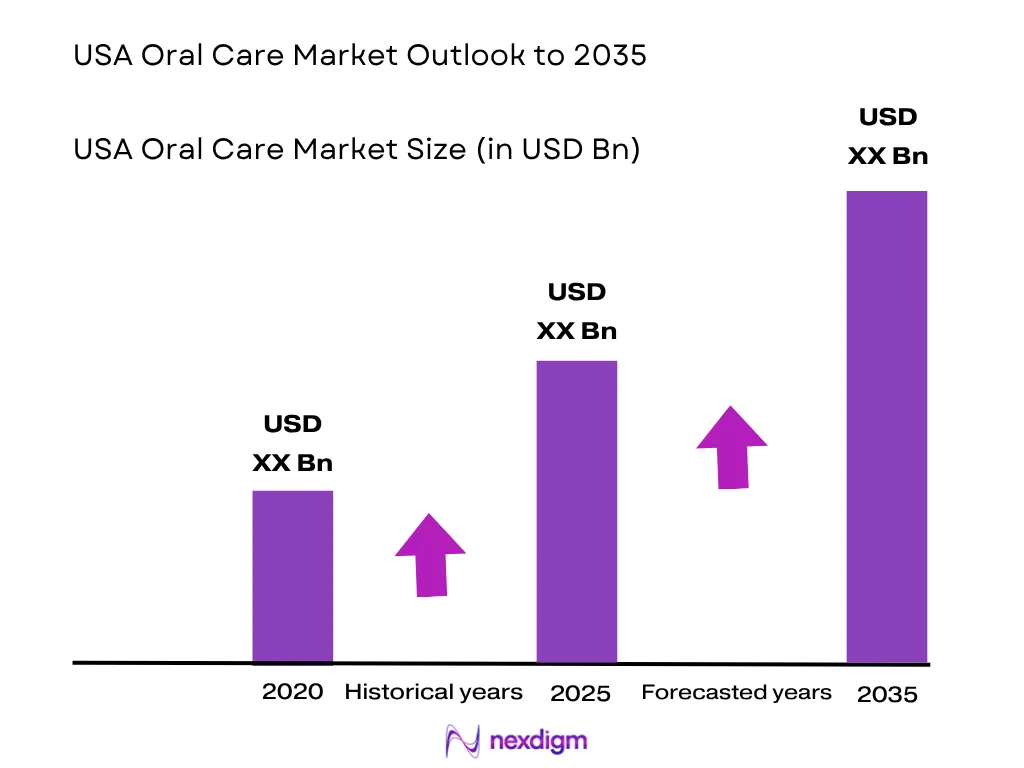
The USA oral care products market is valued at USD ~ billion, with the prior measured value reported at USD ~ billion for a narrower U.S. oral care definition. Growth is driven by high daily-use penetration of toothpaste, toothbrushes, mouthwash, floss, whitening products and denture care, supported by dental disease prevalence; CDC reports nearly 21 adults per 100 aged 20–64 have untreated permanent-tooth decay.
New York, Los Angeles, Chicago, Houston, Phoenix, Philadelphia and Dallas dominate oral care consumption because they combine dense households, pharmacy chains, mass retail, premium dental clinics and high e-commerce delivery coverage. Census city estimates list New York at 8,478,072 people, Los Angeles at 3,878,704, Chicago at 2,721,308, Houston at 2,390,125, and Phoenix at 1,673,164, creating large replenishment-led demand pools for oral hygiene products.
Market Segmentation
By Product Type
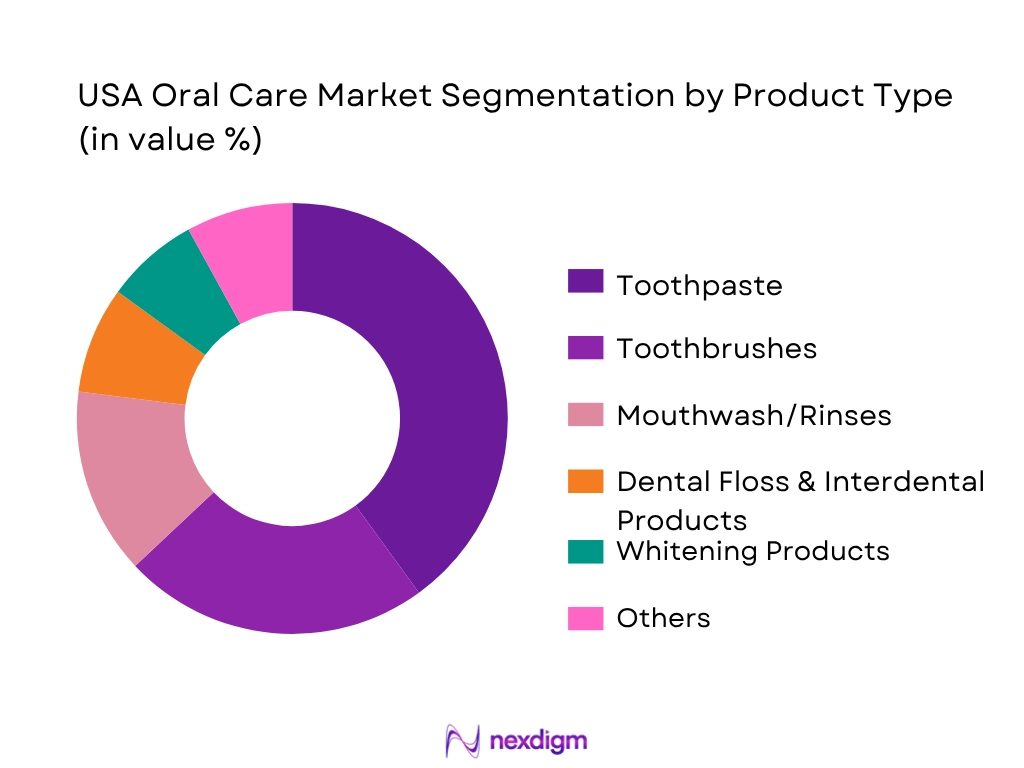
USA Oral Care Market is segmented by product type into toothpaste, toothbrushes, mouthwash/rinses, dental floss and interdental products, whitening products, denture care, and water flossers. Toothpaste dominates the product segmentation because it is the highest-frequency daily-use oral hygiene product and is consumed across all age cohorts. Its dominance is supported by repeat household replenishment, broad affordability, dentist-backed fluoride positioning, large SKU availability, and therapeutic extensions such as sensitivity, gum care, whitening, enamel repair and tartar control. Brands such as Colgate, Crest, Sensodyne, Arm & Hammer and Tom’s of Maine reinforce this segment through mass retail shelves, pharmacy visibility, Amazon subscriptions and multi-pack pricing. Nexdigm also identifies toothpaste as the largest product segment in the oral care market, while U.S.-focused sources indicate toothpaste remains a leading category within product segmentation.
By Distribution Channel
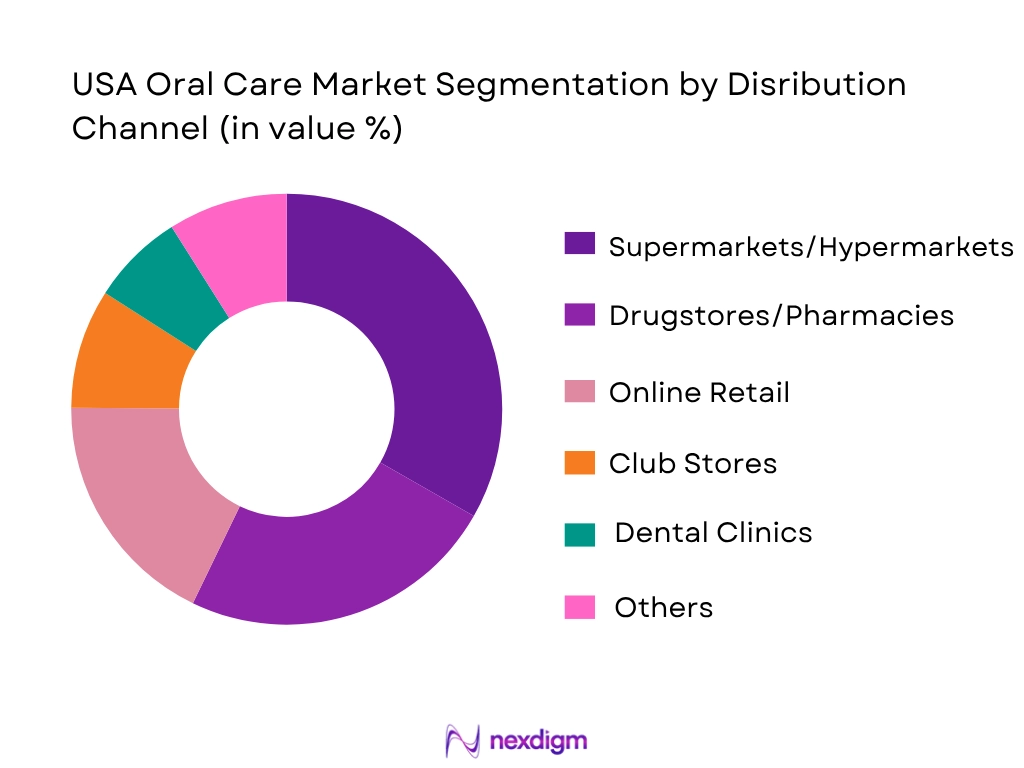
USA Oral Care Market is segmented by distribution channel into supermarkets/hypermarkets, drugstores/pharmacies, online retail, club stores, dental clinics/professional channels, grocery stores and convenience stores. Supermarkets and hypermarkets dominate because oral care is a routine replenishment category frequently purchased with household essentials. Large-format retailers provide broad shelf space, bundle packs, private-label alternatives, promotions, family-size toothpaste, toothbrush multipacks, and easy comparison across Crest, Colgate, Sensodyne, Listerine, Oral-B and store brands. As per Nexdigm, the hypermarkets and supermarkets are accounted for about 33.41% of the U.S. oral care product market, reflecting their importance in mass availability, bulk discounts and high shopper traffic.
Competitive Landscape
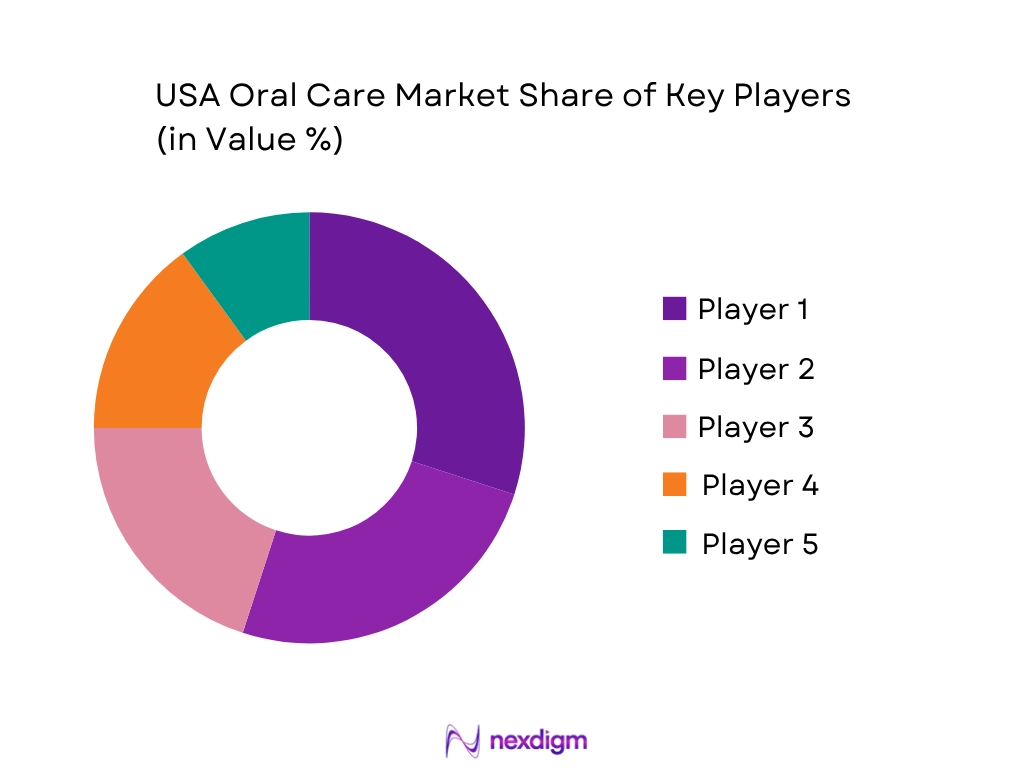
The USA Oral Care Market is led by large consumer-health and personal-care companies with deep retail distribution, strong brand equity and differentiated therapeutic claims. Colgate-Palmolive, Procter & Gamble, Haleon, Kenvue and Church & Dwight dominate through toothpaste, toothbrush, mouthwash, sensitivity, whitening, denture-care and gum-health portfolios. Competition is concentrated around ADA-backed claims, fluoride science, whitening efficacy, electric toothbrush innovation, shelf visibility, pharmacy trust and e-commerce replenishment.
| Company | Establishment Year | Headquarters | Key Oral Care Brands | Core Categories | Therapeutic Strength | Retail Strength | Premiumization Focus | Digital/DTC Strength |
| Colgate-Palmolive | 1806 | New York, USA | ~ | ~ | ~ | ~ | ~ | ~ |
| Procter & Gamble | 1837 | Cincinnati, USA | ~ | ~ | ~ | ~ | ~ | ~ |
| Haleon | 2022 | Weybridge, UK | ~ | ~ | ~ | ~ | ~ | ~ |
| Kenvue | 2023 | Skillman, USA | ~ | ~ | ~ | ~ | ~ | ~ |
| Church & Dwight | 1846 | Ewing, USA | ~ | ~ | ~ | ~ | ~ | ~ |
USA Oral Care Market Analysis
Growth Drivers
Preventive Oral Health Awareness
Preventive oral health awareness is strengthening USA Oral Care Market demand because untreated dental conditions remain widespread across age and income cohorts. CDC’s Oral Health Surveillance Report shows untreated permanent-tooth decay among dentate adults aged 20–64 at 20.5, with higher readings among high-poverty adults at 39.6, current smokers at 41.4, adults with less than high-school education at 39.1, and non-Hispanic Black adults at 30.3. These disease-burden indicators support consistent demand for fluoride toothpaste, gum-care toothpaste, interdental cleaners, mouthwash and dentist-recommended preventive regimens. The macroeconomic base also supports consumer access to routine oral hygiene products, with World Bank reporting U.S. GDP at USD 28.75 trillion, GDP per capita at USD 84,534.0, GDP growth at 2.8, and population growth at 1.0. This combination of high disease prevalence and large purchasing capacity makes prevention-led oral care a structurally important category.
Premium Whitening Demand
Premium whitening demand in the USA Oral Care Market is supported by the overlap of cosmetic oral care, daily hygiene and dentist-guided product usage. FDA’s OTC oral healthcare monograph defines dentifrice as a toothbrush-used substance for cleaning accessible tooth surfaces and mouthwash as an oral rinse, providing the formal product scope under which whitening toothpastes and rinses are positioned. Whitening demand is also reinforced by a high-income consumer base; World Bank reports U.S. GDP per capita at USD 84,534.0, GDP at USD 28.75 trillion, and GDP growth at 2.8, while BLS reports average annual consumer-unit expenditures at USD 78,535 and average income before taxes at USD 104,207. These figures support premium oral care trade-up behavior, especially for whitening toothpaste, whitening strips, enamel-safe whitening products and electric toothbrush bundles. The category also benefits from CDC’s adult decay data, as whitening purchases often coexist with preventive products that address cavity, enamel and gum-care needs.
Market Challenges
Price Sensitivity
Price sensitivity remains a key challenge in the USA Oral Care Market because household budgets differ sharply across income groups, affecting willingness to buy premium toothpaste, electric toothbrushes, whitening kits and specialty rinses. BLS reports average annual expenditures of USD 35,046 for consumer units in the lowest income quintile compared with USD 150,342 for the highest income quintile, showing a wide spending gap across U.S. households. At the macro level, World Bank reports U.S. consumer inflation at 2.9, while unemployment is reported at 4.2 in the latest available World Bank series. These indicators make value packs, coupons, private labels and multipack promotions important in oral care purchase decisions. CDC data further shows untreated decay is higher among high-poverty adults at 39.6, compared with low-poverty adults at 13.2, indicating that affordability constraints can directly affect preventive product adoption and dental-care behavior.
Private Label Pressure
Private label pressure is rising in the USA Oral Care Market because oral care is a high-frequency replenishment category sold heavily through mass retail, pharmacy, grocery and online channels where store brands compete directly with national brands. U.S. Census Bureau retail data shows health and personal care stores recorded 252,472 in year-to-date sales in the cited retail release, while nonstore retailers posted positive movement in the same data series, reflecting the scale of channels where private label and low-cost alternatives gain visibility. BLS also shows average annual expenditures of USD 78,535 per consumer unit and income before taxes of USD 104,207, but income dispersion remains large, with the lowest quintile at USD 35,046 in annual expenditure. This supports retailer-led price competition in toothpaste, toothbrushes, floss and mouthwash. CDC’s high untreated-decay reading among high-poverty adults at 39.6 further reinforces the need for affordable oral care SKUs, increasing pressure on branded premium products.
Opportunities
Senior Oral Care
Senior oral care represents a strong future-growth opportunity in the USA Oral Care Market because older adults require specialized products for tooth retention, gum care, denture maintenance, dry mouth, sensitivity and assisted oral hygiene. U.S. Census Bureau reports the population aged 65 and older reached 61.2 million, rising by 3.1 from the prior year, while the population under 18 declined to 73.1 million. CDC’s oral-health findings show adults aged 65 or older had an average of 0.2 decayed teeth, 9.3 filled teeth and 6.4 missing teeth due to disease, confirming the clinical relevance of senior-focused products such as denture cleansers, adhesives, soft-bristle brushes, fluoride toothpaste and alcohol-free rinses. World Bank’s macro data shows GDP per capita at USD 84,534.0 and population growth at 1.0, supporting a large addressable base for age-specific oral care products. NIDCR also identifies older-adult oral health resources covering dry mouth, periodontal disease, saliva disorders and caregiver support.
Dry Mouth Products and Alcohol-Free Rinses
Dry mouth products and alcohol-free rinses offer future-growth potential in the USA Oral Care Market because xerostomia affects chewing, swallowing, speaking, cavity risk and oral infection risk. NIDCR states that dry mouth can make chewing, swallowing and talking difficult, and increases the risk of tooth decay or fungal infections because saliva helps control harmful germs. NIDCR also notes that hundreds of medicines can reduce saliva, including medicines for high blood pressure, depression and bladder-control issues, making the condition highly relevant for older and medically managed consumers. The opportunity is supported by Census data showing 61.2 million Americans aged 65 and older, and CDC data showing older adults averaged 6.4 missing teeth due to disease. NIDCR’s self-care guidance recommends 8 to 12 cups of water per day, equal to 64–96 ounces or 2–3 liters, alongside regular dental check-ups and good home care, supporting demand for alcohol-free rinses, saliva substitutes and dry-mouth relief products
Future Outlook
The USA Oral Care Market is expected to grow at a forecasted CAGR of 4.57% from 2026–2035, supported by premium therapeutic products, smart electric toothbrushes, whitening regimens, alcohol-free mouthwash, sensitivity care, aging-related denture demand and online replenishment. Precedence Research estimates the U.S. oral care market will reach around USD 16.60 billion by 2035. Growth will be led by dentist-recommended formulations, clinically positioned brands, and high-margin innovations such as app-connected brushes, gum-health toothpaste, peroxide whitening systems and water flossers. Retail expansion will remain strongest in supermarkets, pharmacies and online channels, while premiumization will be shaped by consumer willingness to pay for visible cosmetic outcomes, sensitivity relief and preventive oral-health benefits.
Major Players
- Colgate-Palmolive Company
- Procter & Gamble
- Haleon
- Kenvue
- Church & Dwight Co., Inc.
- Unilever
- Koninklijke Philips N.V.
- Sunstar Group
- Perrigo Company plc
- Prestige Consumer Healthcare Inc.
- Water Pik, Inc.
- Quip NYC, Inc.
- BURST Oral Care
- The Humble Co.
- DenTek Oral Care, Inc.
Key Target Audience
- Oral care product manufacturers
- Toothpaste and toothbrush brands
- Mouthwash and therapeutic rinse companies
- Dental clinics and dental service organizations
- Retail chains and pharmacy chains
- E-commerce and DTC oral care platforms
- Investments and venture capitalist firms
- Government and regulatory bodies, including U.S. Food and Drug Administration, Federal Trade Commission, Centers for Disease Control and Prevention, National Institute of Dental and Craniofacial Research, American Dental Association
Research Methodology
Step 1: Identification of Key Variables
The initial phase involves mapping the USA Oral Care Market ecosystem, including manufacturers, retailers, pharmacies, dental clinics, online platforms, ingredient suppliers and regulatory bodies. Key variables include product type, therapeutic claims, pricing tiers, SKU formats, distribution channels and consumer cohorts.
Step 2: Market Analysis and Construction
Historical market values, company portfolios, retail channel structures and product segmentation are assessed through secondary research and proprietary databases. Market sizing is constructed using top-down validation from published industry values and bottom-up checks across leading brands, SKUs, retail prices and category penetration.
Step 3: Hypothesis Validation and Expert Consultation
Market assumptions are validated through interviews with category managers, dentists, hygienists, distributors, retail buyers and oral care brand executives. These consultations help refine category shares, channel mix, pricing assumptions, product adoption patterns and competitive positioning.
Step 4: Research Synthesis and Final Output
The final phase consolidates secondary research, company analysis, expert validation and market modeling into a structured report. Output includes market size, segmentation, competitive benchmarking, growth outlook, target audience mapping and strategic recommendations for business professionals.

- Executive Summary
- Research Methodology (Market Definitions, Product Taxonomy, OTC vs Professional Oral Care Boundaries, Retail Audit Approach, Dental Professional Interviews, Brand SKU Mapping, Active Ingredient Classification, Price Pack Architecture, TAM/SAM/SOM, Limitations)

- Definition and Scope (Daily Oral Hygiene, Therapeutic Oral Care, Cosmetic Oral Care, Adjunctive Dental Devices)
- Market Genesis (Fluoride Adoption, Whitening Boom, Electric Toothbrush Penetration, Natural Oral Care Expansion)
- Timeline of Major Players (Colgate, Crest, Oral-B, Sensodyne, Listerine, Arm & Hammer, Waterpik, Philips Sonicare)
- Business Cycle (Replenishment Frequency, Household Penetration, Dental Visit Influence, Holiday/Promotion Seasonality)
- Supply Chain and Value Chain Analysis (Contract Manufacturing, Bristle/Handle Materials, Fluoride/Silica/Sorbitol Inputs, Retail Distribution, Dental Clinics, DTC Subscriptions)
- Regulatory and Claim Ecosystem (FDA OTC Monograph, ADA Seal, Fluoride Claims, Antigingivitis Claims, Whitening Claims, PFAS-Free Floss Claims)

- Growth Drivers (Preventive Oral Health Awareness, Premium Whitening Demand, Aging Population, Electric Toothbrush Upgrades, DTC Subscription Adoption)
- Market Challenges (Price Sensitivity, Private Label Pressure, Active Ingredient Scrutiny, Claims Substantiation, Low Dental Access Among Uninsured Consumers)
- Opportunities (Senior Oral Care, Dry Mouth Products, Alcohol-Free Rinses, Kids Natural Oral Care, Gum Health Regimens, Orthodontic/Aligner Care Kits)
- Trends (SLS-Free Toothpaste, PFAS-Free Floss, Peroxide-Free Whitening, Recyclable Brush Handles, Smart App-Connected Brushing, Dentist-Influencer Commerce)
- Government & Regulatory Landscape (FDA OTC Oral Health Monograph, ADA Seal, FTC Advertising Claims, State Dental Access Programs, Medicaid Dental Coverage Variation)
- SWOT Analysis (Brand Equity, Clinical Claims, SKU Breadth, Retail Shelf Power, Ingredient Risk, Sustainability Gap)
- Stakeholder Ecosystem (Manufacturers, Retailers, Dental Clinics, Hygienists, DSOs, Online Marketplaces, Ingredient Suppliers, Packaging Vendors)
- Porter’s Five Forces (Retail Buyer Power, Private Label Threat, Brand Loyalty, Ingredient Supplier Dependence, DTC Disruption)
- Unit Economics Analysis (Gross Margin by SKU, Brush Replacement Cycle, Whitening Kit ASP, Promotional Discounting, Subscription LTV)
- Pricing and Promotion Analysis (BOGO Offers, Club Pack Pricing, Amazon Subscribe & Save, Premium Brush Bundles, Coupon-Driven Drugstore Sales)

- By Value (2020-2025)
- By Volume (2020-2025)
- By Average Selling Price (2020-2025)
- By Retail Sales Channel Contribution (2020-2025)
- By Per-Capita Oral Care Spending (2020-2025)

- By Product Category (In Value%)
Toothpaste
Manual Toothbrushes
Electric/Battery Toothbrushes
Mouthwash & Therapeutic Rinses
Dental Floss, Picks & Interdental Brushes
Whitening Strips, Pens & Kits
Denture Adhesives & Cleansers
Water Flossers & Oral Irrigators - By Therapeutic Claim (In Value%)
Anticavity/Fluoride
Gum Care/Antigingivitis
Sensitive Teeth
Enamel Strengthening
Whitening
Breath Freshening
Dry Mouth Relief
Denture Stability & Cleansing - By Ingredient/Formulation (In Value%)
Conventional Fluoride Formulations
Stannous Fluoride Formulations
Sensitivity Actives
Peroxide-Based Whitening
Alcohol-Free Rinses
Natural/Free-From Formulations
Kids-Safe Low-Abrasive Formulations - By Consumer Age Group (In Value%)
Children
Teenagers
Adults
Seniors
Orthodontic Consumers
Denture Users - By Price Tier (In Value%)
Economy Oral Care
Mainstream Mass Brands
Premium Therapeutic Brands
Premium Cosmetic Whitening Brands
Smart Electric Oral Care Devices
DTC Subscription Oral Care - By Distribution Channel
Supermarkets & Hypermarkets
Drugstores & Pharmacies
Club Stores
Online Marketplaces
Brand DTC Platforms
Dental Clinics & Professional Channels
Convenience Stores
Grocery Chains - By Purchase Occasion (In Value%)
Routine Household Refill
Dental Visit-Driven Purchase
Whitening Event Preparation
Travel & Trial Packs
Kids Back-to-School Oral Care
Senior Care & Denture Maintenance
Braces/Aligner Maintenance - By Region (In Value%)
Northeast
Midwest
South
West
Urban Households
Suburban Households
Rural Households

- Market Share of Major Players (Toothpaste, Toothbrushes, Mouthwash, Whitening, Denture Care, Interdental Cleaning)
- Cross Comparison Parameters (ADA Seal/Clinical Claim Strength, Fluoride & Active Ingredient Portfolio, Whitening/Sensitivity/Gum Care SKU Depth, Electric & Smart Brush Technology, Dentist/Professional Channel Access, Retail & Amazon Shelf Coverage, Price Tier Architecture, Sustainable Packaging & Refill Strategy)
- SWOT Analysis of Major Players (Brand Equity, Innovation Pipeline, Retail Execution, Premiumization, Private Label Exposure)
- Pricing Analysis by SKU (Toothpaste Tube, 2-Pack Toothbrush, Electric Brush Handle, Replacement Brush Heads, Mouthwash Bottle, Whitening Strip Kit, Floss Pack, Denture Adhesive)
- Detailed Profiles of Major Companies
Colgate-Palmolive Company
Procter & Gamble
Haleon
Kenvue
Church & Dwight Co., Inc.
Unilever
Koninklijke Philips N.V.
Sunstar Group
Perrigo Company plc
Prestige Consumer Healthcare Inc.
Water Pik, Inc.
Quip NYC, Inc.
BURST Oral Care
The Humble Co.
DenTek Oral Care, Inc.

- Consumer Demand and Utilization (Toothpaste Refill Rate, Brush Replacement Rate, Mouthwash Usage, Whitening Regimen Frequency)
- Purchasing Power and Basket Behavior (Mass Retail Basket, Pharmacy Premium Basket, Amazon Replenishment, Club Store Bulk Buying)
- Needs, Desires and Pain Points (Cavity Prevention, Gum Bleeding, Tooth Sensitivity, Bad Breath, Stain Removal, Denture Fit, Braces Cleaning)
- Decision-Making Process (Dentist Recommendation, ADA Seal, Brand Trust, Claims, Flavor, Price, Reviews, Bundle Value)
- Consumer Cohort Mapping (Families with Kids, Gen Z Beauty-Oral Care Users, Adults with Sensitivity, Seniors, Orthodontic Patients, Natural Product Buyers)

- By Value (2026-2035)
- By Volume (2026-2035)
- By Average Selling Price(2026-2035)
- By Premium Product Contribution (2026-2035)
- By Online Channel Contribution (2026-2035)


 Request a Sample
 Ask for Customization
 Get a Quote
 Enquire Now