
 Download PDF
Market Overview
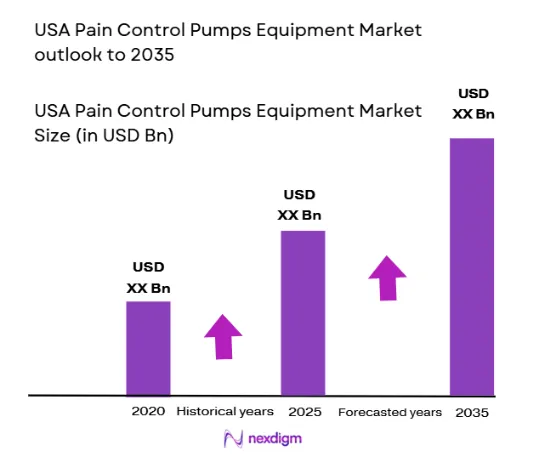
The USA Pain Control Pumps Equipment market has experienced substantial growth due to the increasing prevalence of chronic pain conditions, particularly in older populations. Based on a recent historical assessment, the market size is estimated to be valued at approximately USD ~ billion. This growth is driven by advancements in medical technologies, the rising demand for effective pain management solutions, and increased awareness regarding non-invasive treatments for chronic pain. In particular, the market is expanding as more healthcare providers integrate pain control pumps into their treatment offerings, focusing on improving patient outcomes and reducing reliance on opioid-based solutions.
Dominant cities in the market include New York, Los Angeles, and Chicago, which are home to leading healthcare institutions, pain management clinics, and hospitals. These cities have a high concentration of the elderly population and patients suffering from chronic pain, contributing to the demand for pain control solutions. States such as California, New York, and Texas are particularly important due to their large healthcare infrastructures and progressive regulations that support advanced pain management techniques. This widespread access to healthcare facilities and specialized care has driven the dominance of these regions in the pain control pumps market.
Market Segmentation
By Product Type:
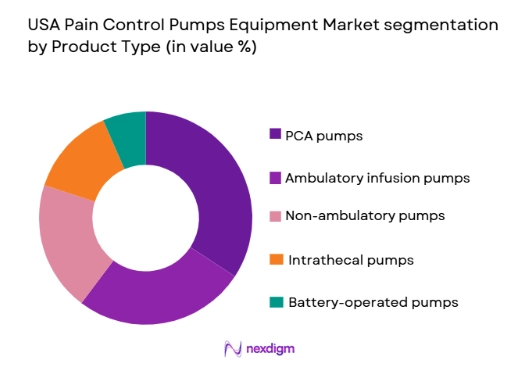
The USA Pain Control Pumps Equipment market is segmented by product type into ambulatory infusion pumps, PCA pumps, non-ambulatory pumps, intrathecal pumps, and battery-operated pumps. Recently, PCA pumps have a dominant market share due to their widespread use in managing postoperative pain and their ability to deliver consistent pain relief for patients recovering from surgery. The ease of use, portability, and personalized pain management that PCA pumps offer make them the preferred choice among both healthcare providers and patients. Additionally, the high adoption rates of PCA pumps in hospitals and pain management clinics, combined with their regulatory approval and efficiency in reducing opioid consumption, have positioned this sub-segment as a leader in the market.
By End-User:
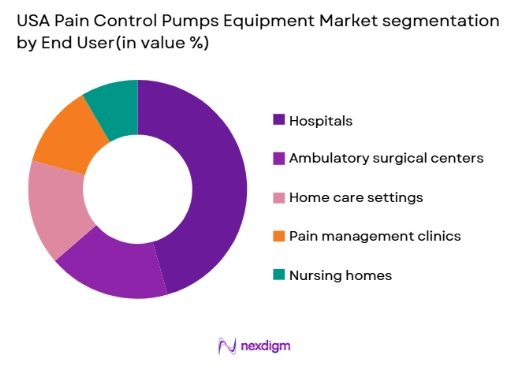
The USA Pain Control Pumps Equipment market is segmented by end-user segment into hospitals, ambulatory surgical centers, home care settings, pain management clinics, and nursing homes. Recently, hospitals have a dominant market share due to their advanced infrastructure, high patient volume, and comprehensive pain management services. Hospitals have integrated pain control pumps into their treatment protocols to provide efficient pain relief, especially after surgeries or for chronic pain management. With their advanced medical technology capabilities, hospitals offer access to a wide range of treatments, including advanced pain control pumps that cater to both inpatient and outpatient needs. The demand for more precise pain control and reduced hospital stays also supports the growth of this sub-segment in the market.
Competitive Landscape
The USA Pain Control Pumps Equipment market is highly competitive, with significant consolidation driven by major players’ focus on technological innovation, strategic acquisitions, and expanding market reach. Several key players dominate the market, influencing product development and distribution channels. The market has seen the emergence of advanced pain control pumps, featuring wireless technology and real-time patient monitoring capabilities. As the demand for personalized pain management solutions continues to rise, these companies are focusing on providing a wide range of products and services to address both acute and chronic pain management needs across various healthcare settings.
| Company Name | Establishment Year | Headquarters | Technology Focus | Market Reach | Key Products | Revenue |
| Medtronic | 1949 | Minneapolis, MN, USA | ~ | ~ | ~ | ~ |
| Baxter International | 1931 | Deerfield, IL, USA | ~ | ~ | ~ | ~ |
| Smiths Medical | 1945 | London, UK | ~ | ~ | ~ | ~ |
| Fresenius Kabi | 1999 | Bad Homburg, Germany | ~ | ~ | ~ | ~ |
| Zyno Medical | 2008 | Irvine, CA, USA | ~ | ~ | ~ | ~ |
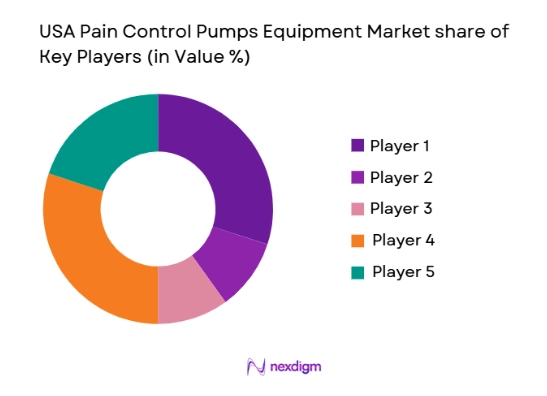
USA Pain Control Pumps Equipment Market Analysis
Growth Drivers
Rising Demand for Non-Opioid Pain Management:
The increasing concerns about opioid addiction and its associated risks have driven a significant shift toward non-opioid pain management solutions. This shift has resulted in heightened demand for alternative treatments such as pain control pumps, which deliver pain relief without the dependency risks associated with opioids. Pain control pumps offer a more controlled and personalized approach to pain management, allowing patients to receive consistent relief while minimizing the potential for misuse. Furthermore, the growing awareness and advocacy for non-opioid alternatives have prompted healthcare professionals to adopt advanced solutions like PCA pumps, which have become integral in both hospital and outpatient settings. As healthcare providers and policymakers prioritize opioid reduction initiatives, the adoption of pain control pumps is expected to continue growing in the coming years.
Technological Advancements in Pain Control Pumps:
Technological advancements in pain control pumps have played a crucial role in driving market growth. Innovations such as wireless technology, remote patient monitoring, and enhanced user interfaces have made these pumps more efficient, user-friendly, and effective in managing chronic and acute pain. These technological improvements have made pain control pumps more accessible and practical for both healthcare providers and patients, leading to increased demand across various healthcare settings. The integration of real-time monitoring systems allows for better patient outcomes, as it enables healthcare providers to adjust the dosage and delivery method of pain relief based on individual patient needs. As these technologies continue to evolve, the market for pain control pumps is expected to grow, driven by the demand for more personalized and efficient pain management solutions.
Market Challenges
High Costs of Advanced Pain Control Pumps:
Despite the advantages of pain control pumps, the high initial cost of these devices remains a significant challenge for widespread adoption. Advanced pain control pumps, especially those with integrated wireless capabilities and real-time monitoring, come with a premium price tag, which can be a barrier for healthcare facilities with limited budgets. Additionally, the maintenance costs of these devices, including regular servicing, calibration, and replacement of parts, further increase the financial burden on healthcare providers. While the benefits of pain control pumps in improving patient outcomes are widely acknowledged, the high cost of acquisition and maintenance is a challenge that needs to be addressed for broader market penetration. As healthcare systems aim to optimize costs, finding a balance between advanced pain control solutions and affordability is crucial for the growth of the market.
Regulatory Hurdles and Approval Processes:
Regulatory hurdles and approval processes represent another major challenge in the USA Pain Control Pumps Equipment market. The approval process for medical devices in the USA can be lengthy and complex, with companies needing to navigate strict regulatory frameworks set by agencies like the FDA. The process involves extensive clinical testing, safety assessments, and compliance with a range of standards before pain control pumps can be marketed and used in healthcare settings. This can delay the time to market for new products and increase the overall costs of development. Furthermore, regulatory changes and requirements may vary by region, further complicating the approval process for companies operating on a global scale. These challenges create uncertainty in the market and can impact the timely introduction of new technologies.
Opportunities
Expansion of Home Care Solutions:
As the demand for home-based healthcare services continues to grow, there is a significant opportunity for the pain control pumps market to expand within the home care segment. With the increasing preference for home healthcare solutions, driven by the aging population and the desire for more personalized care, pain control pumps that are portable, easy to use, and cost-effective are expected to gain traction. Home care solutions provide patients with the ability to manage their pain more comfortably in a familiar environment, without the need for frequent hospital visits. Companies that focus on developing pain control pumps tailored for home use, including those with remote monitoring capabilities, are well-positioned to capitalize on this growing trend. The convenience and flexibility of home-based pain management solutions are expected to create new growth opportunities for the market in the coming years.
Focus on Minimally Invasive Procedures:
The growing trend toward minimally invasive medical procedures presents another significant opportunity for the USA Pain Control Pumps Equipment market. As patients and healthcare providers increasingly prioritize less invasive treatment options, pain control pumps are being incorporated into minimally invasive procedures to enhance recovery and manage postoperative pain. These pumps provide a more controlled and precise delivery of pain relief, reducing the need for oral medications and minimizing the side effects associated with traditional pain management methods. As healthcare professionals continue to adopt minimally invasive techniques in surgery and other medical treatments, the demand for pain control pumps is expected to increase. Companies that innovate and create pumps specifically designed for use in these procedures are well-positioned to tap into this expanding market segment.
Future Outlook
The future outlook for the USA Pain Control Pumps Equipment market over the next five years is promising, with expected growth driven by both technological advancements and increasing demand for non-opioid pain management solutions. The integration of wireless technology, remote monitoring systems, and more user-friendly devices will likely increase the adoption of pain control pumps, particularly in hospitals, pain management clinics, and home care settings. Regulatory support for alternative pain management options is also expected to play a crucial role in market growth. Furthermore, the ongoing efforts to reduce opioid dependency will drive further interest in devices that provide controlled, effective pain relief. As these factors converge, the market is set to expand, offering significant opportunities for innovation and growth.
Major Players
- Medtronic
- Baxter International
- Smiths Medical
- Fresenius Kabi
- Zyno Medical
- B Braun
- Halyard Health
- ICU Medical
- Micrel Medical Devices
- Leventon
- Vygon
- Teleflex
- Fisher & Paykel Healthcare
- Teleflex
- Pall Corporation
Key Target Audience
- Investments and venture capitalist firms
- Government and regulatory bodies
- Medical device manufacturers
- Healthcare providers
- Home healthcare companies
- Pain management clinics
- Medical equipment distributors
- Pharmaceutical companies
Research Methodology
Step 1: Identification of Key Variables
This step involves identifying the key factors affecting the market such as product types, end-users, and technology trends to create a foundation for market analysis.
Step 2: Market Analysis and Construction
Data collection is done through primary and secondary research methods, including interviews and published industry reports, to construct a comprehensive market overview.
Step 3: Hypothesis Validation and Expert Consultation
Expert consultations are conducted to validate hypotheses and ensure that the data and trends are accurate and relevant to the current market dynamics.
Step 4: Research Synthesis and Final Output
The final step synthesizes all the data collected and analyzed, leading to the creation of a complete market report that includes forecasts, segmentation, and strategic insights.

- Executive Summary
- Research Methodology (Definitions, Scope, Industry Assumptions, Market Sizing Approach, Primary & Secondary Research Framework, Data Collection & Verification Protocol, Analytic Models & Forecast Methodology, Limitations & Research Validity Checks)

- Market Definition and Scope
- Value Chain & Stakeholder Ecosystem
- Regulatory / Certification Landscape
- Sector Dynamics Affecting Demand
- Strategic Initiatives & Infrastructure Growth

- Growth Drivers
Rising incidence of chronic pain
Technological advancements in pain control pumps
Growing geriatric population
Rising demand for home healthcare
Increased awareness of pain management - Market Challenges
High cost of advanced pain control pumps
Regulatory hurdles in approval processes
Limited reimbursement for home-use pumps
Concerns regarding device malfunctions
Lack of standardized guidelines for pump usage - Market Opportunities
Expansion in home care and remote monitoring
Increased focus on personalized pain management solutions
Advancements in wireless communication for pumps - Trends
Shift towards minimally invasive pain management techniques
Integration of IoT in pain control pumps
Growing preference for wearable pumps
Shift to outpatient and home-based treatments
Focus on patient-centered pain management - Government Regulations & Defense Policy
Regulatory standards for home-use medical devices
FDA approval processes for pain control equipment
Government policies on pain management and opioid alternatives - SWOT Analysis
- Stakeholder and Ecosystem Analysis
- Porter’s Five Forces Analysis
- Competition Intensity and Ecosystem Mapping

- By Market Value, 2020-2025
- By Installed Units, 2020-2025
- By Average System Price, 2020-2025
- By System Complexity Tier, 2020-2025

- By System Type (In Value%)
PCA pumps
Ambulatory infusion pumps
Non-ambulatory pumps
Intrathecal pumps
Battery-operated pumps - By Platform Type (In Value%)
Portable pumps
Stationary pumps
Wireless-enabled pumps
Disposable pumps
Rechargeable pumps - By Fitment Type (In Value%)
External pumps
Implantable pumps
Peristaltic pumps
Syringe pumps
Epidural pumps - By EndUser Segment (In Value%)
Hospitals
Ambulatory surgical centers
Home care settings
Pain management clinics
Nursing homes - By Procurement Channel (In Value%)
Direct sales
Online retailers
Medical distributors
Hospitals and healthcare systems
Third-party procurement - By Material / Technology (In Value%)
Plastic materials
Silicone-based materials
Microprocessor technology
Wireless technology
Biocompatible materials

- Market structure and competitive positioning
- Market share snapshot of major players
- CrossComparison Parameters (Product Innovation, Market Penetration, Pricing Strategies, Distribution Network, Customer Base, R&D Investment, Brand Reputation, Regulatory Compliance, Sales Channels, Technological Advancements)
- SWOT Analysis of Key Players
- Pricing & Procurement Analysis
- Key Players
Medtronic
Baxter International
Smiths Medical
Fresenius Kabi
Johnson & Johnson
Stryker
Hospira
IVENIX
Zyno Medical
Leventon
Halyard Health
B Braun
Vygon
Civco Medical Solutions
Teleflex

- Hospitals focus on cost-effective solutions
- Growing trend of pain management clinics expanding
- Home care market expansion due to increasing aging population
- Increased preference for non-invasive treatments in clinics

- Forecast Market Value, 2026-2035
- Forecast Installed Units, 2026-2035
- Price Forecast by System Tier, 2026-2035
- Future Demand by Platform, 2026-2035


 Request a Sample
 Ask for Customization
 Get a Quote
 Enquire Now