
 Download PDF
Market Overview
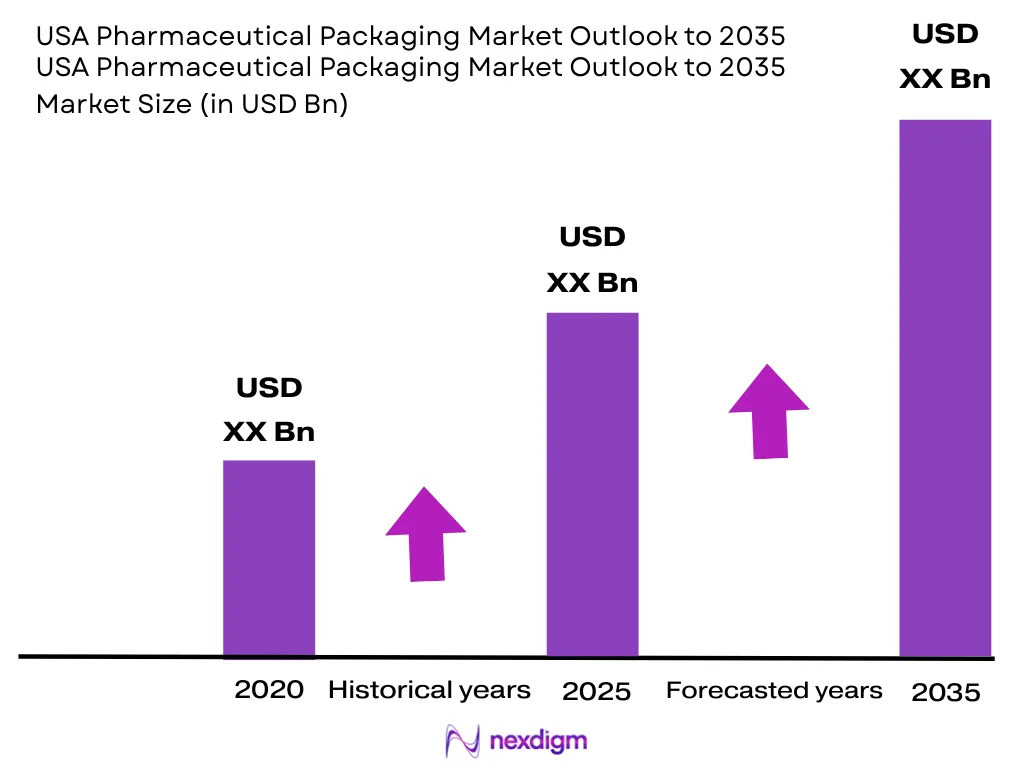
The USA Pharmaceutical Packaging Market was valued at USD ~ Billion in 2024 and is anticipated to expand at a CAGR of ~ % during 2026–2035. The market is primarily driven by rising production of injectables, biologics, and vaccines, continued growth of generic drug manufacturing, and increasing reshoring of pharmaceutical production capacity to the United States. According to GMI Research, the U.S. pharmaceutical packaging market grew from USD ~ billion in 2022 to USD ~ billion in 2023 and reached USD ~ billion in 2024, with market size climbing further to USD ~ billion in 2025. Approximately 90 percent of all prescriptions written in the United States are for generic medications, according to Research Nester, sustaining consistent demand for high-volume, cost-efficient packaging formats such as bottles and blister packs alongside specialized sterile packaging for injectable and biologic therapies.
Market Segmentation
By Material
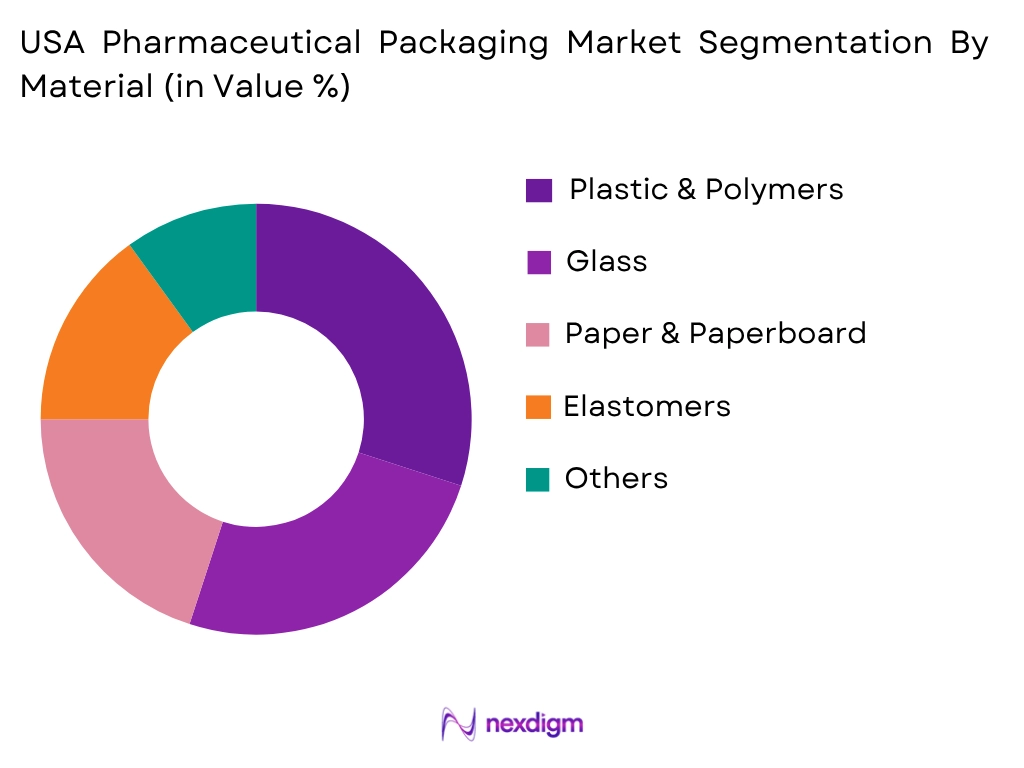
Among these, Plastic & Polymers hold the largest share of the USA Pharmaceutical Packaging Market, driven by widespread use across bottles, blister packs, and closures for oral solid dosage forms. Product and material innovation continues to reshape this segment, with the development of cyclic olefin polymers (COPs) representing an important breakthrough, as these materials are composed primarily of hydrogen and carbon, making them extremely non-reactive and durable while resembling the optical clarity of glass and offering greater design flexibility. Glass remains essential for injectable and biologic packaging formats such as vials and ampoules, where inertness and barrier performance are critical for drug stability. At the same time, manufacturers are increasingly focused on sustainability, with Aptar Pharma launching a high-performance nasal spray featuring recyclable packaging in January 2024, reflecting industry-wide efforts to eliminate microplastics and reduce environmental impact while maintaining strict regulatory compliance.
By Application
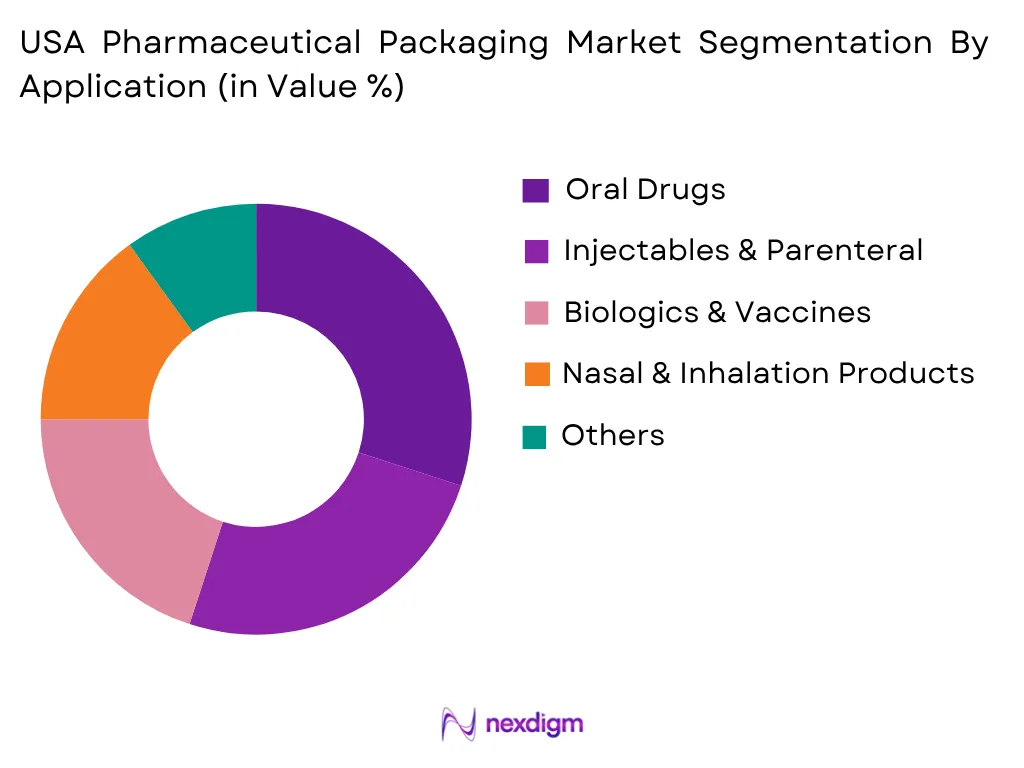
The Oral Drugs segment holds the largest share, supported by the dominance of tablets and capsules packaged in bottles and blister packs, which remain the most widely prescribed and manufactured dosage forms in the United States given that approximately 90 percent of all prescriptions are for generic medications. Pharmaceutical companies heavily rely on efficient and specialized packaging to ensure drug safety and efficacy, protecting products from contamination, physical damage, degradation, and environmental factors such as light, moisture, and oxygen. Meanwhile, the Injectables & Parenteral segment is expanding rapidly, driven by rising production of biologics, vaccines, and specialty drugs, with manufacturers increasingly adopting prefilled syringes, vials, and auto-injector systems to improve patient convenience and support self-administration. In June 2025, 60 Degrees Pharmaceuticals introduced a new 8-count bottle format for its antimalarial drug ARAKODA, illustrating continued innovation in application-specific packaging formats tailored to patient use cases.
Competitive Landscape
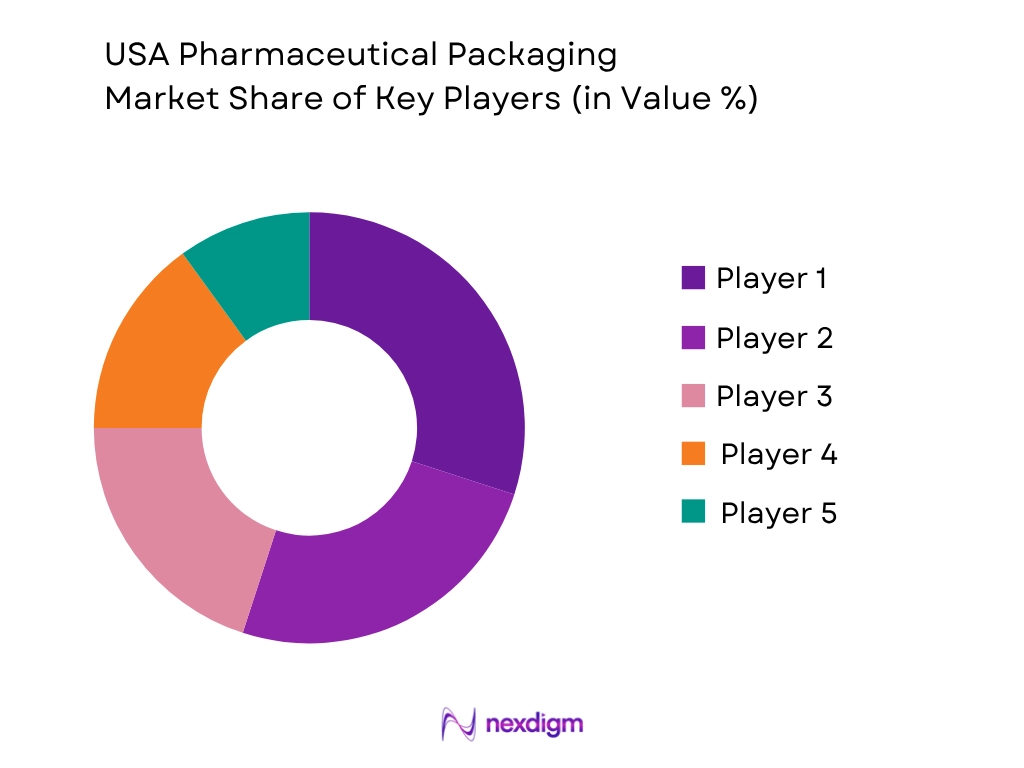
The USA Pharmaceutical Packaging Market is highly competitive and moderately fragmented, with the presence of established global players, regional manufacturers, and emerging innovators. According to GMI Research, the top five players in the market, including Amcor plc, Gerresheimer AG, West Pharmaceutical Services, Inc., AptarGroup, Inc., and Schott AG, collectively account for approximately 10.2 percent of the global pharmaceutical packaging market, leveraging diversified portfolios across rigid, flexible, and drug delivery packaging solutions supported by strong global manufacturing networks. Competition is primarily based on regulatory compliance, sterile and aseptic packaging capability, barrier performance, and the ability to serve both large pharmaceutical companies and the growing base of contract manufacturing organizations (CMOs). Companies are increasingly investing in sustainable packaging solutions, smart anti-counterfeiting technologies, and regional manufacturing expansion to meet the increasing demand for safe, innovative, and compliant pharmaceutical packaging.
| Company | Establishment Year | Headquarters | Primary Product Portfolio | Pharmaceutical Packaging Portfolio
|
Manufacturing Presence | Major End-Use Industries | Key Strategic Focus | Certifications & Compliance |
| Amcor plc | 1860 | ~ | ~ | ~ | ~ | ~ | ~ | ~ |
| Gerresheimer AG | 1864 | ~ | ~ | ~ | ~ | ~ | ~ | ~ |
| Avon Crowncaps & Containers Nigeria Limited | 1961 | ~ | ~ | ~ | ~ | ~ | ~ | ~ |
| AptarGroup, Inc. | 1992 | ~ | ~ | ~ | ~ | ~ | ~ | ~ |
| Schott AG | 1884 | ~ | ~ | ~ | ~ | ~ | ~ | ~ |
USA Pharmaceutical Packaging Market Analysis
Growth Drivers
Rising Production of Injectables, Biologics and Vaccines
The USA pharmaceutical packaging market is experiencing sustained growth due to rising production of injectables, biologics, vaccines, and specialty drugs, which require advanced glass, rigid plastics, and flexible packaging with barrier coatings, prefilled systems, and tamper-evident features to ensure drug stability, sterility, and patient safety. According to Grand View Research, pharmaceutical companies are increasingly adopting post-consumer recycled materials and compostable, bio-based packaging solutions to reduce environmental impact while maintaining strict sterility and barrier requirements. Government initiatives supporting sustainable packaging materials and serialization standards continue to propel adoption of high-performance containers across both primary and secondary packaging formats. Growing healthcare infrastructure, an aging population, and rising chronic disease prevalence continue to expand the addressable base of patients requiring complex biologic and injectable therapies, sustaining long-term demand for specialized pharmaceutical packaging formats across the country.
Reshoring of Pharmaceutical Manufacturing and CMO Expansion
The steady reshoring of pharmaceutical manufacturing capacity to the United States, combined with the expansion of contract manufacturing organizations (CMOs), remains a major driver for pharmaceutical packaging consumption. According to Research Nester, North America is expected to generate the largest share of the global pharmaceutical packaging market by 2037, fueled by reshoring of pharmaceutical manufacturing, growth of production facilities, and expanding partnerships between pharmaceutical companies and CMOs. CMOs are increasingly preferred when pharmaceutical companies plan to outsource drug production to third-party manufacturers, playing a crucial role from drug formulation and production through packaging and distribution. This structural shift toward domestic manufacturing and outsourced production continues to strengthen long-term demand for compliant, scalable pharmaceutical packaging solutions across the United States.
Market Challenges
High Cost of Serialization and Regulatory Compliance
Despite steady demand growth, the USA pharmaceutical packaging market faces significant cost pressure from full enforcement of the Drug Supply Chain Security Act (DSCSA), which came into effect on November 27, 2024, following a one-year enforcement delay granted by the FDA to allow systems to stabilize and achieve full interoperability. The DSCSA mandates that manufacturers, wholesalers, and pharmacies use serialization to assign unique product identifiers that track and trace prescription drugs at every point in the supply chain, requiring significant investment in retooling production lines for more complex barcode packaging, labeling, and inspection systems. A Healthcare Distribution Alliance member survey found that fewer than a third of manufacturer respondents were able to send fully serialized data to their distribution partners even as the deadline approached, reflecting the scale of technology investment required. These compliance obligations require continuous investment in data infrastructure, quality assurance, and cross-partner interoperability, increasing operational complexity for packaging manufacturers and pharmaceutical companies alike.
Volatility in Raw Material Costs and Sustainability Trade-Offs
The escalating cost of raw materials poses a significant constraint for the USA pharmaceutical packaging market, according to Precedence Research, as resin, glass, and specialty material prices surge due to supply chain disruptions, increased demand, and fluctuating currency values. Pharmaceutical packaging manufacturers face a difficult balance between adopting sustainable, recyclable materials and maintaining the stringent sterility, barrier, and extractables and leachables requirements mandated by the FDA for container closure systems. Unlike consumer food packaging, pharmaceutical packaging cannot easily substitute recycled or bio-based materials without extensive stability and compatibility testing, creating longer development timelines and higher validation costs for manufacturers seeking to align with growing sustainability expectations from regulators and healthcare systems.
Market Opportunities
Rising Investment in Prefilled Devices and Sustainable Materials
The USA pharmaceutical packaging market presents significant opportunities for manufacturers investing in prefilled syringes, drug delivery devices, and sustainable packaging materials. The rising production of injectables, biologics, and specialty drugs continues to drive demand for prefilled and self-administration systems that improve patient convenience and adherence outside of clinical settings. Aptar Pharma’s January 2024 launch of a high-performance nasal spray featuring recyclable packaging illustrates the commercial viability of combining advanced drug delivery functionality with improved sustainability credentials. As consumers and regulatory bodies continue pushing for reduced waste and eco-friendly practices, pharmaceutical companies are increasingly adopting recyclable solutions across nasal, topical, and select injectable packaging formats, creating opportunities for manufacturers offering differentiated, environmentally conscious packaging technologies.
Expansion of Cyclic Olefin Polymers and Advanced Barrier Materials
Continued innovation in cyclic olefin polymers (COPs) and copolymers creates substantial opportunities for pharmaceutical packaging manufacturers seeking to differentiate their material portfolios. Since COPs and copolymers are composed mainly of hydrogen and carbon, they are extremely non-reactive and durable while resembling the optical properties of glass and offering greater design flexibility, positioning them as an increasingly preferred alternative to traditional glass in select injectable and prefilled applications. As pharmaceutical companies continue expanding domestic manufacturing capacity to support reshoring trends and CMO growth, manufacturers offering advanced barrier materials, extractables and leachables testing capabilities, and scalable production of prefilled and unit-dose formats are well positioned to capture growing demand across both branded and generic pharmaceutical manufacturers.
Future Outlook
The USA Pharmaceutical Packaging Market is expected to witness sustained expansion over the forecast period, supported by continued growth in injectable, biologic, and vaccine production, ongoing reshoring of pharmaceutical manufacturing capacity, and ongoing full enforcement of DSCSA serialization requirements across the supply chain. Continued investment in cyclic olefin polymers, prefilled drug delivery devices, and sustainable packaging materials will further accelerate innovation across the industry. The market is also likely to benefit from expanding contract manufacturing organization capacity and rising chronic disease prevalence, enabling greater investment in advanced, compliant packaging technologies capable of serving both branded and generic pharmaceutical manufacturers across the United States.
Major Players
- Amcor plc
- Gerresheimer AG
- West Pharmaceutical Services, Inc.
- AptarGroup, Inc.
- Schott AG
- Becton, Dickinson and Company
- O-I Glass, Inc.
- Berry Global Group, Inc.
- WestRock Company
- SGD Pharma
- International Paper
- Comar, LLC
- CCL Industries
- Vetter Pharma International
- Drug Plastics Group
Key Target Audience
- Pharmaceutical Packaging Manufacturers
- Pharmaceutical and Biopharmaceutical Companies
- Contract Manufacturing Organizations (CMOs)
- Hospitals, Clinics and Specialty Pharmacies
- Retail and Mail-Order Pharmacy Chains
- Investment and Venture Capitalist Firms
- Government and Regulatory Bodies (U.S. Food and Drug Administration (FDA), U.S. Pharmacopeia (USP), Drug Enforcement Administration (DEA))
- Packaging Material Suppliers and Industrial Raw Material Distributors
Research Methodology
Step 1: Identification of Key Variables
The research process begins with identifying the complete ecosystem of the USA Pharmaceutical Packaging Market, including raw material and resin suppliers, packaging converters and manufacturers, pharmaceutical and biopharmaceutical companies, contract manufacturing organizations, distributors, and regulatory authorities. Extensive secondary research is conducted using company annual reports, government publications, trade associations, customs statistics, industry journals, and proprietary databases to determine the variables influencing market demand, pricing, production, consumption, and technological developments.
Step 2: Market Analysis and Construction
Historical market information is collected and analyzed to estimate market size, production volumes, import-export activity, application-wise demand, and pricing trends. A combination of top-down and bottom-up approaches is used to estimate market revenues and validate segment-level performance. Consumption patterns across oral drugs, injectables, biologics, and topical formulations are evaluated to establish an accurate representation of the industry.
Step 3: Hypothesis Validation and Expert Consultation
The preliminary findings are validated through Computer-Assisted Telephone Interviews (CATIs) and structured discussions with pharmaceutical packaging manufacturers, procurement managers, regulatory affairs experts, quality assurance professionals, and senior executives operating within the U.S. pharmaceutical packaging industry. These interviews help verify market assumptions, competitive developments, technology adoption trends, pricing dynamics, and future investment opportunities while refining the overall market estimates.
Step 4: Research Synthesis and Final Output
The final stage integrates insights obtained from primary interviews with quantitative information collected through secondary sources. Data triangulation techniques are applied to reconcile differences between supply-side and demand-side estimates, ensuring robust market forecasting. The report is then reviewed through multiple quality assurance checkpoints to deliver a comprehensive analysis covering market size, segmentation, competitive landscape, future outlook, and strategic recommendations for industry stakeholders.

- Executive Summary
- Research Methodology (Market Definitions and Assumptions, Abbreviations, Market Sizing Approach, Top-Down Analysis, Bottom-Up Analysis, Demand-Side Assessment, Supply-Side Assessment, Primary Industry Interviews, Secondary Research Validation, Data Triangulation, Forecasting Framework, Limitations and Future Conclusions)

- Definition and Scope
- Market Evolution and Industry Genesis
- Timeline of Major Industry Developments
- Pharmaceutical Packaging Industry Value Chain Analysis
- Supply Chain Analysis

- Growth Drivers (Rising Production of Injectables, Biologics and Vaccines, Growth of Generic Drug Manufacturing, Reshoring of Pharmaceutical Manufacturing Capacity, Expansion of Contract Manufacturing Organizations, Increasing Demand for Prefilled and Self-Administration Devices, Rising Chronic Disease Prevalence)
- Market Challenges (Stringent Regulatory Compliance Under FDA cGMP Requirements, High Cost of Serialization and Track-and-Trace Systems, Volatility in Resin and Glass Raw Material Prices, Complexity of Cold Chain Packaging for Biologics, Sustainability and Recyclability Trade-Offs in Sterile Packaging, Supply Chain Disruptions Affecting Specialty Materials)
- Market Opportunities (Growth in Prefilled Syringes and Drug Delivery Devices, Investment in Sustainable and Recyclable Pharmaceutical Packaging, Expansion of Smart and Anti-Counterfeiting Packaging Technologies, Cyclic Olefin Polymer and Alternative Material Adoption, Cell and Gene Therapy Packaging Innovation, Domestic Glass and Component Manufacturing Expansion)
- Market Trends (Shift Toward Cyclic Olefin Polymers and Copolymers, Rising Adoption of Prefilled and Self-Injection Systems, Growth in Recyclable and PCR-Content Packaging, Smart Packaging with Anti-Counterfeiting Features, Full DSCSA Serialization Enforcement, Industry Consolidation Through M&A)
- Government Regulations (FDA Current Good Manufacturing Practice (cGMP) Requirements Under 21 CFR 210/211, Container Closure System and Extractables & Leachables Standards, Drug Supply Chain Security Act (DSCSA) Serialization Requirements, U.S. Pharmacopeia (USP) Packaging Standards, Poison Prevention Packaging Act Child-Resistant Closure Requirements, DEA Controlled Substance Packaging Requirements)
- Import and Export Analysis (Trade Volume, Major Import Sources, Export Destinations, HS Code Analysis, Trade Balance)
- Raw Material Availability Analysis (Pharmaceutical-Grade Resins, Borosilicate Glass, Aluminum, Elastomeric Closures, Cyclic Olefin Polymers)
- Technology Landscape (Serialization and Track-and-Trace Systems, Cyclic Olefin Polymer Processing, Prefilled Syringe and Auto-Injector Assembly, Barrier Coating and Extractables Testing, Smart and Anti-Counterfeiting Packaging)
- Sustainability Assessment (Recyclability and Post-Consumer Recycled Content, Microplastic Reduction Initiatives, Carbon Footprint Reduction, Sterile Packaging Waste Minimization, Circular Economy Integration)
- PESTLE Analysis
- SWOT Analysis
- Porter’s Five Forces Analysis
- Stakeholder Ecosystem
- Competition Ecosystem

- By Market Value (2020-2025)
- By Volume Consumption (2020-2025)
- By Average Selling Price (2020-2025)

- By Material (In Value %)
Plastic & Polymers
Glass
Paper & Paperboard
Metal
Elastomers - By Product Type (In Value %)
Bottles
Blister Packs
Vials & Ampoules
Prefilled Syringes
Pouches & Sachets
Caps & Closures - By Application (In Value %)
Oral Drugs
Injectables & Parenteral
Biologics & Vaccines
Topical Formulations
Nasal & Inhalation Products - By End Use (In Value %)
Pharmaceutical Companies
Contract Manufacturing Organizations (CMOs)
Hospitals & Clinics
Retail & Mail-Order Pharmacies - By Region (In Value %)
Northeast
Midwest
South
West

- Market Share of Major Players (By Value, Volume, Material Type, Application Industry, Product Category)
- Cross Comparison Parameters (Material Portfolio Breadth, Sterile & Aseptic Packaging Capability, Drug Delivery Device Portfolio, Application Technical Support Capability, Manufacturing Capacity, Regulatory Compliance & Certifications, Pharmaceutical Customer Base, Innovation & New Product Launch Frequency)
- SWOT Analysis of Major Players
- Pricing Analysis by Product Category and SKU
- Production Capacity Analysis
- Manufacturing Footprint Analysis
- Distribution Network Analysis
- Innovation Benchmarking
- Detailed Profiles of Major Companies
Amcor plc
Gerresheimer AG
West Pharmaceutical Services, Inc.
AptarGroup, Inc.
Schott AG
Becton, Dickinson and Company
O-I Glass, Inc.
Berry Global Group, Inc.
WestRock Company
SGD Pharma
International Paper
Comar, LLC
CCL Industries
Vetter Pharma International
Drug Plastics Group

- Consumption Pattern Analysis (Industrial Usage, Batch Size, Product Category Penetration, Seasonal Demand, Reformulation Activity)
- Purchasing Criteria (Barrier Performance, Regulatory Compliance, Sterility Assurance, Cost Efficiency, Tamper-Evidence, Child-Resistance)
- Procurement and Supplier Selection Analysis
- Sustainable Packaging Adoption Assessment
- Premium vs Conventional Packaging Demand
- Product Attribute Preference Analysis (Barrier Properties, Extractables & Leachables Profile, Tamper-Evidence, Child-Resistance, Recyclability, Print and Serialization Quality)
- Patient Safety and Adherence Influence on Packaging Design
- Pain Point Analysis
- Decision-Making Process

- By Market Value (2026-2035)
- By Volume Consumption (2026-2035)
- By Average Selling Price (2026-2035)


 Request a Sample
 Ask for Customization
 Get a Quote
 Enquire Now